
Wholesale Turkish Copper Cookware Supplier
Copper supply for your business
We are a wholesale supplier of handmade Turkish copper cookware and decoration products, working from Kahramanmaraş, Türkiye with restaurants, hotels, cafés, boutique retailers, gift shops and online sellers. Tell us the product group, the approximate quantity and the destination — the quotation comes back the same day.
If you are not sure about sizes, describe the use — cups per pot, covers per service, table count — and we will propose them.
BakırBul supplies handmade Turkish copper cookware, drinkware and serveware to hotels, restaurants, cafés, retailers and online sellers abroad, shipping from Kahramanmaraş, Türkiye. Orders start from a list rather than a catalogue page: send the product group, an approximate quantity and the destination country, and a written quotation with prices and lead time follows.
International shipping
We ship abroad for wholesale quantities. Tell us the country and the quantity and we confirm it with the quotation.
Tiered pricing
The more you take of the same item, the lower the unit price. The quotation states it in writing.
Samples first
We send samples before a bulk order, and the sample cost is deducted from the order when you place it.
Custom production
Sizes outside the catalogue, changed forms, different finishes, and logo or engraving work are made to order at a contracted workshop.
Quality control
Every batch is checked for dimensions and tin coverage before it leaves the warehouse.
Invoicing
We invoice tax-registered businesses. Payment and delivery terms are written into the quotation, not assumed.
Product groups
Photographs, dimensions and gauges are on every product page. The catalogue is in Turkish; ask us about anything you cannot read.
Copper supply at BakırBul is grouped into families: Turkish coffee pots, teapots and tea sets, pots and casseroles, frying pans and sahan, trays and serving plates, and drinkware. Every family is available in several diameters, gauges and finishes, and any of them can be quoted as a mixed pallet rather than one line at a time.
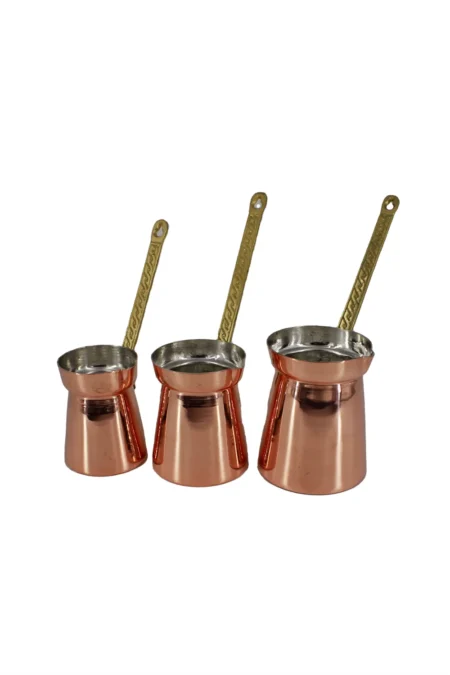 Turkish coffee potsCezve in tin-lined copper, from single-cup to seven-cup bodies.See the range
 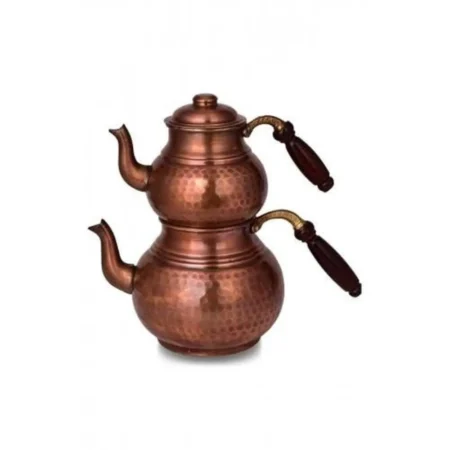 Teapots and tea setsTwo-part Turkish tea sets, plain and fluted bodies, with or without a warmer.See the range
 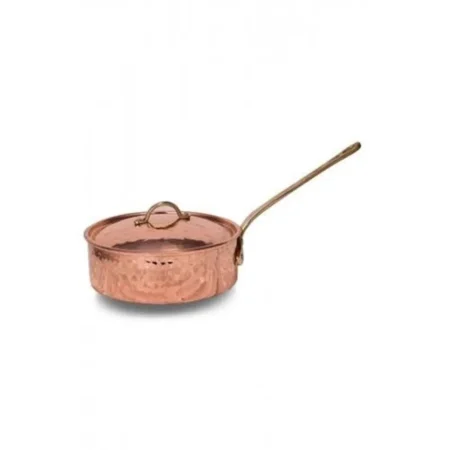 Pots and casserolesFrom single-portion casseroles to large-diameter bodies for volume cooking.See the range
 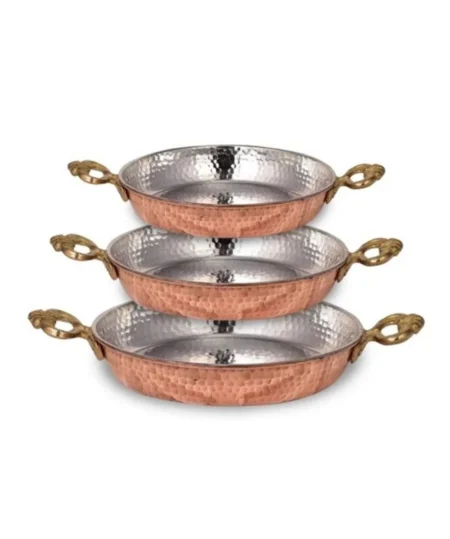 Frying pans and sahanHand-hammered, machine-forged and plain bodies; lidded and open.See the range
 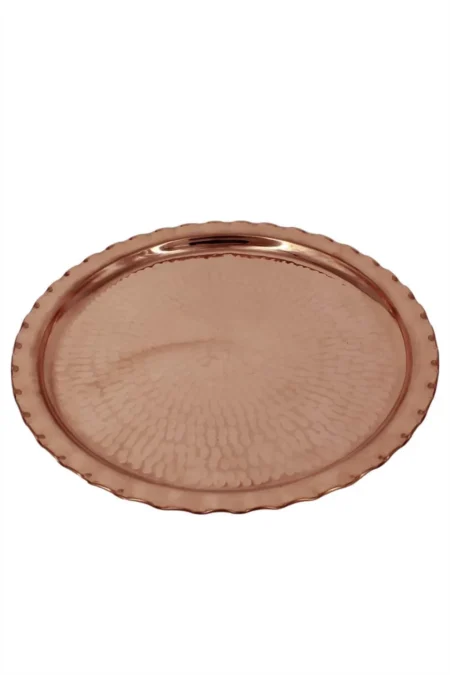 Trays and serving platesRound and shaped trays, engraved or plain, for table and buffet service.See the range
 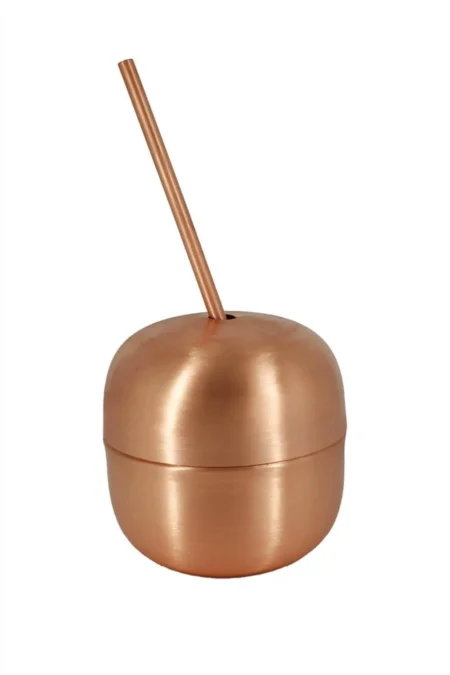 DrinkwareTumblers, mugs, goblets and Moscow mule mugs in several finishes.See the range
 How a wholesale order works
A wholesale order runs in five steps: you send a list, we quote against it, samples go out if you want them, catalogue stock is picked while custom work is produced at the partner workshop, and the batch is checked for dimensions and tin coverage before dispatch. Nothing is produced before you have approved a sample.
- You tell us what you need. Product group, approximate quantity, sizes if you already know them, and the destination.
- We quote. Price is calculated, not read off a list: diameter or volume, sheet gauge, whether the body is hand-hammered or machine-forged, and the quantity all move the figure.
- Samples, if you want them. Sent before the bulk order; the cost is deducted from the order.
- Production or picking. Catalogue items ship from stock. Custom sizes, forms, engraving or a logo are produced at the workshop we work with.
- Quality control, then dispatch. Dimensions and tin coverage are checked, items are packed individually and shipped with a tracking number.
Shipping and export
Export shipping is quoted per order, not fixed in advance. BakırBul ships wholesale quantities abroad from Kahramanmaraş, and you may also nominate your own freight forwarder and collect ex works. Duties and import taxes in the destination country belong to the buyer, and Turkish export documentation is available as a separate paid service.
Inside Türkiye we ship any quantity, with tracked parcels and no minimum order. Abroad we ship wholesale quantities. Tell us the destination country and what you need; we confirm whether it works as an export order and price the delivery in the quotation. You are also welcome to nominate your own freight forwarder and collect from us in Kahramanmaraş.
Customs duties and import taxes in the destination country are the buyer’s responsibility, and we say so up front so there are no surprises after dispatch.
Country notes for the two destinations we are asked about most: wholesale into the United Kingdom and wholesale into the United States. The commodity code, the documents and the Incoterms are set out in the import guide.
Two things buyers often assume we cannot do, and we can. We prepare the Turkish export documentation as a paid service if you would rather not handle it — the customs entry in your own country still stays with you or your broker. And if the piece you want is not in the catalogue, at trade quantities we have new tooling made to your drawing.
Choosing a copper supplier in Türkiye
Choosing a Turkish copper supplier comes down to five questions: who does the metalwork, what happens to a piece between the workshop and the pallet, whether a sample goes out before the quantity, what the seller refuses to do, and who prepares the paperwork. A supplier who answers all five plainly is easier to hold to account.
Most buyers reaching this page are comparing several names and cannot tell them apart from the outside. Everyone photographs the same hammered surface. Here is what actually separates one Turkish copper cookware supplier from another, including the questions that would put us on the spot.
Ask who does the metalwork. The Turkish copper trade runs on workshops, and almost nobody selling abroad owns the hammer. What matters is whether the seller can name the arrangement and stand behind it. Ours is a long-term production partnership: we specify the piece, our partner produces it, and we carry it under our own name. That is why we can commission tooling for a form that does not exist yet, and why a repeat order matches the first one.
Ask what happens to a piece between the workshop and the pallet. Dimensions, the state of the tin lining and the finish are checked in our own warehouse before anything is packed. A seller who cannot describe that step is passing boxes through.
Ask for a sample before the quantity. We send samples ahead of a bulk order and deduct the sample cost from the order when it is placed. Any supplier who resists a sample on a first order is telling you something.
Ask what the seller will not do. We will not put a magnetic base on a hand-worked pan for an induction hob, we do not hold a food contact test report today, and we say so before an order rather than at a border. Those answers are on this site because finding them out late is what costs a buyer money.
Ask about the paperwork. Commercial invoice, packing list and proof of origin travel with the goods; preparing export documents is a paid service and it covers the Türkiye side. The customs declaration in your own country has to be made by a party established there.
How we work
BakırBul works through a long-term production partnership rather than an in-house plant: we write the specification, our partner produces the piece, and we carry it under our own name and take responsibility for it. Copper is drawn from Kahramanmaraş and other Anatolian copper towns, brought into our warehouse, checked against the order and shipped.
We work through a long-term production partnership — we specify the piece, our partner produces it, and we carry it under our own name. That is why we can commission new tooling for a form that does not exist yet.
Copper is selected from the workshops of Kahramanmaraş and other Anatolian copper towns, brought into our own warehouse, checked against the order and shipped. Sizes, forms and marking outside the catalogue are made to your specification.
What we need in your enquiry to quote fast
A copper quotation needs four inputs: the pieces, the size or capacity of each, the approximate quantity per line, and the destination. Anything missing is estimated, and an estimated quotation is the one that changes later. A photograph of a similar piece replaces a dimension you do not have.
Copper is priced by the metal in the piece, not by a line in a catalogue. Diameter and height set how much sheet goes in; sheet gauge sets how heavy that sheet is; whether the body is hand-hammered or machine-forged sets how much labour sits on top of it; and the finish adds or removes a process at the end. Change any one of those and the figure moves. That is why a request that says only “copper pots” comes back with questions rather than a price.
The fastest enquiries we receive read like a purchase order that has not been placed yet. They name the pieces, give a size or a capacity for each, put an approximate quantity against every line, state the destination city and country, and say whether the buyer wants the goods delivered or will collect. If a mark or a logo is involved, they say so at this stage rather than after the price is agreed, because engraving is a process and not a sticker.
What you do not need to have ready: exact dimensions, a technical drawing, or a final quantity. Describe the use instead — cups per pot, covers per service, tables in the room, jars in a production batch — and we will propose sizes and tell you which ones are already in stock. Buyers often discover that the size they had in mind is one step away from a body that is available now, which changes both the price and the lead time.
Say the destination early, too. It decides whether the shipment goes as an export consignment with its own documents, what the commodity code will be, and which of the country notes on this site applies. The ICC Incoterms rules are the vocabulary we use for the handover point, and naming one in your enquiry — ex works, FCA, CIF — removes an entire round of e-mail.
Quality control before dispatch
Quality control at BakırBul happens in our own warehouse, after the goods arrive from the partner workshop and before anything is packed. Every batch is checked for dimensions against the order, for tin coverage on all food-contact surfaces, for handle and rivet security, and for finish consistency across pieces that will stand together on a table.
Dimensions. Hand-worked copper is not a moulded product, and a small spread between pieces is normal and expected. What is not acceptable is a body that misses the ordered size band, a lid that does not seat, or a stack of the same item that will not nest. Those are pulled before packing.
The tin lining. This is the check that matters most and the one buyers most often forget to ask about. Tin is applied by hand and it can be thin at a corner, at the base seam, or under a rivet head — exactly the places that see the most wear in service. A lining with copper showing through is not a cosmetic fault; it is a piece that will need relining sooner than the buyer planned. The Council of Europe technical guide on metals and alloys in food contact materials is the reference point we use when a buyer asks why the interior is lined at all.
Handles, rivets and knobs. Copper handles are riveted, not welded. A rivet that has not been set properly will loosen under the weight of a full pan, and it will do it in a kitchen rather than in a warehouse. Every handle is worked by hand at this stage.
Finish consistency. Red copper, oxidised, nickel, scotch-brite matt, matt black and dark brown are separate processes, and pieces from different runs of the same finish can sit slightly apart. For a service that will stand together on one table, we match within the batch rather than shipping whatever is nearest to hand.
Anything that fails is set aside rather than shipped and argued about afterwards. That is the whole point of holding stock in our own warehouse instead of drop-shipping from a workshop: there is a step between production and the pallet where somebody is accountable.
Packing and palletising for export
Copper is soft and marks easily, so every piece is wrapped individually before it goes into a carton. Cartons are filled by weight rather than by volume, palletised, corner-protected and stretch-wrapped, and each pallet carries a packing list that matches the commercial invoice line by line.
The failure mode with copper freight is not breakage — it is rubbing. Two unwrapped pans in the same carton will polish scratches into each other over a long road journey, and a buyer who opens a pallet of marked goods has a claim that nobody enjoys settling. Individual wrapping is therefore not packaging theatre; it is the cheapest insurance in the shipment.
Cartons are made up to a weight a person can lift and move without help, which usually means large hammered bodies travel in fewer pieces per box than drinkware does. Boxes are labelled with the item reference, the quantity inside and the gross weight, so a receiving team can check a delivery without opening everything.
For palletised shipments, note that wooden pallets crossing borders fall under ISPM 15, the international standard for wood packaging material, and must be heat-treated and marked accordingly. We use compliant pallets as standard; if your own forwarder collects and supplies pallets, this is worth confirming with them, because a non-compliant pallet can hold a consignment at the border while the goods inside are perfectly in order.
Air freight changes the arithmetic. Copper is dense, so an air shipment is charged on actual weight rather than volumetric weight in almost every case, and the packaging that protects goods on a truck is heavier than it needs to be in a hold. Tell us which mode you intend before we pack, and the box specification follows the mode.
If you nominate your own forwarder, we will hand over ex works in Kahramanmaraş with the goods ready, labelled and documented. If you would rather we arranged it, the delivery is priced in the quotation and the handover point is named there in Incoterms terms rather than left to assumption.
Finishes and what survives commercial service
Finish choice decides how a copper piece looks after a year of service, not just on the day it arrives. Red copper and oxidised finishes age visibly and are usually wanted for that; nickel and matt finishes hold their appearance longer under frequent handling and machine washing, which suits front-of-house pieces that guests touch every day.
Red copper is the bare metal, polished. It is the finish most buyers picture, and it is also the one that changes fastest: copper darkens with air, moisture and handling, and a piece on a busy table will move away from its shipped colour within weeks. Some operators polish it back on a schedule and treat that as part of the room’s character. Others find it a chore. There is no wrong answer, but it should be a decision rather than a surprise.
Oxidised, or antique, takes that darkening and does it deliberately and evenly at the workshop. It hides fingerprints and early wear far better than polished copper, which is why it is the usual choice for hotel buffet pieces and for anything that will be handled by many people.
Nickel is a silver-toned plated surface over copper. It is the most forgiving finish in heavy service: it resists tarnish, tolerates repeated washing, and stays close to its original appearance for a long time. It is also the finish that reads least as copper from a distance, which for some rooms is exactly the point and for others defeats the purpose.
Scotch-brite matt, matt black and dark brown are surface treatments applied over the copper body. They sit between the extremes: less reflective than polished copper, less uniform than nickel, and good at disguising the small marks that any piece picks up in a working kitchen.
Two things apply to every finish. The first is that the exterior finish never affects the interior: every surface that meets food is tinned, whatever the outside looks like. The second is that dishwashers are hard on copper — detergents are aggressive, and the combination of heat and alkalinity dulls polished surfaces quickly. If pieces will go through a commercial machine, say so before you choose a finish, and we will steer the specification accordingly. Care detail is on the copper care page.
Re-ordering and matching a previous batch
A repeat order is made against the original reference rather than from memory. Form, diameter, height, sheet gauge, finish name, handle type and marking are recorded against your first order, so a second batch is specified from the same sheet of paper the first one was built from.
This is the part of wholesale supply that separates a supplier from a marketplace, and it is worth asking about before the first order rather than after the second. Hand-worked copper has natural variation between pieces — that is the material, and most buyers want it. What must not vary is the specification underneath: a pan that arrives a size band smaller, a finish that has drifted, or a handle in a different form is not variation, it is a different product.
For pieces made to your own drawing, the approved sample is the reference. It is kept and described, and tooling made for your form stays available for the next run, which is why a repeat order does not pay the tooling cost again. For catalogue pieces, the item reference and finish name do the same job.
Where matching genuinely cannot be guaranteed, we say so. Antique and oxidised finishes are chemical processes on a hand-worked surface, and a second batch can land marginally lighter or darker than the first. If your pieces will stand side by side on one table — a set of serving trays, a run of ice buckets — the honest options are to order the full quantity at once, or to accept a small spread. Buyers who plan to expand a service over time usually order a little ahead for that reason.
One practical habit helps more than anything we can do at our end: keep one piece from the first batch unused as a reference. A physical sample settles a colour discussion in a minute; photographs of copper, under different lights, settle nothing.
Who we are a good fit for — and who we are not
BakırBul fits buyers who want hand-worked Turkish copper in trade quantities and are willing to work from a written specification. We are a poor fit for buyers who need a certified food-contact test report today, an induction-ready cooking range — solid copper does not work on induction — or single-piece dropshipping.
A good fit. Hotels, restaurants and cafés furnishing a room or a service; boutique retailers and gift shops who want stock nobody else on their street carries; online sellers building a copper category rather than testing one item; interior designers and contract buyers specifying pieces for a project; and companies buying engraved copper as corporate gifts. What these have in common is a quantity, a use, and someone willing to describe both.
A good fit for custom work, too, if the piece you want does not exist yet. At trade quantities we have new tooling made to your drawing, which is a different conversation from picking from a catalogue and a better one for a brand with its own house style.
Not a fit: a buyer who needs certified test documentation today. We do not hold a food-contact test report, and we say so before an order rather than at a border. If your market or your own compliance policy requires one, tell us early — testing can be arranged, but it takes time and it costs money, and discovering the requirement at customs is the expensive way to learn it. The regulatory background is set out on our food contact page, and the underlying European framework is Regulation (EC) No 1935/2004.
Not a fit: a kitchen that cooks entirely on induction. Copper is not ferromagnetic, so an induction hob will not detect it, and no version of a hand-worked copper pan changes that. The honest answer is serveware, drinkware and front-of-house pieces instead of a cooking range — that is explained in full on the copper and induction page.
Not a fit: one-piece orders and dropshipping. Inside Türkiye we sell single pieces through the shop, but an export consignment of one item does not pay for itself once documents and freight are counted. If you are testing the market, ask for samples instead — that is what they are for.
Not a fit: a buyer who wants the cheapest copper available. There is thin, lightly finished copper in this market and it can be bought for less than we will quote. It dents, the lining is thinner, and it does not survive commercial service. If price alone decides the order, we will lose it, and that is the right outcome for both sides.
Request a quotation
A quotation needs three things from you: the pieces and sizes, roughly how many of each, and the destination country. Send that list by e-mail or WhatsApp and a written price with a realistic lead time comes back the same day. Sizes can be described by use: cups per pot, or covers per service.
Tell us the pieces, the sizes and roughly how many you need, and which country the shipment goes to. We answer with a price and a realistic lead time. If you prefer a conversation, WhatsApp works just as well.
What copper buyers usually ask
The questions below cover tinning and relining, induction compatibility — solid copper does not work on an induction hob — hand-hammered versus machine-forged bodies, logo engraving, minimum quantities, how to verify a Turkish company, and private label work. Each answer is the one we would give on a call.
Is the interior tinned?
Yes. Every surface that meets food is tin-lined. Tin wears with use and is renewed when the copper starts to show through — for a piece in daily commercial service, expect that sooner than in a home kitchen. Tell us your service volume and we will advise on gauge accordingly.
Can these be used on induction?
No. Copper is not magnetic, so an induction hob will not detect the body. These pieces are for gas and electric hobs, for open fire, and for oven use where the handle allows it.
Hand-hammered or machine-forged — which should I order?
Hand-hammered bodies carry visible hammer marks and no two are identical, which is what most hospitality buyers want on the table. Machine-forged gives a more regular pattern at a lower price and suits back-of-house volume. We quote both so you can compare.
Can you put our logo on the pieces?
Yes, engraving and logo work is done to order. Send us the mark and the placement, and our partner produces a sample first.
What is the minimum for an export order?
There is no published figure, because it depends on what you are ordering — a pallet of one small item and a mixed order of large bodies are not the same problem. Send your list and we will tell you straight away whether it works as an export shipment.
Are you a manufacturer or a trading company?
Neither label fits cleanly, and the honest answer is more useful than either. We work through a long-term production partnership: the specification, the brand and the responsibility for the goods are ours, and the metalwork happens at the partner workshop. In practice that means you deal with one party from quotation to delivery, and that party is accountable for what arrives.
How do I check that a Turkish supplier is real?
Turkish companies are traceable through a tax number, a trade registry record and a chamber of commerce membership, and your own bank or broker can verify those. Beyond the paperwork, the practical tests are the ones any serious supplier will pass without complaint: a sample before a bulk order, a video call, a written specification with dimensions and gauge, and payment terms that do not ask for everything up front.
Do you sell to other brands under their own label?
Yes. Engraving, marking and packaging can carry your label rather than ours, and work made to your drawing goes out under your mark.
The 2026 catalogue — the full range with codes, sizes and weights: open or download it here.
Send us your list
Product group and an approximate quantity is enough to start. We come back the same day.
Last updated: 10 September 2026