
Copper Mugs and Drinkware
Copper mugs, tumblers and goblets
Hand-worked copper drinkware from Kahramanmaraş — tumblers, mugs, goblets and moscow mule mugs, in red copper, oxidised, nickel-plated and brushed matt finishes. Interiors that meet drink are tin-lined.
Bar and hotel buyers: tell us the service volume and how many covers, and we will propose sizes.
Copper drinkware from BakırBul covers tumblers, handled mugs, stemmed goblets, maşrapa cups and moscow mule mugs, hand-worked in Kahramanmaraş in red copper, oxidised, nickel-plated and brushed matt finishes. Interiors that meet drink are tin-lined, and engraving or private-label packaging is quoted on the order.
Four finishes
Red copper, oxidised, nickel-plated and brushed matt. The same body can be ordered in a different finish to match a room.
Cold to the touch
Copper takes the temperature of what is in it quickly, which is why a chilled drink feels colder in the hand than in glass.
Engraving to order
Logos, names and table numbers are engraved to order at a contracted workshop. A sample is produced first, before the batch.
Sold as sets too
Many bodies are available as matched sets, which is usually what a bar or a gift buyer needs.
What is in stock right now
Stock shown on this page is read live from the warehouse, so a body in the grid is a body on the shelf today rather than a catalogue photograph. Sizes and finishes move through the week. Anything absent can still be quoted, because bodies outside the range are made to order.
Read live from the warehouse — sizes and finishes on the shelf today.
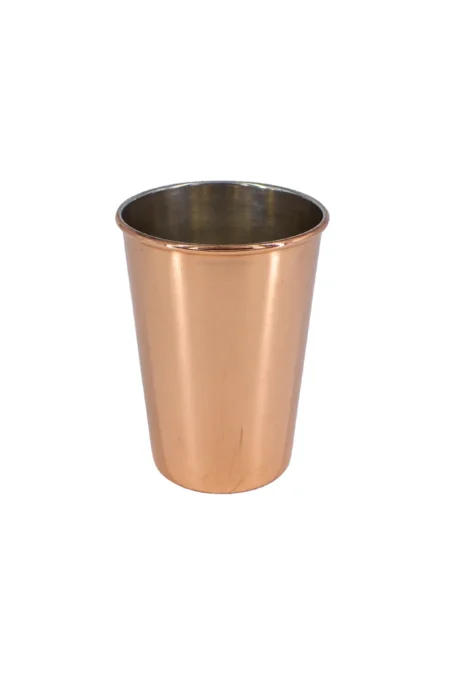
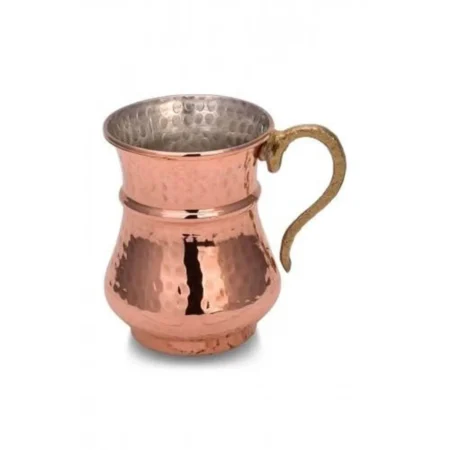
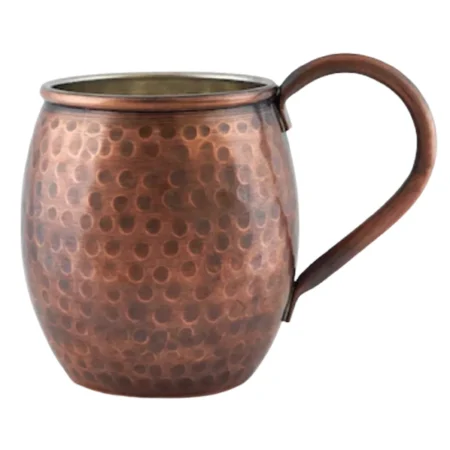
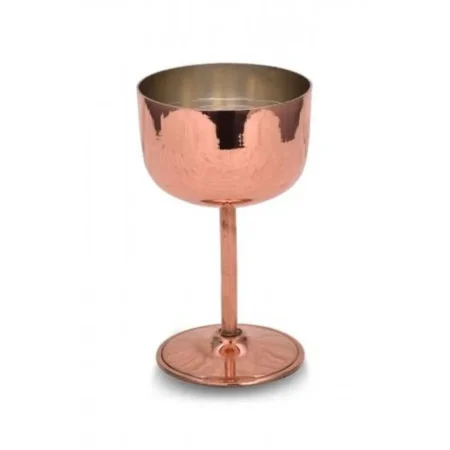
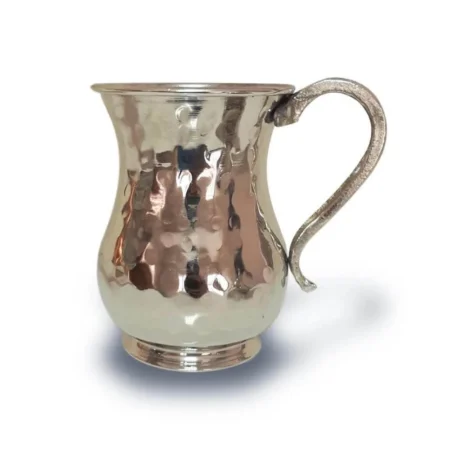
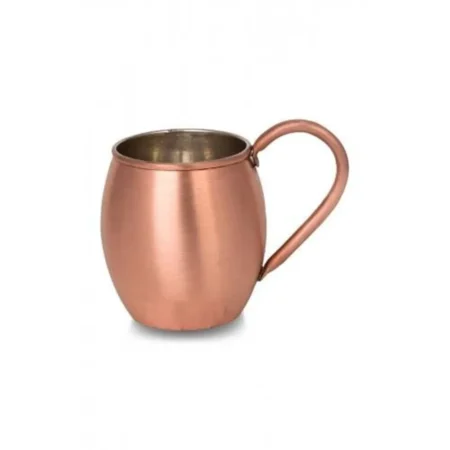
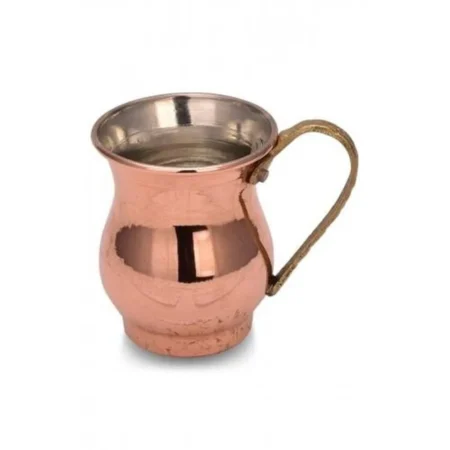
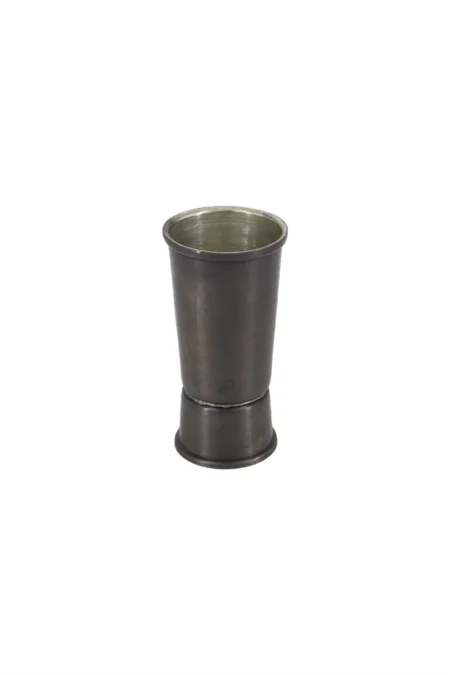
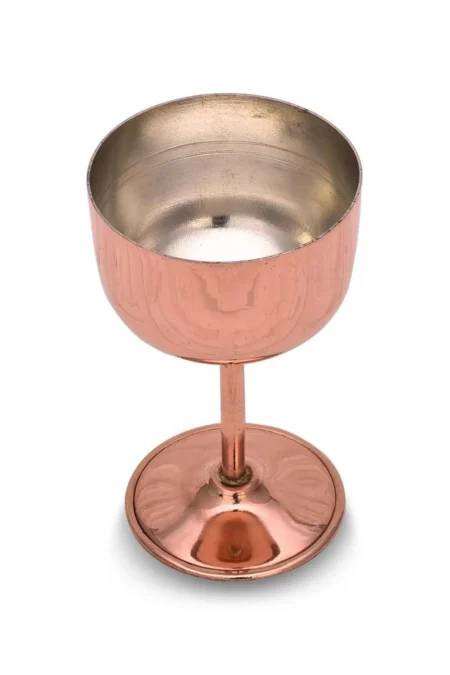
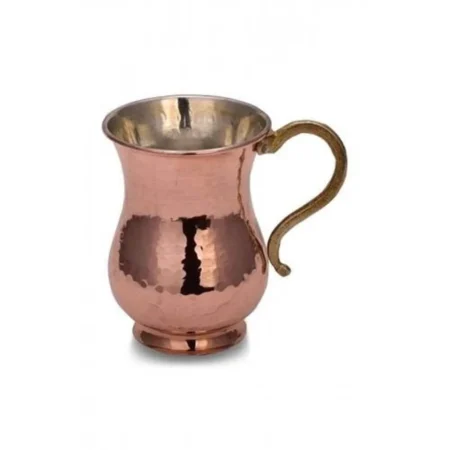
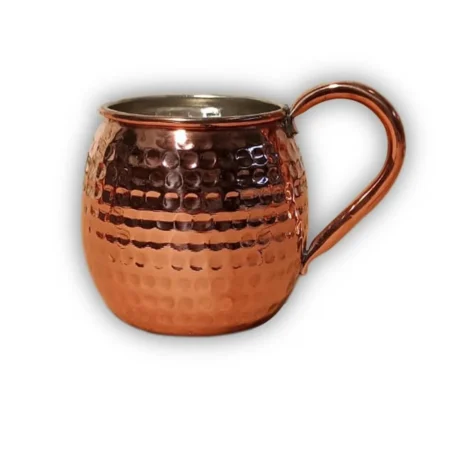
78 items in stock right now, from 30 ml to 1000 ml. Other sizes and finishes are produced to order.
Moscow mule mugs
The moscow mule mug is a straight-sided copper cup of roughly half a litre, usually handled, recognised worldwide from the cocktail it is named after. The same body serves water, ayran and chilled soft drinks, so the shape is not tied to one drink and sells equally well as everyday drinkware.
The moscow mule mug is the shape most people outside Türkiye recognise first: a straight-sided copper body, usually around half a litre, often with a handle. We carry it as a product line, and the same bodies are used for water, ayran and chilled soft drinks — the shape is not tied to one drink.
What copper does and does not do
Copper drinkware does one measurable thing: it takes the temperature of its contents almost instantly, so a chilled drink makes the cup cold in the hand. Claims about immunity, digestion or mineral intake are not demonstrated, and BakırBul does not repeat them in order to sell a cup.
What is measurable: copper moves heat quickly, so a cold drink poured into a copper mug reaches the metal fast and the mug feels cold in the hand. That is a property of the material, not a marketing claim.
What we will not tell you: that drinking from copper cures anything. Health claims attached to copper drinkware are widely repeated and, as far as we can establish, not demonstrated. We would rather sell you a mug that is honestly described.
One practical point does matter: interiors that meet drink are tin-lined, and acidic drinks should not be left standing in an unlined copper vessel.
Capacity bands and what they are for
Copper drinkware falls into four capacity bands: small cups under a hundred millilitres for coffee and spirits, tumblers around two to three hundred millilitres for water and ayran, mugs near half a litre for cocktails and cold drinks, and larger pitchers and coolers meant for the table rather than the hand.
The small band is the cheapest way to put copper in front of a guest. Turkish coffee cups, shot cups and tasting vessels live here. They photograph beautifully and they are the worst possible surface for a detailed logo, because there is no flat area wide enough to carry one.
The tumbler band is the volume item. It is what a Turkish table actually uses for water and ayran, it stacks in a carton, and its uninterrupted wall is the easiest surface in the whole range to engrave or laser mark. If you are ordering copper drinkware for the first time and are not sure which body to choose, this is the safe answer.
The half-litre band is the international one. Moscow mule mugs and large handled cups sit here, and demand for them comes from bars, gift programmes and online sellers rather than from Turkish households.
Above that the pieces stop being drinkware and become service: pitchers, jugs, ice buckets and drink coolers that sit in the middle of a table. They are usually bought to match the cups rather than on their own, which is why we quote them together — the serving range is on copper trays, plates and pitchers.
Capacity is stated in millilitres on every product page, and it is measured to a practical fill rather than to the brim.
Hammered, smooth and what the wall does
Wall texture changes three things on copper drinkware: how visible fingerprints are, how a logo reproduces, and how the piece reads on a table. Hammered walls scatter light and hide handling. Smooth walls show every mark and carry fine engraving cleanly. Neither is stronger; the difference is finish, not structure.
Hammering is done with a hammer against a stake, so the marks vary in depth and spacing and no two bodies are identical. That irregularity is the point: light breaks up across the surface and fingerprints stop being visible from a metre away. On a bar where cups are handled constantly, it is a practical choice as much as an aesthetic one.
It is also the harder surface to mark. A laser or an engraver working across a hammered wall crosses peaks and hollows, so fine lines break up. A logo with weight to it survives; a hairline signature does not. If the artwork is delicate, the answer is a smooth body or a smooth panel left on a hammered one.
Smooth walls are the opposite trade. They read as modern tableware, they carry the finest marking the trade can produce, and they show every fingerprint and water spot on the shelf. Pairing a smooth body with an oxidised or brushed finish gets most of the marking quality without most of the upkeep.
Machine hammering exists between the two: a regular repeating pattern, produced faster and priced lower, which suits back-of-house volume and large promotional runs. We quote hand and machine work separately so the difference is visible rather than assumed.
Maşrapa, kadeh, bardak: reading the Turkish names
Turkish drinkware names describe shape rather than contents. Bardak is a straight tumbler, kadeh a stemmed goblet, maşrapa a handled dipping cup from the bath and kitchen tradition, and kupa the handled mug. Product titles use these words, so recognising four of them makes the whole catalogue readable.
Bardak is the workhorse. It means a drinking glass in ordinary Turkish and, in a copper catalogue, a straight-sided tumbler without a handle. Most water and ayran vessels are listed this way.
Kadeh means a stemmed vessel — a goblet or a chalice. A copper kadeh is bought for a table setting rather than for daily drinking, and it boxes well as a gift because the stem makes it read as an object rather than as a cup.
Maşrapa is the one that confuses buyers, because it belongs to two traditions at once. It is a handled dipping cup, used at the hammam to pour water and in the kitchen to draw liquid from a larger vessel. Sold abroad it usually finds a third life as a mug. If you want a mug in the international sense, maşrapa and kupa are both worth looking at.
Kupa is the direct borrowing: a handled mug. Sürahi is a pitcher, ibrik a spouted ewer, and güğüm a large lidded water container that is decorative rather than practical for most buyers today.
Finish words repeat across the range: kırmızı bakır for bright red copper, oksit for the darkened surface, nikel for nickel plating, skoç for brushed matt. Kalaylı means tin-lined, and it is the word to look for on anything that will hold a drink.
Tin lining, acid and cold drinks
Tin lining matters on drinkware because most of what goes into a copper cup is acidic: lime juice, ayran, wine, fruit sherbet, coffee. Tin separates that liquid from the copper. The United States Food Code restricts bare copper in contact with foods below pH 6, and a tinned interior is the standard answer to it.
The reason is chemistry rather than regulation. Acid dissolves small quantities of copper from a bare surface, and a drink that sits in an unlined cup for an hour is not the same as one poured and drunk. Tin is neutral, soft enough to be applied by hand, and renewable, which is why it has been the answer in Anatolia for centuries. It is also soft and low-melting — the Royal Society of Chemistry gives tin a melting point of 231.9 °C — so a lined vessel should never be heated dry.
The rule that follows is simple: pour and serve, do not store. A copper cup is not a carafe, and a cocktail left in one overnight is a mistake regardless of the lining. Rinse after use rather than leaving the residue in the cup, and the question never arises.
Regulators reached the same conclusion by a different route. The FDA Food Code restricts copper surfaces in contact with acidic foods in commercial service, and a tinned interior removes that contact. If you are buying for a licensed venue in the United States, that is the paragraph your inspector will cite, and a tinned lining is what answers it.
Decorative copper vessels are a different product. If a piece is bought as an ornament and later used for a drink, the specification no longer matches the use — say what the piece is for when you order. The wider picture is on is copper cookware safe.
Temperature: what a copper mug does to a drink
Copper drinkware changes how cold a drink feels rather than how cold it stays. Copper conducts heat roughly twenty-five times faster than stainless steel, so the wall reaches the temperature of the liquid almost immediately and the outside frosts. The drink itself warms no more slowly than it would in glass.
This is worth stating plainly, because the opposite is widely implied. A copper mug is not an insulated vessel. Conductivity works in both directions: the same property that makes the cup cold to the touch also lets room heat into the drink. A vacuum flask keeps a drink cold; a copper mug tells your hand that the drink is cold.
That sensation is a real product benefit and it is why the moscow mule was served in copper in the first place. Condensation forms on the outside within seconds, the cup frosts visibly, and a drink that would look ordinary in glass becomes the thing photographed at the table.
Two practical consequences for a venue. Chill the cups if you want the effect at its strongest — a copper mug taken from a fridge frosts the moment the drink goes in. And do not use copper for a drink that is meant to sit for an hour, because it will reach room temperature at the same pace as anything else.
The conductivity figure itself is standard materials data published by the Copper Development Association. Nothing about it is proprietary, and any supplier claiming an insulating property for solid copper is describing a different material.
Packing, gift boxes and what arrives
Copper drinkware ships wrapped individually inside cartons, because copper marks against copper in transit. Gift boxing, matched sets and labels carrying your own brand are available on quoted orders. Retail-ready packaging is decided before the run rather than after, since it changes carton count and pallet height.
Unwrapped copper travelling loose in a carton arrives scratched. This is the single most common complaint about copper drinkware bought cheaply from any origin, and it is a packing failure rather than a manufacturing one. Every piece leaving our warehouse is wrapped, and pieces with handles are wrapped so the handle cannot press into the next body.
Retail sellers usually want more than that. A printed sleeve, a rigid gift box, a barcode label or a set of four presented together all change how the product sells on a shelf and none of them can be added after the goods are packed. Decide at quotation stage: it changes carton dimensions, pallet height and therefore freight.
Private-label packaging is available on quoted orders. Your label on the box, your mark on the base, and no reference to us inside the carton if that is what your programme needs.
What arrives is checked before it leaves. Dimensions and tin coverage are inspected in our own warehouse against the order, and pieces that do not match the approved sample do not go into the carton. If something still arrives wrong, tell us with photographs and we replace it on the next shipment — the terms are written into the quotation rather than left to be discovered.
Questions buyers ask about copper drinkware
Buyers ask five questions about copper drinkware before ordering: whether the interiors are lined, whether a dishwasher is acceptable, whether the outside darkens, whether logos can be applied, and what quantity is supplied. The short answers are yes, no, yes, yes, and it depends on the destination.
Are the interiors lined?
Yes, surfaces that meet drink are tin-lined. Tin wears with use and is renewed when the copper starts to show through.
Can they go in a dishwasher?
No. Machine detergent dulls the outside and attacks the lining. Rinse by hand and dry straight away; the finish lasts far longer that way.
Will the outside darken?
Yes, and that is normal — copper reacts with air. A cut lemon with salt, or flour with vinegar and salt, brings the surface back. Oxidised and brushed matt finishes are chosen precisely because they wear this way more gracefully.
Can you put our logo on them?
Yes. Send the mark and where it should sit; a sample is produced first, then the batch.
What quantity do you supply?
Inside Türkiye there is no minimum. For shipments abroad we work in wholesale quantities — send your list and we will tell you straight away whether it works as an export order.
Buying drinkware in quantity
Bulk drinkware orders are handled on a separate page because the questions change: bodies, linings, marking methods, sampling, carton packing and the details that decide whether a buyer reorders a year later. Bar, hotel, retail and promotional programmes all start from the same written list.
If you are ordering for a bar, a hotel, a shop or a branded run rather than for a home, the detailed version of this page is wholesale copper mugs, cups and goblets — bodies, linings, marking methods, sampling, packing and the questions that decide whether you reorder in a year.
Choosing a body for service
Four body types behave differently in daily service: hammered handled mugs hide fingerprints, straight tumblers stack and mark cleanly, stemmed goblets carry a table setting, and small cups put copper in a hand cheaply. Handle attachment decides survival more than shape does.
The four shapes behave differently once they are in daily use. Hammered mugs with a handle are what most international buyers arrive looking for; the hammering hides fingerprints, which matters more on a bar than buyers expect. Straight tumblers are the volume item for tables — they stack, they cost less, and their uninterrupted wall is the easiest surface to mark. Stemmed goblets carry a table setting visually and box well as gifts. Small bodies and shot cups are the cheapest way to put copper in someone’s hand, and the worst surface for a detailed logo.
Whatever the shape, ask how the handle is attached. Riveted attachment survives being dropped and being carried full; a light solder joint does not, and it is the most common failure on inexpensive copper drinkware from anywhere.
Marking, in short
Copper drinkware carries a mark four ways: hand engraving cut into the metal, laser marking for fine repeatable detail, base stamping that stays invisible on the table, and embossing where the run justifies tooling. Vector artwork is cheaper to correct before a sample than after one.
Hand engraving cuts into the metal and lasts indefinitely, but it needs a design with weight — hairline strokes disappear. Laser marking holds finer detail and repeats identically across a large run. Base stamping keeps the mark invisible on the table and traceable in the stockroom, which is what most hotel groups choose. Embossed work is possible where the run justifies tooling. Send vector artwork if you have it; if all you have is a photograph of a logo, say so at the start, because redrawing is cheap before a sample is cut and expensive afterwards.
The honest version of the health question
Health claims attached to copper drinkware are not supported by evidence, and BakırBul does not make them. The honest reasons to buy copper are that it looks extraordinary on a table, that a chilled cup frosts in the hand, and that a well-made piece outlives the person who bought it.
Copper drinkware is often sold on claims about immunity, digestion and mineral intake. The strong versions of those claims are a myth and there is no evidence that a vessel is a sensible way to change anything about your health. Buy copper drinkware because it looks extraordinary on a table, because a chilled mug frosts in the hand, and because a well-made piece lasts a generation. Those reasons are true, and they are enough — the longer explanation, including what is real about copper and acid, is on is copper cookware safe.
Keeping them looking right
Copper drinkware keeps its appearance with hand washing, a soft cloth and immediate drying. Dishwashers dull the exterior and shorten the life of the lining, so BakırBul makes no dishwasher claim. Venues without a polishing rota should order aged or brushed finishes rather than bright red copper.
Hand wash, soft cloth, dry immediately. Keep them out of the dishwasher — we do not make that claim, because detergent and heat attack the tin and dull the exterior over time. If nobody in your venue will be assigned to polishing, order an aged or brushed finish rather than bright red copper: marks disappear into them and the pieces still look intentional after a season. The routine is on living with copper.
Tell us what your bar or shop needs
Sizes, finishes and quantity. We come back the same day with a quotation.
Last updated: 11 September 2026