
Handmade Copper from Türkiye
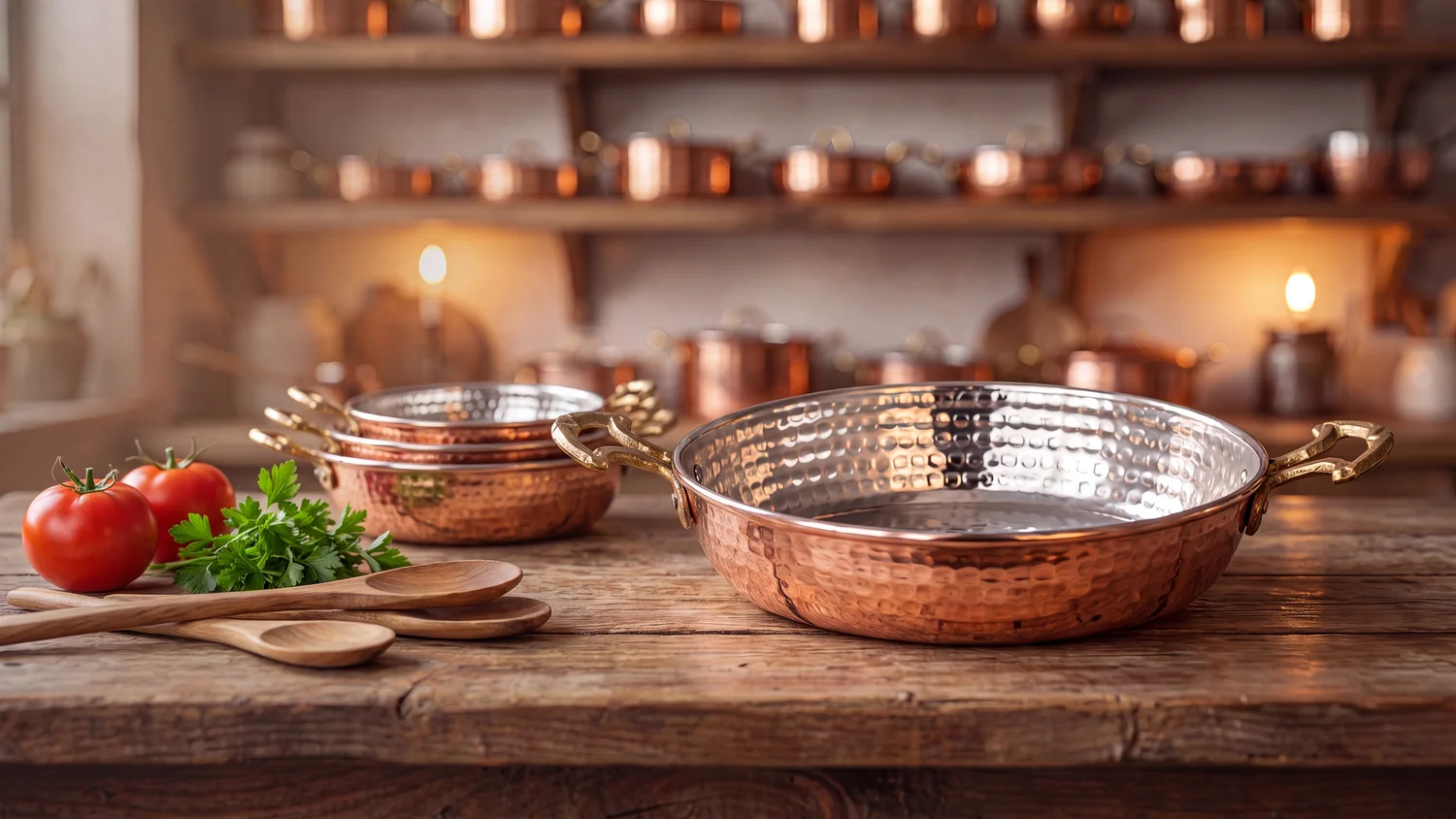
Wholesale copper cookware and home décor from Türkiye
Get a wholesale quoteHandmade copper from Kahramanmaraş
BakırBul supplies handmade Turkish copper cookware and decoration products from Kahramanmaraş, Türkiye — a town whose copper handcraft carries a registered Turkish geographical indication. We select the work, check it in our own warehouse and ship it. Every surface that meets food is tin-lined.
We reply in English. Tell us what you are looking for and, if you are buying for a business, roughly how many pieces.
BakırBul is a Turkish copper supplier in Kahramanmaraş, selling handmade copper cookware, coffee and tea service, trays, drinkware and decorative pieces to buyers at home and abroad. Every surface that meets food is tin-lined. Retail sales run through the Turkish shop; buyers outside Türkiye are quoted from a list.
Hand-hammered bodies
Sheet copper is annealed, hollowed with a hammer, and the handle, lid and spout are added as separate parts.
Tin-lined interiors
Tin keeps acidic food from sitting against copper. It wears with use and is renewed when the copper shows through.
Checked before dispatch
Dimensions and tin coverage are inspected in our warehouse before anything leaves it.
Registered craft
Kahramanmaraş copper handcraft carries a Turkish geographical indication (mahreç işareti).
What we supply
The catalogue itself is in Turkish, but the photographs, sizes and prices are readable in any language. Pick a group to see the range.
BakırBul supplies copper by family: Turkish coffee pots, teapots and tea sets, pots and casseroles, frying pans and sahan, trays and serving plates, and drinkware. Storage vessels and decorative pieces sit alongside them. Each family runs across several diameters, sheet gauges and surface finishes, and mixed pallets are normal rather than exceptional.
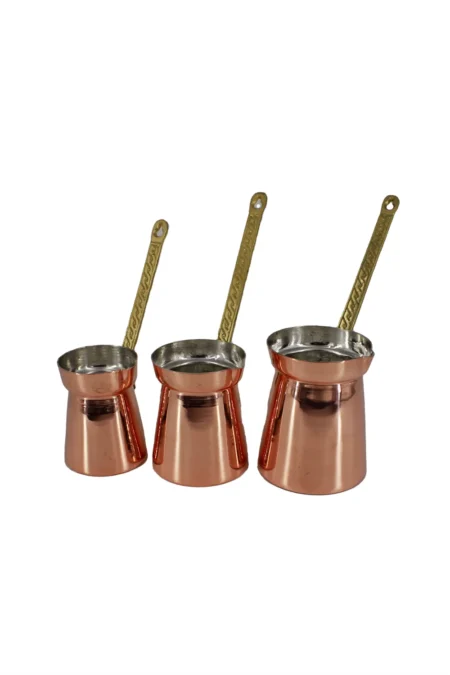 Turkish coffee potsCezve in tin-lined copper, from single-cup to seven-cup bodies.See the range
 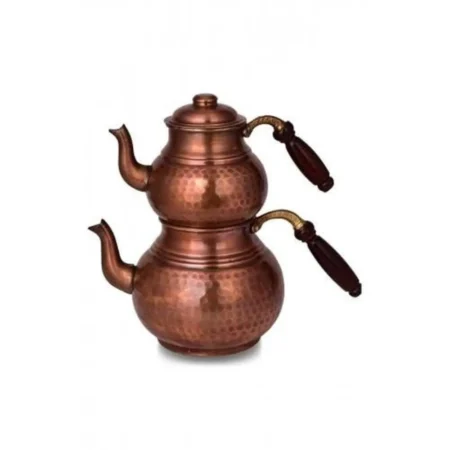 Teapots and tea setsTwo-part Turkish tea sets, plain and fluted bodies, with or without a warmer.See the range
 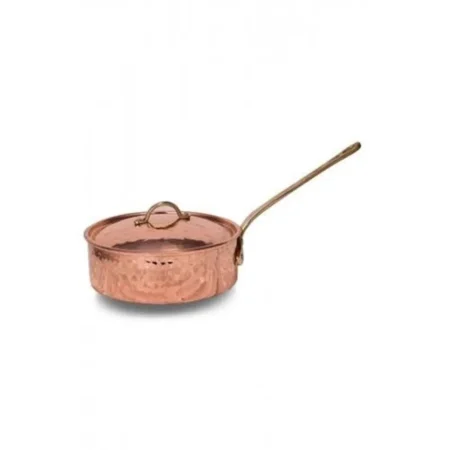 Pots and casserolesFrom single-portion casseroles to large-diameter bodies for volume cooking.See the range
 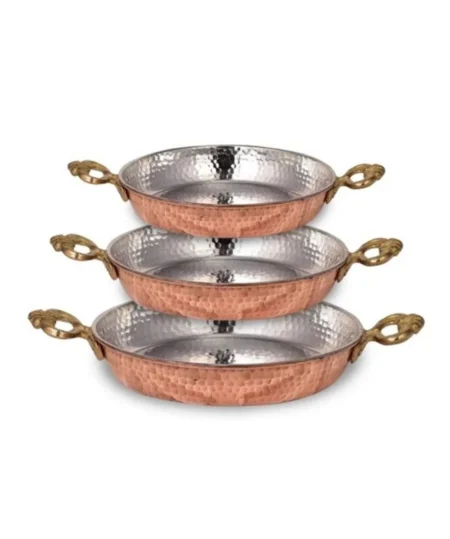 Frying pans and sahanHand-hammered, machine-forged and plain bodies; lidded and open.See the range
 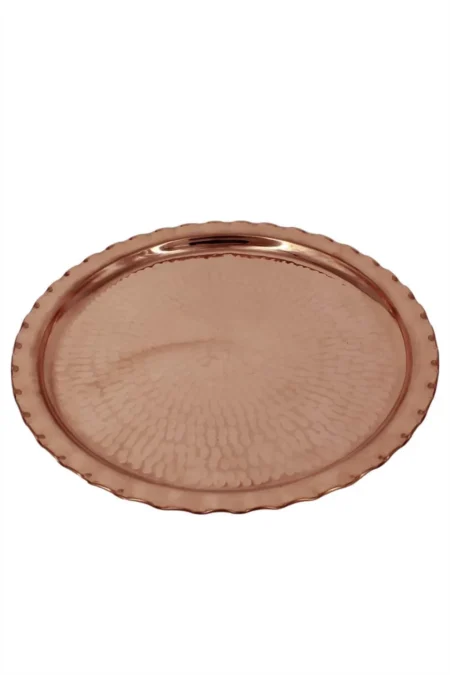 Trays and serving platesRound and shaped trays, engraved or plain, for table and buffet service.See the range
 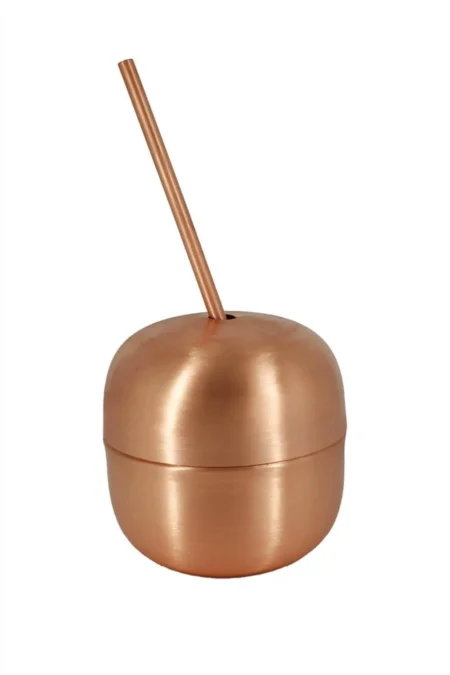 DrinkwareTumblers, mugs, goblets and Moscow mule mugs in several finishes.See the range
 Beyond the kitchen
Copper for the table, the shelf and the shop window.
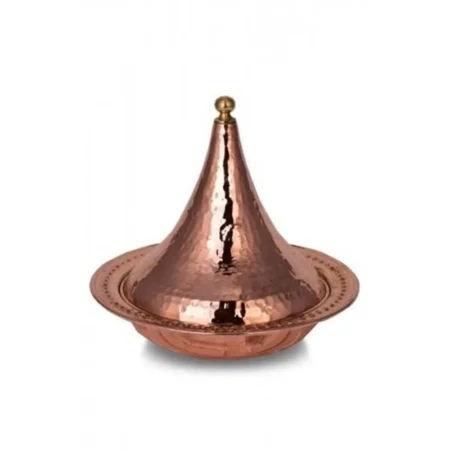
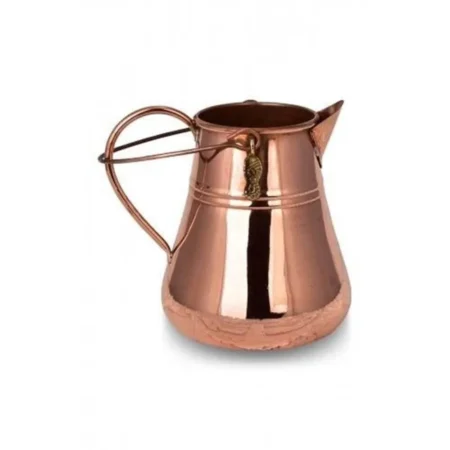
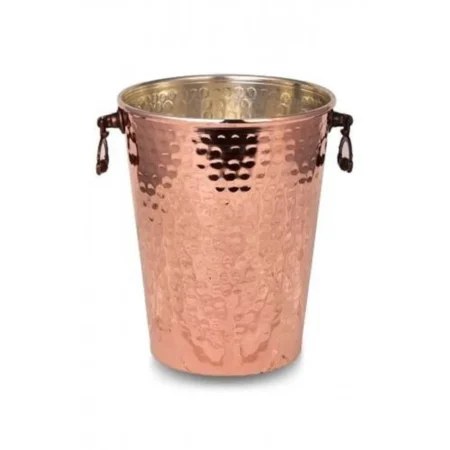
Copper leaves the kitchen in three directions at BakırBul: service pieces for the table, storage vessels for the shelf, and decorative work for a room. Serving plates, pitchers, sugar bowls, ice buckets, candle holders, incense burners, vases and planters all sit here, and none of them depend on a hob.
Where to start
Four pages in English, written for buyers rather than for search engines. Each one ends with a way to reach us.
English pages on this site are organised by intent rather than by catalogue structure. Product pages explain cookware, cezve, drinkware and care. Commercial pages cover wholesale terms, country-specific import routes, custom production and food contact documentation. Every page ends with the same route: send a list, receive a written quotation.
Why copper behaves differently
Copper conducts heat more than twenty times faster than stainless steel, which is why a copper pan spreads a flame across its whole base within seconds instead of holding a hot spot. The same conductivity works in reverse when the pan is lifted, so cooking stops when the cook decides it should.
Copper conducts heat far faster and far more evenly than stainless steel or cast iron. A flame hitting one point of the base spreads across the whole surface within seconds, so hot spots and scorching are much less likely — which is why milk puddings, sauces, jams and Turkish coffee have been cooked in copper for centuries. The same property works in reverse: taken off the heat, copper releases it quickly, so cooking actually stops when you want it to.
Two practical consequences follow. Thin gauge heats fast and stays light, which suits short cooking and service pieces. Heavy gauge holds heat, so the temperature does not collapse when cold food goes in — that is what you want for searing and long cooking. And because copper is not magnetic, these pieces work on gas and electric hobs and over open fire, but not on induction.
Buying from us
Buying from BakırBul splits by location. Inside Türkiye the online shop takes retail orders at any quantity. Outside Türkiye the route is a written quotation: send the product group, an approximate quantity and the destination country, and a price with a realistic lead time comes back the same day.
Our online shop serves retail customers inside Türkiye. If you are outside Türkiye, or you are buying for a business, the route is a conversation rather than a basket: tell us the product group and roughly how many pieces, and we come back with a quotation the same day. We ship abroad for wholesale quantities.
The 2026 catalogue — the full range with codes, sizes and weights: open or download it here.
Who we supply
Four buyer types account for most of what leaves the warehouse: hospitality operators, retail and homeware sellers, gift and promotional agencies, and importers or distributors. Each needs a different conversation, because a hotel asks about gauge and handle attachment while a gift buyer asks about artwork and packaging.
Four kinds of buyer account for most of what leaves our warehouse, and each needs a different conversation.
Hospitality. Restaurants, hotel groups, cafés and caterers buying pieces that have to survive daily service. The specification questions are gauge, handle attachment and finish upkeep rather than appearance, and the honest answer sometimes is that a piece will not last in your kitchen. That conversation is on copper for restaurants and hotels.
Retail and homeware. Shops and online sellers who need consistency across repeat orders, packaging that survives a shelf, and photography that matches the goods. Copper reads warmer in a photograph than under retail lighting, so we push retail buyers hard towards a physical sample before they shoot a catalogue.
Gift, promotional and branded work. Agencies and brands ordering drinkware with a mark on it. The detail that decides the result is artwork, not quantity — see mugs, cups and goblets in bulk.
Importers and distributors. Buyers taking a mixed range into another market, where classification, documents and testing matter as much as the pieces. Start at importing from Türkiye.
How an order actually works
An order runs in five steps: you send a list, a written specification and price come back, a physical sample is approved, the run is made against that sample, and the batch is checked for dimensions and tin coverage before packing. Skipping the sample is the step buyers regret.
The sequence is deliberately unglamorous, and it is the part that prevents expensive surprises. You send the pieces, the approximate quantities, the finish and the destination. We come back with a written specification and a price, including the quantity tiers. You approve a physical sample — in your hands, not a rendering. The run is made against that approved sample, checked in our own warehouse for dimensions and tin coverage, then packed and shipped.
The step buyers most want to skip is the sample, and it is the one that pays for itself. Copper colour, hammering density and how a mark sits against a handle are all things a screen cannot tell you. The sample cost comes off the order when you place it.
The awkward questions, answered before you ask
Four questions decide most copper orders: whether the pieces work on an induction hob, whether they survive a dishwasher, whether copper is safe to cook in, and what certificate exists. Copper does not work on induction, a dishwasher shortens its life, tin-lined interiors are safe, and no conformity certificate exists for cookware.
Induction. Copper is not magnetic, so copper pans do not work on an induction hob. An interface disc will bridge it but removes the responsiveness you were buying. If your kitchen is induction throughout, we steer you to serveware, trays, drinkware and coffee service instead, which are unaffected — the full note is on copper and induction hobs.
Dishwashers. We do not claim our pieces are dishwasher safe, because detergent and heat shorten the life of the tin and dull the exterior. Hand washing and immediate drying is what we specify.
Safety. Tin-lined copper is safe to cook in; bare copper is not, for anything acidic. That single distinction explains most of what is written on the subject, and the long version is on is copper cookware safe.
Certificates. No supplier can hand you an “FDA approved” certificate for a copper pan, because the document does not exist in that form. Laboratory migration testing on a specific piece does exist, and it can be arranged when a market requires it — food contact and compliance sets out what applies where.
Comparing us with another supplier
Four answers separate cookware from decorated objects at any supplier in any country: what the interior lining is and how it is applied, what the wall gauge measures, how the handles are attached, and whether published dimensions exist at all. A supplier who cannot answer all four is selling something else.
If you are running a sourcing exercise rather than buying from us today, use the checklist rather than the brochures: what the interior lining is and how it is applied, what the wall gauge is, how handles are attached, and whether the range publishes dimensions at all. Those four answers separate cookware from decorated objects wherever in the world you buy it. We wrote the comparison out in full, including where other origins are the better choice, on sourcing copper cookware.
The finishes, and what each one is for
Copper reaches the customer in four finishes at BakırBul: red copper left bright, oxidised copper darkened deliberately, nickel-plated copper kept silver, and brushed matt copper. The choice is not decorative alone — each finish shows fingerprints, water marks and handling wear at a different rate.
Red copper is the finish most people picture: the metal polished bright, warm and reflective. It is the most striking on a shelf and the most demanding in service, because every fingerprint and every water spot shows on it. Households that enjoy polishing choose it; kitchens that will not assign anyone to polishing should not.
Oxidised copper is darkened on purpose, so the surface starts where an untreated piece would end after several years of use. Marks disappear into it. This is the finish hospitality buyers choose most often, and it is why a venue can run copper on the pass without keeping a polishing rota.
Nickel-plated copper keeps a cool silver colour over a copper body. It reads as tableware rather than as folk craft, which suits hotel dining rooms and modern bars. Because the silver is a plating rather than the metal itself, abrasives take it off permanently — it wants a soft cloth and nothing stronger.
Brushed matt copper sits between the two: the colour of copper without the mirror. It photographs well, hides handling and needs no upkeep beyond washing and drying. Every one of these surfaces changes over time because copper forms an oxide film in air, a property documented in the material references published by the Copper Development Association.
The same body can usually be ordered in any of these, so a mixed order is normal — bright pieces for the display, oxidised for the working shelf. If you are choosing between them, tell us who will handle the pieces and how often. We recommend against the bright finish more often than buyers expect, and the reasoning is set out on living with copper.
Why the inside is silver
Tin lining is the silver-grey layer applied by hand to every copper surface that meets food. Tin separates acidic ingredients from copper, melts at around 232 °C, and wears thin with heat and use. When reddish copper shows through the silver, the piece is re-tinned rather than retired.
Copper is an excellent cooking metal and a poor food-contact surface. Acid — tomato, lemon, vinegar, wine, coffee — dissolves small amounts of copper from a bare surface, and that is the whole reason the lining exists. Tin has been the answer in Anatolia for centuries because it is soft, food-neutral, and can be renewed by hand without dismantling the piece.
Two consequences follow, and neither is a defect. First, tin has a low melting point — the Royal Society of Chemistry puts it at 231.9 °C — which is why an empty pan on a strong flame is the fastest way to ruin a lining. Fat or liquid goes in before the heat, always. Second, tin is a wear layer, so a copper pan is a maintained object rather than a disposable one. In a home kitchen the lining lasts years; in a restaurant running the same pan through nightly service it comes round sooner.
Re-tinning is a trade rather than a repair. The old layer is stripped, the surface cleaned, fresh tin applied with heat, and the piece returns looking new inside. It is the reason a copper pot in a Turkish kitchen is routinely older than the person cooking with it. The release limits a laboratory measures a lining against are set out in the Council of Europe technical guide on metals and alloys used in food contact, published by the EDQM.
Decorative pieces are a separate case. A vase, a planter or a candle holder never meets food and needs no lining at all. If you intend to serve food from something bought as decoration, say so before you order, because the specification changes — the background is on is copper cookware safe.
Where the copper comes from
Kahramanmaraş is the centre of the copper trade BakırBul buys from, and its coppersmithing carries a registered Turkish geographical indication. Erzincan and Gaziantep supply further work, so the range is drawn from several Anatolian towns rather than from a single street of workshops.
Turkish copper is not made in one place. Kahramanmaraş is the largest and best known centre, and its coppersmithing is protected by a geographical indication registered with the Turkish Patent and Trademark Office — the same mechanism that protects a regional cheese or a wine. Erzincan is known for finer, thinner work; Gaziantep for heavier service pieces. Buying across several towns is what makes a mixed order possible at all.
Our position in that chain is specific, and we would rather state it than let a buyer assume. We do not own a hammer shop. We work through a long-term production partnership: we write the specification, our partner produces the piece, and it carries our name and our responsibility. Catalogue stock is selected from the copper towns, brought into our own warehouse in Kahramanmaraş, checked against the order and shipped from there.
That structure is also why a piece which does not exist yet can still be ordered. When the quantity justifies it, new tooling is commissioned to a drawing and the form enters production — something a trading company cannot offer, and something a single workshop with one product line cannot offer either. The detail is on custom and private label production.
For a buyer running a sourcing exercise the practical consequence is simple: one enquiry covers several towns, and one invoice covers the whole pallet.
Wholesale, retail, and which one applies to you
Wholesale and retail run on different rails at BakırBul. Retail customers inside Türkiye buy through the Turkish online shop at any quantity. Business buyers and everyone outside Türkiye are quoted from a list, because currency, freight and customs make an online basket the wrong instrument for an export order.
Inside Türkiye there is no minimum order, and that is a deliberate commercial position rather than an oversight: a single cezve and a restaurant refit are both welcome. It is also why a Turkish buyer sees a price on every product page.
Abroad the picture changes. There is no published minimum figure either, but for a different reason — the threshold depends entirely on what you are ordering. A pallet of one small item and a mixed order of large bodies are not the same logistical problem, and quoting a single number for both would be false for half the range. Send the list and you get a straight answer, usually within the day.
What a business buyer gets that a retail customer does not: quantity tiers written into the quotation, samples before the run, engraving and private-label packaging, sizes outside the range, and Turkish export documentation prepared as a separate paid service. What stays with you is the customs entry in your own country, because only a party established there can make it.
Country-specific routes are written out separately for the United Kingdom and the United States, and the general terms sit on wholesale and export.
Reading a Turkish catalogue in English
Product pages on this site are written in Turkish, but the technical content survives translation without help: dimensions in millimetres, capacity in millilitres, weight in grams, and photographs of the actual piece. Codes beginning BB identify each item, and any code can be quoted back to us in an enquiry.
A handful of Turkish words unlocks most of the range. Cezve is the Turkish coffee pot. Çaydanlık is the two-part tea kettle. Tencere is a pot, tava a frying pan, sahan a shallow lidded dish that goes from heat to table. Tepsi is a tray, sürahi a pitcher, bardak a tumbler, kadeh a stemmed goblet, maşrapa a handled cup.
Production terms are just as few. El dövme means hand-hammered, makine dövme means machine-forged, and kalaylı means tin-lined. Finishes appear as kırmızı bakır for red copper, oksit for the darkened oxidised surface, nikel for nickel plating and skoç for brushed matt.
Sizes are usually written into the product title, either as a diameter in centimetres or as a traditional series number — a “3 No” cezve, for instance. Those numbers are series names rather than capacities, and the same number means different volumes in different series, so order against the stated millilitre figure rather than the number.
If a page will not give you what you need, send the address of it. Reading a product page back in English costs us nothing and prevents the most expensive mistake in this trade, which is ordering exactly the right item in the wrong size.
Questions we are asked before a first order
Buyers ask the same questions before a first order: what the range covers, whether we sell abroad, what the minimum is, whether interiors are lined, which hobs work, dishwasher tolerance, branding options, and how the business is structured. The answers below are the ones given in writing to every enquiry.
What do you supply?
Handmade copper cookware, serveware, drinkware and decorative pieces from Türkiye — pots, pans, sahan, cezve, teapots, trays, serving plates, pitchers, bowls, tumblers, goblets, candle holders and planters, in several finishes and in sizes made to order when the range does not have what you need.
Do you sell to buyers outside Türkiye?
Yes, in wholesale quantities. Retail sales are limited to addresses inside Türkiye, so abroad the route is a quotation and a conversation rather than an online basket. Tell us the pieces, the approximate quantity and the destination country.
What is the minimum order?
There is no published figure, because it depends entirely on what you are ordering. A pallet of one small item and a mixed order of large bodies are not the same problem. Send your list and we will tell you straight away whether it works as an export shipment.
Are the interiors lined?
Yes. Every surface that meets food is tin-lined. Tin wears with use and is renewed when the copper begins to show through, which is maintenance rather than failure — the detail is on is copper cookware safe.
Does copper work on an induction hob?
No. Copper is not magnetic, so an induction hob cannot detect it. An interface disc will bridge it but removes the responsiveness you were buying. On an induction line we steer you to serveware, trays, drinkware and coffee service instead, which are unaffected.
Is it dishwasher safe?
We do not make that claim. Detergent and heat dull the exterior and shorten the life of the tin. Hand washing and immediate drying is what we specify.
Can pieces carry our brand?
Yes. Hand engraving, laser marking and base stamping are available, packaging can carry your label rather than ours, and work made to your drawing goes out under your mark. See custom and private label production.
Are you a manufacturer or a trading company?
Neither label fits cleanly. We work through a long-term production partnership: the specification, the brand and the responsibility for the goods are ours, and the metalwork happens at the partner workshop. In practice you deal with one party from quotation to delivery.
How do we start?
Send the pieces, the approximate quantities, the finish and the destination country by form, email or WhatsApp. We answer with a written specification, a price with quantity tiers and a realistic lead time, and we say plainly if something in your list is a poor fit.
Last updated: 11 September 2026