
Wholesale Copper Cookware for UK Buyers
Turkish copper, supplied to UK trade buyers
We supply handmade Turkish copper cookware, serveware and drinkware wholesale from Kahramanmaraş to restaurants, hotels, cafés, delicatessens, homeware retailers and online sellers in the United Kingdom. Tell us the product group, the rough quantity and the delivery town — the quotation comes back the same day.
If the copper is going into a working UK kitchen, read the hob section below before you order. It changes what you should buy.
BakırBul supplies handmade Turkish copper cookware, serveware and drinkware wholesale to United Kingdom restaurants, hotels, cafés, delicatessens, homeware retailers and online sellers, shipping from Kahramanmaraş. You are the importer of record. Copper does not work on an induction hob, and that is settled before a quotation rather than after a delivery.
You are the importer
We invoice as an export sale. You or your broker make the UK import entry, and the duty and import VAT are assessed there.
Origin paperwork included
Commercial invoice, packing list and proof of Turkish origin travel with the shipment, so your broker can claim preferential treatment where the goods qualify.
Tin-lined interiors
Every surface that meets food is tin-lined. In daily commercial service the lining wears faster than in a home kitchen, and it is renewed rather than replaced.
Hob reality, stated up front
Copper is not magnetic. It will not work on an induction hob without an interface disc — see below before you commit to a kitchen order.
Samples before bulk
We send samples ahead of a bulk order and deduct the sample cost from the order when you place it.
Logo and custom sizes
Engraving, marking and sizes outside the catalogue are made to order at the workshop we work with. A sample is produced first.
Copper on a UK hob — read this first
Induction is the default in a large share of new British kitchens, and copper does not work on it: the hob looks for a magnetic base and copper is not magnetic, so the ring never fires. An interface disc bridges the gap at the cost of responsiveness. Serving copper is unaffected.
Induction is now the default in a large share of new British kitchens and in a growing number of commercial ranges. Copper does not work on induction. The hob detects a magnetic base, and copper is not magnetic, so the ring simply will not fire.
There are two honest ways round it. An induction interface disc — a magnetic plate that sits between the hob and the pan — will heat the pan, but it heats it through a second layer of steel and gives up most of the responsiveness that makes copper worth buying in the first place. Or you keep the copper for gas, ceramic and radiant electric rings, for oven work where the handle allows it, and for open fire.
We say this before the quotation rather than after the delivery. If your kitchen is induction throughout, tell us: serveware, trays, drinkware and coffee pots are unaffected, and that is usually the better order.
Bringing the goods into the UK
Import into the United Kingdom is made by you or your broker. Our invoice is a Turkish export invoice carrying no Turkish VAT, and duty and import VAT are assessed at UK entry. Where the goods qualify as Turkish origin and valid proof is presented, preferential treatment can apply.
Türkiye and the United Kingdom have a free trade agreement in force. Where the goods qualify as Turkish origin and a valid proof of origin is presented at entry, preferential duty treatment can apply. We supply the origin documentation; your customs broker confirms the commodity code, the rate and the eligibility for your specific consignment. We do not quote UK duty rates ourselves, because the rate is set in your jurisdiction and not ours.
Our invoice is a Turkish export invoice and carries no Turkish VAT. Import VAT is accounted for on entry in the UK, and VAT-registered importers commonly use postponed VAT accounting for it. Customs duties and import taxes at destination are the buyer’s responsibility, and we say so before dispatch rather than after.
The commodity code, the documents and the Incoterms are set out in more detail on our guide to importing copper cookware.
Cookware we ship to trade buyers
Live from the warehouse, in stock today, with the dimensions we actually hold. The catalogue itself is in Turkish — ask us about anything you cannot read.
Stock shown here is read live from the warehouse rather than from a catalogue export, so every piece listed is a piece on the shelf with the dimensions we actually hold. Product pages are in Turkish; the measurements, weights and photographs read the same in any language.
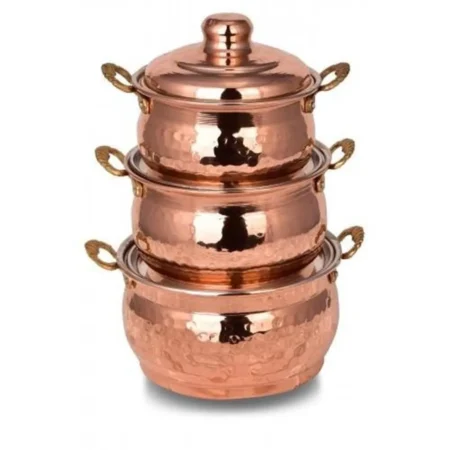

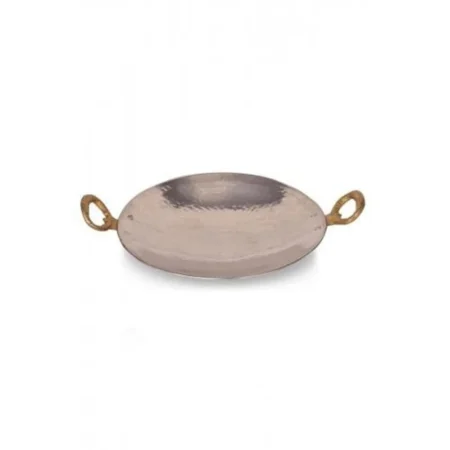
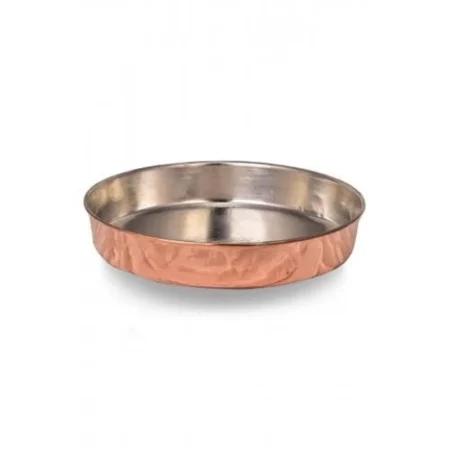
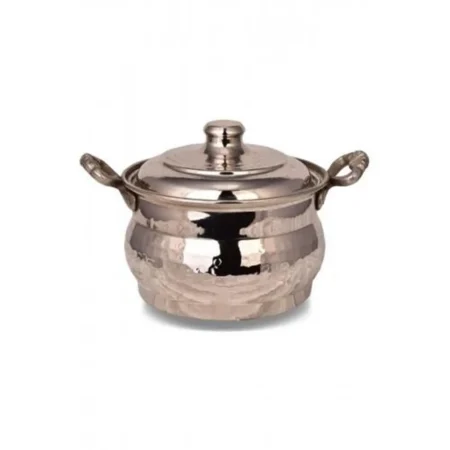
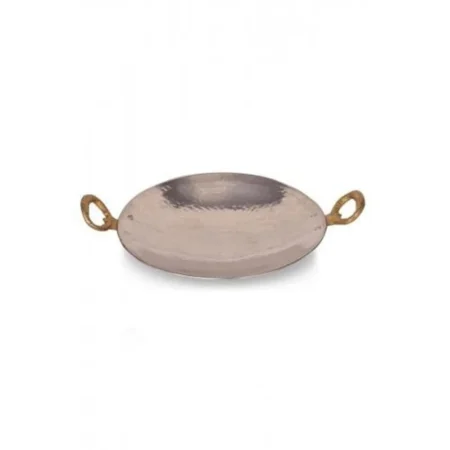
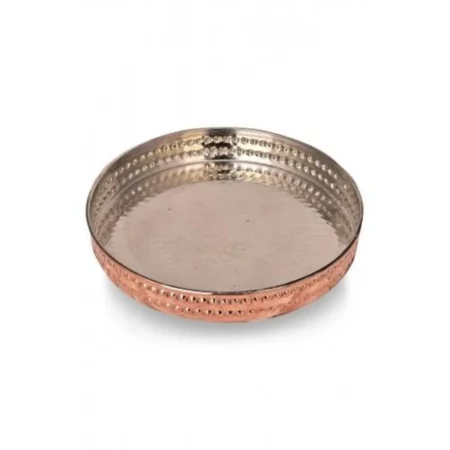
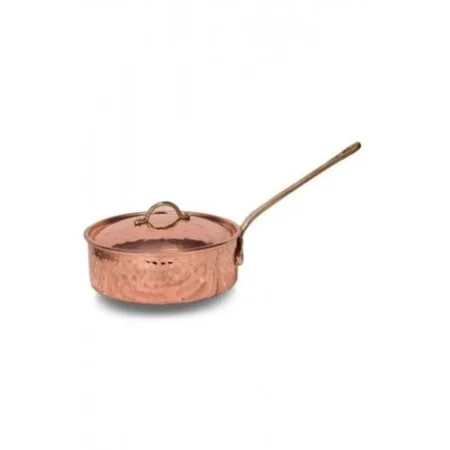
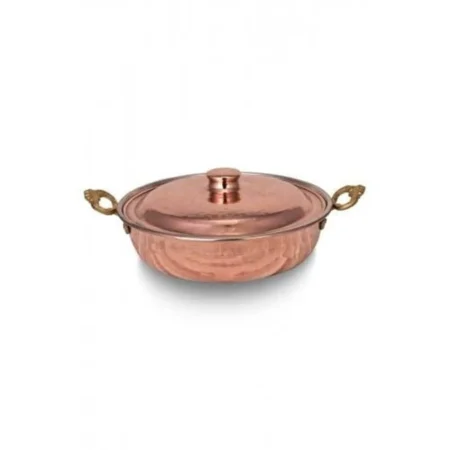
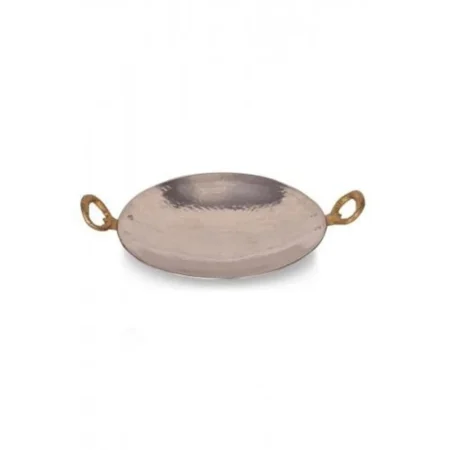
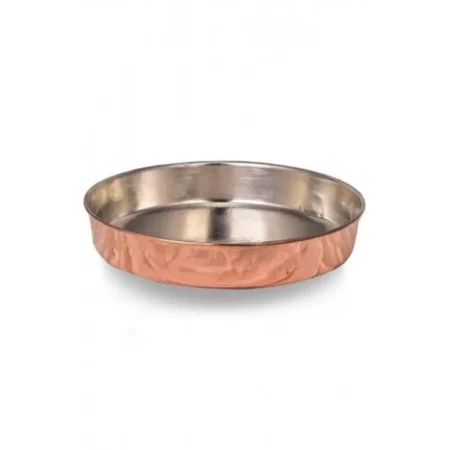
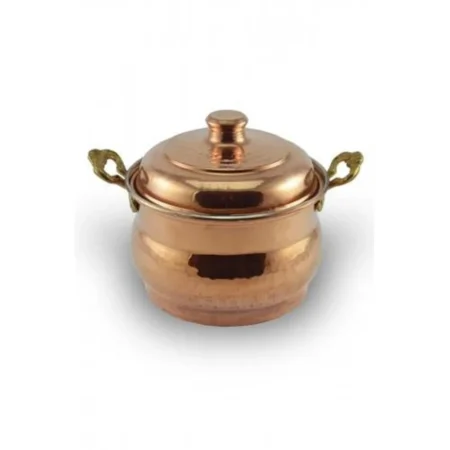
134 items in stock right now, from 12 cm to 36 cm. Other sizes and finishes are produced to order.
What UK buyers usually order
Two ordering patterns dominate the UK trade. Hospitality buyers take serving copper — trays, sahan, small casseroles and coffee pots — because it reaches the guest. Retail and online buyers take gift-weight pieces that photograph well and post cheaply. Heavy cooking copper is the smaller order, and the hob is why.
Two patterns come up again and again. Hospitality buyers order serving copper — trays, sahan, small casseroles, coffee pots — because it goes on the table in front of the guest and the hammer marks are the point. Retail and online buyers order gift-weight pieces: cezve sets, mugs, small bowls, pieces that photograph well and post cheaply.
Heavy cooking copper is the smaller order in the UK, and the hob question above is why. If you are buying to cook rather than to serve, tell us the hob type first and we will tell you honestly whether the order makes sense.
If this is your first import from Türkiye
A first import from Türkiye stalls on paperwork far more often than on freight. BakırBul prepares the Turkish export documentation as a quoted paid service. The customs entry in the United Kingdom stays with you or your broker, because only a party established there is able to make it.
We ship abroad in wholesale quantities and there is no published minimum, because a pallet of one small item and a mixed order of large bodies are not the same problem. The carriage is normally yours to arrange — you or your forwarder collect from our warehouse in Kahramanmaraş — and if you would rather we priced it, say so and we will put a figure in the quotation.
The part that stops most first-time buyers is not the freight, it is the paperwork. We prepare the Turkish export documentation for you as a paid service, quoted openly alongside the goods. To be exact about what that covers: it is the export side, in Türkiye. The customs entry in your own country stays with you or your broker, because only a party established there can make it.
And if the piece you want is not in the catalogue: at trade quantities we have new tooling made to your drawing. See custom copper work — the range you can see is a starting point, not the limit of what you can order.
How we work
BakırBul works through a long-term production partnership: we write the specification, our partner produces the piece, and it carries our name and our responsibility. Copper is selected from Kahramanmaraş and other Anatolian towns, checked in our own warehouse against the order, and shipped from there.
We work through a long-term production partnership — we specify the piece, our partner produces it, and we carry it under our own name. That is why we can commission new tooling for a form that does not exist yet.
Copper is selected from the workshops of Kahramanmaraş and other Anatolian copper towns, brought into our own warehouse, checked against the order and shipped. Sizes, forms and marking outside the catalogue are made to your specification.
Food contact compliance for the GB market
No UKCA or CE marking exists for cookware, because materials meeting food are outside those regimes. What applies in Great Britain is the food contact framework, and the documentation duty falls on the business placing goods on the market — which, once the pallet lands, is you rather than us.
There is no UKCA marking for cookware. The UKCA and CE regimes cover the so-called new approach product categories — machinery, toys, electrical equipment, personal protective equipment and around twenty others. Materials and articles that meet food are not in that list, and a copper pan carries no conformity marking at all. If a supplier offers you a “UKCA certificate” for a saucepan, they are describing a document that does not exist for this product.
What does apply in Great Britain is the food contact framework: assimilated Regulation (EC) No 1935/2004, the Materials and Articles in Contact with Food (England) Regulations 2012 and their Scottish and Welsh equivalents, together with the good manufacturing practice rules. Enforcement sits with the Food Standards Agency, your local food authority and, at the border, the port health authority.
Where the responsibility sits — and it is with you
Once the goods land, you are the business placing them on the GB market. The framework requires the business that manufactures or imports the articles to hold documentation showing they comply, and to produce it if an authority asks. We say this plainly rather than letting you discover it at an inspection: buying from Türkiye does not move that duty back to us.
What we supply, and what we do not
We can give you, in writing: the material of each item, confirmation that every surface meeting food is tin-lined, the production batch so a consignment can be traced, and the origin documentation that travels with the shipment. We can also send samples for laboratory testing at your cost.
What we do not have is a current GB test report. Metals and alloys have no specific harmonised measure of their own; the reference used across Europe is the Council of Europe technical guide on metals and alloys used in food contact materials, published by the EDQM, which sets release limits a laboratory can test a piece against. If your buyer, your insurer or your own trading standards officer wants that test, tell us before we quote. Laboratory work takes weeks and is charged separately — the wrong moment to discover it is when the pallet is already at the port.
Why the tin lining is the answer to most of these questions
The surface that meets food on our cookware is tin, not bare copper. That is the ordinary answer to the question a GB food safety officer asks first about copper pans, and it is also why the lining is a wear item rather than a finish: when the copper starts to show through, the piece is re-tinned rather than retired.
None of this is legal advice, and we are not established in the United Kingdom. Your food safety adviser and your customs broker decide what your specific consignment needs. Our part is to answer their questions with documents instead of adjectives.
Specifying for an induction-heavy kitchen
Induction hobs do not heat copper, so a British kitchen running induction throughout needs a different copper order rather than no copper at all. Serving pieces, trays, drinkware and coffee service reach the guest without touching a hob, and that is where most of the visual value of copper sits anyway.
It is worth being precise about what fails. The hob is not weak or unsuitable; it is looking for a ferromagnetic base and finding none, so the ring simply does not switch on. No damage occurs to the pan or to the hob. Nothing heats.
An interface disc is the only bridge, and the honest description of it is that it works and it costs you the thing you were buying. Heat arrives through a steel plate with its own lag, so the instant response that justifies copper over stainless steel disappears. Buyers who accept that trade usually regret it within a month.
The productive conversation is a different one. Front of house is where copper earns its price in a British venue: sahan carried to the table still sizzling, trays under afternoon tea, cezve brought out with the coffee, hammered mugs behind the bar. None of it depends on a hob, and all of it is what a guest photographs.
Where a kitchen has any gas at all — a single ring, a plancha, a charcoal grill — copper cooking pieces still make sense for the dishes that need control: sauces, sugar work, milk, reductions. Tell us your hob configuration in the first message and the quotation is shaped around it. The full technical argument — why copper does not work on induction, and what an interface disc costs you — is on copper and induction hobs.
How UK buyer types differ
Four UK buyer types order differently: restaurant groups buy service pieces in matched finishes, hotels buy banqueting and room items with base stamping, delicatessens and homeware shops buy gift-weight pieces that photograph well, and online sellers buy by carton size. The specification questions change with each.
Restaurant groups. The requirement is consistency across sites and across reorders. Finish matters more than form, because a site opening a year later has to match the first. Oxidised and brushed surfaces are specified almost every time, since neither needs a polishing rota. Heavier gauges and riveted handles are the difference between a piece that survives a year of service and one that does not.
Hotels. Two separate programmes usually run at once: banqueting and public areas on one side, guest rooms and amenity items on the other. Base stamping is the common request, because a mark on the underside is invisible to the guest and traceable in the stockroom. Quantities are larger and lead times are planned rather than urgent.
Delicatessens and homeware shops. The piece has to sell itself on a shelf without a salesperson. Gift-weight items, retail packaging and a printed card explaining what the object is do more for the sell-through rate than any discount. Physical samples matter most here, because copper photographs warmer than it looks under retail lighting.
Online sellers. Carton dimensions and weight decide the margin, so the conversation starts with packing rather than with product. Pieces that nest, ship flat or post within a standard parcel band are the ones that work. Breakage in transit is a packing question, and it is answered before the first order rather than after it.
Samples, and how a first order runs
A first UK order runs sample first. You send a list, a written specification and a price come back, one or two physical samples travel by courier, and the run is produced against the approved sample. Sample cost is deducted from the order when the order is placed.
The sample is the step buyers most want to skip and the one that pays for itself every time. Copper reads warmer in a photograph than under a shop light. Hammering density, the exact tone of an oxidised finish and the way a logo sits against a handle are things a screen cannot communicate, and all three are expensive to discover on a pallet.
What to ask for in a sample: the actual finish you intend to buy, at the actual size, with the actual marking if any. A bright sample followed by an oxidised order tells you nothing useful. If the range includes several finishes you are undecided between, ask for one small piece in each — that is cheaper than a wrong decision at volume.
Lead time is short for catalogue items, which come off the shelf, and longer for anything made to order, because a body has to be produced. Marking adds a step, since artwork is proofed before it is cut.
Once a sample is approved it becomes the reference for the run. Production is made against it, and the batch is inspected in our warehouse for dimensions and tin coverage before packing. If a delivered piece does not match the approved sample, that is our problem rather than a discussion — the terms sit in the quotation rather than in the small print.
Freight from Kahramanmaraş to a UK address
Freight to the United Kingdom is arranged either by your own forwarder collecting ex works from Kahramanmaraş, or priced into the quotation on request. Road groupage through Europe and sea freight from a Turkish port are both routine. Palletised copper travels well when each piece is wrapped individually.
Buyers who already import from Türkiye almost always nominate their own forwarder, because they have rates and a broker in place. Buyers importing for the first time usually prefer a delivered figure, and we will put one in the quotation on request. Either route is normal; neither is cheaper in every case.
Road groupage suits smaller consignments and moves in days rather than weeks. Sea freight becomes worthwhile at pallet volumes and larger. Air freight exists and is rarely justified for copper, since the weight makes it expensive and the goods are seldom urgent.
Packing is the part that decides whether the goods arrive presentable. Copper marks against copper, so pieces are wrapped individually and packed so handles cannot press into neighbouring bodies. Palletised loads are wrapped and cornered. If your warehouse has a height restriction or a specific pallet standard, say so before packing rather than after.
On the customs side we quote nothing that is not ours to quote. Your broker confirms the commodity code against the UK Trade Tariff and decides whether a preference claim under the UK–Türkiye free trade agreement applies to your consignment. We supply the origin documentation that lets them make that claim. The document set is set out in detail on importing copper cookware from Türkiye.
Re-tinning and service life in a British kitchen
Tin lining wears faster in a commercial kitchen than in a home, and re-tinning workshops are scarce in Britain. Two practical routes exist: build a spare set into the original order so pieces can rotate, or specify a heavier sheet gauge, which lengthens the interval before the lining thins.
We would rather say this before an order than after one. In Türkiye a tinsmith is a phone call away and re-tinning is an ordinary errand. In the United Kingdom it is a specialist service, there are few practitioners, and a piece may have to travel to reach one. That changes how a British kitchen should plan a copper programme.
The first lever is gauge. A heavier sheet does not make tin last longer by itself, but it holds temperature better, which means the pan spends less time being pushed hard — and hard heat is what thins a lining. Specifying up one step at the order stage is the cheapest intervention available.
The second lever is rotation. Ordering a small number of spares means a worn piece can leave service without leaving a gap on the pass, and re-tinning can then happen on a sensible schedule rather than as an emergency.
The third is composition. Not every copper piece in a venue needs a lining at all: trays, chargers, ice buckets, drinkware that is rinsed rather than cooked in, and decorative work sit outside the question entirely. A programme weighted towards those pieces has almost no maintenance profile.
Tin melts at 231.9 °C according to the Royal Society of Chemistry, which is the practical reason an empty pan on a strong burner is the fastest way to destroy a lining in any kitchen. On the documentation side, the Materials and Articles in Contact with Food (England) Regulations 2012, published on legislation.gov.uk, are the starting point for the records a GB importer is expected to hold, and what we can put in writing for you is listed above.
Request a quotation
A quotation needs four things: the pieces, the sizes, the approximate quantity and the UK delivery town. A written price and a realistic lead time come back the same day. Telling us the hob type in the first message prevents the most common wrong order in this market.
Tell us the pieces, the sizes and roughly how many you need, and the UK delivery town. We answer with a price and a realistic lead time. If you would rather talk it through, WhatsApp works just as well.
What UK buyers ask before they order
UK buyers ask seven questions before a first order: induction compatibility, who pays duty and import VAT, whether a minimum applies, delivery against collection, UKCA marking, declarations and test reports, and lining life in a commercial kitchen. Each is answered plainly below.
Can I use these pans on an induction hob?
Not directly. Copper is not magnetic and induction will not detect it. An interface disc makes it usable at the cost of most of the responsiveness. For an induction kitchen we would steer you towards serveware, trays and drinkware instead — the full explanation is on copper and induction.
Who pays the duty and the import VAT?
You do, as the importer. Our invoice is an export invoice with no Turkish VAT on it. Duty and import VAT are assessed at UK entry, and your broker sets the commodity code and the rate. Where the goods qualify as Turkish origin and you present a valid proof of origin, preferential treatment can apply.
Is there a minimum order for the UK?
There is no published figure, because a pallet of one small item and a mixed order of large bodies are not the same problem. Inside Türkiye we ship any quantity; abroad we ship wholesale quantities. Send your list and we will tell you straight away whether it works as an export shipment.
Do you deliver to a UK address, or do I collect?
Either. We can price the delivery in the quotation, or you nominate your own freight forwarder and collect from us in Kahramanmaraş. Buyers who already import from Türkiye usually prefer the second.
Do these products need UKCA marking?
No. Cookware and serveware are not in the product categories the UKCA and CE regimes cover, so there is no marking and no conformity certificate for them. What applies instead is the GB food contact framework, and the documentation duty falls on you as the importer. The section above sets out what we can put in writing for you.
Can you provide a declaration of compliance or a test report?
We can put the material, the tin lining and the batch in writing, and we send samples for testing. We do not hold a current GB laboratory report. If you need migration testing against the Council of Europe metals and alloys guide, say so before we quote — it takes weeks and is charged separately.
How long does the lining last in a commercial kitchen?
Less than in a domestic one, because the pieces are used daily and washed harder. Tin is renewed when the copper starts to show through the lining. Tell us your service volume and we will advise on the sheet gauge, which is what really decides how long a body lasts.
The 2026 catalogue — the full range with codes, sizes and weights: open or download it here.
Send us your list
Product group, an approximate quantity and the destination town is enough to start. We come back the same day.
Last updated: 11 September 2026