
Wholesale Turkish Copper for US Buyers
Turkish copper for US wholesale buyers
We supply handmade Turkish copper drinkware, serveware and cookware wholesale from Kahramanmaraş to bars, restaurants, hotels, gift and homeware retailers and online sellers across the United States. Tell us the product group, the rough quantity and the port or city — the quotation comes back the same day.
If you are searching for cookware made in the USA, we are not that supplier — and the section below says why we put that at the top.
Turkish copper reaches US buyers as an import, not as domestic manufacture. Orders are quoted as export sales from Kahramanmaraş; the buyer is the importer of record and makes the customs entry. Copper drinkware and serveware carry most of the American volume, because copper cooking equipment meets certification questions that hand workshops do not answer.
Bar and mule mug volume
Hammered and smooth copper mugs, tumblers and goblets in several finishes, ordered by the carton rather than the piece.
You are the importer
We invoice as an export sale. You or your customs broker make the US entry, and duty is assessed there — we do not quote US rates.
Tin-lined where it matters
Cooking and serving pieces are tin-lined on every surface that meets food. Drinkware finishes vary by line, and we state the lining for each item you ask about.
Not induction compatible
Copper is not magnetic, so it will not fire an induction burner. Gas, radiant electric and oven use are fine.
Samples before bulk
We send samples ahead of a bulk order and deduct the sample cost from the order when you place it.
Logo and private label
Engraving and marking are done to order at the workshop we work with, and a sample is produced before the run.
“Made in USA” — the honest answer
Copper from Kahramanmaraş is Turkish, and it arrives in the United States as an import. Buyers whose programme, listing or customer promise requires domestic manufacture should stop here, because nothing in this catalogue will satisfy that requirement and no amount of discussion will change where the metal was worked.
A good share of American searches for copper cookware are looking for domestic manufacture, and some are looking for a specific French or American brand. We are none of those. Our copper is Turkish, worked by hand in Anatolian copper towns, and sold to you as an import.
We put that at the top rather than at the bottom because it saves both of us a week. If your buyer, your listing or your customer promise requires domestic manufacture, we are the wrong supplier and you should stop reading here. If what you want is hand-worked copper with a visible hammer finish at import pricing, that is exactly what we do.
It is worth being precise about the claim rather than vague about it, because the phrase is regulated in the United States. An unqualified “Made in USA” claim carries a legal standard, and goods worked abroad cannot carry it however they are finished after arrival. Qualified claims — assembled, decorated, engraved or finished domestically — have their own rules and their own evidence requirements. If any part of your programme depends on origin language on the product, the packaging or the listing, take advice on the exact wording before you commit to an order, because the exposure sits with the seller in the United States rather than with the supplier in Türkiye.
There is a second reason we lead with this. A meaningful share of the traffic that reaches a page like ours is looking for domestic manufacture specifically because of a sourcing policy, a grant condition or a retail programme with a country requirement. Those buyers are not going to be argued out of the requirement, and burying the answer three screens down wastes their afternoon and ours. The buyers who stay are the ones for whom “hand-worked in Anatolia” is the point rather than the problem.
Where Turkish copper actually fits in a US programme
Turkish copper earns its place in American programmes through appearance and craft rather than through equipment specification. Bar drinkware, serveware, trays and coffee service are where it works. Copper cooking equipment for a certified commercial kitchen is where it does not, and saying so early saves a wasted sampling round.
Three buyer profiles account for most of what we ship into the United States, and they want different things.
Bar and beverage programmes buy mugs, tumblers and goblets by the carton, care most about consistency of finish across reorders, and usually want a mark on the piece. Their pain point is a second order that does not match the first, which is a real risk with hand-finished metal and the reason we quote a finish by name and keep a run together rather than assembling it from whatever is on the shelf.
Hospitality and hotel buyers take serving copper: trays, small casseroles and lidded dishes for the pass, coffee service for the table, presentation pieces for a buffet. Their question is durability under service and dishwashing rather than certification, because these are front-of-house items.
Gift, homeware and online sellers buy for how the piece photographs and how it sits in a listing. They care about carton quantities that match their pick-and-pack, about packaging that survives a parcel network, and about origin and material language they can put in a listing without exposure.
What almost nobody buys from us in volume is heavy cooking copper for an American professional kitchen, and the reasons are structural rather than commercial. Those reasons are set out below rather than glossed over.
Bringing the goods into the United States
Every commercial shipment into the United States needs a customs entry, made by the importer of record or a licensed broker acting for them. The seller in Türkiye cannot be that party. There is no free trade agreement between Türkiye and the United States, so ordinary duty treatment applies at whatever the tariff line for the classification says.
Plan for a customs entry on every shipment. The United States ended the low-value de minimis exemption in 2025, so the old habit of treating small parcels as duty-free no longer holds — confirm the current treatment with your broker before you commit to an order, because this is exactly the kind of rule that moves.
There is no free trade agreement between Türkiye and the United States, so ordinary most-favoured-nation duty applies. Your broker sets the tariff line and the rate from the classification; we supply the commercial invoice, the packing list and the proof of Turkish origin the entry needs. Duties and import taxes at destination are the buyer’s responsibility, and we say so before dispatch rather than after.
Two practical items that first-time importers meet and are rarely told about in advance. The importer of record has to satisfy the customs authority’s requirements for a commercial entry, which for most buyers means engaging a licensed broker and arranging the surety the authority expects; your broker will tell you what applies to your situation and it is a conversation to have before goods are on the water rather than after. And imported articles generally have to be marked with their country of origin in a way that reaches the ultimate purchaser. Marking after arrival is expensive and sometimes has to happen under supervision, so tell us at the order stage if you need it in a particular position or form.
The authority’s own importing guidance is a better first read than any supplier’s summary of it, and the tariff schedule itself is public and searchable through the Harmonized Tariff Schedule. Looking up the line yourself before you speak to a broker makes that conversation shorter.
The commodity code and the documents are set out in more detail on our guide to importing copper cookware.
Tariff exposure, and why we will not quote a rate
United States tariff treatment of metal goods has moved repeatedly, including through metals measures that have at times been extended to derivative articles. Whether any such measure reaches a particular copper household article is a classification question decided in the United States, and it changes. A supplier quoting a rate is quoting a number that may already be stale.
This is not evasiveness and it is worth explaining rather than asserting. Ordinary duty is set by the tariff line your broker declares. On top of ordinary duty, the United States has operated national-security metals measures that apply to specified articles and that have been widened and narrowed over time, sometimes to include downstream products made from the covered metal. Copper has been inside that conversation. Whether a given household article sits inside or outside a given measure on a given day depends on the classification, the wording of the measure in force and any exclusions attached to it.
That is exactly the kind of question a licensed broker answers and a supplier cannot. So the position we take is consistent with the one on our import page: current rates are confirmed at the time of shipment; classification is the importer’s responsibility and should be checked with a customs broker. If your margin is thin enough that a change in tariff treatment would break the programme, raise that with your broker before you place the order, and consider an advance ruling from the customs authority if you are going to reorder the same articles repeatedly.
What we will do is give you what the ruling or the entry needs from our side: an accurate description of each article, the materials of every component, the treatment of the food surface, the weights and the dimensions, and a clear statement of Turkish origin. Vague invoices are the supplier’s contribution to a bad entry, and we would rather not make one.
Drinkware for bar and gift programmes
Copper drinkware is the line that moves in the United States: mugs, tumblers and goblets in hammered and smooth finishes, ordered by the carton for bar service or for gift and online programmes. The grid below is live from the warehouse and shows what is actually held today rather than a catalogue of everything that exists.
Live from the warehouse, in stock today, with the volumes we actually hold. The catalogue itself is in Turkish — ask us about anything you cannot read.
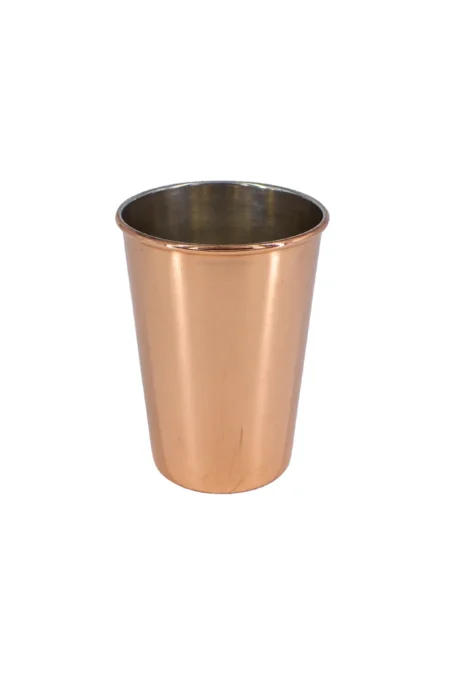
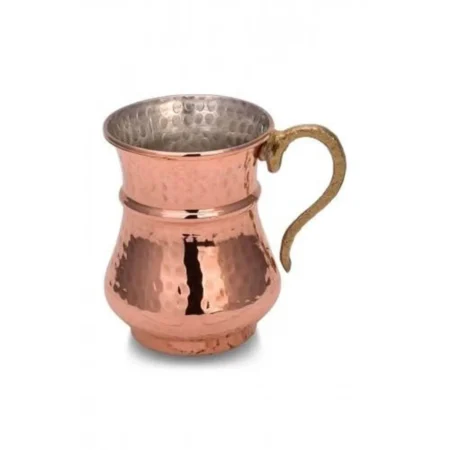
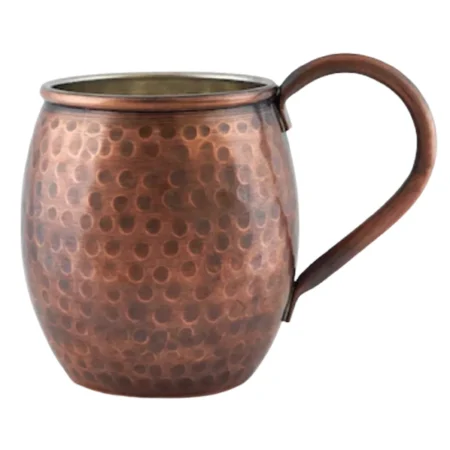
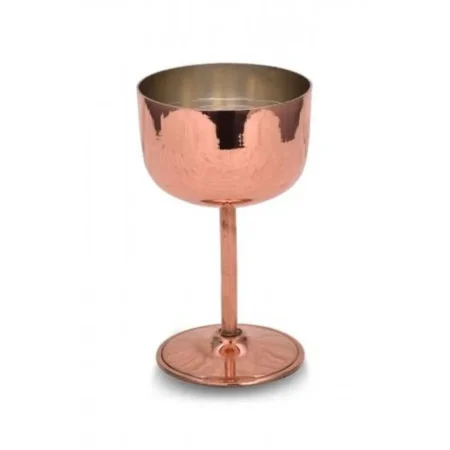
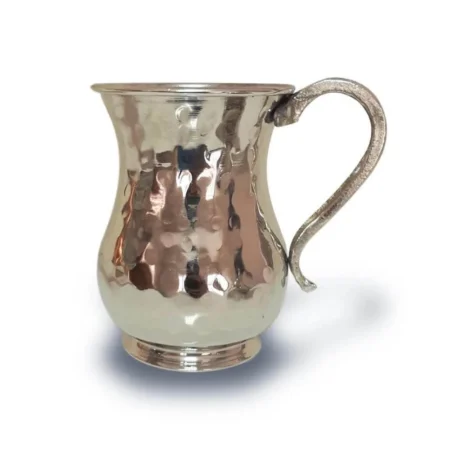
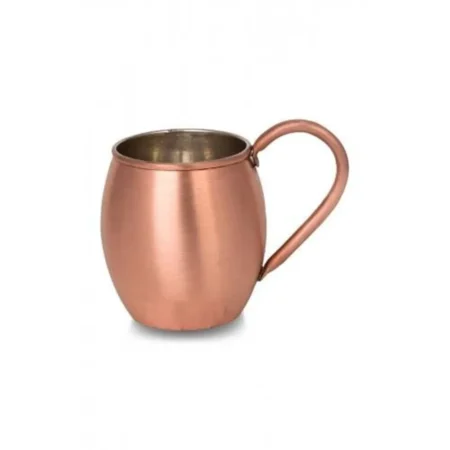

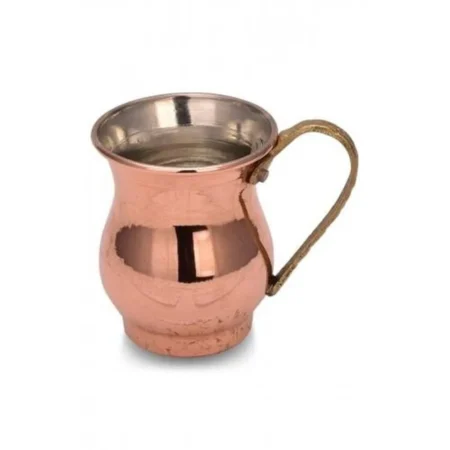
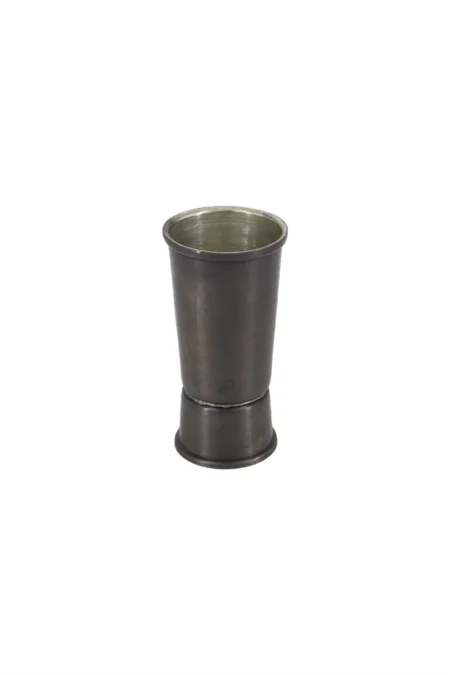
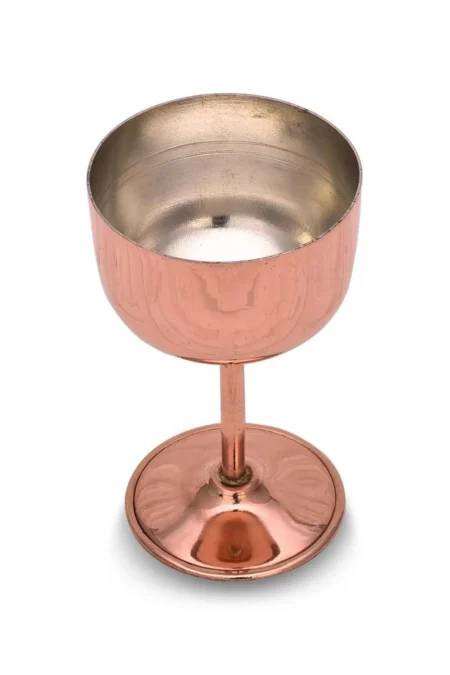
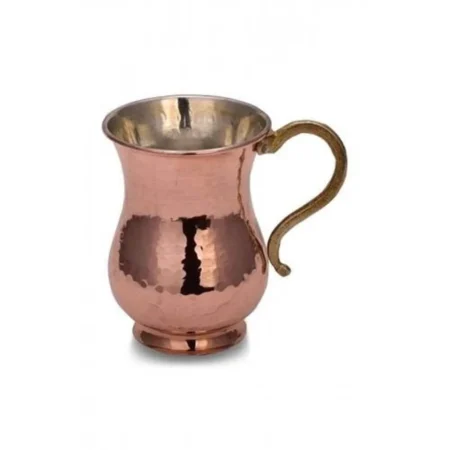
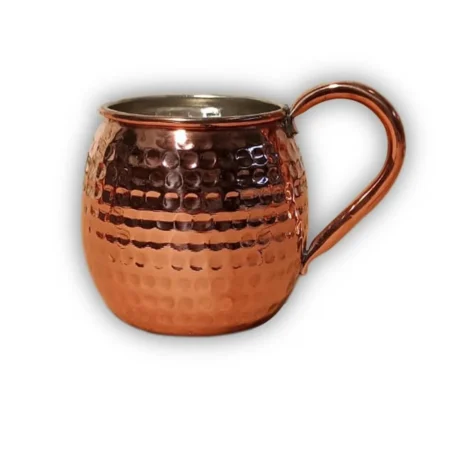
78 items in stock right now, from 30 ml to 1000 ml. Other sizes and finishes are produced to order.
What US buyers usually order
Copper mugs are the American volume line, split between bar programmes buying for service and gift or online sellers buying finishes that photograph well. Behind that sit serving pieces for hospitality: trays, small casseroles and coffee pots for the table. Heavy cooking copper is the smaller American order.
Copper mugs are the volume line, and they go two ways: bar programmes buying by the carton for service, and gift or e-commerce sellers buying finishes that photograph well. Both usually want a mark on the piece, and both want to know the finish will still look the same on the second order — so we quote the finish by name and keep the run consistent.
Behind that, hospitality buyers take serving copper: trays, small casseroles, coffee pots for the table. Heavy cooking copper is the smaller American order, largely because of the hob question — copper will not run on induction, and a lot of new commercial ranges are induction.
Turkish coffee service is a category on its own and it has grown, driven partly by the number of American cities where Turkish and Levantine cafés have opened and partly by gifting. A cezve set — pot, cups, saucers, tray — sells as a presentation item rather than as equipment, and it is one of the few lines where the Turkish origin is the selling point rather than something the listing has to work around.
Decorative copper — candle holders, incense burners, planters, chargers — moves through the gift and homeware channel and is the simplest part of the range to import, because pieces that are not intended for food contact sit outside the food contact framework entirely. What matters there is that the listing matches the declaration: a decorative bowl photographed full of fruit and listed under tableware has been presented as food contact whatever the paperwork says.
Commercial kitchens, retail and the certification question
American commercial kitchens generally require food equipment certified to an accredited standard by an independent body, and hand workshops do not fit certification programmes built around audited factories. Copper enters US hospitality through the front of house — serveware, trays, coffee service, bar drinkware — where that requirement is narrower or does not arise.
The distinction that matters here is between what the law requires and what an inspector will accept. No federal statute obliges a pan to be certified. Local codes for retail food establishments commonly require food equipment to be certified to a standard accredited for the purpose, and an equipment schedule that includes uncertified cooking vessels is the sort of thing that stalls a sign-off. Both statements are true and they are about different things, which is why suppliers and restaurant buyers talk past each other on this point so often.
Certification is a programme, not a test: an assessment of materials and construction against a published standard, followed by audits of the production facility, with a mark applied to certified items. Handmade copper from small Anatolian workshops does not fit that model, and we are not going to pretend a certificate is around the corner. We do not hold that certification.
There is also the Food Code question, which applies to the material rather than to the maker. The model code adopted by states restricts copper and copper alloys in contact with food below a defined acidity in a retail food establishment, which covers a great deal of what a restaurant kitchen actually cooks. A tin lining is what puts a barrier between the food and the copper, and a lining worn through in service is a compliance issue rather than a cosmetic one. The provision, and its narrow exception, are set out in the FDA Food Code; the version that binds your premises is the one your state or county adopted, which may be an earlier revision.
Retail is a different picture. Nothing stops a homeware retailer or an online seller from selling tinned copper cookware to consumers, and the certification question does not arise in that channel. What does arise is California’s Proposition 65 warning regime, which is a labelling law rather than a ban and which most often comes up with metal goods because of brass components — handles, knobs and feet. If you sell into California, raise it with the enquiry and we will tell you what the parts are made of before you order rather than after.
What the rules on both sides of the Atlantic actually require of copper, and which certificates do not exist at all, is set out on food contact and compliance.
The hob question, plainly
Copper is not ferromagnetic, so an induction hob will not detect it and the burner will not fire. That is a property of the metal rather than a fault in the pan, and no finish, base or construction changes it. Gas, radiant electric, halogen and oven use are all unaffected.
We are raising this ourselves because it is the single most common reason an American cookware order goes wrong after delivery, and because a supplier with an obvious commercial interest in being vague about it ought to be the one to say it clearly.
An interface disc — a ferromagnetic plate that sits between the hob and the pan — will make a copper pan usable on an induction surface. It also removes most of the reason to buy copper in the first place, because the disc becomes the heating surface and the responsiveness that makes copper worth the money disappears into it. We will sell you copper for an induction kitchen if you want it with that understood, but we will not let you find out afterwards.
For an American buyer this bears directly on which part of the range to look at. New commercial ranges are increasingly induction, and a growing share of new residential kitchens are too. Serveware, trays, coffee service and drinkware are unaffected by any of this, because none of them sits on a hob — which is a large part of why those categories, rather than saucepans, carry the American volume.
If your kitchen is gas or radiant electric, none of the above applies to you and copper does what copper has always done. The full explanation is on copper and induction.
Samples, marking and the first order
Samples go out ahead of a bulk order and the sample cost is deducted from the order when it is placed. Marking and engraving are done to order, with a sample produced and approved before a run starts, so that placement, depth and finish are agreed on a physical piece rather than on a drawing.
The order of operations for a first American programme usually looks like this. You send a list, an approximate quantity and the destination. We quote, and the quotation names the finish rather than describing it loosely. You take samples of the pieces you are unsure about. If marking is involved, a marked sample follows the plain one, because a logo that reads well on a flat surface can distort on a hammered curve and it is cheaper to discover that on one mug. Then the run is produced or picked, checked, packed and shipped.
On marking specifically: engraving, stamping and etching each sit differently on hammered and smooth surfaces, and the choice is partly aesthetic and partly about how the piece will be washed. Tell us where the mark goes, how large it needs to be and whether it has to be legible from across a bar, and we will tell you which method suits the body.
On consistency: hand-worked copper varies, and pretending otherwise would be dishonest. What we can control is that a single run is kept together and that a reorder is quoted against the same named finish. What we cannot promise is that two pieces from different years are indistinguishable. Buyers whose programme depends on absolute uniformity should know that before the first order, not at the second.
There is no published minimum order quantity, and that is deliberate rather than evasive. A carton of mugs and a mixed order of large bodies are not the same problem, and any single number we published would be wrong for most of the range and would turn away orders we would happily take. Send the list and the destination and we will tell you whether it works as an export order at that size.
Freight: what we arrange and what we do not
Carriage is normally the buyer’s to arrange. We do not hold a contracted freight forwarder, so most US orders leave the warehouse in Kahramanmaraş to a forwarder the buyer nominates. Where you would rather we priced the carriage, we will put a figure in the quotation instead of leaving it open.
Buyers who already import from Türkiye almost always nominate their own forwarder, because that forwarder is consolidating cartons from several Turkish suppliers into one container and our cartons simply join it. That is the cheapest route by a distance and we are happy to be one line on somebody else’s consolidation.
First-time buyers usually want a single number to compare, in which case we price the carriage into the quotation and the term is written out with its named place rather than assumed. What does not change either way is the destination side: duties, taxes and the entry are the buyer’s, because only a party established in the United States can lodge that entry.
Export paperwork is separate from freight and it is worth stating its scope precisely. Preparing the Turkish export documentation is a paid service, quoted openly alongside the goods, and it covers the Türkiye side of the shipment. The customs entry in the United States is not part of it and cannot be.
If this is your first import from Türkiye
First-time buyers should settle three things before an order: who arranges the freight, who is acting as importer of record with a broker in place, and whether any origin marking or state-level labelling applies to the channel you are selling into. All three are inexpensive to arrange in advance and expensive to fix at a port.
We ship abroad in wholesale quantities and there is no published minimum, because a carton of mugs and a mixed order of large bodies are not the same problem. The carriage is normally yours to arrange — you or your forwarder collect from our warehouse in Kahramanmaraş — and if you would rather we priced it, say so and we will put a figure in the quotation.
The part that stops most first-time buyers is not the freight, it is the paperwork. We prepare the Turkish export documentation for you as a paid service, quoted openly alongside the goods. To be exact about what that covers: it is the export side, in Türkiye. The customs entry in your own country stays with you or your broker, because only a party established there can make it.
And if the piece you want is not in the catalogue: at trade quantities we have new tooling made to your drawing. See custom copper work — the range you can see is a starting point, not the limit of what you can order.
How we work
BakırBul works through a long-term production partnership: we specify the piece, our partner produces it, and it is carried under our own name. Copper is selected from the workshops of Kahramanmaraş and other Anatolian copper towns, brought into our own warehouse, checked against the order and shipped.
We work through a long-term production partnership — we specify the piece, our partner produces it, and we carry it under our own name. That is why we can commission new tooling for a form that does not exist yet.
Copper is selected from the workshops of Kahramanmaraş and other Anatolian copper towns, brought into our own warehouse, checked against the order and shipped. Sizes, forms and marking outside the catalogue are made to your specification.
What that structure means for an American buyer is worth spelling out, because “supplier” covers a lot of very different businesses. We are not a trading desk forwarding an enquiry to whoever answers first: the pieces are specified by us, held by us and checked by us before they leave. And we are not a factory floor either, so a request for a form that does not exist goes through a tooling conversation rather than a scheduling one. Both facts have consequences for what we can promise on a date, and we would rather you knew the shape of the business than a slogan about it.
What to send with your enquiry
The most useful enquiry contains four things: the pieces or the product group, an approximate quantity, the destination city or port, and whether marking is involved. Anything a customer or a channel requires — origin wording, state labelling, a documentary condition — belongs in the same message rather than in a later one.
We would rather have an imprecise list today than a precise one in three weeks. “Around a few hundred mule mugs for a bar group, hammered, our logo on the body, delivered to the East Coast” is enough to quote against. So is a photograph of something you have seen elsewhere with a note about the size.
What genuinely slows a quotation down is a missing destination, because the destination decides the paperwork, and a missing indication of quantity, because a carton and a container are different prices and different lead times. Those two are worth guessing at rather than leaving blank.
And if there is a condition attached to the order that could kill it — domestic manufacture, certified equipment, a laboratory report, a fixed landed cost — put it in the first message. We will tell you straight away whether it can be met. Losing an order in the first message costs both of us nothing; losing it after production costs both of us a great deal.
Request a quotation
Quotations come back the same day for catalogue pieces. Tell us the items, the finish, roughly how many you need and the destination port or city, and the reply carries a price and a realistic lead time rather than an estimate that gets revised later.
Tell us the pieces, the finish, roughly how many you need and the destination port or city. We answer with a price and a realistic lead time. If you would rather talk it through, WhatsApp works just as well.
What US and EU rules actually require of copper cookware — and which certificates do not exist — is set out on food contact and compliance.
What US buyers ask before they order
American enquiries repeat the same questions: whether the goods are domestic, who handles the customs entry, whether copper works on a modern range, whether equipment is certified, and how marking and reorders behave. The answers below are the ones we give on the telephone, including the ones that lose us the order.
Do you manufacture in the United States?
No. The copper is Turkish and arrives as an import. If your programme requires domestic manufacture, we cannot serve it and we would rather say so now.
Can we describe the goods as “Made in USA” after finishing them here?
Not on our word, and we would be cautious about it generally. The unqualified claim carries a legal standard in the United States that goods worked abroad do not meet, and qualified claims about domestic assembly or decoration have their own evidence requirements. Take advice on the exact wording, because the exposure sits with the seller there.
Does the low-value de minimis exemption still cover my shipment?
Treat it as gone. The exemption was ended in 2025 and small consignments are no longer waved through on value alone. Ask your customs broker to confirm the current position before you order — the rule changed once and can change again.
What duty will we pay?
We do not quote US rates and would be guessing if we did. Ordinary duty comes from the tariff line your broker declares, and metals measures have at times reached beyond raw metal into downstream articles. Current rates are confirmed at the time of shipment; classification is the importer’s responsibility and should be checked with a customs broker.
Can you be the importer of record?
No. That entry has to be lodged by a party established in the United States — you, your company, or a licensed broker acting for you. We prepare the Turkish export documentation as a paid service and make sure what you receive is accurate and consistent.
Can I order copper mule mugs in bulk with our logo?
Yes. Marking and engraving are done to order and a sample is produced before the run so you can approve the placement and the depth. Tell us the finish, the volume per mug and the quantity.
Will copper work on an induction range?
No. Copper is not magnetic and the burner will not detect it. An interface disc makes it usable and costs you most of the responsiveness. Drinkware, serveware and trays are unaffected.
Is your cookware certified for a commercial kitchen?
No, we do not hold that certification, and hand workshops do not fit the audited-factory model such programmes are built on. Copper generally enters American hospitality front of house — serveware, trays, coffee service, bar drinkware — where the requirement is narrower or does not arise. If your project needs certified cooking equipment, we are the wrong supplier for that part of it.
Do we need a Proposition 65 warning?
That depends on the article and the channel, and it is your call as the seller in California rather than ours. It comes up with metal goods mainly because of brass components. Raise it with the enquiry and we will tell you what the parts are made of before you order.
Will the second order match the first?
We quote a finish by name and keep a run together, which is how we hold it as close as hand-worked copper allows. What we will not claim is that pieces from different years are indistinguishable. If your programme depends on absolute uniformity, that is worth knowing before the first order.
Is there a minimum order?
There is no published minimum, because the range spans a carton of mugs and a pallet of large bodies and a single figure would be wrong for most of it. Send the list, the destination and a rough quantity, and we will tell you whether it works as an export order.
What is the lead time to a US destination?
Catalogue items ship from stock, so the lead time is mostly transit and clearance. Custom sizes, forms or marking are produced first and we give you a date in the quotation rather than an estimate afterwards.
The 2026 catalogue — the full range with codes, sizes and weights: open or download it here.
Last updated: 10 September 2026
Send us your list
Product group, an approximate quantity and the destination is enough to start. We come back the same day.