
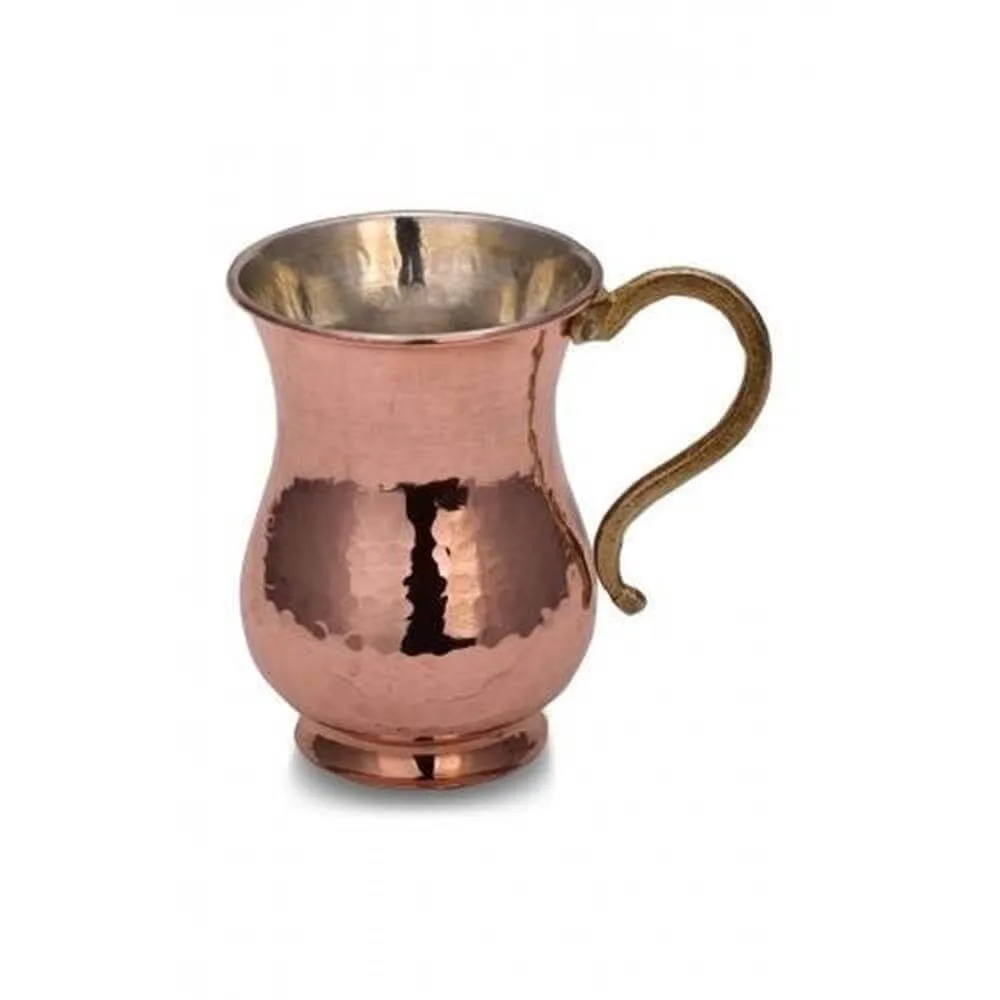
Copper Drinkware
Type
Technique
Finish
Sheet thickness
Copper drinkware is today’s form of an old table habit: serving a drink straight from metal. BakırBul’s range has four groups: cups and tumblers, stemmed wine and cocktail glasses, handled cup cups and wide ayran bowls. Cups are chosen by volume and glasses by stem and bowl, and every list is quoted per order.
Showing 1–16 of 212 results
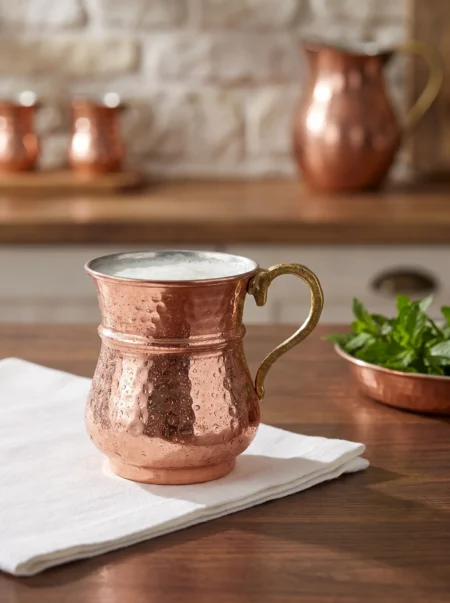
Copper Handled Cup with Rolled Band — 250 ml, machine-hammered, polished copper
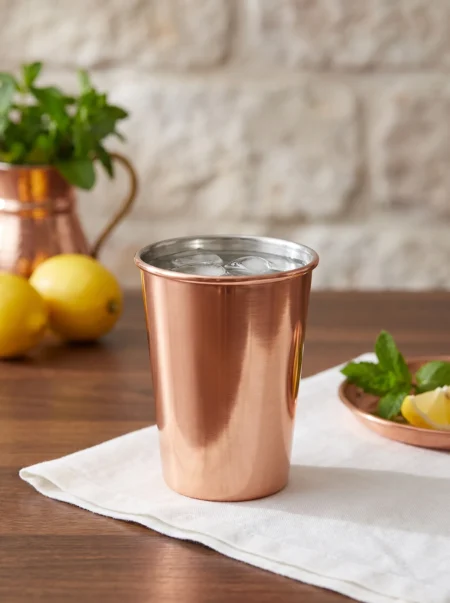
Lungo Copper Tumbler — 530 ml, smooth, polished copper
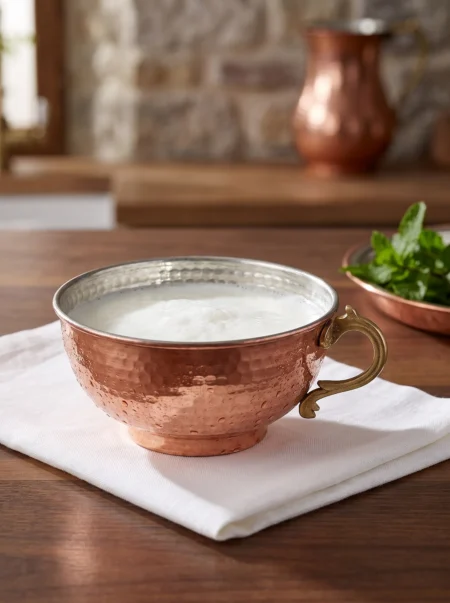
Pınarbaşı Copper Ayran Bowl — 500 ml, machine-hammered, polished copper
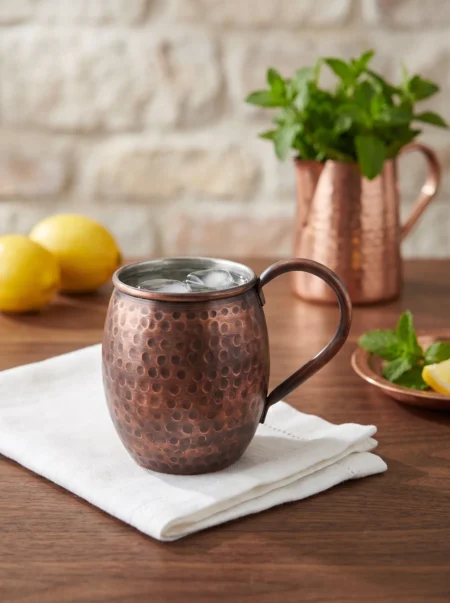
Copper Moscow Mule Mug — 500 ml, hand-hammered, oxidised
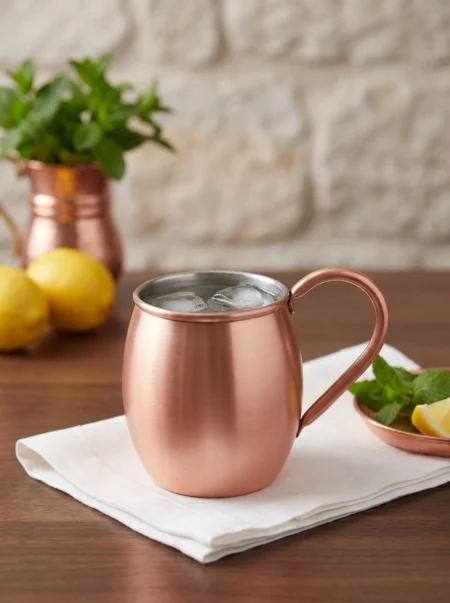
Copper Moscow Mule Mug — 500 ml, smooth, brushed matt
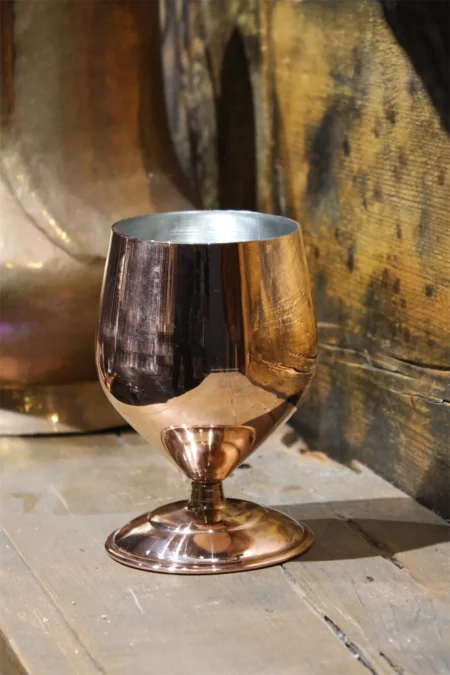
Merlot Copper Goblet — 500 ml, smooth, polished copper
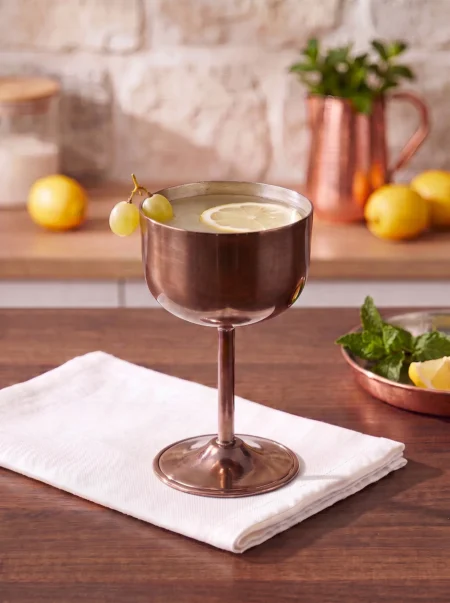
Vino Copper Goblet — No. 1, 240 ml, smooth, polished copper
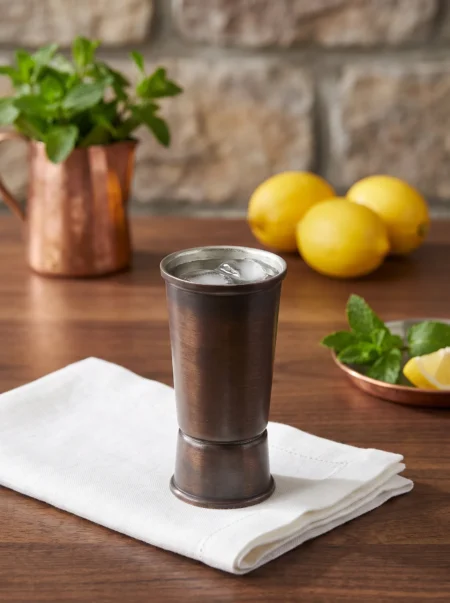
Copper Shot Glass — 40 ml, smooth, oxidised
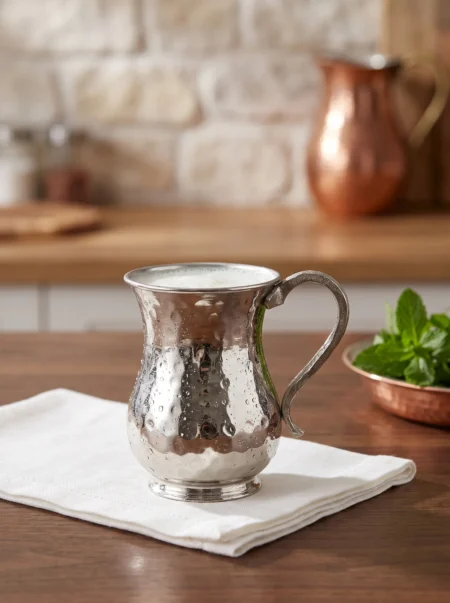
Copper Handled Cup without Band — 300 ml, hand-hammered, nickel-plated

Zemzem Mini Copper Handled Cup — 100 ml, smooth, polished copper
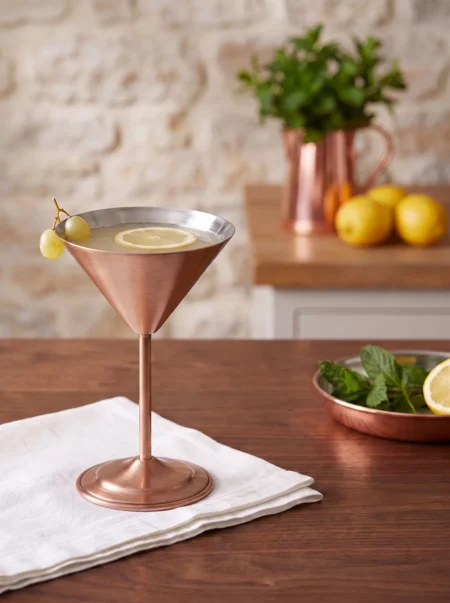
Copper Cocktail Glass — 250 ml, smooth, brushed matt
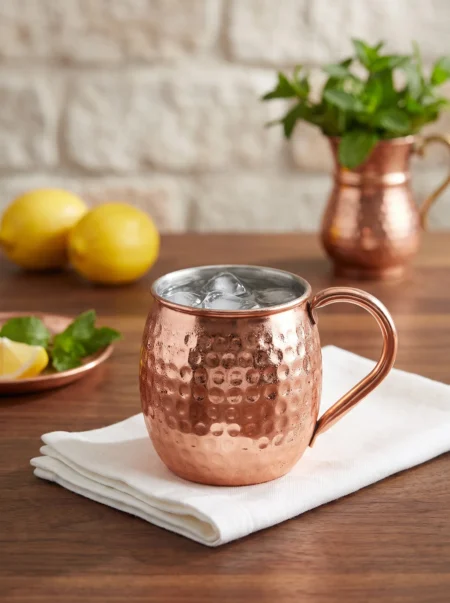
Luna Copper Tumbler — 360 ml, smooth, polished copper
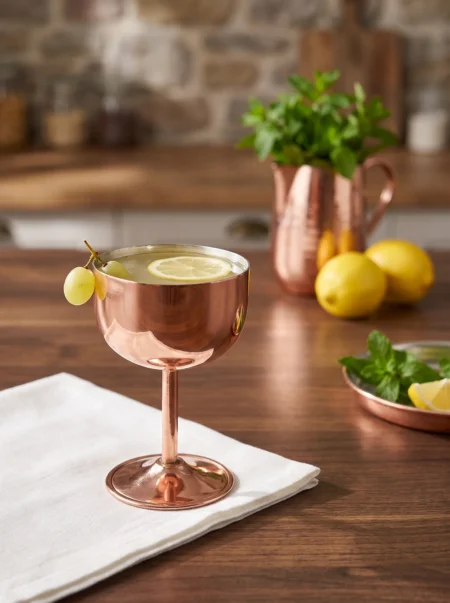
Vino Copper Goblet — No. 2, 400 ml, smooth, polished copper
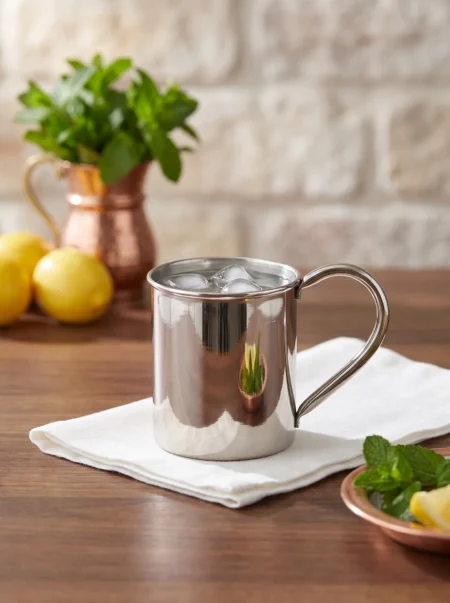
Copper Tumbler — No. 1, 330 ml, smooth, nickel-plated
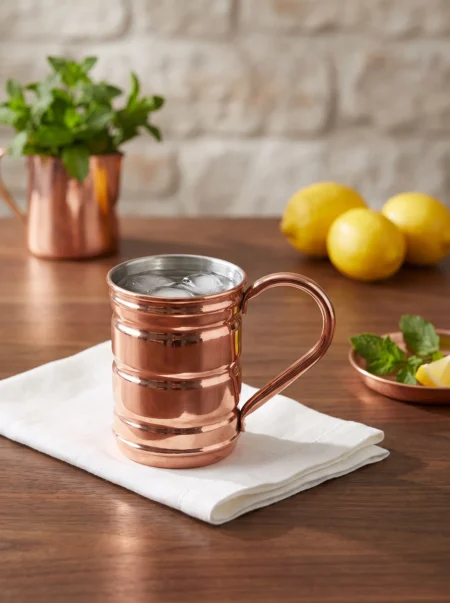
Copper Tumbler — 380 ml, smooth, polished copper, brushed matt
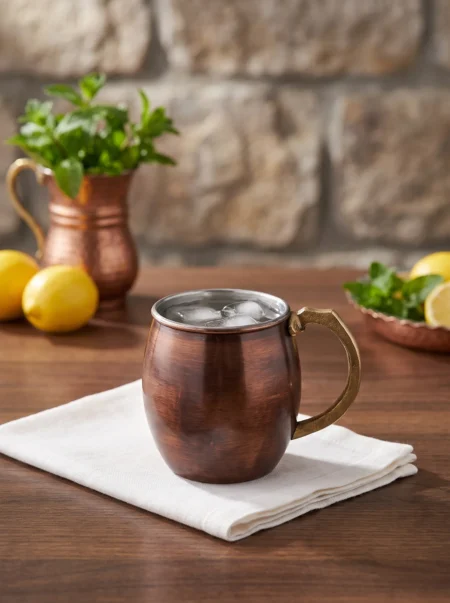
Riva Copper Tumbler — 550 ml, smooth, oxidised
Copper cups, glasses and bowls in this range are made in Türkiye. BakırBul produces to order through a long-term partner workshop in Kahramanmaraş, where copper sheet is raised and shaped into each body. Every surface that meets a drink is tin-lined. On nickel-finish pieces the nickel is on the outside only, and the inside is tin.
The four sub-categories differ in volume, handle and the job they do at the table. The table below shows which vessel is meant for which use.
Which vessel is for what
| Sub-category | Volume range | Job at the table |
|---|---|---|
| Copper cups, tumblers and mule mugs | 30 – 1000 ml | Water, ayran, lemonade and cold drinks, from a single sip to a one-litre sharing size |
| Copper wine and cocktail glasses | 240 – 500 ml | Stemmed bowl for hosting and special-occasion service |
| Copper handled cup | 100 – 300 ml | Handled cup for serving water, at the table and in the hammam |
| Copper ayran bowls | 500 ml | Deep, wide-mouthed bowl for ayran and sherbet |
How copper behaves with cold drinks
Copper conducts heat far faster and more evenly than stainless steel or cast iron. That matters in drinkware as much as in cooking: pour a cold drink into a thin copper cup and the wall drops to the temperature of the liquid within seconds. The outside feels cool in the hand, and in humid weather beads of condensation form on it.
There is a second effect. A thick ceramic or porcelain cup gives back the room-temperature heat it has stored during the first minutes; a thin copper cup weighing 170–180 grams carries little stored heat, so it warms the drink far less. To be honest about the limits, though: copper is not an insulator and does not behave like a vacuum flask. What really keeps a drink cold is ice, a pre-chilled cup and a sensible serving time.
How to choose
- Volume: 330–500 ml covers everyday water and ayran. Long drinks served over ice want 550–600 ml, and the one-litre size takes the place of a shared jug. Stemmed glasses run from 240 ml to 500 ml.
- Gauge: sheet thickness across cups and glasses runs from 0.40 mm to 1.10 mm. Thin sheet is light; heavier sheet sits more solidly in the hand and stands up better to knocks.
- Finish: polished copper is the natural metal colour, oxidised gives a deliberately darkened look, brushed matt is a satin surface, and nickel-plated gives a silver-tone exterior.
- Technique: every body is handmade. Hand-hammered pieces show hammer marks and no two are identical; machine-hammered pieces carry a more regular pattern; smooth bodies have no hammered texture at all.
- Sets: most models are listed as a single piece and as sets of two, four and six, each as its own product. Check the quantity in the product name before you put it on your list.
Tin lining, cleaning and what to avoid
The tin inside these vessels is the protective layer that keeps the drink from long, direct contact with copper. Under heavy use it is usually renewed every one to two years; when the tin starts to lift and the reddish copper shows through in spots, it is time to re-tin. Do not leave lemony, vinegary or fruit drinks standing in a copper vessel for hours: serve them, then empty and rinse.
None of these pieces goes in the dishwasher, because detergent and high heat wear the tin and dull the exterior. Wash by hand with a soft sponge and warm water, then dry straight away. Copper darkening in air is a natural reaction, not a defect; lemon and salt, or a paste of flour, vinegar and salt, brings the shine back. Cups, glasses, handled cup and bowls are made for serving, not for heating; copper is not magnetic, so none of them will work on an induction hob in any case. The full routine is in how to care for copper.
Drinkware from Kahramanmaraş
Drinking vessels are among the finest work in a copper workshop. Pots and pans use heavy sheet; a cup is worked from sheet under one millimetre thick. The body has to be drawn up without tearing, the rim rolled smoothly enough to meet the lips, and the handle soldered on so it does not sit crooked. Kahramanmaraş copperwork carries a registered Turkish geographical indication, and the know-how behind it is used today to produce serving cups and stemmed glasses at the same benches as traditional pieces.
What sets the price of copper drinkware
Four factors separate prices in this group: volume, sheet gauge, body form and surface work. Volume runs from 40 millilitres to one litre, and the amount of copper follows it directly. Gauge runs from 0.40 mm to 1.10 mm, so a heavy-walled cup weighs noticeably more than a thin one of the same volume. Hand-hammered bodies carry a labour share, and stemmed glasses add a separate foot to the bowl. Prices are quoted per order, because they move with the copper price, the finish and the quantities; send your list with quantities and the destination, and the quotation comes back line by line.
Lines and sizes
Two main lines run through this group. Cups and tumblers have no stem and spread across a wide range, from 40 millilitres to one litre; stemmed glasses sit between 240 and 500 millilitres. Because the stem reduces contact between the hand and the bowl, it extends the time a drink stays cool.
Wall thickness is a shared axis for both lines, and the choice is between weight and cold-holding: a thin body stays light in the hand, a heavier one keeps the drink cool for longer. Four finishes appear in both lines. For bar and retail buyers, Turkish copper mugs and tumblers matches cup lines to volumes, and wholesale copper goblets and wine cups covers the stemmed side.
Ordering drinkware wholesale
There is no single published minimum, because the threshold changes from one model to another; send the list of models, finishes and quantities and the quotation answers each line. Models shown as out of stock can be made in a production run, and the lead time is agreed per order. Engraving, stamping and private-label packaging are quoted as separate lines. Each product has a Wholesale enquiry button that opens a message with the product code already filled in, and the terms are set out on the wholesale page.
Frequently asked questions
What is the difference between a copper cup and a copper wine glass?
The difference is the stem. A wine or cocktail glass sets its bowl on a slim stem, while a cup sits directly on its base. The stem cuts the warmth passing from the hand to the drink, so it suits drinks served cold; a cup is sturdier and more practical for everyday use, and it stands up better to knocks behind a busy bar.
Can any drink be served in copper drinkware?
Any cold or lukewarm drink can be served, but acidic drinks should not be left standing in the vessel. If lemonade, fruit juice and lemony mixes are drunk and the vessel is then emptied and rinsed, the tin lining stays sound for a long time. Every surface that meets a drink is tin-lined, so the drink is not sitting against bare copper.
How are sets sold?
The same model is listed as a single piece and as sets of two, four and six, each as a separate product. The quantity is part of the product name, so check it when you build your list. For wholesale lists, quantities can also be given per finish and per model, and the quotation prices each line separately.
Can I order a model that shows as out of stock?
Yes. A model that is currently out of stock can be made in a production run. Use the Wholesale enquiry button on the product to send the code and the quantity you need, and the lead time is agreed with the order. The stock line on each product page is read live, so it never shows a model as available when it is not.