
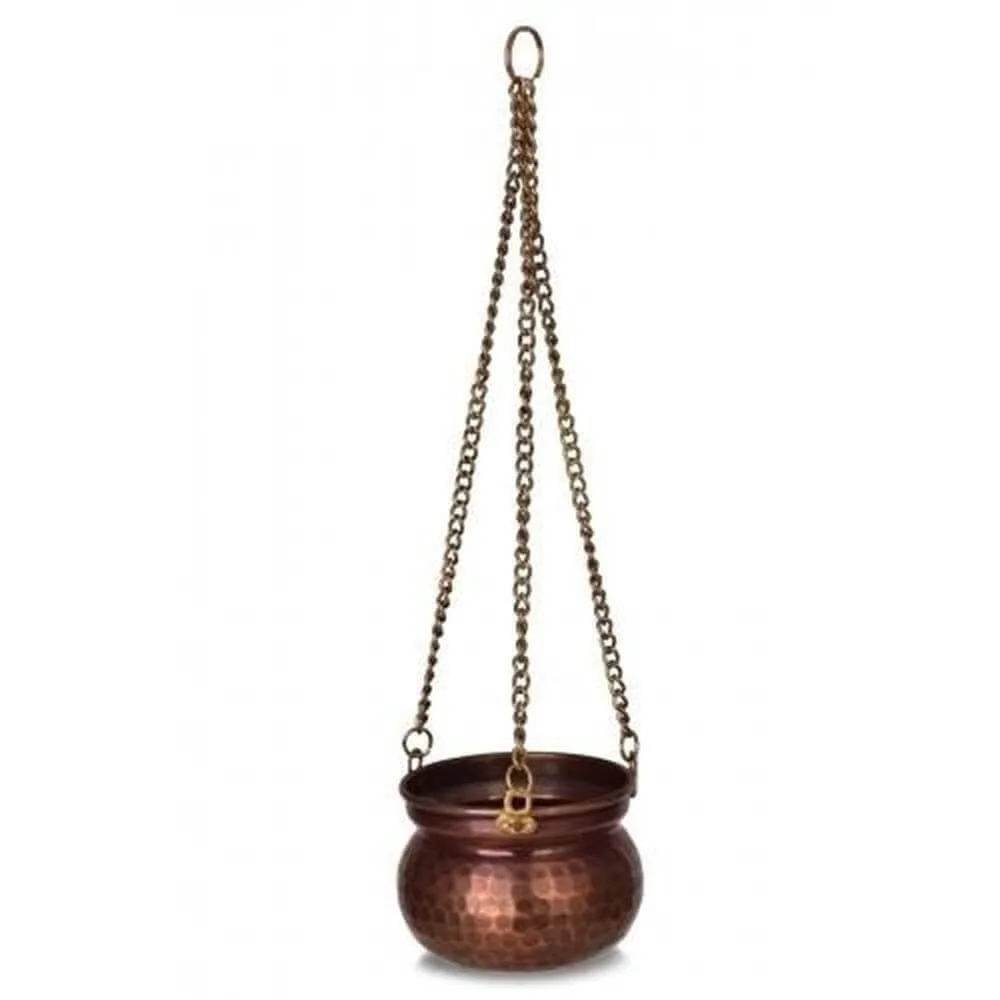
Copper Planters
Type
Technique
Finish
Sheet thickness
A copper planter is the metal that looks best beside a green plant, its warm red completing the cool green of the leaves. The choice is made by mouth diameter and depth, and the pots have no drainage hole, so they work as cachepots. BakırBul supplies copper planters singly or in sets, quoted per order.
Showing 1–16 of 23 results
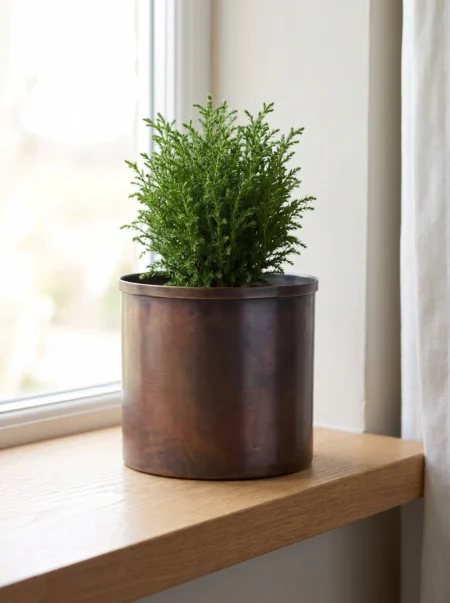
Bahar Copper Planter — No. 1, 8 cm, smooth, oxidised
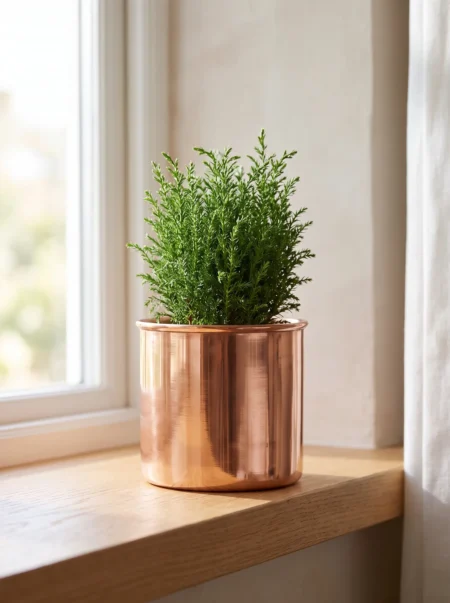
Bahar Copper Planter — No. 1, 8 cm, smooth, polished copper
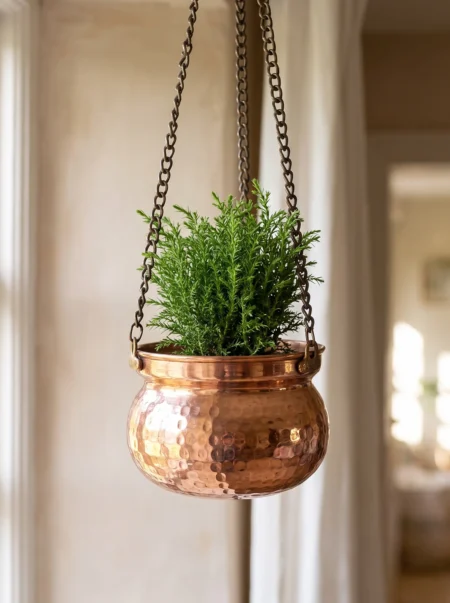
Kabak Copper Planter — No. 4, 20 cm, hand-hammered, polished copper
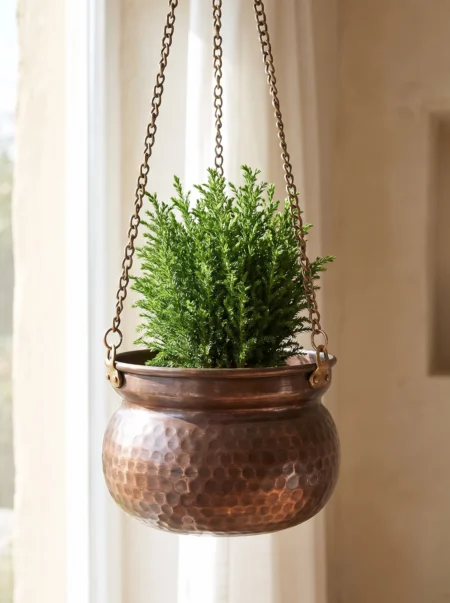
Kabak Copper Planter, Set of 3 — Nos. 1–3, hand-hammered, oxidised
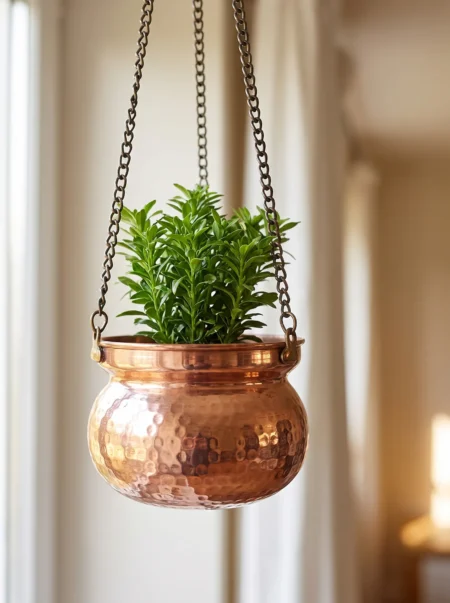
Kabak Copper Planter — No. 3, 17 cm, hand-hammered, polished copper
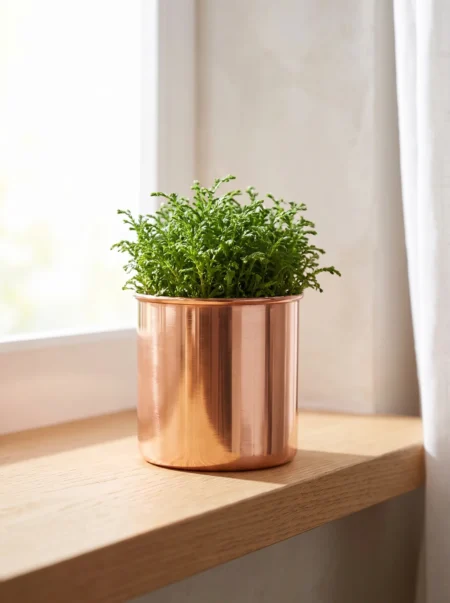
Bahar Copper Planter — No. 2, 10 cm, smooth, polished copper
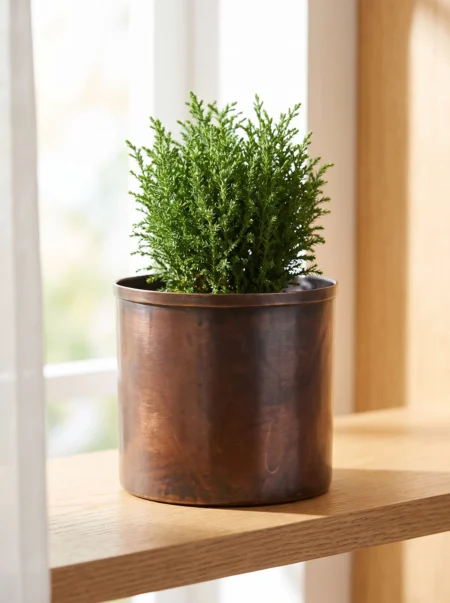
Bahar Copper Planter — No. 3, 14 cm, smooth, oxidised
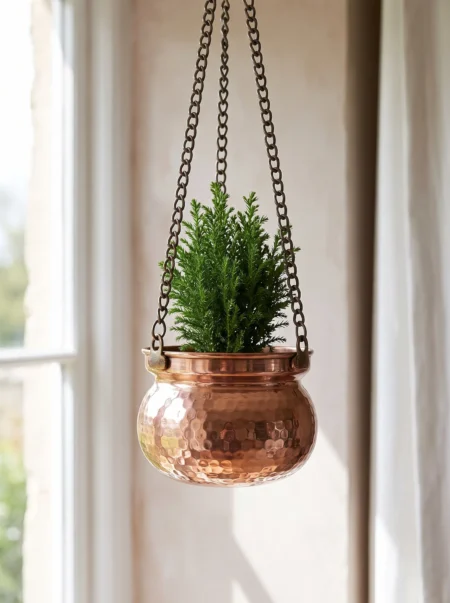
Kabak Copper Planter, Set of 3 — Nos. 1–3, hand-hammered, polished copper
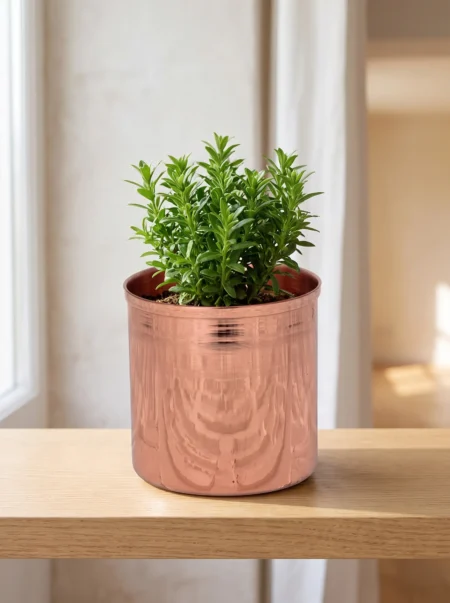
Bahar Copper Planter — No. 3, 14 cm, smooth, polished copper
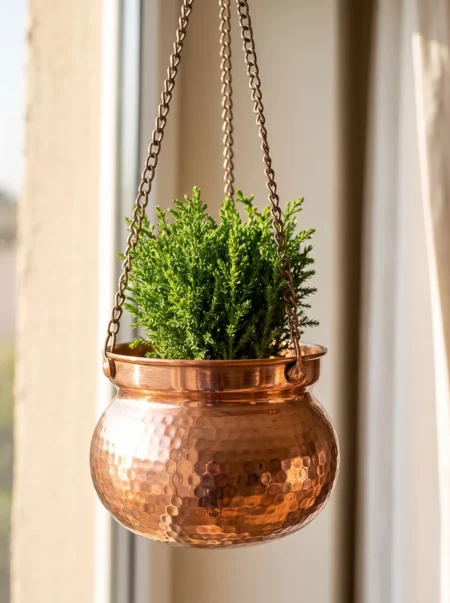
Kabak Copper Planter — No. 1, 10 cm, hand-hammered, polished copper
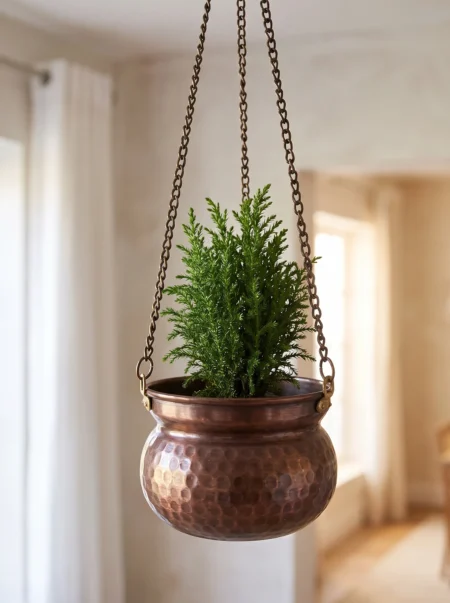
Kabak Copper Planter — No. 1, 10 cm, hand-hammered, oxidised
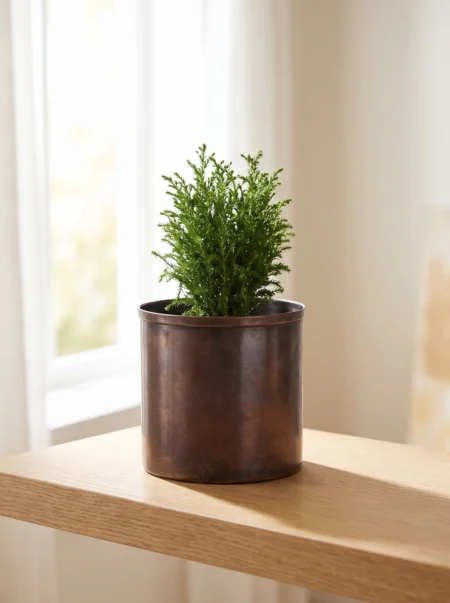
Bahar Copper Planter — No. 2, 10 cm, smooth, oxidised
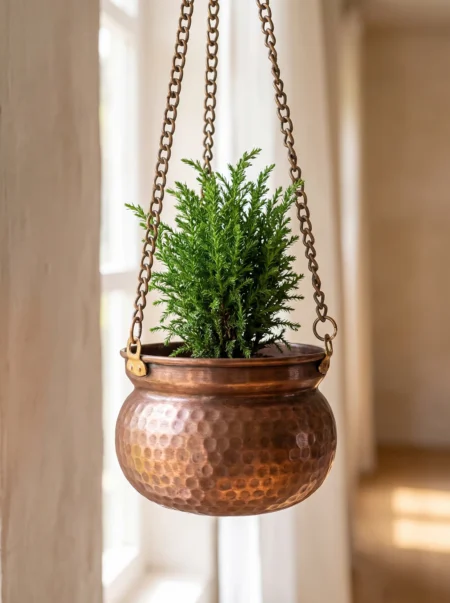
Kabak Copper Planter — No. 3, 17 cm, hand-hammered, oxidised
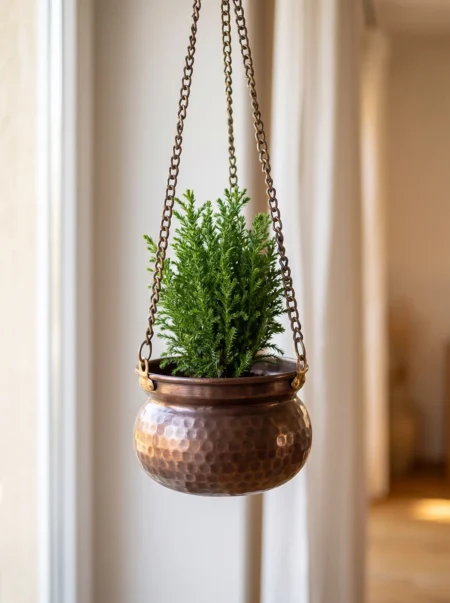
Kabak Copper Planter — No. 2, 15 cm, hand-hammered, oxidised
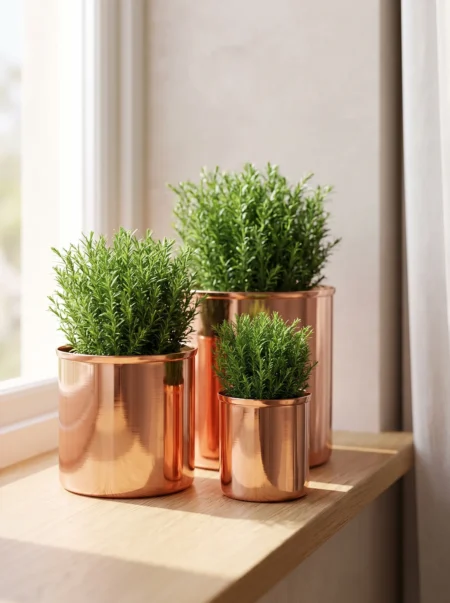
Bahar Copper Planter, Set of 3 — smooth, polished copper
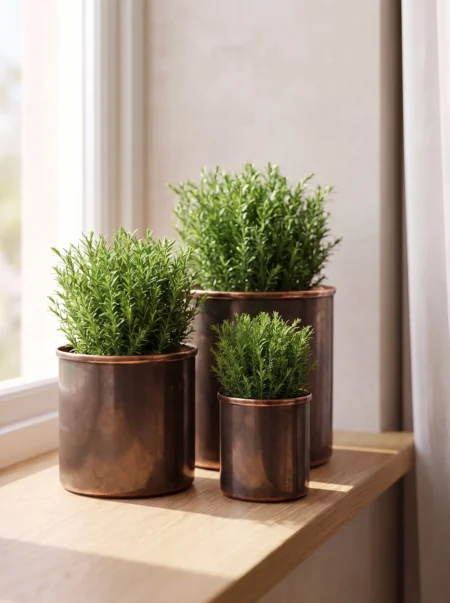
Bahar Copper Planter, Set of 3 — smooth, oxidised
The planters fall into two series: the smooth-bodied Bahar series and the hand-hammered Kabak series. Both are sold in single sizes and in sets of 3 or 4, and both are made in Kahramanmaraş.
Series and sizes
| Series | Sizes | Sheet thickness | Weight | Finish |
|---|---|---|---|---|
| Bahar, smooth | No. 1 8 cm, No. 2 10 cm, No. 3 14 cm | 0.70 mm | about 115 / 220 / 375 g | Polished copper, oxidised, brushed matt |
| Kabak, hand-hammered | No. 1 10 cm, No. 2 15 cm, No. 3 17 cm, No. 4 20 cm | 0.50–0.70 mm | about 290 / 380 / 450 / 630 g | Polished copper, oxidised |
The Bahar set of 3 brings the three Bahar sizes together; lined up from small to large they make a neat row on a windowsill or at the end of a shelf. The Kabak series has two different sets of 3 (Nos. 1–3 and Nos. 2–4) and a set of 4 with every size. Kabak means pumpkin: the hand-hammered body is swelled into a pumpkin shape with the hammer, so the spread of marks differs on every pot.
Drainage: the most important point
These planters have no drainage hole in the base. If you fill one with soil and plant straight into it, excess water collects at the bottom, the roots are starved of air and eventually rot. The answer is simple and is already the most common way to use them: leave the plant in its own perforated plastic pot and use the copper planter as the outer pot, a cachepot. Pour away any water that collects after watering, and the plant never touches the copper.
If you insist on planting directly, take two precautions. Lay a drainage layer of pumice, gravel or expanded clay at least two fingers deep in the base and water sparingly. Then line the inside, or use a heavy planting bag; this stops damp soil from staying in constant contact with the copper.
How copper and soil behave together
Copper in constant contact with damp soil oxidises and grows a greenish patina. From outside this often looks attractive, and in garden containers it is a wanted effect. But in wet conditions dissolved copper builds up around the roots, and sensitive roots do not like it; that is exactly why copper is used in root-control coatings on nursery pots. Plants that want little water, such as succulents, cacti and snake plants, get on better with a copper planter; for plants that need constantly moist soil, an inner pot is close to essential. Do not leave the planter standing on a wet floor; a felt or cork pad underneath protects both the furniture and the base of the pot.
Which size for which plant
- 8–10 cm: succulents, cacti, small pot plants, basil on a desk.
- 14–15 cm: medium green plants, young trailing plants.
- 17–20 cm: established houseplants, larger pieces that stand on their own.
- Sets: one plant species in three sizes builds a group that does not look scattered.
Copper’s long friendship with the garden
Copper vessels meeting plants is not a new idea; from the watering pail to the garden basin, the metal has always worked alongside soil. In Kahramanmaraş a planter is often shaped at the same bench that hammers cauldrons and basins; the difference lies in the angle at which the mouth turns outward and the width given to the base. The wider the base, the less the pot tips, a balance coppersmiths have set over years by the stroke of the hammer.
What drives the unit cost of a copper planter
Diameter and technique set the cost. Weight runs from about 110 to 630 grams, and that difference comes almost entirely from the size of the body. Hand-hammered bodies carry more labour than smooth ones. Finish is the third factor; oxidised and brushed matt need an extra step over polished copper. Sets bring several diameters together and are quoted as a set. We do not publish prices; we quote per order from your list.
Models, sets and sizes
In a planter, diameter is chosen against the root ball of the plant: the body should be a few centimetres wider than the ball. Height is the second measure and keeps the pot in proportion to the plant. Sets bring several diameters together, which suits anyone who wants to gather more than one plant in the same look.
Because copper planters have no drainage hole, the body is mostly used as an outer pot: the plant stays in its plastic pot and the planter takes it inside. Used like this, the copper is also protected from water. Finishes are polished copper, oxidised and brushed matt. For liners, sizing against nursery pots and display surfaces in more depth, read wholesale copper planters.
Setting the plant in place
The healthiest set-up is to leave the plant in the perforated plastic pot it came in and slip the copper pot over it. If the inner pot sits a few millimetres below the copper rim, it cannot be seen. If the height difference is large, raise the plant on a small upturned pot or a layer of cork; choose something that lets air through rather than packing the gap tight. As the plant grows, only the inner pot needs changing; the copper body stays the same for years.
Watering routine
Do not water inside the copper pot. Lift the plant out in its inner pot, water it at the sink, let the excess drain and put it back only once the dripping has stopped. That habit removes standing water at the base entirely. If you water in place on a busy day, lift the plant fifteen minutes later and check for water underneath; pour it away if there is any. Water forgotten at the bottom both drowns the roots and leaves a ring mark on the metal.
Protecting furniture and the pot
A metal base can mark wood and marble; a felt or cork pad stuck underneath protects the furniture and reduces scratching when the pot is moved. Leaf shine and misting sprays spot copper when they splash it, so apply them to the plant away from the pot. If soil dust and water marks build up on the outside, wipe with a damp cloth and dry straight away.
Frequently asked questions
Does a copper planter have a drainage hole?
No, the base has no drainage hole. The healthiest approach is to leave the plant in its own plastic pot and use the copper planter as the outer pot.
Does copper harm plants?
Planted directly, in constantly moist soil, plants with sensitive roots can be affected. With an inner pot or a liner there is no contact and no such problem.
Can the planter be used outside, on a balcony?
Yes. Copper does not rust outdoors, but rain and damp give it a patina faster and darken its colour. If you do not want that look, keep the planter under cover.
Should I order sets or single sizes?
For more than one plant in the same corner, a set gives visual unity and matched sizes; for a single plant, choose one size up from its current pot. Buyers who also work with cut flowers can look at copper vases; pieces for the rest of the home are under copper home décor.