
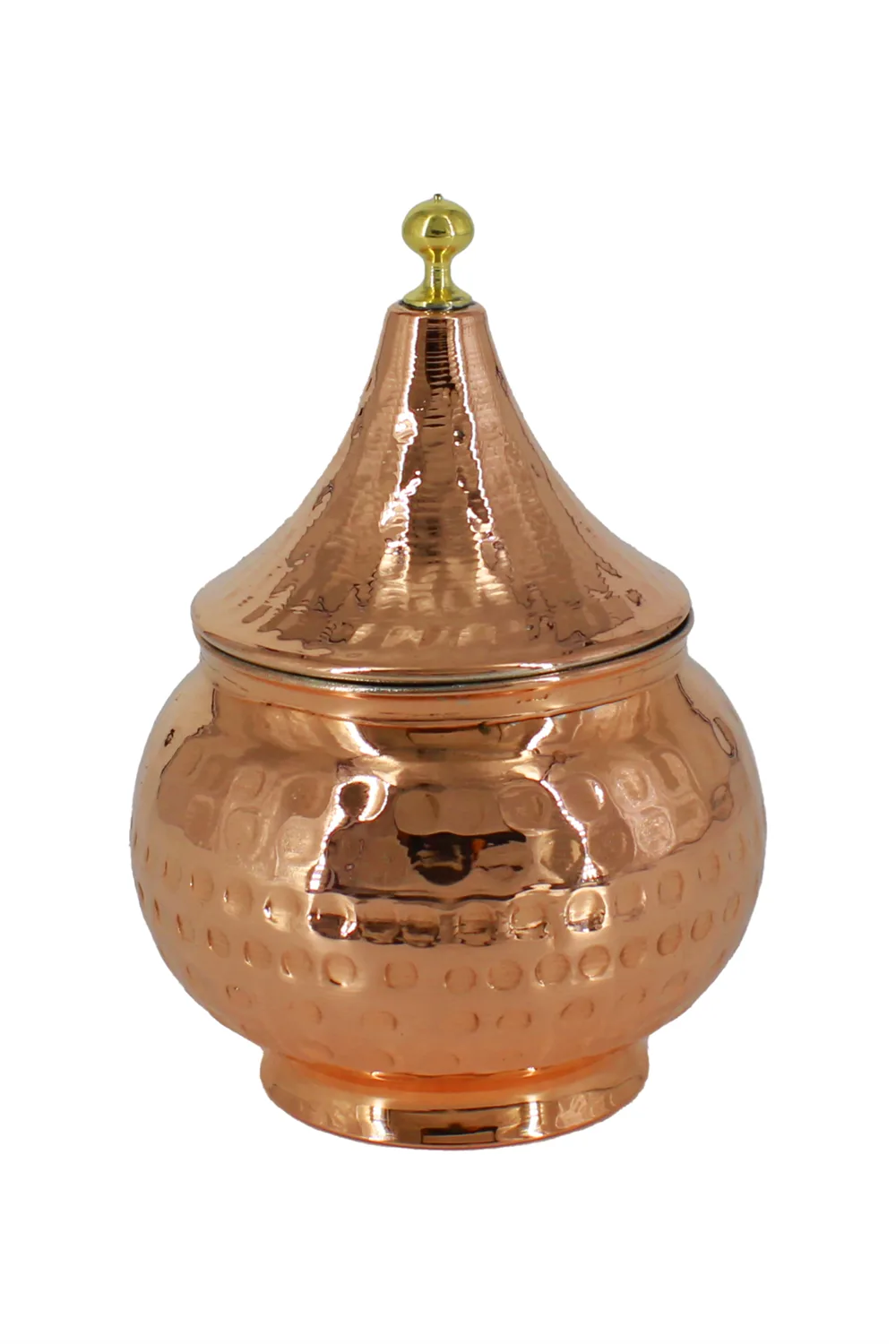
Copper Spice Jars
Type
Technique
Finish
Sheet thickness
Copper spice jars are lidded containers that keep dry spices away from light and damp, in numbered sizes that line up on the counter from small to large. The choice is made by body size and finish. BakırBul supplies them singly within an order or as sets, quoted per order for trade buyers.
Showing 1–16 of 24 results
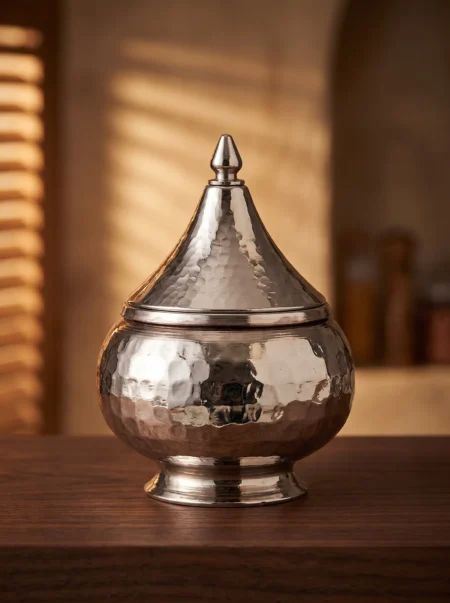
Tabbal Domed Copper Spice Jar — hand-hammered, nickel-plated
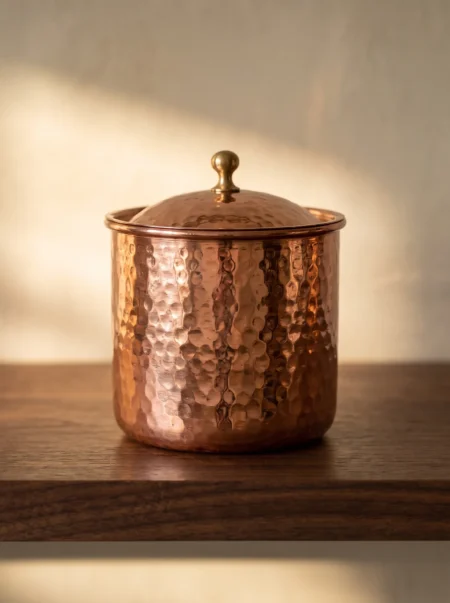
Safran Copper Spice Jar — No. 1, hand-hammered, polished copper
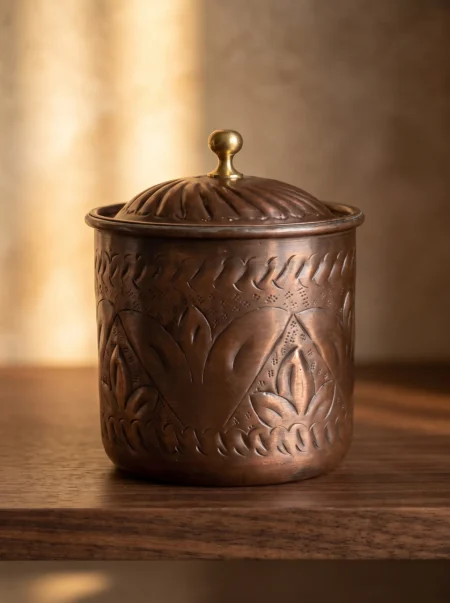
Safran Copper Spice Jar — No. 1, hand-engraved, oxidised
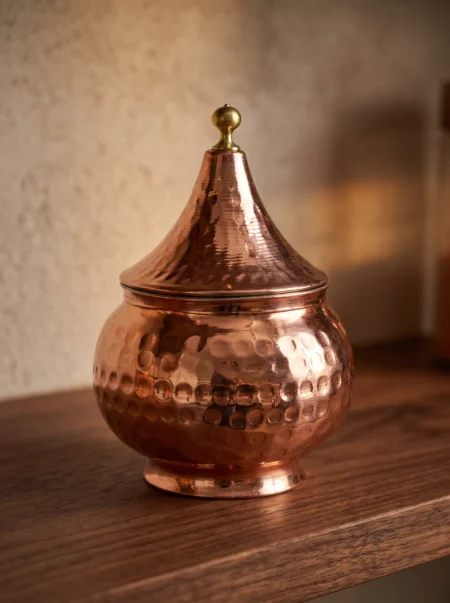
Tabbal Domed Copper Spice Jar — hand-hammered, polished copper
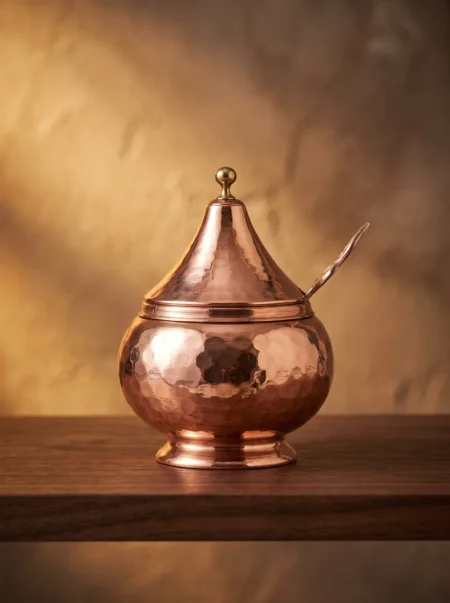
Tabbal Copper Spice Jar — hand-hammered, polished copper
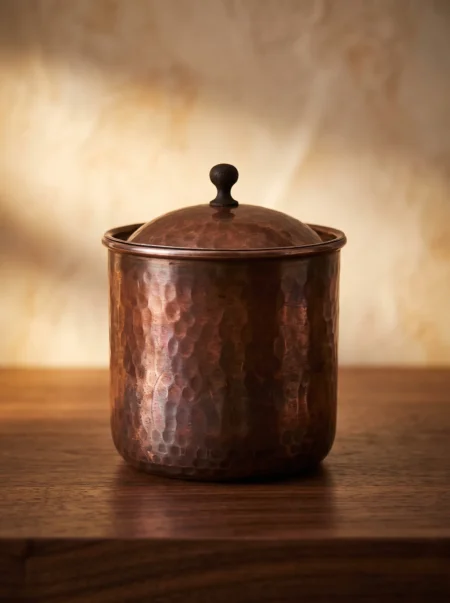
Safran Copper Spice Jar — No. 1, hand-hammered, oxidised
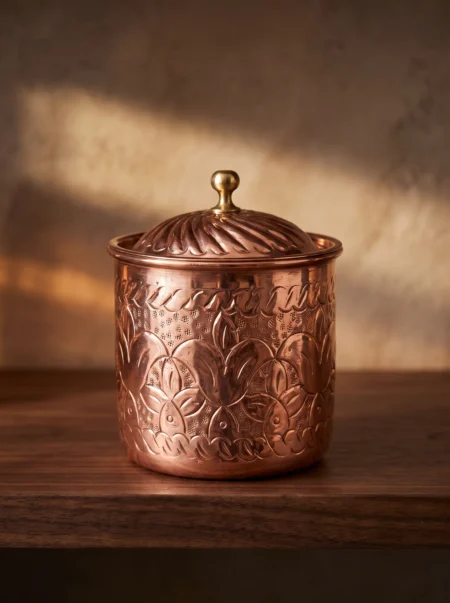
Safran Copper Spice Jar — No. 1, hand-engraved, polished copper
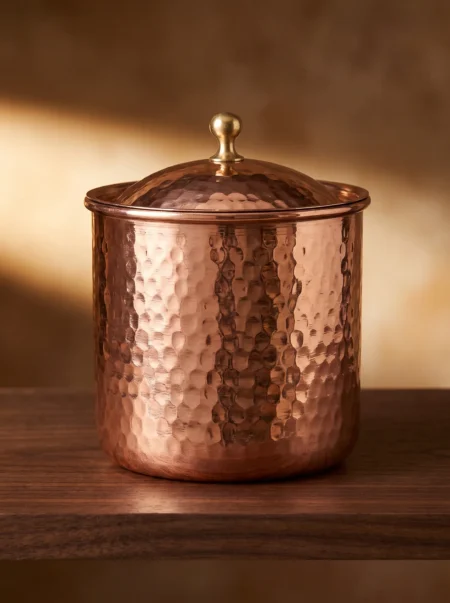
Safran Copper Spice Jar — No. 2, hand-hammered, polished copper
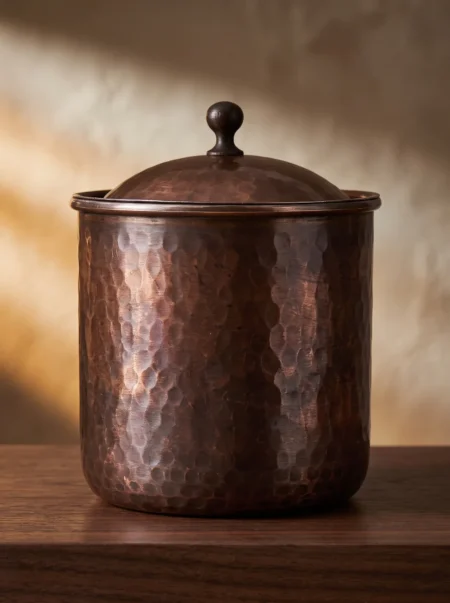
Safran Copper Spice Jar — No. 2, hand-hammered, oxidised
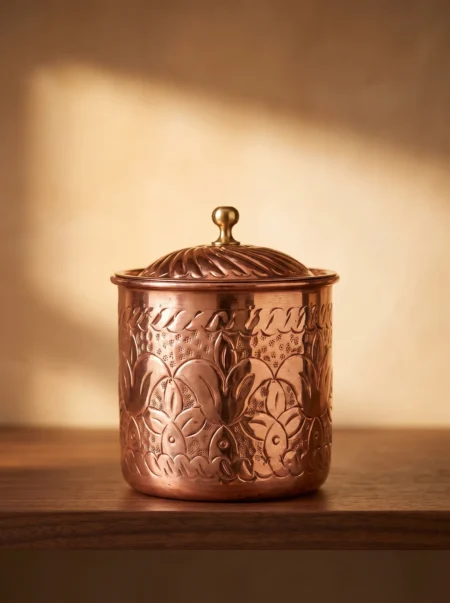
Safran Copper Spice Jar — No. 2, hand-engraved, polished copper
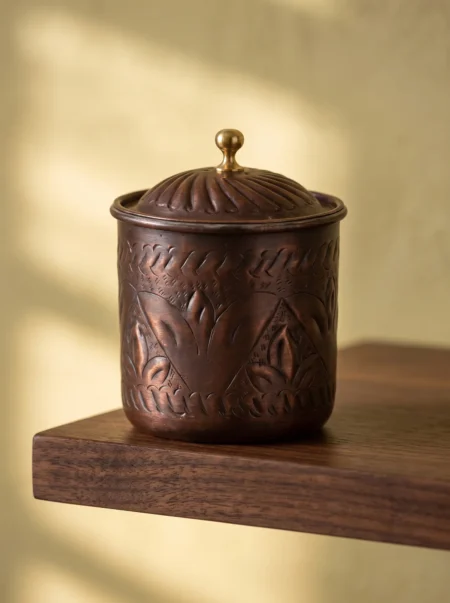
Safran Copper Spice Jar — No. 2, hand-engraved, oxidised
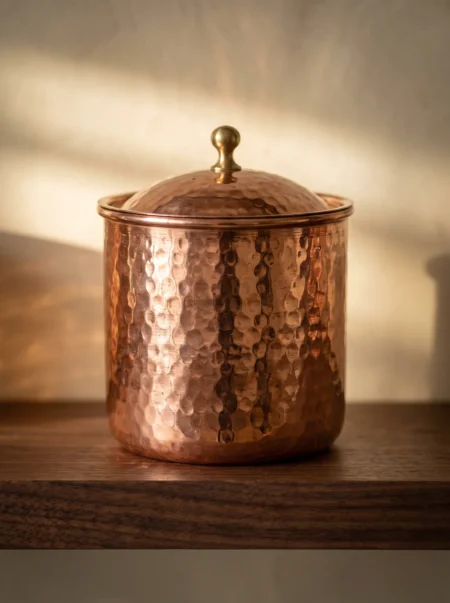
Safran Copper Spice Jar — No. 3, hand-hammered, polished copper
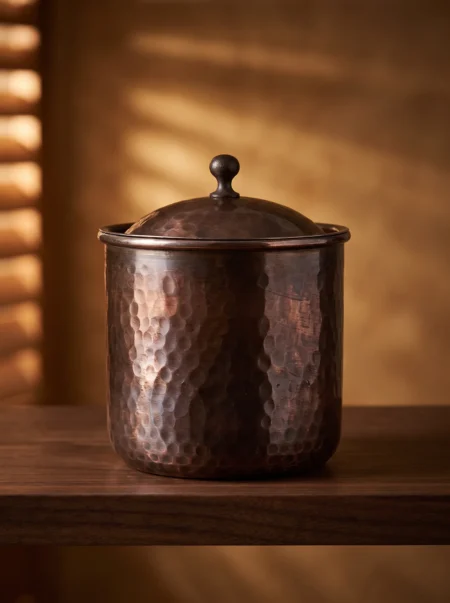
Safran Copper Spice Jar — No. 3, hand-hammered, oxidised
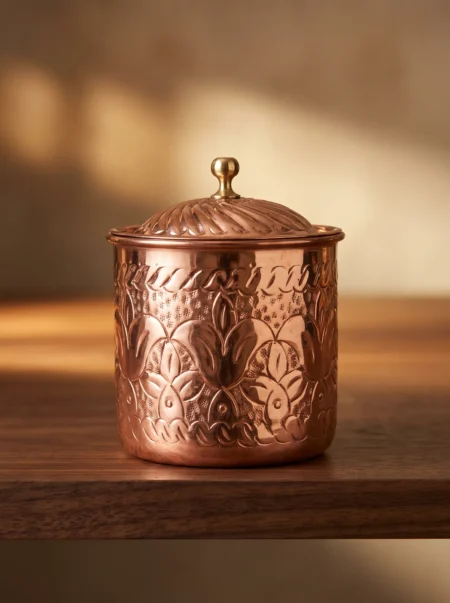
Safran Copper Spice Jar — No. 3, hand-engraved, polished copper
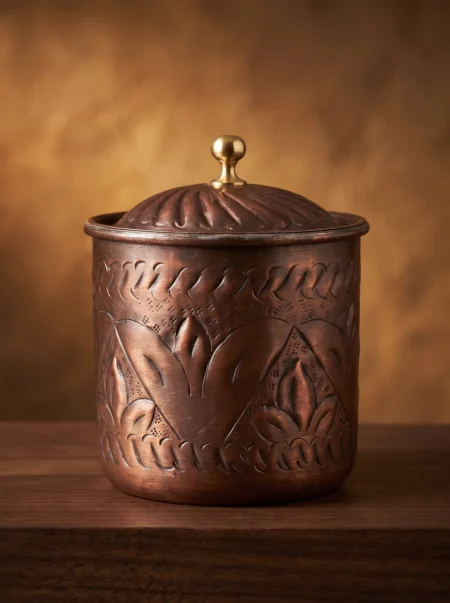
Safran Copper Spice Jar — No. 3, hand-engraved, oxidised
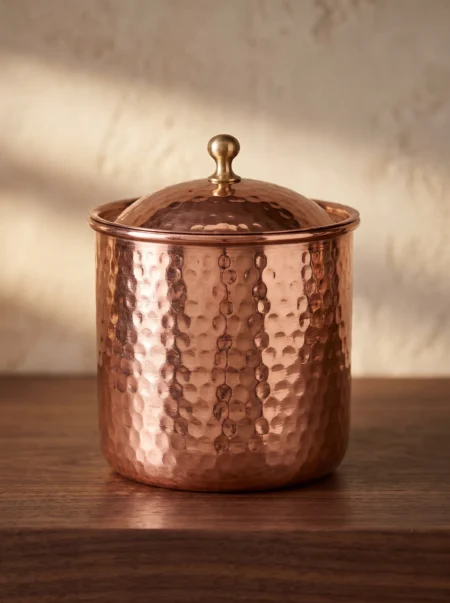
Safran Copper Spice Jar — No. 4, hand-hammered, polished copper
Copper spice jars, also sold as copper spice containers, are made to protect dry spices from light and moisture. The range has two series: the Safran jars, listed in numbered sizes, and the dome-lidded Tabbal jars. Both are made by hand in Kahramanmaraş and tinned on the inside.
What spoils a spice, and what a metal jar does about it
The smell and taste of a spice come from its volatile oils, and three things damage them: light, moisture and air. Red pepper, thyme or sumac kept in a clear jar on a bright counter loses both colour and aroma within a few months. A copper body lets no light through at all, so it slows that loss.
On moisture, the lid decides. How closely the lid seats on the body determines how well the jar keeps damp out, which makes the lid the more important part of a spice jar. Never fill a jar that is not completely dry after washing; a single drop of water left inside is enough to make a dry spice clump.
Series and sizes in the range
| Model | Weight | Sheet thickness | Finishes |
|---|---|---|---|
| Safran No. 1 | 210 g | 0.60 mm | Polished copper, oxidised |
| Safran No. 2 | 230 g | 0.60 mm | Polished copper, oxidised |
| Safran No. 3 | 290 g | 0.70 mm | Polished copper, oxidised |
| Safran No. 4 | 350 g | 0.70 mm | Polished copper, oxidised |
| Tabbal dome | 130 g | 0.80 mm | Polished copper, nickel-plated |
| Tabbal dome with spoon | 120 g | 0.70 mm | Polished copper, nickel-plated |
The Safran series also comes as a set of 4, with sizes No. 1 to No. 4 together; lined up in rising order they make a tidy row on a counter or a shop shelf. The same series is listed in two versions, hand-hammered and hand-decorated; on the hand-decorated pieces the pattern on the surface is more pronounced.
How to choose
- Size: a small number is enough for expensive spices used sparingly. For red pepper, cumin or black pepper, which go quickly, No. 3 and No. 4 need refilling less often.
- Set or single sizes: a set of 4 suits a buyer furnishing a kitchen or a gift shelf in one go; single sizes suit a retailer filling gaps or a restaurant that needs one size in quantity.
- With a spoon: the Tabbal version with its own spoon makes measuring easier and is the usual choice for spices in daily use.
- Finish: polished copper adds a warm tone but shows fingerprints more; oxidised hides marks with its darker colour; nickel-plated has a silver-tone look and holds its look better in a damp kitchen.
Tin, cleaning and filling
The interior surfaces that meet the spice are tinned in the traditional way. Because the jar holds dry contents, the tin wears more slowly than in a vessel that carries liquid; even so, with heavy use it is worth checking every one to two years and renewing it once reddish copper starts to show through.
Wash by hand: warm water, a soft sponge, then dry completely. A dishwasher damages both the tin and the outer surface. Do not keep wet spice mixes, brines or pastes in these jars; they are meant for dry contents. If the outside darkens, rub it with salt on half a lemon or with a paste of flour, vinegar and salt, rinse and dry. Tarnish is the natural reaction of copper with air, not a defect. The full routine is on copper care.
Small-piece work in Kahramanmaraş
Small vessels ask for more patience than large ones. The body of a spice jar fits in the palm of a hand, and at that scale the coppersmith has to strike lighter and more often and seat the lid to within a fraction of a millimetre. A dome lid also has to be raised without losing its curve. These small pieces show the precision of hand-work in Kahramanmaraş more clearly than almost anything else in the range.
What drives the unit cost of a copper spice jar
Size and surface work set the cost. Empty weight runs from about 120 grams to 350 grams, and as the number rises both the body and the lid get heavier. The second factor is the decoration: hand-hammered and hand-decorated bodies involve different steps. Sets bring every size together and are quoted as a set rather than as the sum of single jars. We do not publish a price list; send the list and we quote for that order.
Models, sets and sizes
In a spice jar, size rises with the number, and the empty weight shows that rise directly. The smallest size holds a single spice in modest quantity; the largest holds the one used most every day. The dome-shaped jars sit outside that sequence: they stand lower, and the spoon version carries its own spoon under the lid.
How the lid seats matters more than size; a loose lid lets damp in. On a copper jar the seal comes from the lid and the rim meeting closely, not from a separate gasket. Finishes are polished copper, oxidised and nickel-plated. For a buyer-side view of linings, salt and shelf life, read wholesale copper spice containers.
Frequently asked questions
Do spices go off in a copper jar?
Used properly, they keep longer. The copper body lets no light through, so colour and aroma fade more slowly; the contents only need to be dry and the lid kept on.
Is the inside of the spice jar tinned?
Yes, the interior that meets the spice is tinned in the traditional way. The tin is the protective layer that keeps the spice from touching the copper directly.
Which size should I order?
Larger numbers for spices used often, smaller ones for those used rarely. In the Safran series No. 1 weighs 210 grams and No. 4 weighs 350 grams, and the volume increases with the number.
Do the spice jar sets work as gifts?
The sets of 4 are a common housewarming gift, which makes them a steady line for gift retailers. To see them alongside the other containers, browse copper jars, pails and ice buckets; to complete the table, see copper sugar bowls and candy dishes.