
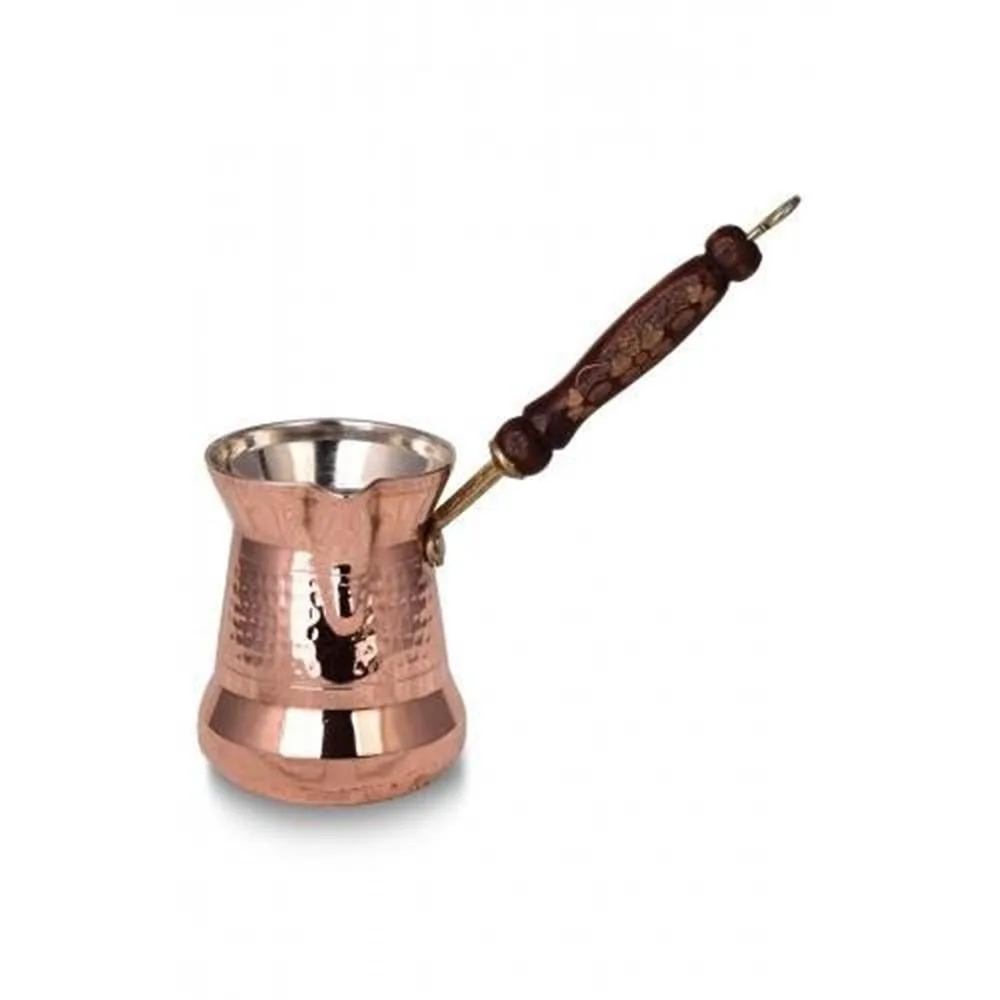
Copper Cookware
Type
Technique
Finish
Sheet thickness
Copper cookware is the part of the BakırBul catalogue that goes on a hob or into an oven: Turkish coffee pots, double teapots, cooking pots, frying pans, wok pans and baking trays. Copper spreads heat faster and more evenly than steel or cast iron, and food-contact surfaces are tinned. Size and sheet thickness decide the choice.
Showing 1–16 of 255 results
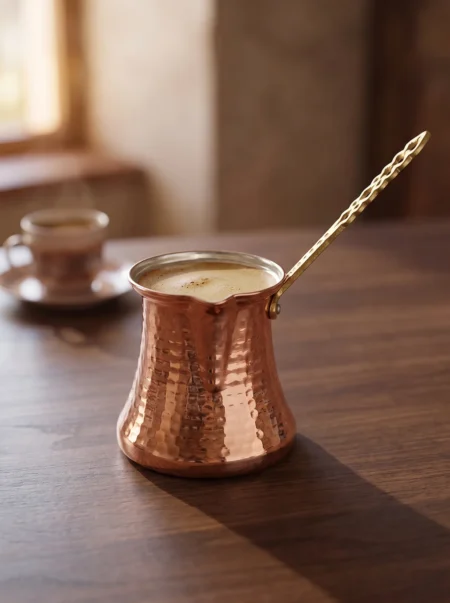
Kervan Copper Turkish Coffee Pot — No. 2, 2 Turkish coffee cups (150 ml), light gauge, machine-hammered, polished copper
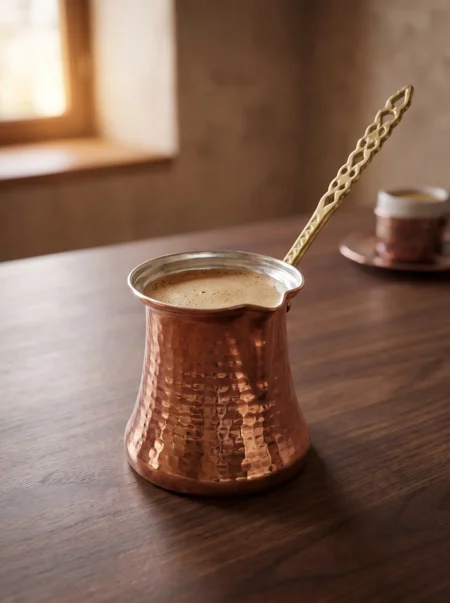
Kervan Copper Turkish Coffee Pot — No. 1, 1 Turkish coffee cups (90 ml), light gauge, machine-hammered, polished copper
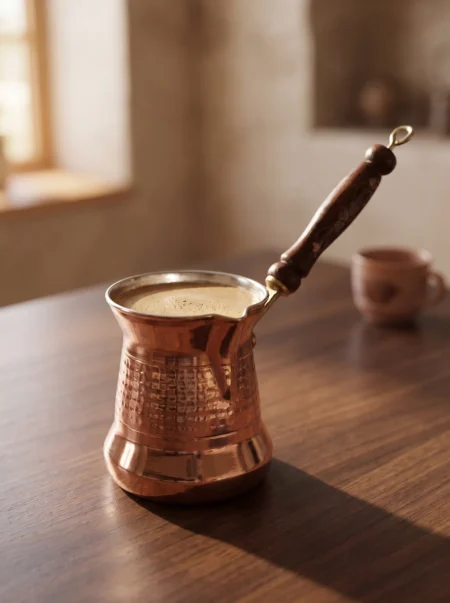
Sultan Copper Turkish Coffee Pot — No. 1, 2 Turkish coffee cups (200 ml), heavy gauge, wooden handle, machine-hammered, polished copper
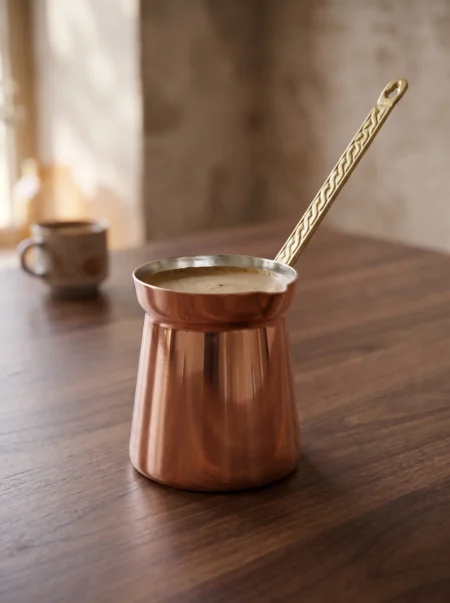
Moda Copper Turkish Coffee Pot — 7 cm, smooth, polished copper
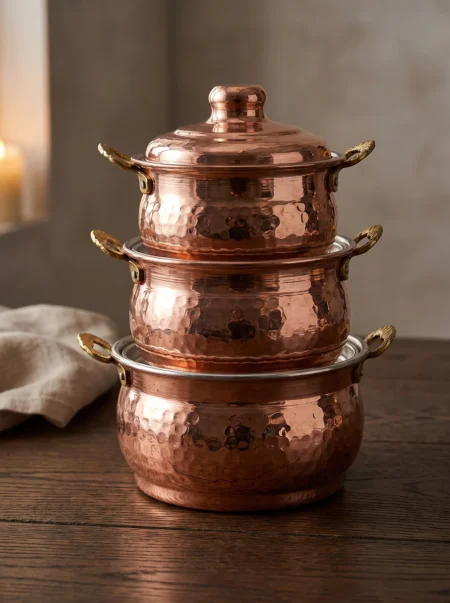
Mini Copper Casserole, Set of 3 — hand-hammered, polished copper
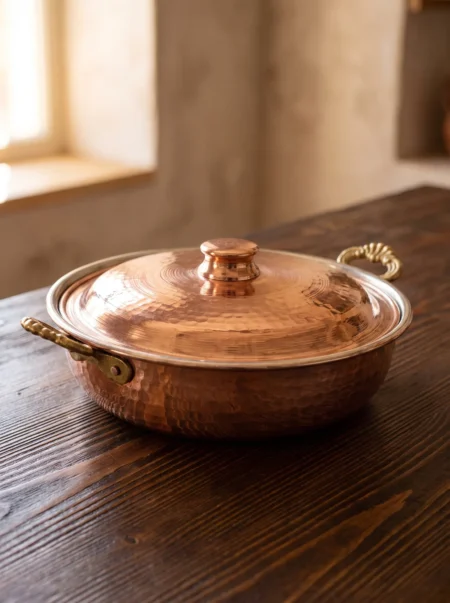
Beyoğlu Copper Frying Pan — No. 1, 18 cm, hand-hammered, polished copper
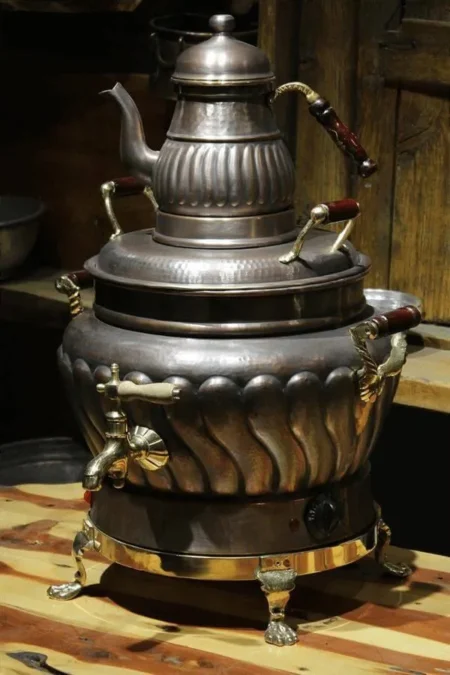
Hünkar Round Fluted Copper Electric Samovar — No. 3, oxidised
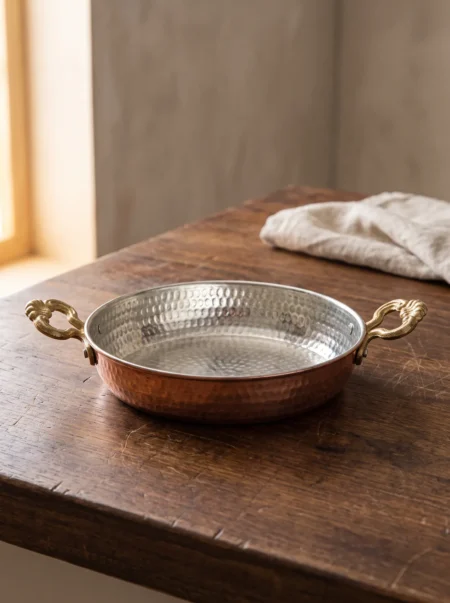
Acemli Copper Frying Pan — No. 3, 18 cm, machine-hammered, polished copper
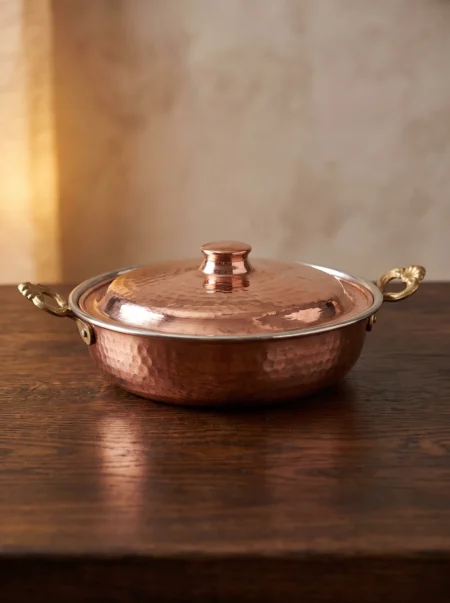
Beyoğlu Copper Frying Pan — No. 4, 24 cm, hand-hammered, polished copper
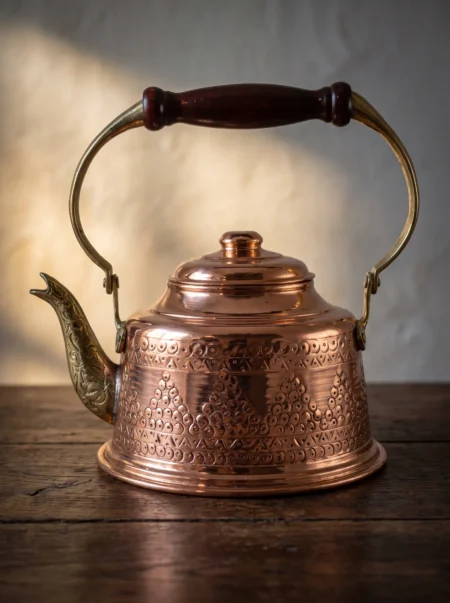
Maraş Copper Teapot — punch-decorated, polished copper
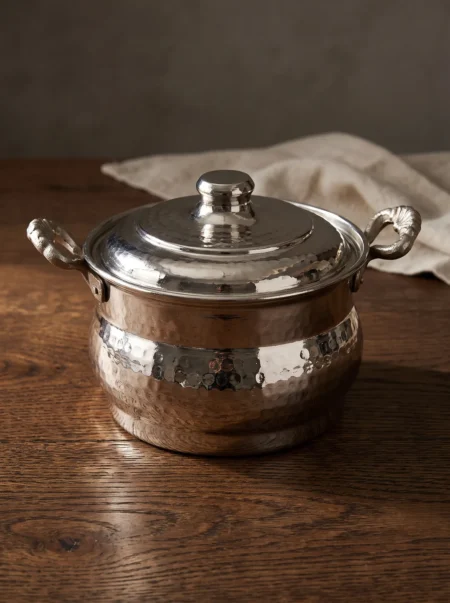
Maraş Copper Casserole — No. 3, 22 cm, hand-hammered, nickel-plated
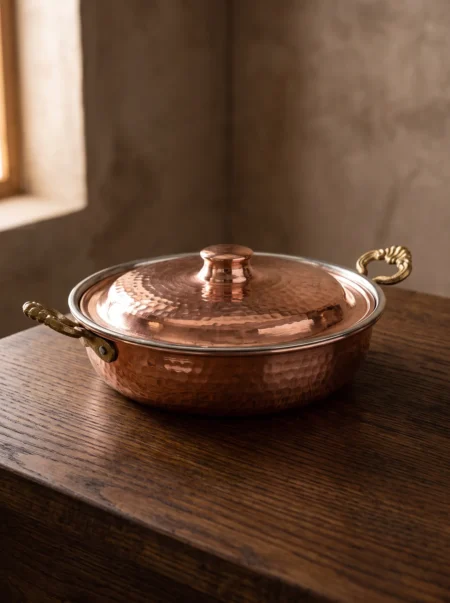
Beyoğlu Copper Frying Pan — No. 5, 27 cm, hand-hammered, polished copper
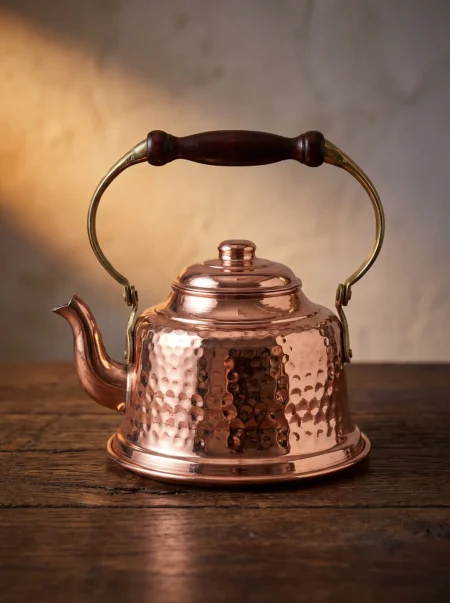
Maraş Copper Teapot — hand-hammered, polished copper
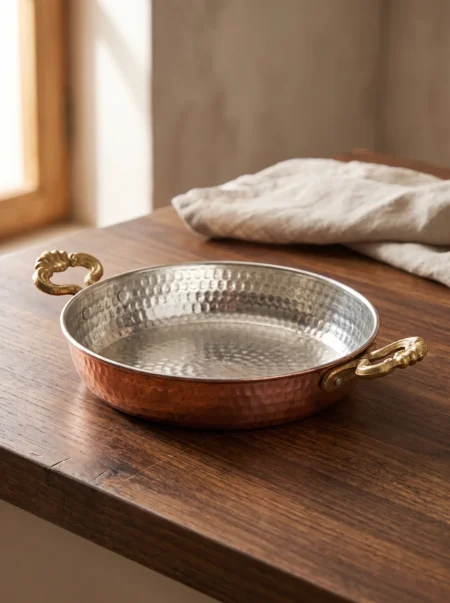
Acemli Copper Frying Pan — No. 1, 14 cm, machine-hammered, polished copper
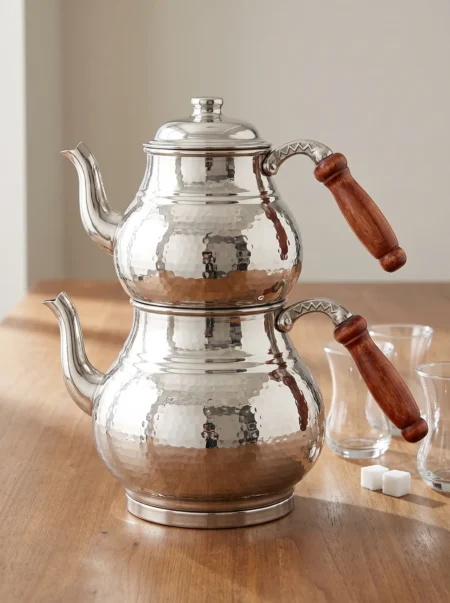
Klasik Copper Turkish Double Teapot — No. 3, light gauge, hand-hammered, nickel-plated
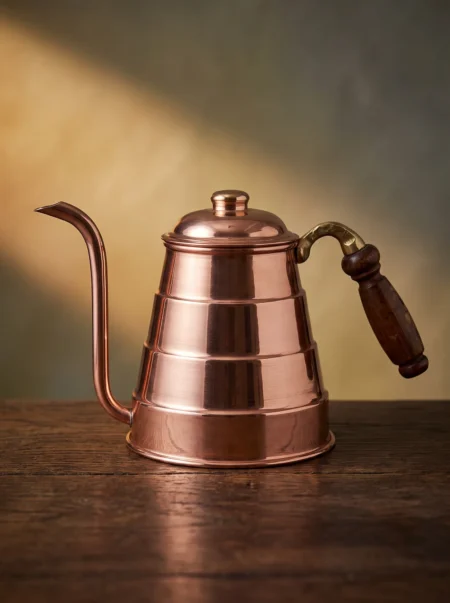
Tiryaki Copper Teapot — smooth, polished copper
This branch brings together every piece in the range that works with heat, from the smallest Turkish coffee pot to the widest baking tray. We produce in Kahramanmaraş, Türkiye, through a long-term partnership with a local workshop, and we supply importers, retailers, restaurants and hotels abroad. The bodies are shaped by hammering and the food-contact surfaces are tinned. No prices are shown on the English catalogue: every quotation is prepared per order from your list.
The sub-categories and what they cover
The cookware branch is divided into the groups below. The first five hold most of the range:
- Copper Turkish coffee pot — Turkish coffee pots: single pieces and sets of 3 and 5, from one-cup bodies up to seven Turkish coffee cups, with brass or wooden handles.
- Copper frying pans: diameters from 14 cm to 27 cm, lidded and open bodies, sheet from 0.50 mm to 1.30 mm.
- Copper cooking pots: from a 12 cm mini casserole to a 36 cm pot, with single long handles or two side handles.
- Copper Turkish double teapots: Nos. 1, 2 and 3, classic and fluted bodies, and sets with a warmer.
- Copper baking trays: round, low-sided trays for the oven, from 16 cm to 36 cm.
Beyond these five, the branch also holds butter warmers and sauce dishes, stand-alone teapots, wok pans, teapot warmers, olive oil cruets and electric samovars. A piece marked as currently out of stock can still be quoted: ask about a production run.
What changes when you cook in copper
Copper conducts heat far faster and more evenly than stainless steel or cast iron. Even when the flame touches one spot on the base, the temperature spreads across the whole surface within moments, so scorched patches are less likely. Milk puddings, sauces, jams and sugar work, all of which catch easily on the base, are more forgiving in a copper pan.
The same property works in reverse: lift copper off the heat and it gives the heat back quickly. That makes it easier to stop caramel at exactly the colour you want, or to take coffee off before it boils over. Because copper is not magnetic, it does not work on an induction hob unless an interface disc is placed between hob and pan; it is used on gas and electric hobs, and flat-based bodies give the best contact on electric plates. The detail is in does copper work on induction and copper pans on gas, electric and glass stoves.
Choosing size, thickness and technique
Copper vessels are named by number rather than by diameter. For cooking pots, No. 1 is 16 cm and each number adds 2 cm, so No. 11 is 36 cm. For frying pans, No. 1 is 14 cm and the numbers climb the same way. The table gives a starting point for common needs:
| Need | Group | Size range |
|---|---|---|
| Two to four cups of Turkish coffee a day | Turkish Coffee Pot | 250–350 ml |
| A meal for two or three | Cooking pot | Nos. 1–3 (16–20 cm) |
| A meal for five or six | Cooking pot | Nos. 5–7 (24–28 cm) |
| Eggs, sausage and vegetables at breakfast | Frying pan | Nos. 1–3 (14–18 cm) |
| Tea for a full table | Double teapot | No. 2 or 3, heavy gauge |
The second deciding factor is sheet thickness. Most bodies in the branch sit between 0.50 mm and 1.30 mm. Light gauge heats fast and stays light, which suits short jobs such as coffee, milk and sauces. Heavy gauge holds heat longer and stands up better to long simmering and daily use. The production technique sets the look: hand-hammered bodies show clear hammer marks and no two pieces come out alike, while machine-hammered bodies carry a more regular pattern.
Tin, care and hob compatibility
Copper vessels used for cooking are tinned on the inside. Tin is the protective layer that keeps acidic food from sitting in direct contact with copper. It wears with use; under heavy use it is usually renewed every one to two years. When the tin lifts in places and the reddish copper beneath starts to show, the piece is due for re-tinning.
Copper does not go in the dishwasher: detergent and high temperature damage both the tin and the outer surface. Wash by hand with a soft sponge and warm water, and dry straight away. Darkening on the outside is not a defect but the normal reaction of copper with air; lemon and salt, or a paste of flour, vinegar and salt, brings the shine back. The full routine is in how to care for copper cookware.
Cooking vessels from Kahramanmaraş
Kahramanmaraş copper handcraft carries a registered Turkish geographical indication. In the town’s workshops, sheet copper is first heated to soften it, then hollowed with the hammer to raise the body; handles, lids and spouts are added as separate parts. For vessels that go on the fire this order matters, because the thickness and depth of the body decide how heat behaves during cooking.
What shapes a quotation
Every piece in this branch is costed on the same four factors: size, sheet thickness, production technique and surface finish. The same form in heavy gauge uses noticeably more copper. A hand-hammered body takes more working hours than one shaped under a press. Weights run from around 60 g for the smallest Turkish coffee pot to more than 2.5 kg for the largest pots, and most of the difference between two quotations is explained by where a piece sits in that band. Send the list with quantities and the destination country, and the quotation comes back per order, with the lead time agreed for that order. The process is set out on the wholesale page.
Models and sizes
In this branch the choice follows the vessel’s relationship with fire. For pieces that sit directly on a hob, thickness and a flat base come first; for serving and storage pieces, size and finish decide. Capacities run from a 90 ml Turkish coffee pot to pots of several litres.
Product names carry size and finish together: the number, the centimetre value, light gauge or heavy gauge, and then the surface, such as smooth, fluted, punch-decorated or engraved. Finishes across the branch include polished copper, oxidised, nickel-plated and brushed matt.
Frequently asked questions
Can copper cookware be used on an induction hob?
No, not on its own. Copper is not a magnetic metal, so an induction hob does not detect the body and does not heat it. An interface disc can bridge the gap at some cost in efficiency; otherwise these pieces are made for gas and electric hobs.
Do the pieces arrive tinned inside?
Yes, the pieces used for cooking are sent with the food-contact surface tinned. Tin thins with use; when the reddish copper starts to show from inside, the piece is re-tinned rather than replaced.
Can copper cookware go in the dishwasher?
No. Dishwasher detergent and high temperature damage the tin layer and the outer surface. Wash by hand in warm water with a soft sponge and dry at once.
Can I order wholesale quantities?
Yes. The English side of the catalogue works by quotation. Send your list with quantities and the destination country; there is no single published minimum, because the threshold differs from product to product.
Why are no prices shown?
Prices depend on quantity, finish, tinning, packing and destination, so a single shelf price would be wrong for most orders. Each quotation is prepared in writing for the order in front of us.