
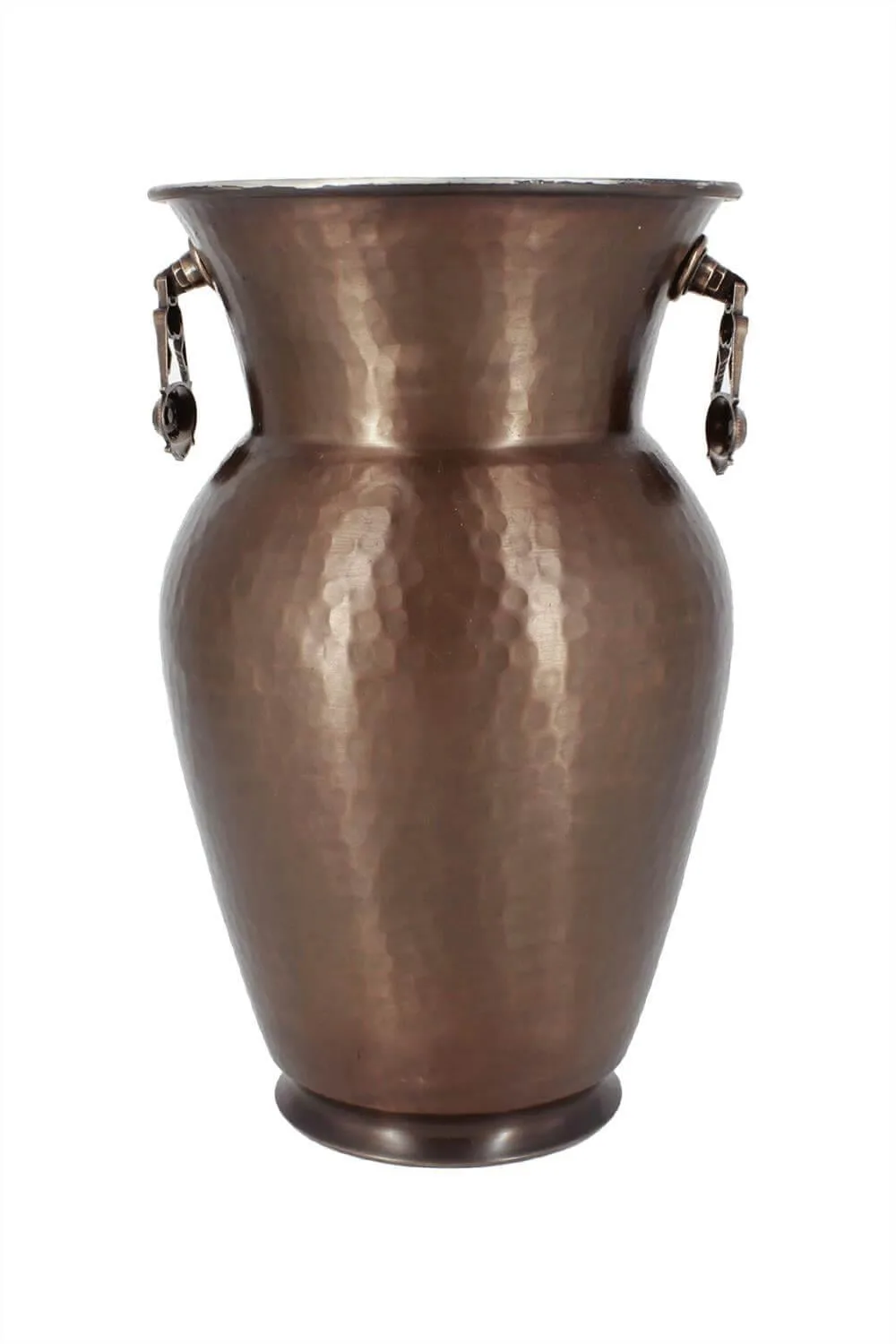
Copper Vases
Type
Technique
Finish
Sheet thickness
A copper vase is a décor piece that speaks through its own body more than its flowers; even empty, it gives a table a centre of gravity. The choice is made by height and mouth width, and fresh flowers need either an inner liner or frequent water changes. BakırBul supplies copper vases to trade buyers, quoted per order.
Showing all 9 results
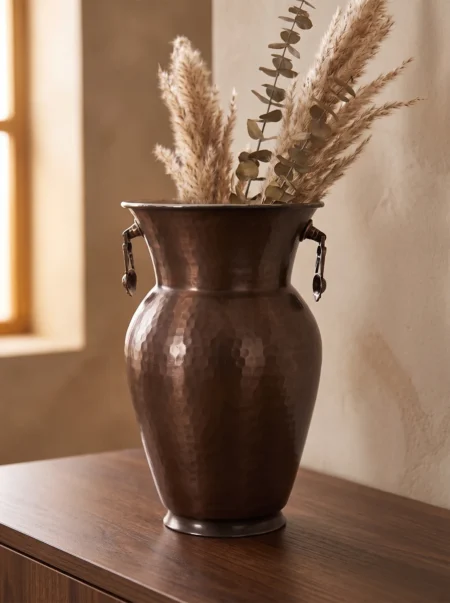
Güldane Copper Vase — hand-hammered, oxidised
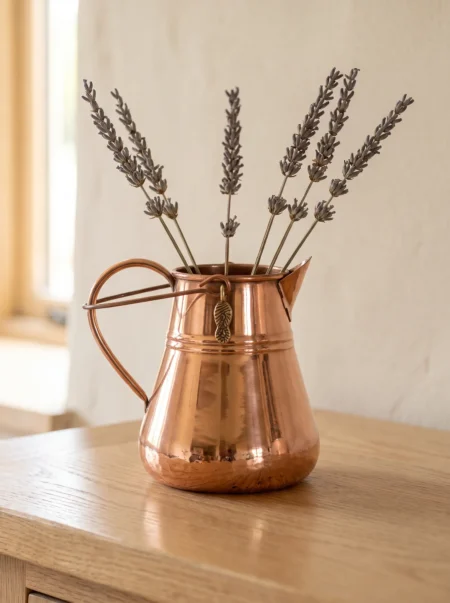
Copper Vase — 15 cm, smooth, polished copper
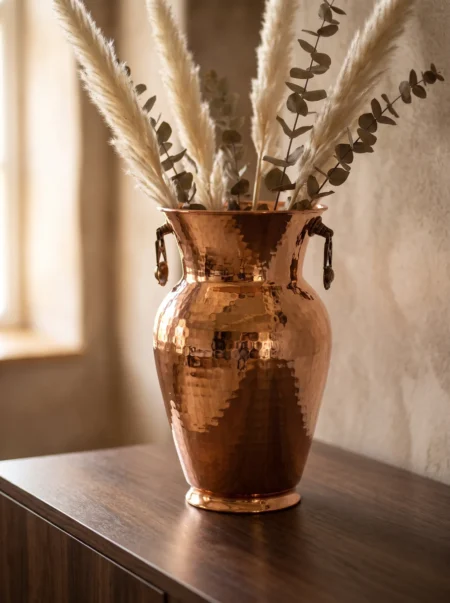
Güldane Copper Vase — hand-hammered, polished copper
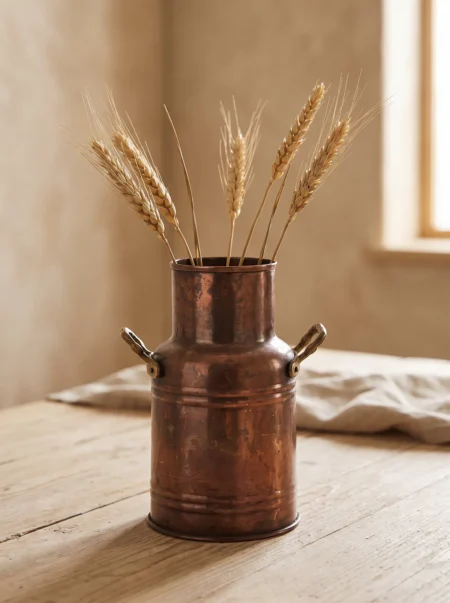
Armağan Copper Vase — 18 cm, smooth, oxidised
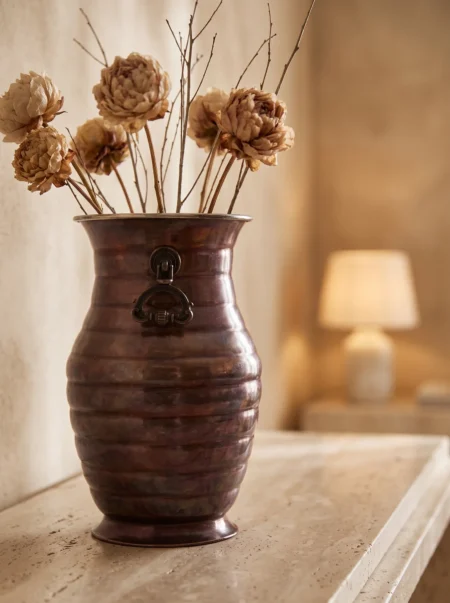
Sümbüllü Copper Vase — smooth, oxidised
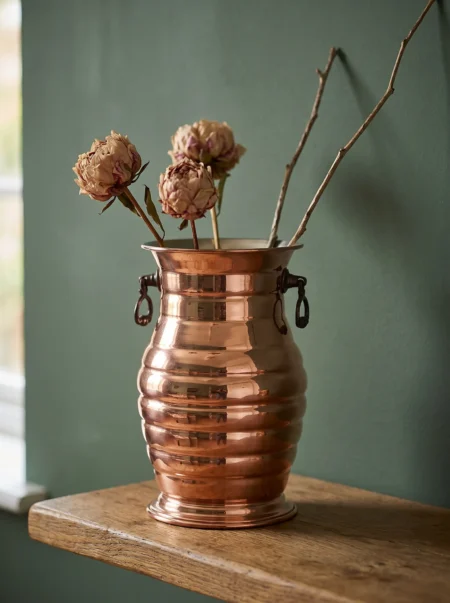
Sümbüllü Handled Copper Vase — smooth, polished copper
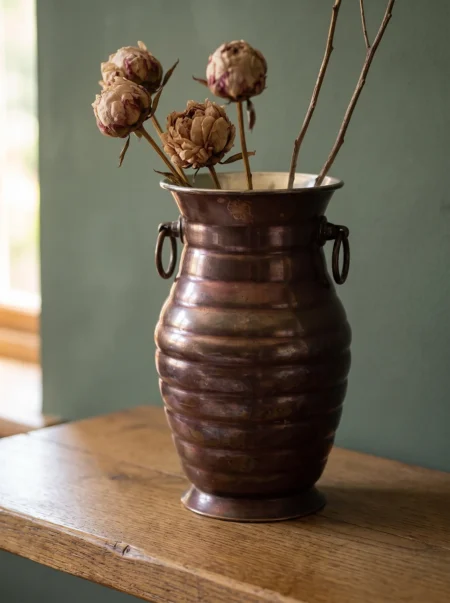
Sümbüllü Handled Copper Vase — smooth, oxidised
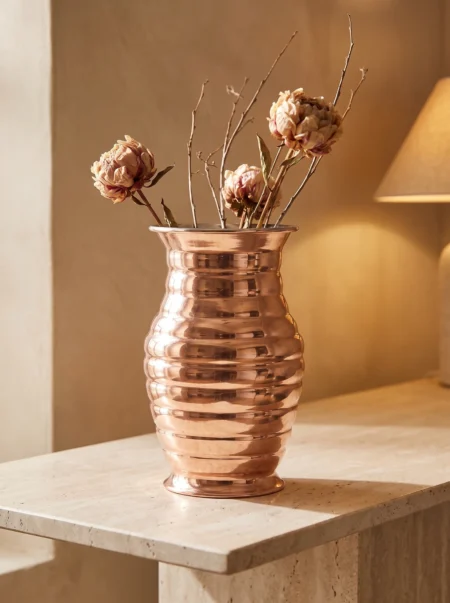
Sümbüllü Copper Vase — smooth, polished copper
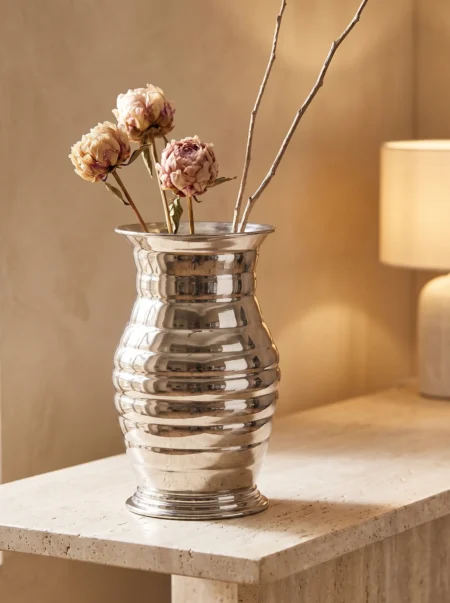
Sümbüllü Copper Vase — smooth, nickel-plated
The range covers the hand-hammered Güldane, the smooth-bodied Armağan and a slim 15 cm smooth vase, and the Sümbüllü vases in versions with and without handles. They are made in Kahramanmaraş.
Models and sizes
With a vase, the choice is mostly about height and mouth width. Long-stemmed flowers need a wide, deep body; short bunches sit better in a low, compact form.
| Model | Size | Sheet thickness | Weight |
|---|---|---|---|
| Güldane, hand-hammered | 15 cm across, 25.5 cm tall | 0.50 mm | 650 g |
| Sümbüllü, handleless | 21 cm tall | 0.70 mm | 480 g |
| Sümbüllü, with handles | 21 cm tall, wider mouth | 0.70 mm | about 500 g |
| Armağan, smooth | 18 cm | 0.50 mm | 348 g |
| Slim smooth vase | 15 cm | 0.45 mm | 352 g |
The Güldane series is hand-hammered, with clear hammer marks on the body, in polished copper and oxidised. The Sümbüllü series has a smooth body in polished copper, oxidised and nickel-plated, and the version with handles takes more stems through its wider mouth. The Armağan and the 15 cm vase are thin-walled, light, and designed for a single stem or a small bunch.
Dried flowers or fresh?
The honest answer: a copper vase causes no trouble at all with dried flowers, cotton stems and artificial arrangements. It can hold fresh flowers too, but there is something to know. Copper oxidises in constant contact with water; water left standing in the vase for days first dulls the interior, then forms a greenish layer. That layer does not harm the body, but copper dissolving into the water can shorten the life of some flowers.
In practice there are three ways round it. The first is to set a glass or plastic liner of the right size inside the vase; it is the cleanest solution and cannot be seen from outside. The second is to empty the water completely every two days, rinse the vase and dry it. The third is to keep the vase for dried arrangements from the start. Whichever you choose, do not leave the vase standing with water in it for long; forgotten water leaves more marks than anything else.
Care and placement
There is no lacquer on these vases, so the outside will darken over time and can always be brought back. For dusting a dry soft cloth is enough; when the surface dulls, use lemon and salt or a flour, vinegar and salt paste, then rinse and dry straight away. Do not use polish on oxidised models, or the aged tone will lift. When placing a vase, think about how copper works with light: near a window it changes colour through the day, and under an evening lamp the body turns towards red. Beside glass and white ceramic the contrast is at its highest.
What makes a vase difficult
Hammering a vase is a different challenge from hammering a pot: the body narrows upwards and then opens again, so the hammer is working on an inner surface the coppersmith cannot see. In Kahramanmaraş this is done with long-handled hammers over stakes set inside the vessel. That is where the irregular spread of marks on hand-hammered models such as the Güldane comes from; machine work gives a regular pattern, while by hand every vase carries its own rhythm.
What drives the unit cost of a copper vase
Height and the work on the body set the cost. Weight runs from about 350 grams to 650 grams, and sheet thickness from 0.45 to 0.70 millimetres, with thinner bodies staying lighter. Handled forms add a separately shaped part to the body and are costed differently from handleless ones. Hand-hammered bodies carry more labour; smooth bodies stay simpler. We do not publish prices; send your list and we quote for that order.
Florists, hotels and event buyers who need liner sizes, water-contact advice and finish choices in more depth can read wholesale copper vases.
Frequently asked questions
Can a copper vase hold water?
Yes, but not for long stretches. Water oxidises the interior it touches over time; an inner liner, or changing the water every two days and drying the vase, largely prevents the marks.
Is the inside of the vase tinned?
No. A vase is not a food vessel, so it carries no tin lining. For the water-contact side, the liner advice above applies. If the same body is meant for food or drink, that is a different specification and has to be stated before the order.
Which model suits long-stemmed flowers?
The 25.5 cm Güldane and the 21 cm Sümbüllü with handles balance long stems. The 15–18 cm Armağan and slim smooth vase suit short bunches and single stems.
Do the vases tip over?
They weigh between about 350 and 650 grams and are light when empty. For long-stemmed arrangements, a few marbles or clean pebbles in the base improve stability noticeably. For living plants, copper planters are a better starting point; the other pieces for the table are under copper home décor.