
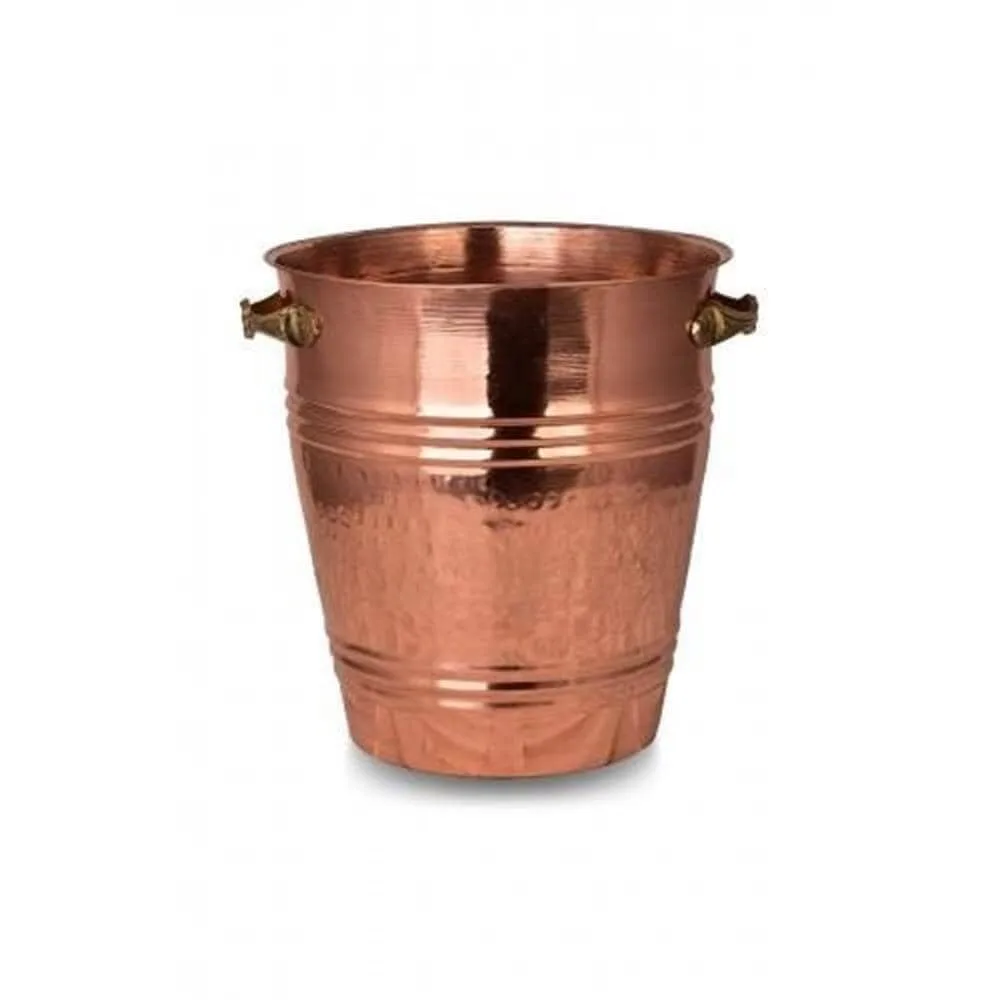
Copper Ice Buckets
Type
Technique
Finish
Sheet thickness
A copper ice bucket is a wide-mouthed vessel that brings ice to the table and, when it is deep enough, chills a bottle; the thin metal wall takes the cold of the ice almost at once. The choice is made by diameter and depth. BakırBul supplies copper ice buckets to trade buyers, quoted per order.
Showing all 5 results
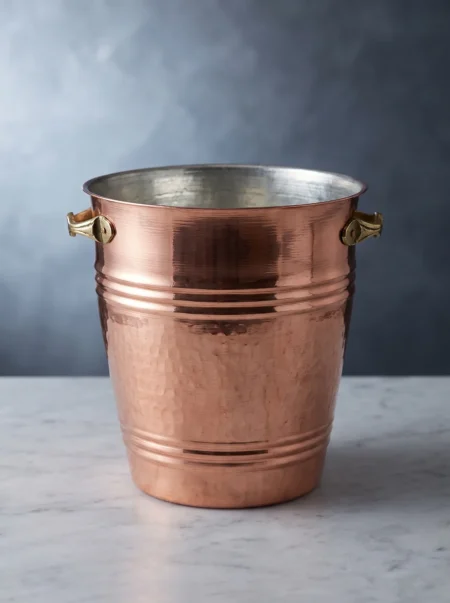
Gerdel Copper Ice Bucket — hand-hammered, polished copper
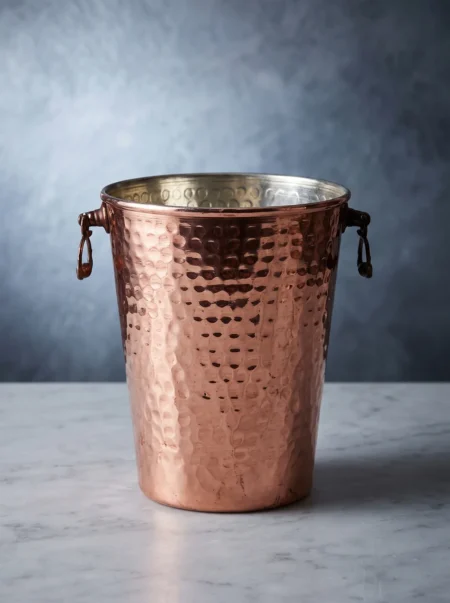
Adalı Copper Ice Bucket — 15 cm, hand-hammered, polished copper
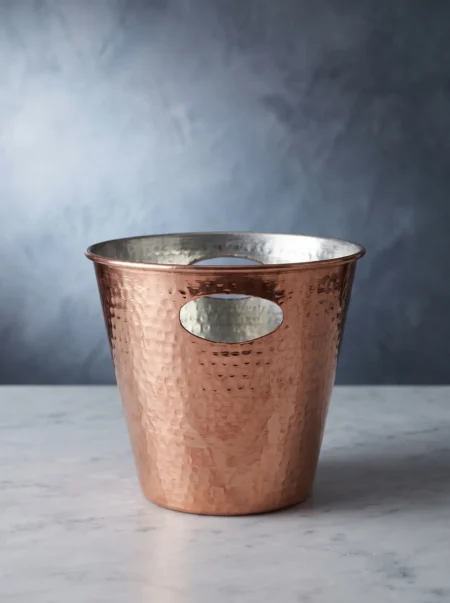
Mercan Copper Ice Bucket — 24 cm, hand-hammered, polished copper
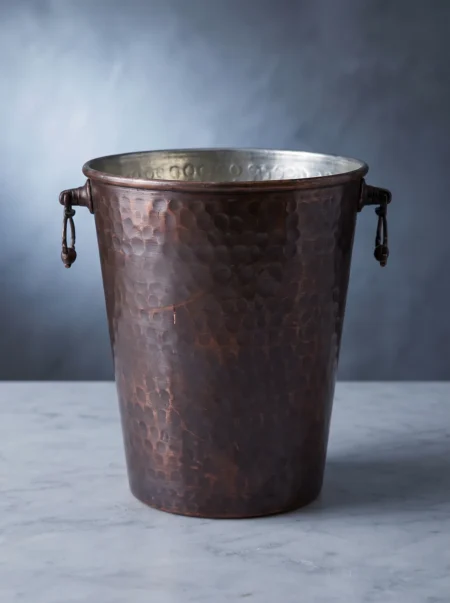
Adalı Copper Ice Bucket — 15 cm, hand-hammered, oxidised
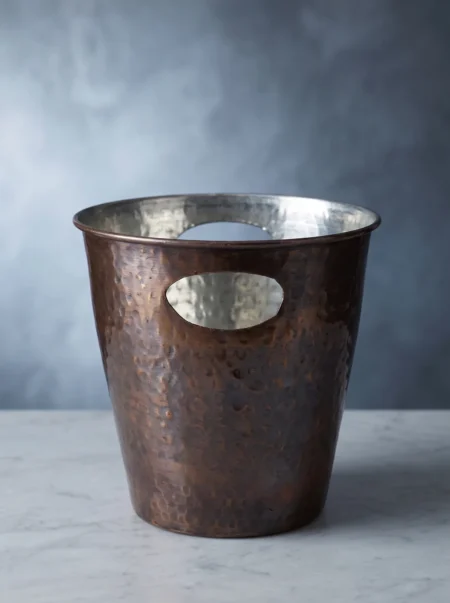
Mercan Copper Ice Bucket — 24 cm, hand-hammered, oxidised
The range covers the 15 cm Adalı, the 24 cm Mercan and the deeper-bodied Gerdel, each hand-hammered in Kahramanmaraş; Adalı and Mercan come in polished copper and oxidised, and Gerdel in polished copper.
Why copper’s heat conduction works in your favour here
Fast heat conduction is usually thought of as a cooking property. In an ice bucket the same property runs the other way and becomes useful. The moment ice goes in, the thin copper wall spreads the cold through the whole body: within a few minutes the bucket feels cold to the touch, and in humid air beads of condensation form on the outside. You can see and feel that the ice is genuinely cold.
The second, more important point is thermal load. A thick ceramic or heavy glass bucket gives the heat it stored at room temperature back to the ice in the first minutes, so some of the ice melts before the vessel has cooled. Thin copper sheet carries far less heat; the bucket adds little extra load from its own mass, drops quickly to the temperature of the ice and stays there.
That should not be overstated: copper is not an insulator and passes room heat as well. Chilling the bucket in the fridge for a few minutes before filling, keeping it out of direct sun, and using large blocks of ice rather than small cubes are the three simple steps that make the real difference.
Models in the range, and how to choose
| Model | Size | Sheet | Technique | Finish | Best for |
|---|---|---|---|---|---|
| Adalı | 15 cm | 0.80 mm | Hand-hammered | Polished copper, oxidised | A small table, ice for two or three people |
| Mercan | 24 cm | 0.80 mm | Hand-hammered | Polished copper, oxidised | A larger table, chilling a bottle |
| Gerdel | Deep body | 0.55 mm | Hand-hammered | Polished copper | Busy service, keeping ice on hand for longer |
- Size: for ice service alone, the 15 cm body is enough. If you also want to chill a bottle, you need the 24 cm model, deep enough to take a bottle up to its neck.
- Finish: the outside of an ice bucket sweats constantly, and as the drops dry they leave marks. An oxidised finish shows these marks less than polished copper; polished copper, in turn, stands out more on the table.
- Hand-hammered surface: the hammer marks are not only decorative. The dimpled surface holds water droplets and makes the bucket less slippery in a wet hand. Every piece has its own pattern.
Use and care
The interior of the bucket is tinned in the traditional way. Because it is in constant contact with water and condensation, this is a vessel whose care should not be skipped: after service, pour away the meltwater, rinse with warm water, dry with a soft cloth and do not put it away until it has been turned upside down to drain. Water forgotten in the base tires the tin and leaves lasting marks on the surface.
It does not go in the dishwasher; detergent and high temperature damage the tin and the outer surface. Do not pour citrus drink mixes directly into the bucket; keep it for ice. Clean a tarnished outside with salt on half a lemon or a paste of flour, vinegar and salt, then rinse well. There is no lacquer to cloud or flake, so a darkened bucket can always be polished back; on the oxidised models the darker tone is part of the intended look. More on surfaces and drying is on copper care.
Raising a wide body by hand
Raising a wide-mouthed bucket from a single sheet takes more passes and more hammering than a narrow vessel; the wider the sheet is spread, the greater the risk of thinning, and the coppersmith has to keep the thickness even all the way round. In Kahramanmaraş this work is judged by how evenly the hammer marks are spaced. The pattern you see is, in effect, a record of how the sheet was worked.
What drives the unit cost of a copper ice bucket
Body size and workmanship set the cost. The larger the bucket, the more copper it uses: the 15 cm Adalı weighs about 550 grams and the 24 cm Mercan about 1,220 grams. Every body here is hand-hammered, so technique does not separate the models; the difference comes from diameter and height. The handle form is the second factor, because handles are shaped separately and fixed to the body. Finish comes third, since oxidising is an extra step over polished copper. We quote per order from your list.
Bar and hotel buyers who need sizing, condensation and finish advice in more depth can read wholesale copper ice buckets.
Frequently asked questions
Does ice melt more slowly in a copper ice bucket?
A thin copper vessel gives less starting heat to the ice than a thick ceramic or glass one, so it has an advantage in the first minutes. But copper is not an insulator; room temperature, the size of the ice and whether the bucket was chilled beforehand matter more.
Which size do I need to chill a bottle?
Choose the 24 cm Mercan model. The smaller sizes do not give the depth needed to hold a bottle steady, and it may tip over.
Is it normal for the outside of the bucket to sweat?
Yes, and it shows that the copper is passing the cold through quickly. Moisture in the air condenses on the cold surface; a coaster or mat under the bucket is enough to protect the table.
What else can an ice bucket be used for?
It works as a cold serving vessel, for fruit in summer and as a decorative piece. If you are planning it alongside glassware, see copper wine and cocktail glasses; for carrying and storage, see copper pails and buckets (pail).