
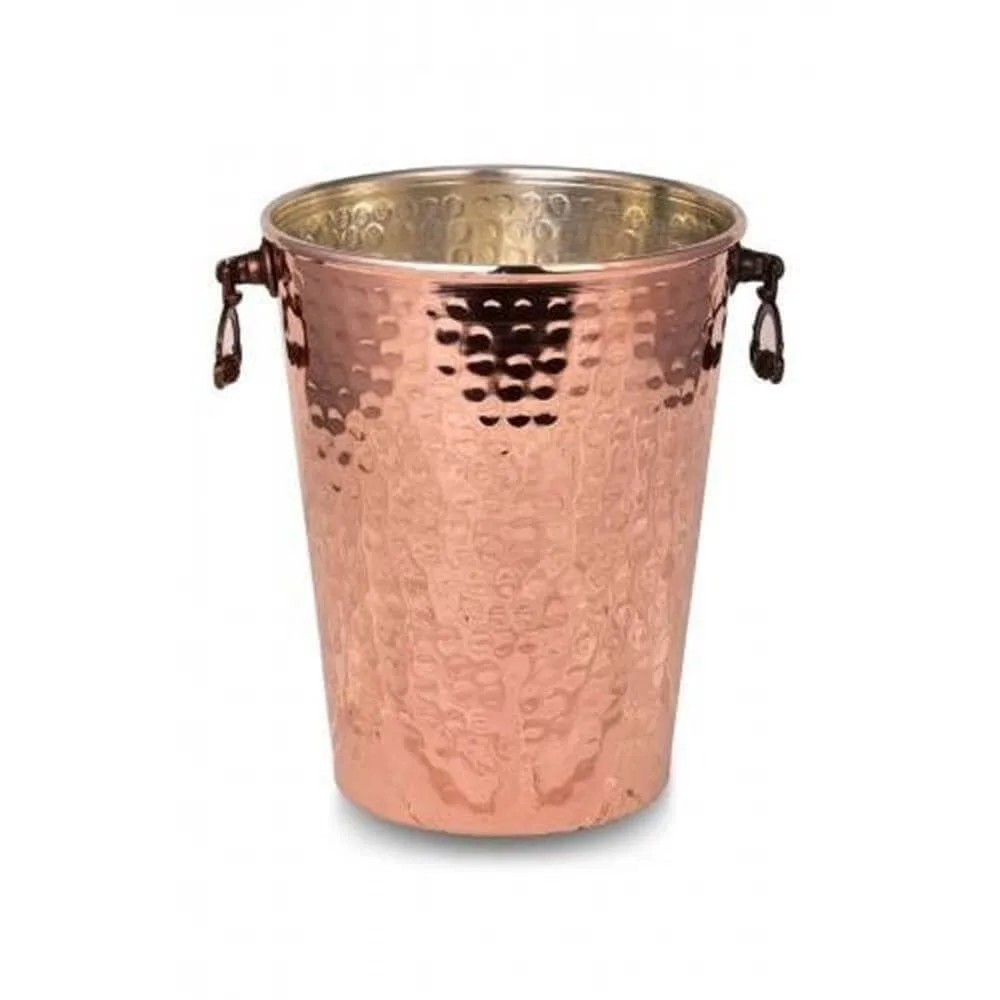
Copper Jars, Pails & Ice Buckets
Type
Technique
Finish
Sheet thickness
Copper jars, pails and ice buckets are the containers in the BakırBul range made to hold, protect or carry something rather than to cook or serve it. The choice depends on what goes inside and on how the lid or handle works. BakırBul supplies the whole group to trade buyers, quoted per order.
Showing 1–16 of 38 results
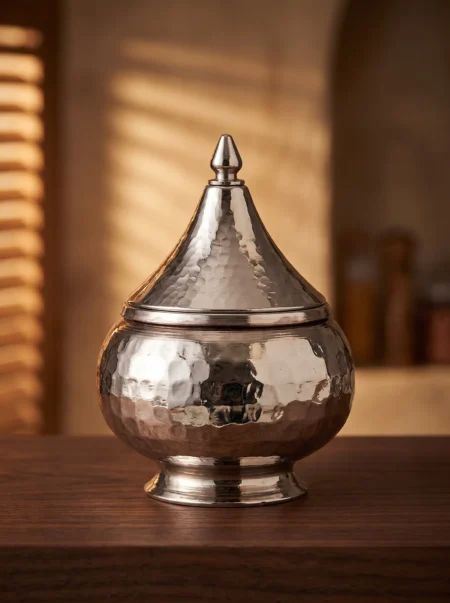
Tabbal Domed Copper Spice Jar — hand-hammered, nickel-plated
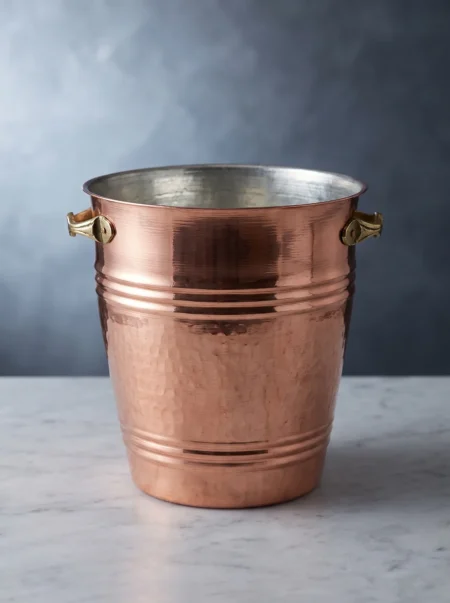
Gerdel Copper Ice Bucket — hand-hammered, polished copper
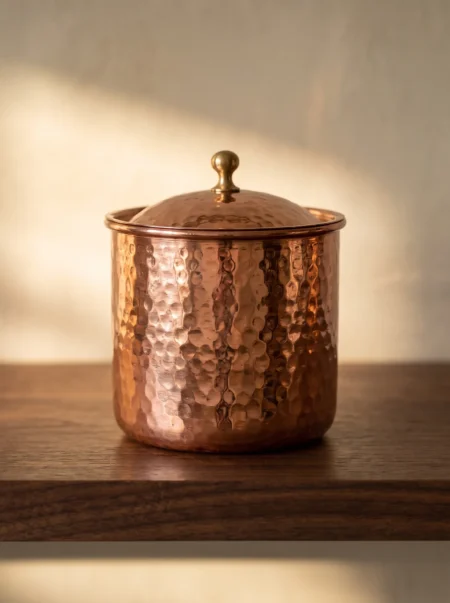
Safran Copper Spice Jar — No. 1, hand-hammered, polished copper
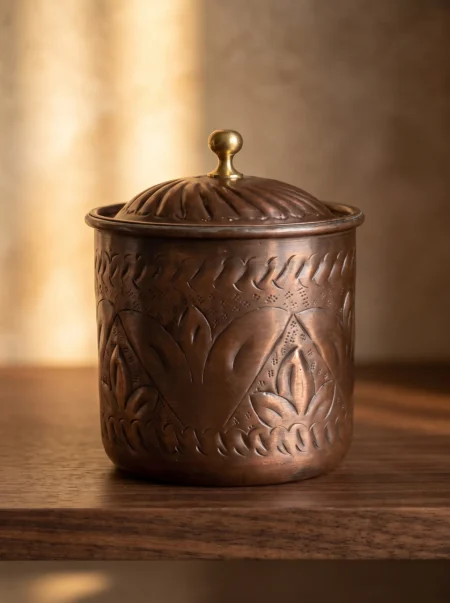
Safran Copper Spice Jar — No. 1, hand-engraved, oxidised
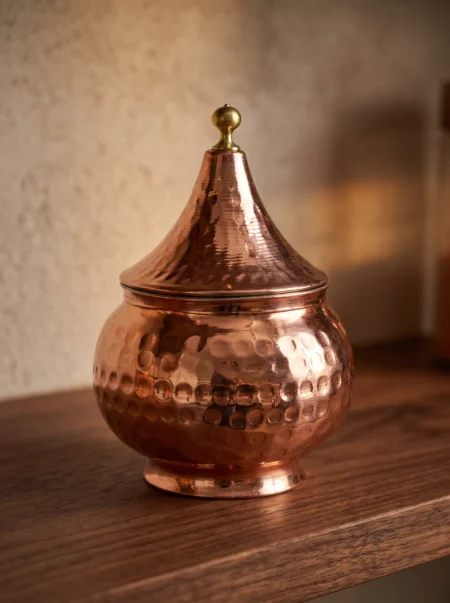
Tabbal Domed Copper Spice Jar — hand-hammered, polished copper
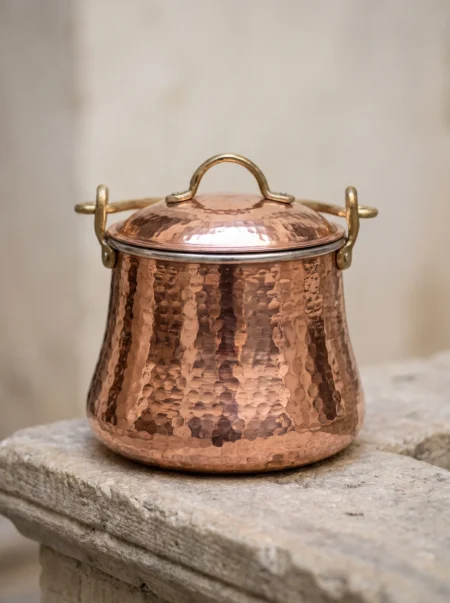
Elit Copper Pail — No. 1, 13 cm, hand-hammered, polished copper
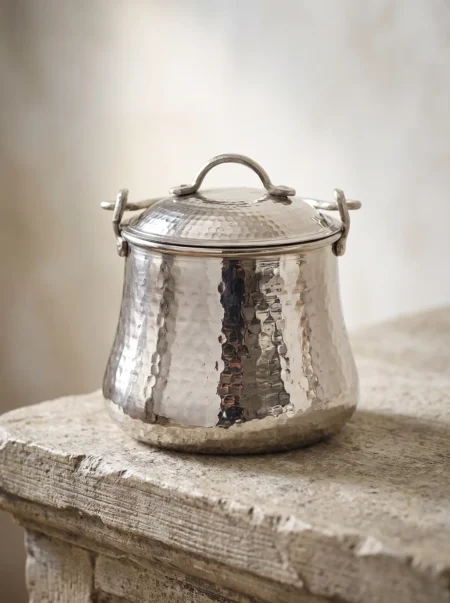
Elit Copper Pail — No. 1, 13 cm, hand-hammered, nickel-plated
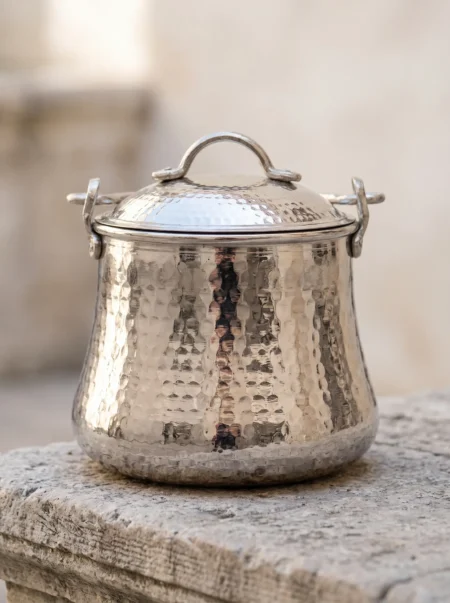
Elit Copper Pail — No. 2, 15 cm, hand-hammered, nickel-plated
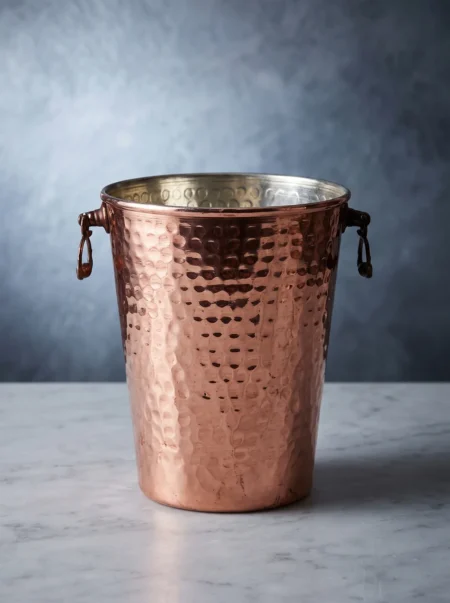
Adalı Copper Ice Bucket — 15 cm, hand-hammered, polished copper
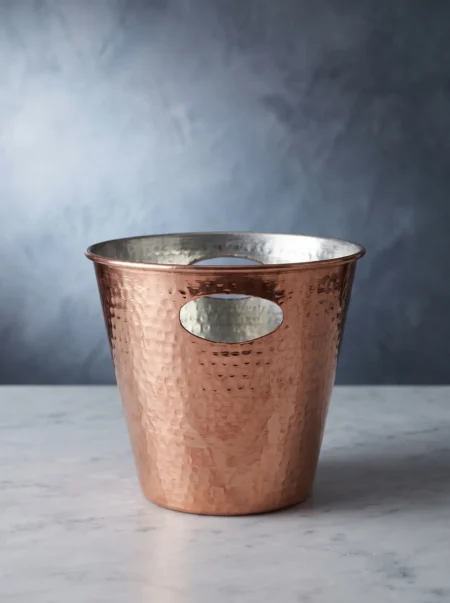
Mercan Copper Ice Bucket — 24 cm, hand-hammered, polished copper
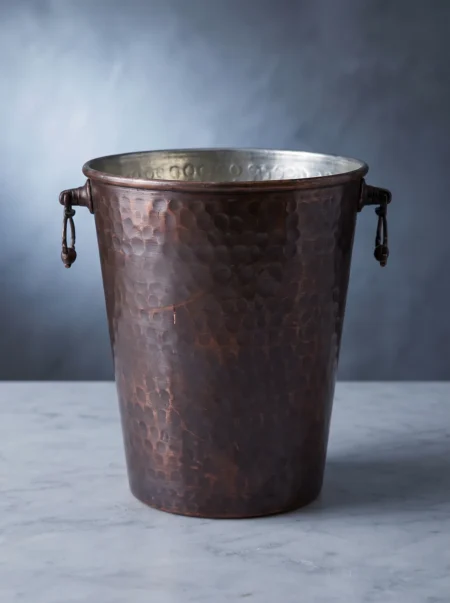
Adalı Copper Ice Bucket — 15 cm, hand-hammered, oxidised
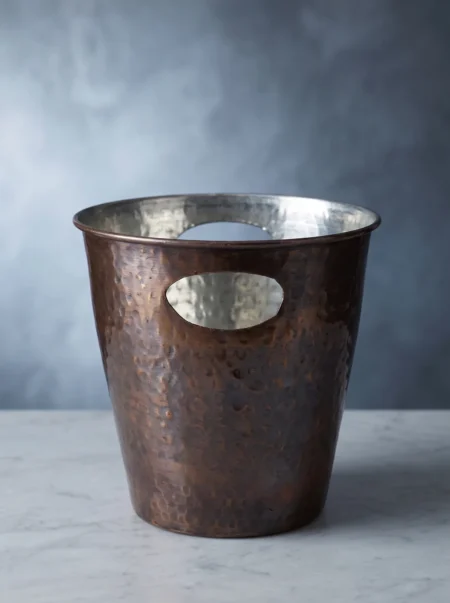
Mercan Copper Ice Bucket — 24 cm, hand-hammered, oxidised
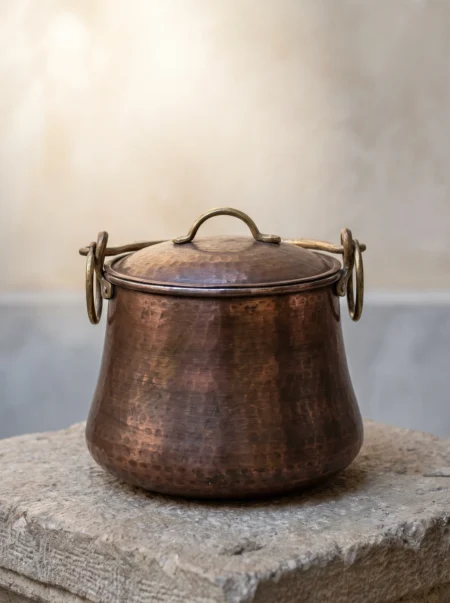
Elit Copper Pail — No. 2, 15 cm, hand-hammered, oxidised
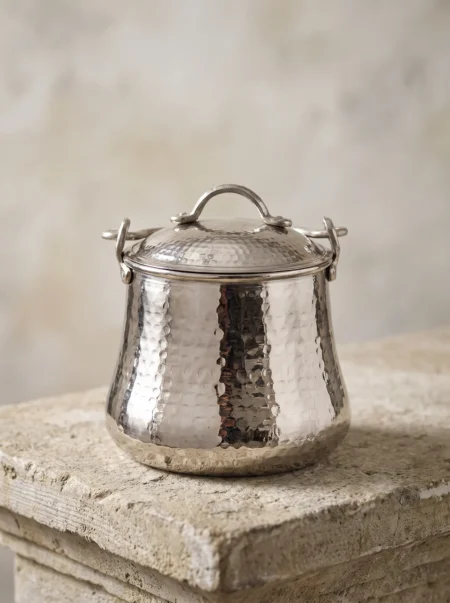
Elit Copper Pail — No. 3, 17 cm, hand-hammered, nickel-plated
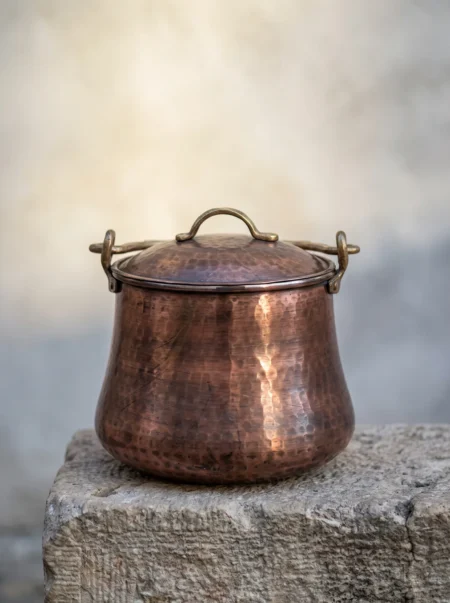
Elit Copper Pail — No. 1, 13 cm, hand-hammered, oxidised
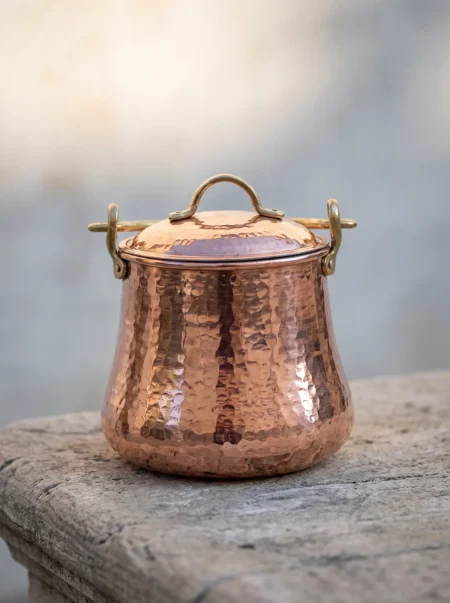
Elit Copper Pail — No. 2, 15 cm, hand-hammered, polished copper
This part of the catalogue brings together lidded spice jars, the traditional pail and ice buckets for the table. They are produced in Kahramanmaraş, most of them hand-hammered, and every surface meant to meet food is tinned inside. Cookware is about heat and serveware is about presentation; this group is about keeping the contents in good condition. A metal body lets no light through, a well-fitted lid keeps damp out, and thick sheet takes knocks that would chip a ceramic jar.
The sub-categories and what each one does
| Sub-category | What it does |
|---|---|
| Copper spice jars | Keep spices away from light and damp; numbered sizes line up on the counter |
| Copper pails and buckets (pail) | A handled pail once used for milk and water, now for dry storage and display |
| Copper ice buckets | Ice at the table, and chilling a bottle when the body is deep enough |
How copper behaves as a storage container
Two properties matter here. The first is that copper is opaque. Red pepper flakes and dried herbs kept in clear glass on a bright counter lose colour and aroma within months; an opaque metal body slows that loss considerably. The second is heat conduction: in an ice bucket the vessel drops to the temperature of its contents almost at once, and you can feel it from the outside.
Copper is not a hermetic container, though. What keeps damp out is how well the lid seats on the body, not the metal itself. For contents that are sensitive to moisture and will be stored for a long time, check the fit of the lid before you fill the jar.
How to choose
- Size: pails are listed as No. 1, No. 2 and No. 3, at 13, 15 and 17 cm across; spice jars run from No. 1 to No. 4. The higher the number, the larger the volume and the heavier the piece.
- Sheet thickness: the group spans roughly 0.55 mm to 0.90 mm. Vessels that are carried full, and so take a load, use the heavier sheet.
- Finish: polished copper is the natural colour of the metal; oxidised is a deliberately darkened finish; nickel-plated gives a silver-tone look. On pieces that stay in view in a busy kitchen, the oxidised finish shows marks least.
- Technique: most pieces here are hand-hammered, so the hammer marks show on the body and no two pieces are exactly alike.
Tin lining and care
Interior surfaces that meet food are tinned, and with heavy use the tin needs renewing roughly every one to two years. In a jar that holds dry spices the tin wears more slowly than in a vessel that carries liquid; an ice bucket, which is wet every time it is used, needs drying after every service.
None of these pieces goes in the dishwasher. Wash by hand in warm water with a soft sponge and dry straight away. A container that will hold dry food must be completely dry before it is filled. Darkening on the outside comes off with lemon and salt, or with a paste of flour, vinegar and salt; tarnish is not a defect, it is what copper does in air. There is no lacquer on these pieces, so the surface can always be brought back. None of them is designed for the hob; for that, see copper cookware, and for the full routine read copper care.
Making a lidded vessel in Kahramanmaraş
The hard part of a lidded vessel is the lid. The better it seats, the more useful the container, and because both the body and the lid are hammered into shape by hand, a close fit comes from experience rather than from a mould. The coppersmith measures the mouth of the body, raises the lid to match and, where needed, pairs lids to bodies one by one. Copper hand-work from Kahramanmaraş is a registered geographical indication in Türkiye; in a storage jar, what that tradition delivers is a lid that drops into place without catching.
What drives the unit cost in this group
The size range is wide, from small spice jars of around 120 grams to pails of more than a kilogram, and most of the difference between unit costs comes from the amount of copper in the piece. The second factor is how the surface is worked: a hammered body and a hand-decorated body take different amounts of time. On lidded forms the lid is a separate part and is costed as one. There is no published price list; we quote per order, from your list of items, quantities and destination.
Models and sizes
Choosing a storage piece starts with what it has to hold. For dry food the fit of the lid comes first; for liquids and for carrying, the handle and the volume matter more. The bodies run from small spice jars up to pails of a few litres, so compare like with like.
In a container for dry goods, the deciding detail is how the lid closes. On copper lids that is done by two metal edges meeting, not by a rubber ring. On a wide-mouthed jar, seating the lid and turning it gently is enough to feel whether there is a gap. The group comes in polished copper, oxidised and nickel-plated. For buyers stocking this range, the guides to copper spice containers, copper pails and buckets and copper ice buckets go into each form in detail.
Frequently asked questions
Is it safe to store food in a copper container?
Storing food in a tin-lined copper container is safe. The tin keeps food from touching the copper directly. Do not leave acidic or wet contents standing for long, and have the lining renewed when it wears through.
What is the difference between a spice jar and a pail?
A spice jar is a small lidded container; a pail is a handled pail that holds litres. One is meant for spices on the counter, the other for carrying and for storing in bulk.
Can these containers go in the fridge?
For short spells of chilling, yes, but they are not designed for long-term refrigerated storage. Copper darkens faster in damp conditions, and the lids are not fully airtight.
How does a wholesale order for this group work?
Send us the list: which pieces, in which sizes and finishes, how many of each and where they are going. There is no single minimum figure, because it depends on the item; we reply with a quote and a lead time agreed for that order. The wholesale page explains the process.