
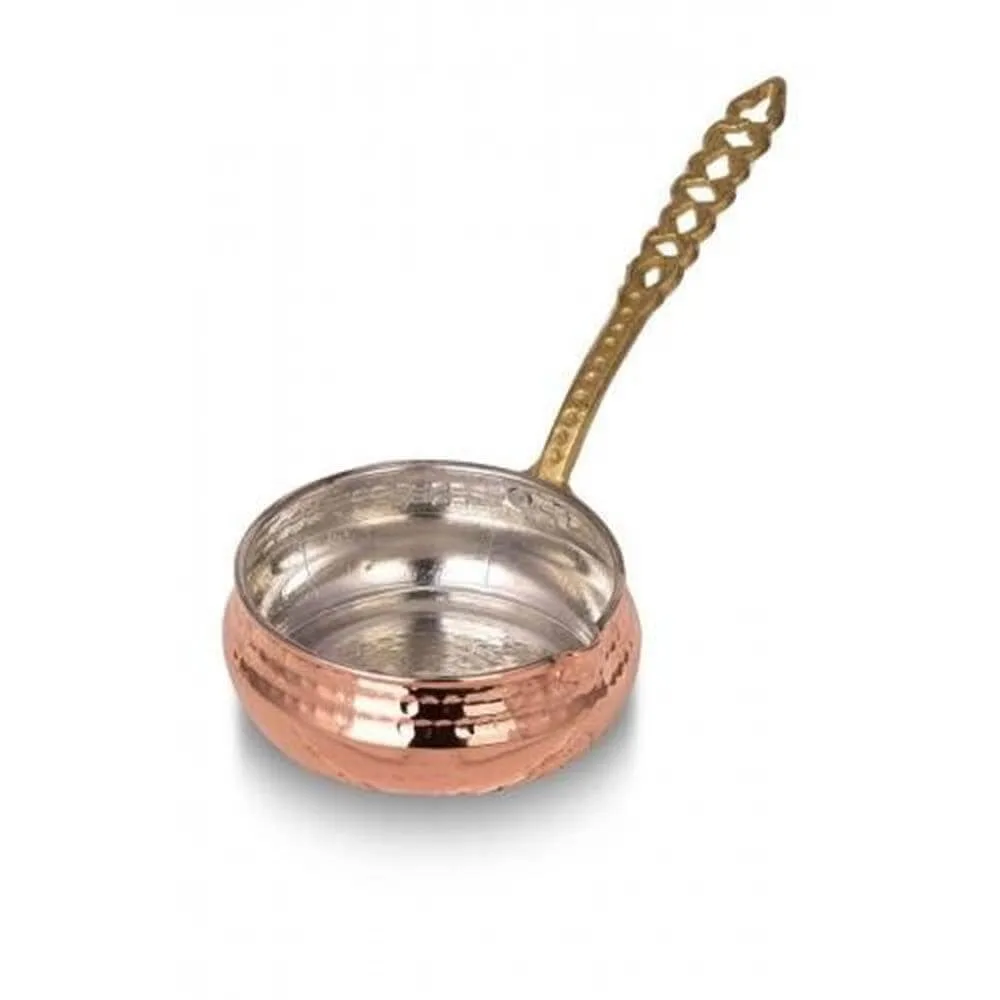
Copper Butter Warmers & Sauce Dishes
Type
Technique
Finish
Sheet thickness
Copper butter warmers and sauce dishes are small vessels that bring olive oil, melted butter, sauce, honey or jam to the table in separate portions. Handled bodies pass from hand to hand, small handleless pieces sit on a plate, and a lidded body keeps warmth in. The inner surface that meets food is tinned, which matters with acidic sauces.
Showing all 14 results
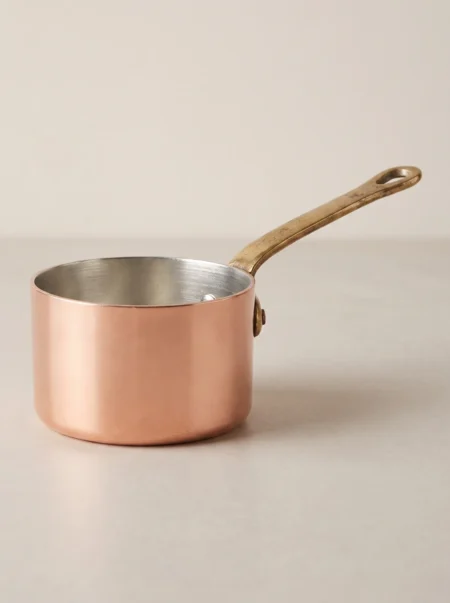
Mini Copper Casserole — No. 1, smooth, polished copper
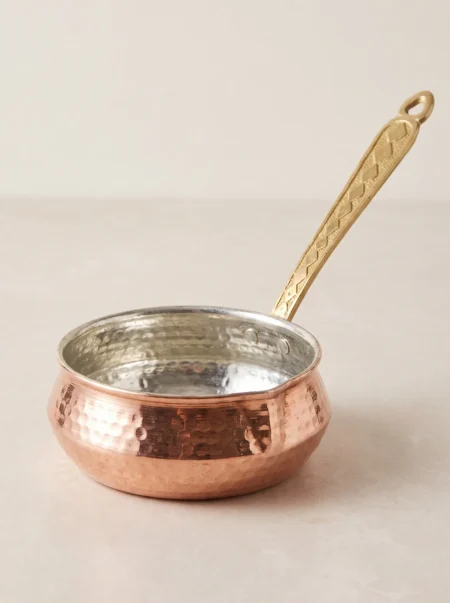
Salsa Copper Sauce Dish — No. 1, brass handle, machine-hammered, polished copper
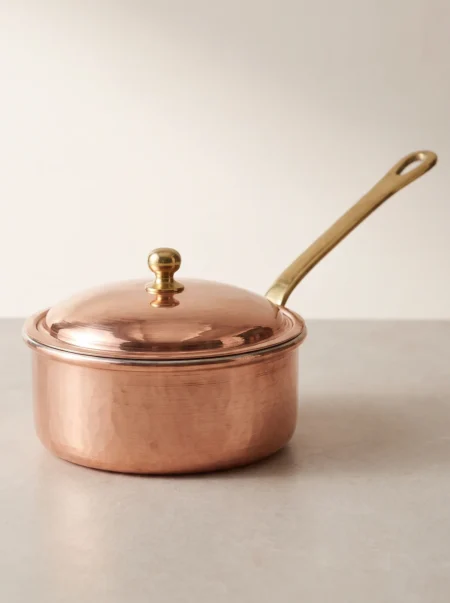
Dalyan Copper Sauce Dish — 14 cm, hand-hammered, polished copper
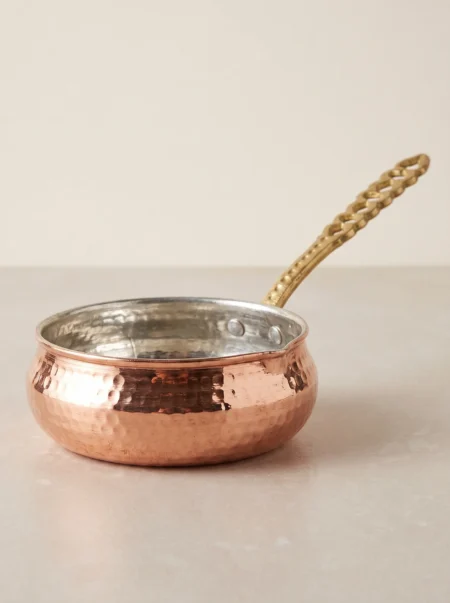
Alebat Copper Sauce Dish — No. 2, 11 cm, machine-hammered, polished copper
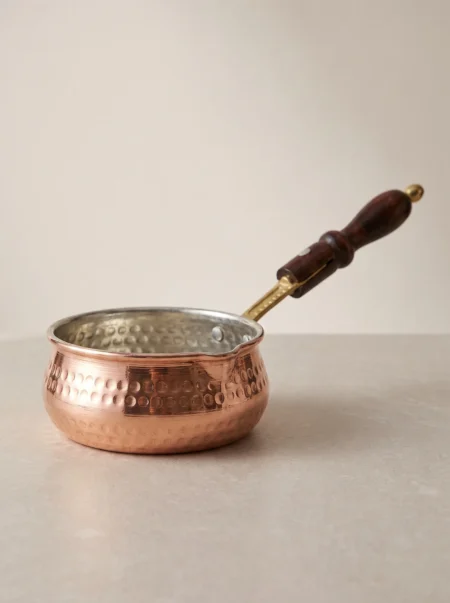
Salsa Copper Sauce Dish — No. 1, wooden handle, machine-hammered, polished copper
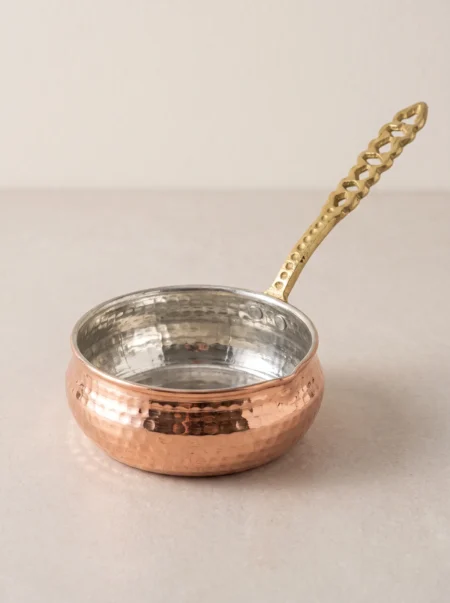
Alebat Copper Sauce Dish — No. 1, 9 cm, machine-hammered, polished copper
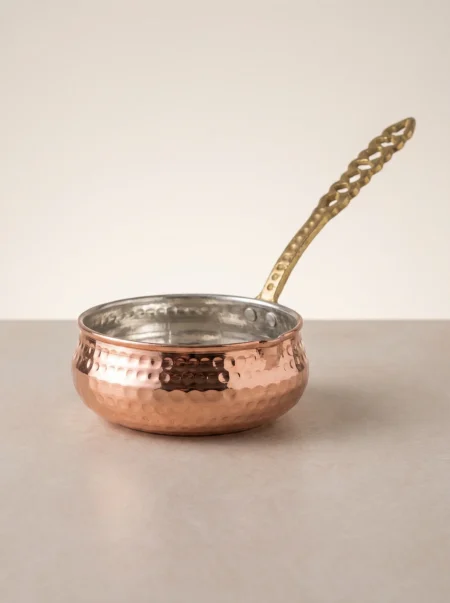
Alebat Copper Sauce Dish — No. 3, 12 cm, machine-hammered, polished copper
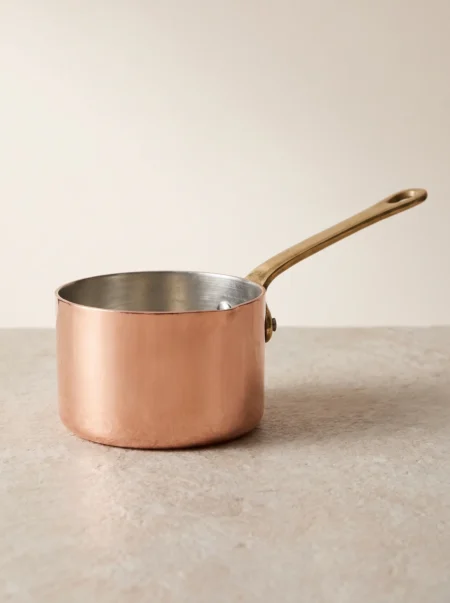
Mini Copper Casserole — No. 2, smooth, polished copper
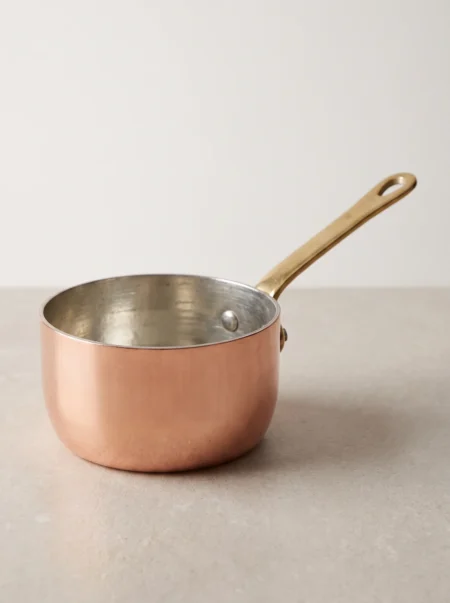
Mini Copper Casserole — No. 3, smooth, polished copper
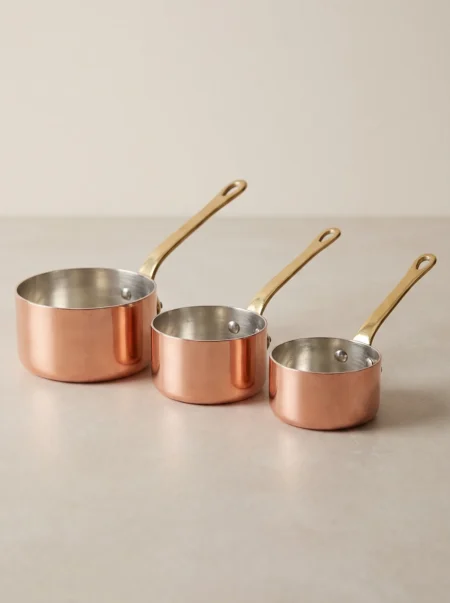
Mini Copper Casserole, Set of 3 — smooth, polished copper
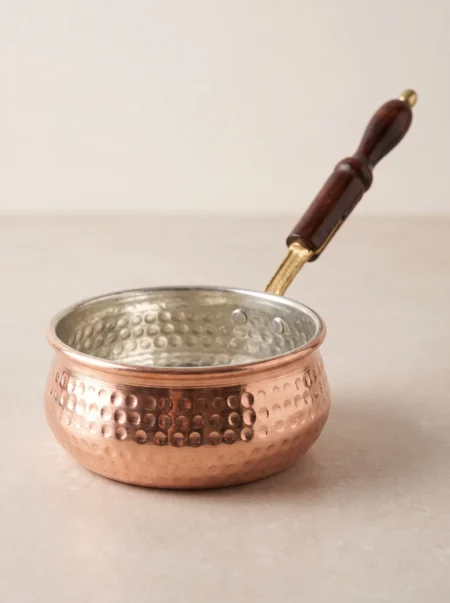
Salsa Copper Sauce Dish — No. 2, wooden handle, machine-hammered, polished copper
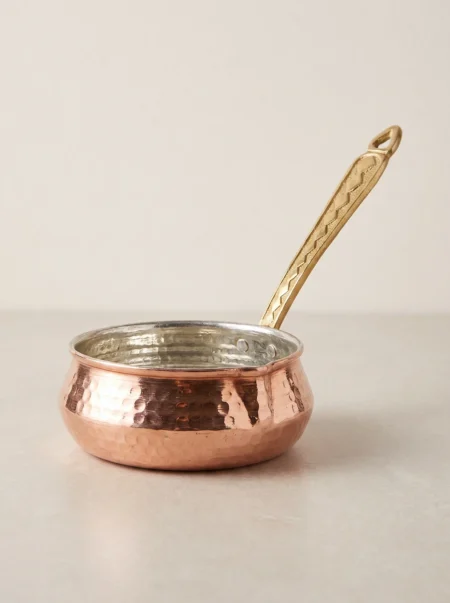
Salsa Copper Sauce Dish — No. 2, brass handle, machine-hammered, polished copper
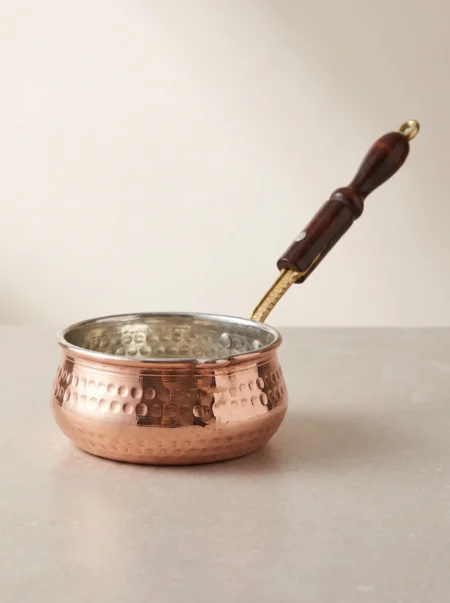
Salsa Copper Sauce Dish — No. 3, wooden handle, machine-hammered, polished copper
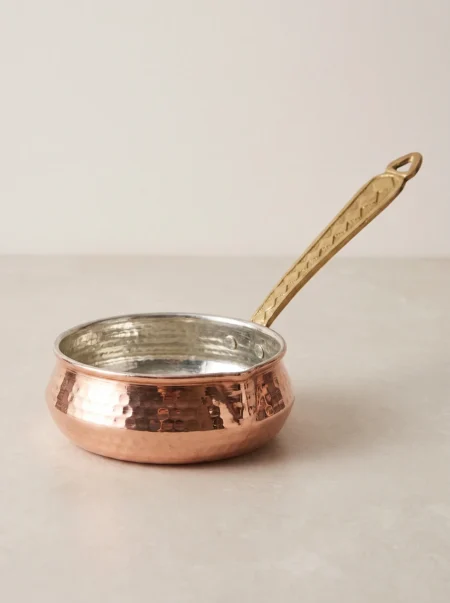
Salsa Copper Sauce Dish — No. 3, brass handle, machine-hammered, polished copper
A copper butter warmer or sauce dish carries a small amount of olive oil, butter, sauce, honey or jam to the table on its own. This group is built on the brass-handled Alebat, the Salsa with a wooden or brass handle, the small Mini Casserole and the lidded Dalyan. Diameters run from 9 cm to 14 cm. The butter warmer is the same shape that Western kitchens use for melted butter: a small pan with a single handle.
Is a sauce dish the same as a egg pan?
These two vessels are often confused, but they do different jobs. A egg pan is a cooking vessel; eggs, scrambled eggs with tomato or spicy sausage are cooked in it on the hob, and its base is wide for that work. A sauce dish is mainly a serving vessel: the base is narrow, the sides are steep, and the volume is kept small on purpose. The aim is not to heat the food but to keep it separate and tidy on the table. Some bodies in this group also suit brief use on the hob, such as melting butter or warming a sauce, but they are not made for long cooking. The egg pan has its own page: Turkish copper egg pan.
On a daily table they are used most for:
- serving honey, clotted cream, jam and olive oil separately at breakfast;
- dividing small portions of hummus, yogurt and cucumber dip or spicy ezme across a meze table;
- serving yoghurt and melted butter alongside dumplings and pide;
- putting mustard, garlic sauce or pomegranate molasses next to grilled food;
- sitting as a small vessel on the plate in single-portion service.
Bodies and how to choose
The first question that simplifies the choice: will the dish stay on the table, pass from hand to hand, or also go near the hob? A handled body is easier to pass and to warm; a small handleless body takes less room on a plate; a lidded body keeps heat and aroma inside.
| Body | Size | What sets it apart |
|---|---|---|
| Alebat | No. 1 9 cm, No. 2 11 cm, No. 3 12 cm | Brass handle, machine-hammered |
| Salsa | Nos. 1, 2 and 3 | Wooden or brass handle, machine-hammered, 0.50–0.60 mm |
| Mini Casserole | Nos. 1, 2, 3 and a set of 3, from 60 ml to 140 ml | Smooth surface, the smallest volume, single-portion service |
| Dalyan | 14 cm | Lidded, hand-hammered, 0.80 mm |
The handle material affects everyday use directly. A wooden handle stays cool and feels softer in the hand, but should not stand in water. A brass handle is more durable and matches the copper in colour; on the other hand, if the dish has been warmed, the handle warms too. The hand-hammered Dalyan, in heavier sheet, resists knocks better and holds heat a little longer. For a full table, the Mini Casserole set of 3 makes it easy to serve three sauces in one arrangement.
Tin, acid and cleaning
Tin matters more than usual in this category, because most of what is served in it is acidic: pomegranate molasses, lemon sauces, tomato-based ezme, pickle brine. Acidic food should not stay in direct contact with copper for long; the tin layer is exactly what prevents that contact. So do not use a sauce dish as a storage container. Empty it when the meal is over and do not leave it full of sauce overnight.
Washing is by hand; the dishwasher damages the tin and the wooden handle. Warm water and a soft sponge are enough; a wire scourer scratches the tin and the surface. Dry it without leaving it to stand, especially around the handle joint. Darkening on the outside comes from copper’s reaction with air and is not a defect; lemon and salt, or a paste of flour, vinegar and salt, brings the shine back. If the dish goes on the hob, keep the heat low and never heat it empty; copper is also not magnetic, so it does not work on an induction hob unless an interface disc is used.
Small vessels in Kahramanmaraş copperwork
Small vessels are usually the first pieces an apprentice works on in the workshop; there is little margin for error, so they teach accuracy. The edge of a sauce dish has to be steep enough not to spill when full and open enough not to get in the way of a spoon. Kahramanmaraş copper handcraft carries a registered Turkish geographical indication, and the lidded Dalyan body in this group is shaped with the same hand-hammering method.
What shapes the quotation for sauce dishes
Because the sizes are close to each other, cost differences come mostly from technique and from whether there is a lid. Machine-hammered bodies make up most of the group, and the hand-hammered option stands apart with its working time. The handle material also counts. Quotations are prepared per order from your list of bodies, handles and quantities, with the lead time agreed for that order. Restaurant and café buyers can see the wider wholesale picture for this shape on wholesale copper gravy boats and sauce dishes.
Models and sizes
The first question in choosing is whether a lid is needed. Open forms are for direct table service; lidded ones for times when the sauce should stay warm or be protected from dust. The second is the width of the mouth: a wide mouth helps spoon service, a narrow one helps pouring.
The finish in this group is polished copper. Because a sauce dish carries acidic contents, a tinned interior matters, so confirm the lining on the quotation before the size.
Frequently asked questions
What is the difference between a sauce dish and a egg pan?
A egg pan is for cooking, a sauce dish for serving. A egg pan has a wide base and eggs or scrambled eggs with tomato are cooked in it on the hob; a sauce dish has a narrow base and a small volume and keeps sauce separate on the table.
Can I serve lemon or vinegar sauces in it?
Yes, if the inside is tinned. The tin layer cuts the contact between acid and copper. Even so, do not leave acidic sauce in the dish for hours; empty it when the meal is over.
Which size should I choose?
For single-portion service, No. 1 or the Mini Casserole; for sharing, Nos. 2 and 3. The lidded 14 cm Dalyan suits sauces that need to stay warm.
How do I wash a dish with a wooden handle?
Wash the body in warm water without soaking the wooden handle, then dry it. Wood that stays wet for long swells and cracks over time; wiping it with a dry cloth is the right way.
Can a butter warmer be used on the hob?
Briefly and on low heat, for example to melt butter. These pieces are not made for long cooking, and they do not work on an induction hob unless an interface disc is used.
What else completes the table?
See the copper serving bowls, the copper olive oil cruets and the whole copper serveware branch.