
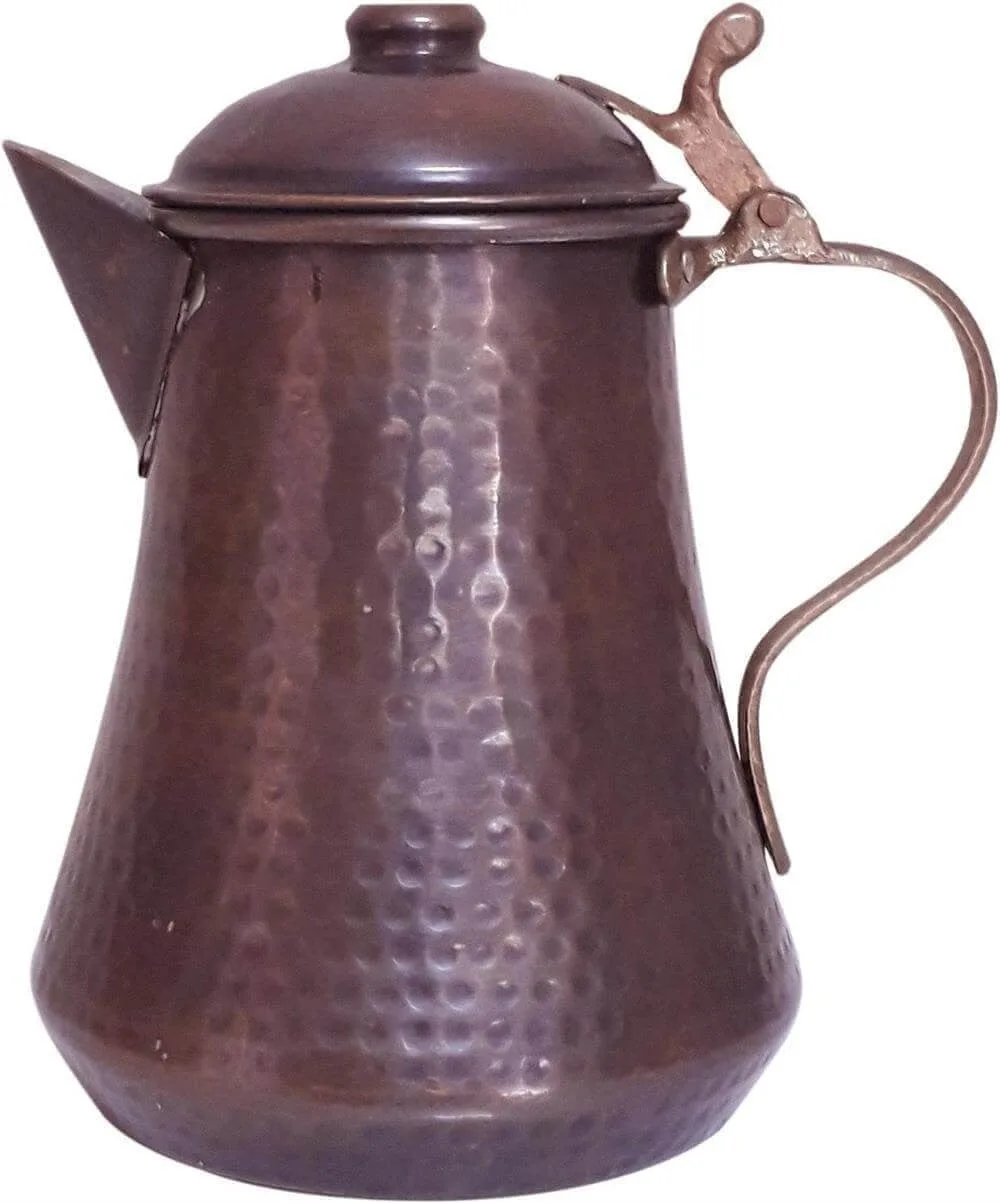
Copper Pitchers & Jugs
Type
Technique
Finish
Sheet thickness
Copper pitchers and jugs carry water, ayran, sherbet and milk to the table in a closed body that chills quickly when the drink inside is cold. BakırBul’s range runs from a 500 ml milk jug to 2.5-litre pitchers. Volume and spout shape decide the choice, and sheet gauge decides how the full jug handles.
Showing 1–16 of 35 results
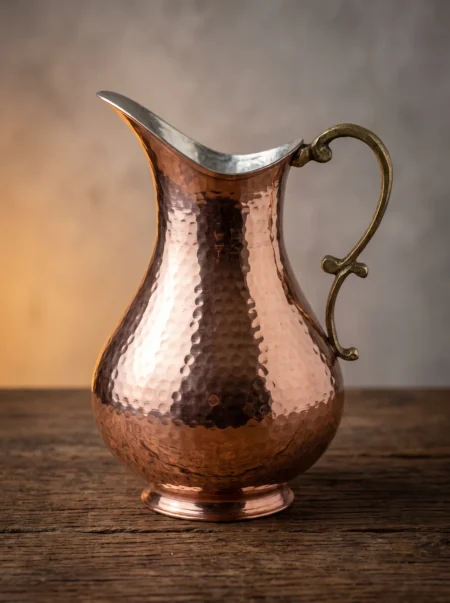
Maraş Copper Pitcher — No. 2, hand-hammered, polished copper
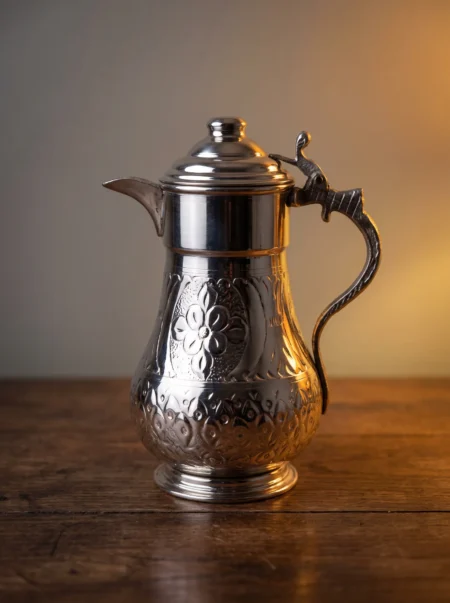
Penguin Copper Pitcher — No. 2, hand-engraved, nickel-plated
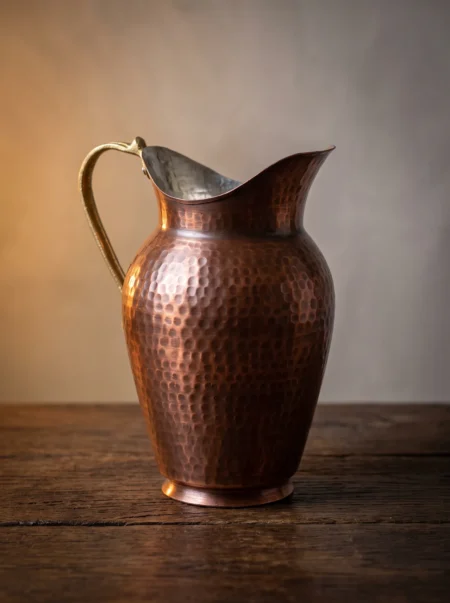
Antalya Copper Pitcher — No. 2, hand-hammered, oxidised
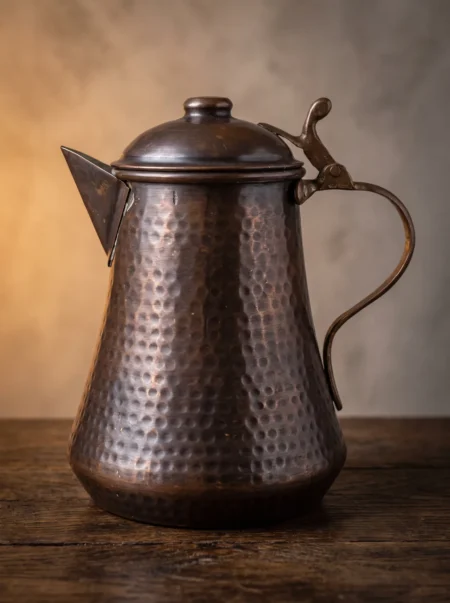
Hancı Copper Milk Jug — hand-hammered, oxidised
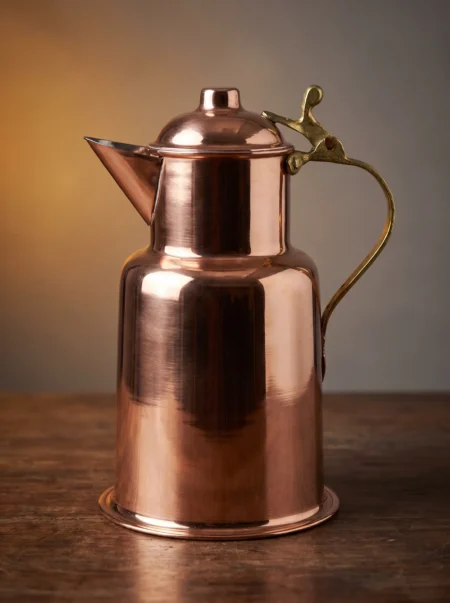
Kadife Copper Milk Jug — 500 ml, smooth, polished copper
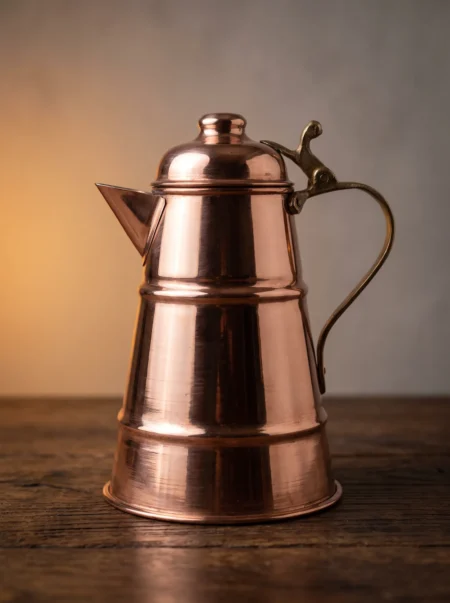
Kervan Copper Milk Jug — smooth, polished copper
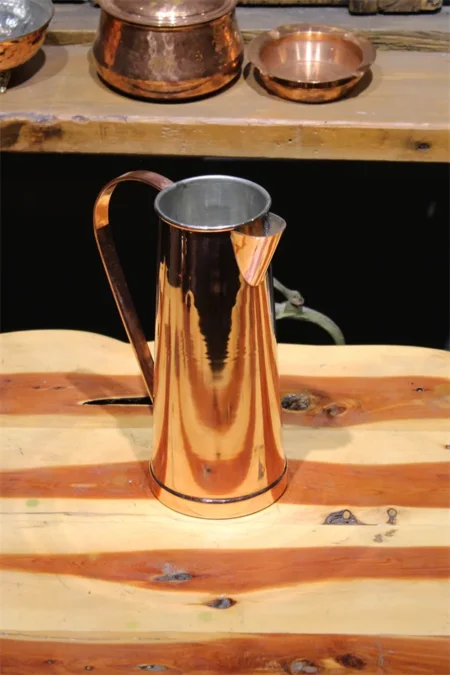
London Copper Pitcher — polished copper
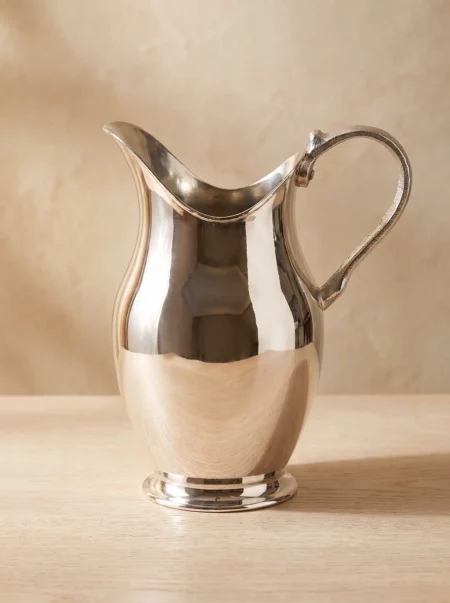
Antalya Copper Pitcher — No. 1, smooth, nickel-plated
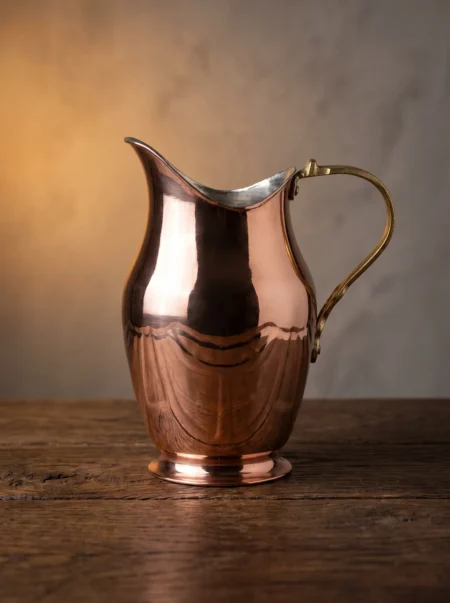
Antalya Copper Pitcher — No. 1, smooth, polished copper
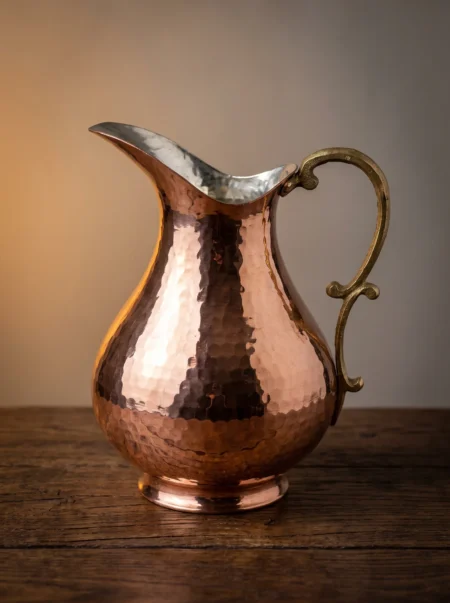
Pınar Copper Pitcher — No. 2, hand-hammered, polished copper
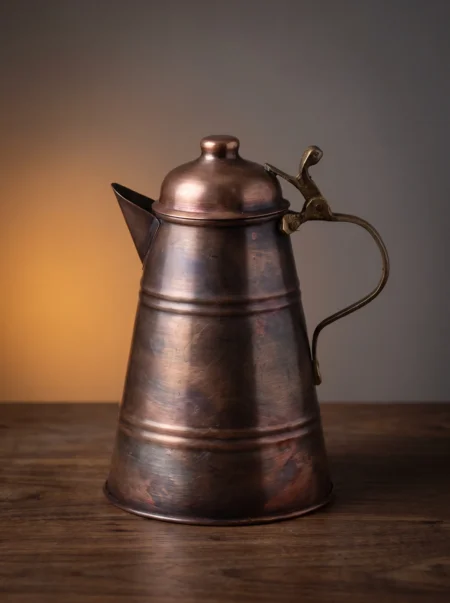
Kervan Copper Milk Jug — smooth, oxidised
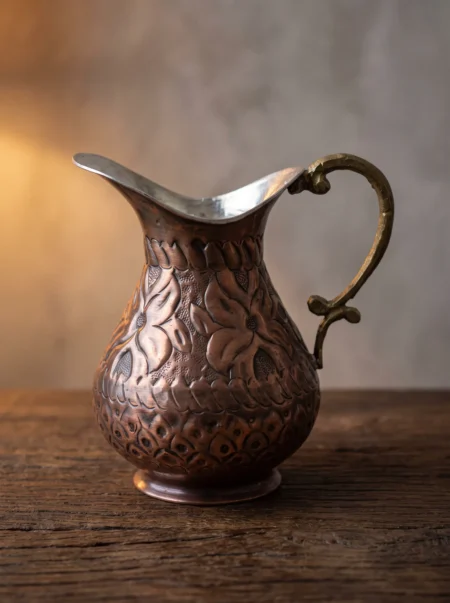
Maraş Copper Pitcher — No. 1, hand-engraved, oxidised
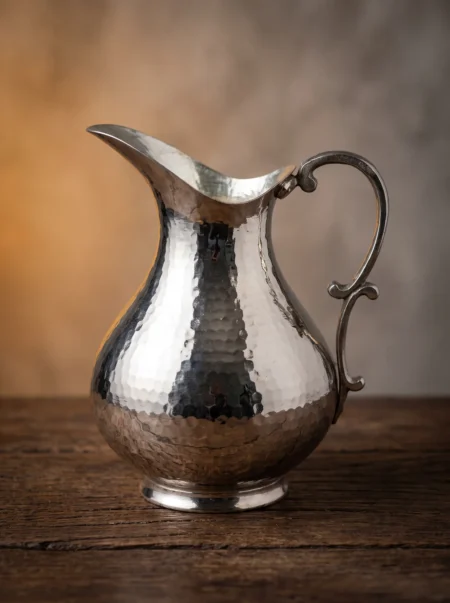
Pınar Copper Pitcher — No. 2, hand-hammered, nickel-plated
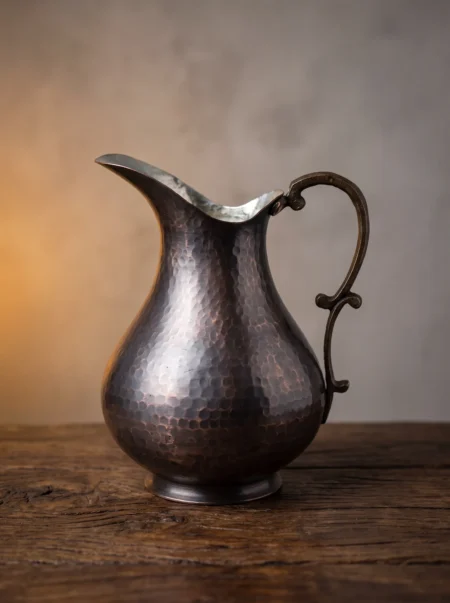
Pınar Copper Pitcher — No. 2, hand-hammered, oxidised
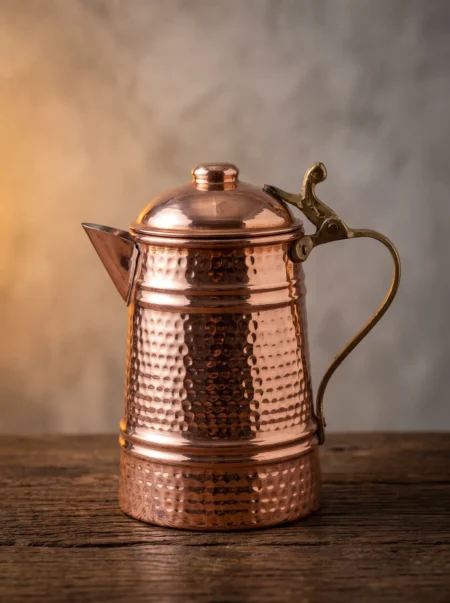
Hanımeli Copper Milk Jug — hand-hammered, polished copper
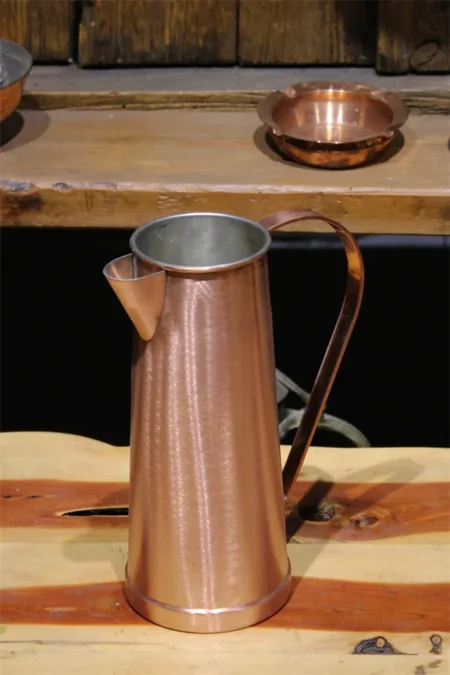
London Copper Pitcher — brushed matt
Copper pitchers and carafes are closed-bodied vessels that bring water, ayran, sherbet and milk to the table. Volumes in the range run from 500 millilitres to 2500 millilitres. Bodies are hammered from a single sheet, the handle is drawn separately and soldered on, and every surface that meets the drink is tin-lined. BakırBul produces them to order through a long-term partner workshop in Kahramanmaraş, Türkiye.
The difference between a pitcher and a carafe
A pitcher has a handle and a lipped spout; it is designed to be held and poured, and it is the vessel for everyday water and ayran. A carafe has a narrow neck, usually no handle and a tall body; it stands on the table showing what it holds, and is gripped by the body to pour. The London model in the range is close to this second group: with a 9 cm mouth, an 11.5 cm base and a height of 26.5 cm it has a tall, upright body and holds 1800 millilitres.
The mouth matters especially in copper, because the tip of the spout is opened by hand. A well-opened spout draws the last drop back into the body; a badly opened one drips on the table. Models made from heavier sheet keep a crisper lip; the 1.2 millimetre body of the Pınar model in the range is an example.
Volume and size
| Model | Volume | Height | Gauge | Weight |
|---|---|---|---|---|
| Kadife milk jug | 500 ml | 14.5 cm | 0.50 mm | 230 g |
| Maraş pitcher No. 1 | 1000 ml | 19 cm | 0.80 mm | 480 g |
| Kervan milk jug | 1050 ml | 16 cm | 0.55 mm | 434 g |
| Kovan milk jug | 1250 ml | 16.7 cm | 0.40 mm | 376 g |
| Antalya pitcher No. 1 | 1400 ml | 21.5 cm | 0.70–0.80 mm | 500 g |
| London pitcher | 1800 ml | 26.5 cm | 1.00 mm | 840 g |
| Maraş pitcher No. 2 | 2000 ml | 26 cm | 0.90 mm | 840 g |
| Pınar pitcher No. 2 | 2000 ml | 24 cm | 1.20 mm | 850 g |
| Antalya pitcher No. 2 | 2500 ml | 25.6 cm | 0.80 mm | 660 g |
How the jug will be used decides as much as its size. The No. 1 pitchers of 1000 to 1400 millilitres are the size filled once and finished at a table of two or three. The No. 2 pitchers of 2000 and 2500 millilitres are for large tables and long sittings, but full they come close to 3 kilograms, so carrying them in one hand gets harder. Milk jugs are narrower and taller; they serve milk at breakfast and ayran at dinner, and their narrow mouths make it easy to control how much is poured.
Techniques include hand-hammered, hand-engraved, smooth and fluted bodies. Hand hammering leaves clear marks; a smooth body has an even surface. Finishes are polished copper, nickel-plated, oxidised and brushed matt; to build a set with cups, choose copper cups and tumblers in the same finish.
How to tell a real copper pitcher
Copper does not attract a magnet; a magnet that sticks to the body shows another metal underneath. Weight is the second test: copper is clearly heavier than a steel or aluminium body of the same size. On plated products the base metal shows through over time at wear points such as the lip of the spout and the foot of the handle.
What sets the price of a copper pitcher
Three things decide it: how much the jug holds, how thick the body is, and how it was formed. As the volume grows, so does the copper used. If the body is hand-hammered, the hammer work enters the price as a separate share. Prices are quoted per order; send the models, finishes and quantities with your destination.
Before first use
Wash a new pitcher first in warm water with a soft sponge and dry it straight away; then fill it with water and swirl it once. It does not go in the dishwasher, and detergent should not be left standing in it. Before use, check that the tin layer inside is continuous. The full routine is in how to care for copper.
Keeping water cool, tin and care
Copper conducts heat very quickly, and in a pitcher that works both ways. A copper pitcher taken from the fridge spreads its cold through the body at once and its outside sweats straight away, leaving a cool vessel in your hand. The same fast conduction also means a pitcher left in a warm room reaches room temperature quickly. To keep water cold for long, leave the pitcher in the fridge or add ice; copper is a conductor, not an insulator.
Ayran, lemonade, sherbet and citrus drinks are acidic and should not stay in long contact with bare copper; the tin inside stops that contact. In a pitcher, tin tires faster because of the acidic drinks put in it; under heavy use, re-tinning every two years is a safe guide. A pitcher does not go in the dishwasher or on the hob. Wash it by hand in warm water and turn it upside down to dry completely; moisture left inside causes both smell and marks. When the outside darkens, rubbing with a salted lemon is usually enough.
Spout, handle and the Kahramanmaraş workshops
A pitcher is the product in copperwork where several jobs come together: the body is hammered, the neck narrowed, the spout opened from the mouth, and the handle drawn separately and soldered on. The two points where the handle joins the body carry the full weight of a full pitcher, so the quality of the solder decides how long it lasts in use. In Kahramanmaraş workshops this joint is still made by hand, and the town’s copperwork carries a registered Turkish geographical indication.
Lines and sizes
The deciding measure for a pitcher is volume. Bodies in the range vary between 1 litre and 2.5 litres; a 1 litre body is sized for a small table, a 2.5 litre body for a crowded one. Weight runs from 370 grams to 850 grams, and that decides how comfortably the full pitcher is carried.
Sheet thickness forms a wide band from 0.40 to 1.20 millimetres; thin bodies stay light, heavy bodies hold the cold longer. In body form, hand-hammered, smooth, hand-engraved and fluted lines stand apart. Finishes are polished copper, oxidised, nickel-plated and brushed matt. Volumes, lining and branding for restaurants and hotels are covered in wholesale Turkish copper pitchers and water jugs.
Frequently asked questions
Does a copper pitcher keep water cold?
Copper conducts cold quickly; it does not insulate. A pitcher taken from the fridge, or filled with ice, chills at once and passes that coolness to your hand, but left in a warm room it also reaches room temperature quickly. Fridge storage and ice are what keep the water cold.
Can ayran or lemonade go in a pitcher?
Yes, if the tin lining is sound. Acidic drinks should not stay in long contact with bare copper; if the lining inside has lifted in places, have the pitcher re-tinned before use, and do not leave lemonade standing in it overnight.
Which volume suits how many people?
1000–1400 millilitres suits a table of two or three, and 2000–2500 millilitres four or more. For milk and ayran at breakfast, the 500–1250 millilitre milk jugs are more practical, because their narrow mouths pour a controlled amount.
Can a pitcher go in the fridge?
Yes; cold does not harm copper. On open models, cover the top so the contents do not pick up fridge smells, and wipe off the condensation that forms on the outside once the pitcher comes out.
Which pieces are ordered with a pitcher?
Most often cups, and the copper raki glass coolers that keep a glass cool. For the whole table, see copper serveware.