
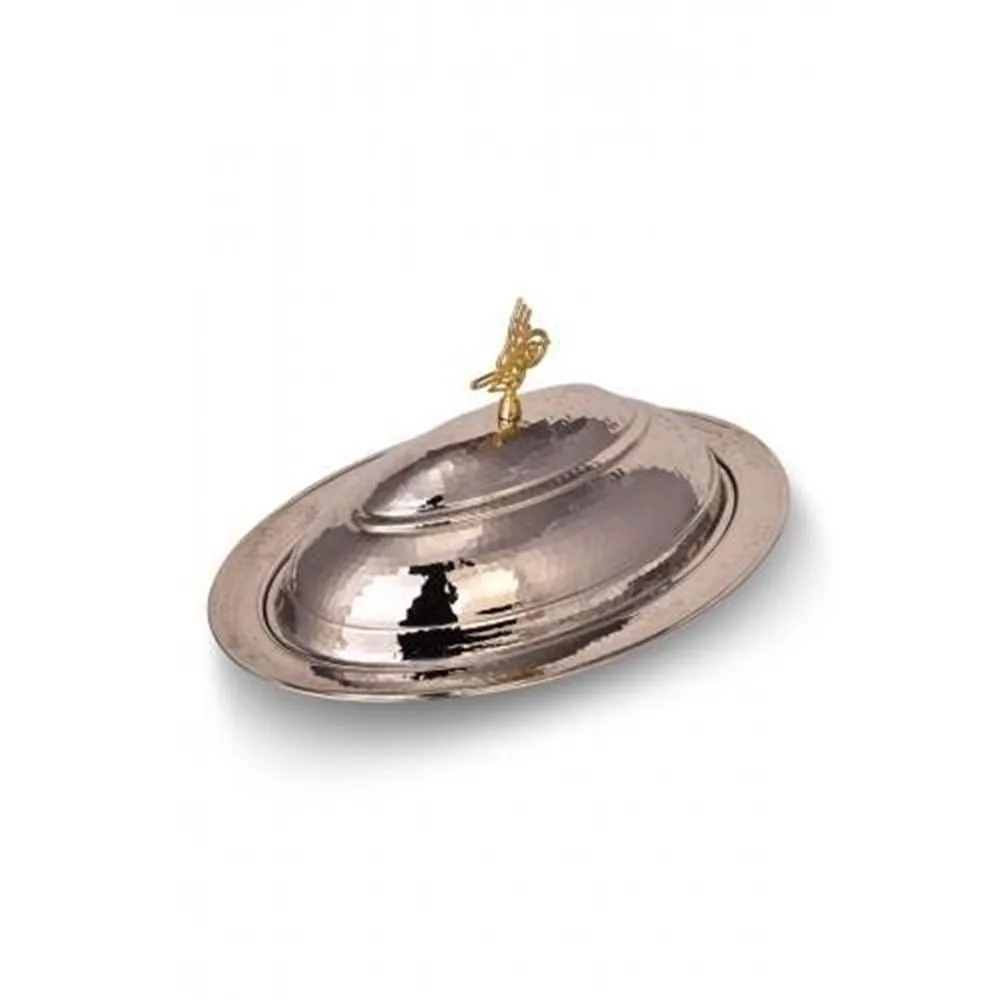
Copper Serving Plates & Platters
Type
Technique
Finish
Sheet thickness
Copper serving plates and platters carry a main course hot from the kitchen and keep it hot at the table. BakırBul’s range covers boat-shaped kebab plates with or without lids, lidded fish platters, tall-lidded round plates and footed charcoal kebab warmers from 30 cm to 120 cm, all quoted per order and wholesale.
Showing 1–16 of 59 results
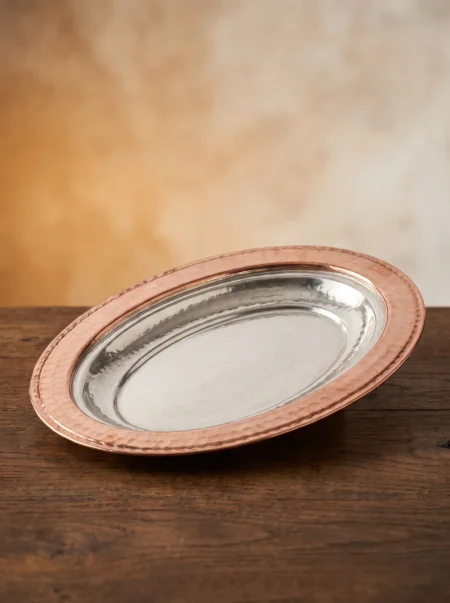
Copper Kebab Boat Plate — 35 cm, hand-hammered, polished copper
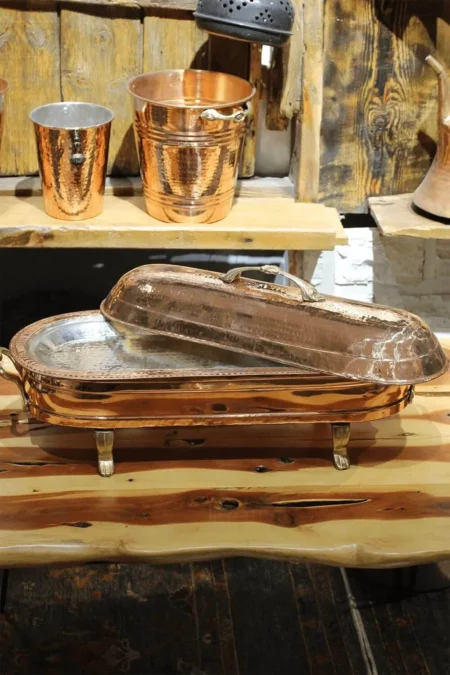
Lidded Copper Footed Charcoal-Heated Kebab Platter — 120 cm, polished copper
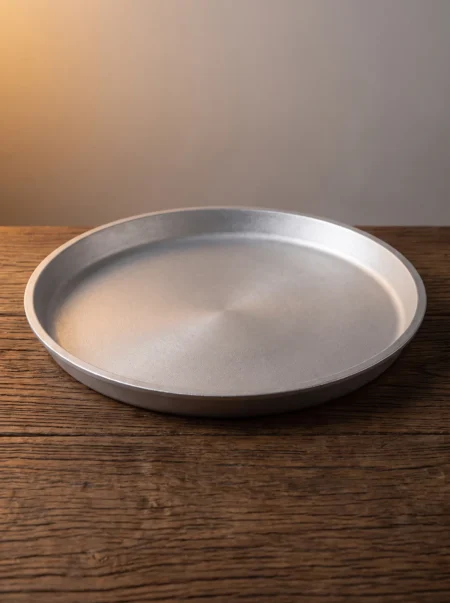
Aluminium Kunafa Plate — for 2, 20 cm
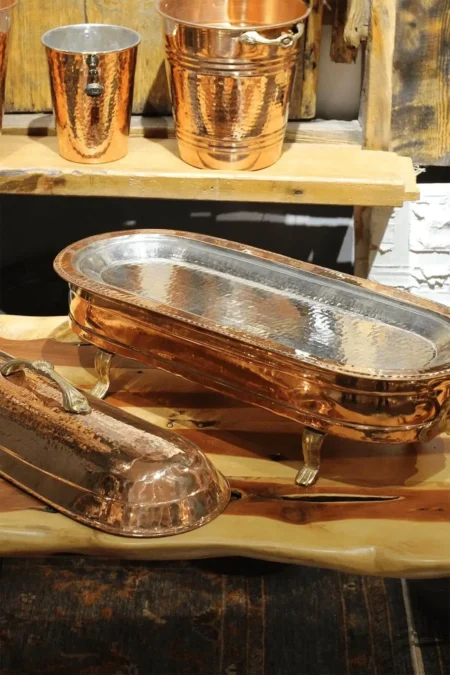
Lidded Copper Footed Charcoal-Heated Kebab Platter — 100 cm, polished copper
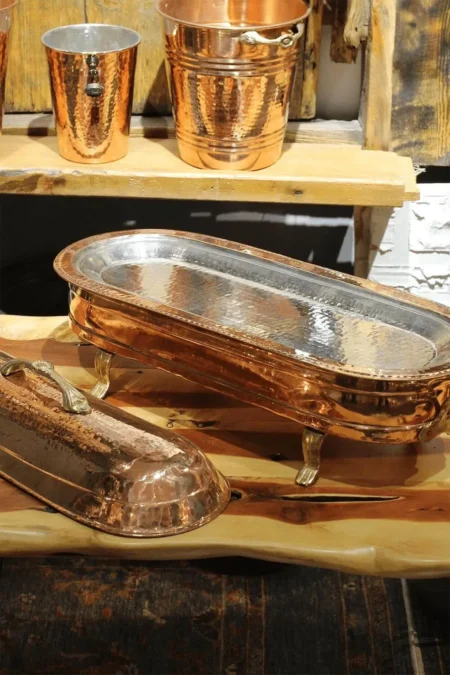
Lidded Copper Footed Charcoal-Heated Kebab Platter — 90 cm, polished copper
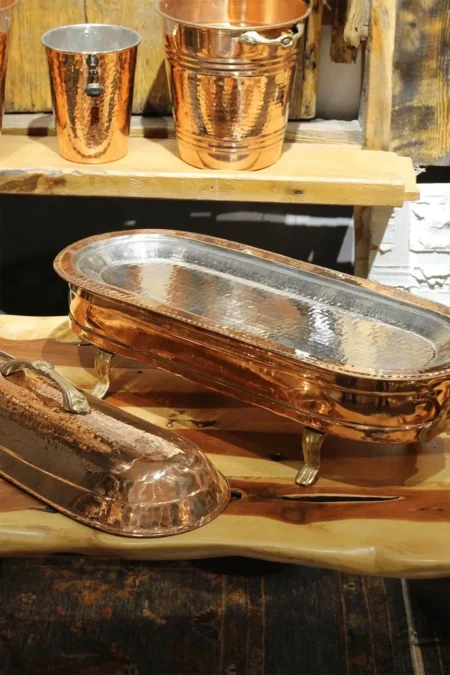
Lidded Copper Footed Charcoal-Heated Kebab Platter — 50 cm, polished copper
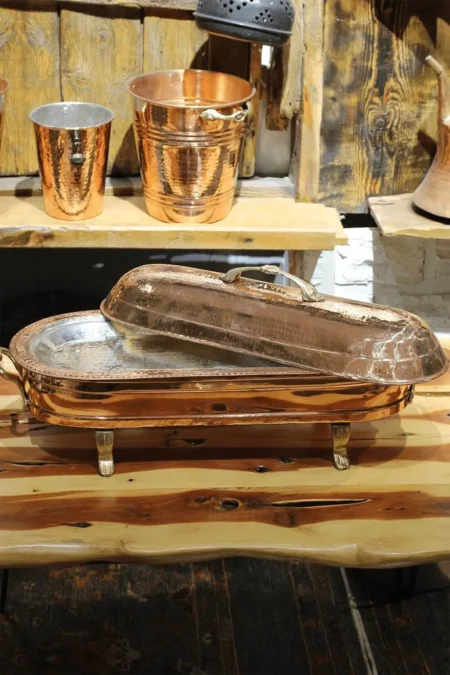
Lidded Copper Footed Charcoal-Heated Kebab Platter — 70 cm, polished copper
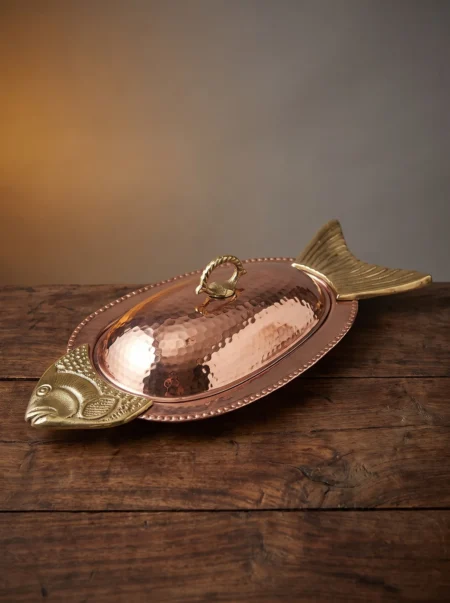
Orkinos Copper Lidded Fish Serving Platter — 40 cm, hand-hammered, polished copper
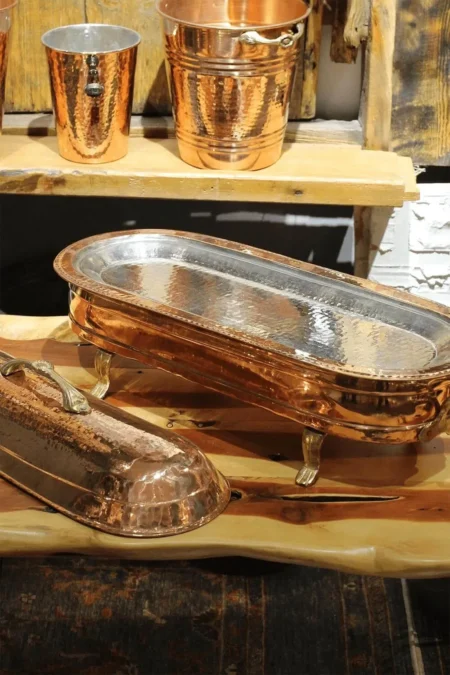
Lidded Copper Footed Charcoal-Heated Kebab Platter — 40 cm, polished copper
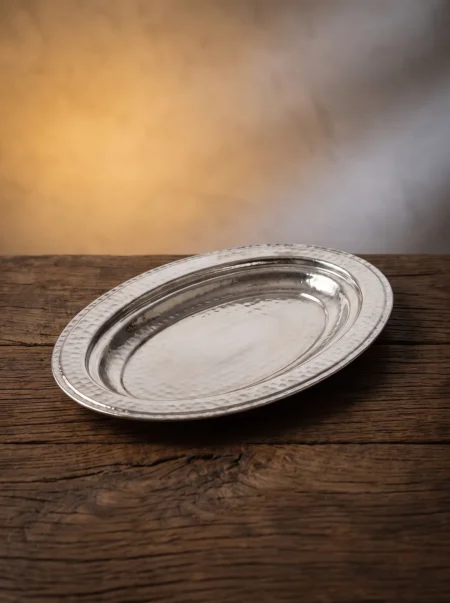
Copper Kebab Boat Plate — 35 cm, hand-hammered, nickel-plated
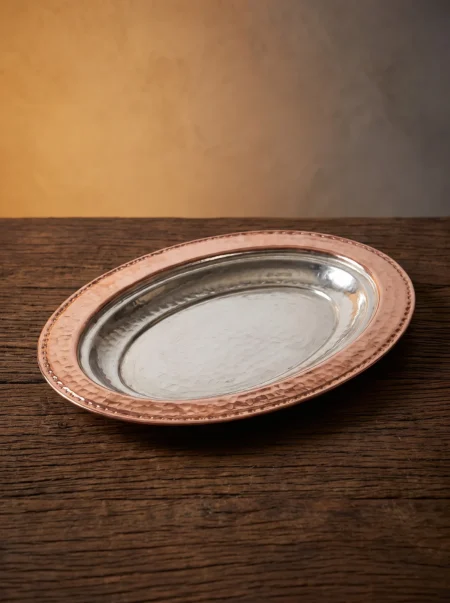
Copper Kebab Boat Plate — 25 cm, hand-hammered, polished copper
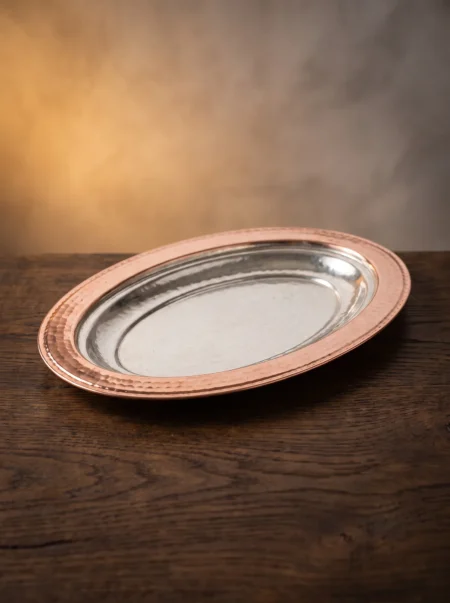
Copper Kebab Boat Plate — 30 cm, hand-hammered, polished copper
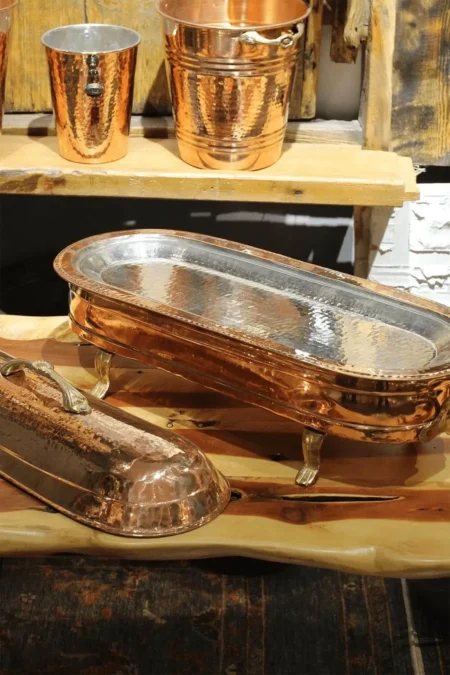
Lidded Copper Footed Charcoal-Heated Kebab Platter — 30 cm, polished copper
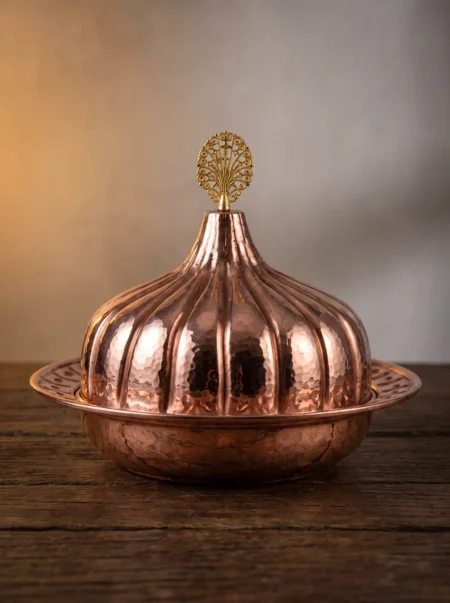
Paşaçadırı Copper Round Serving Plate — 30 cm, hand-hammered, polished copper
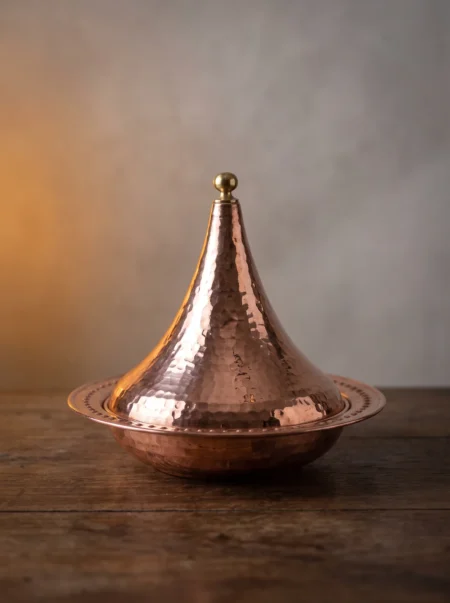
Külah Copper Round Serving Plate — 23 cm, hand-hammered, polished copper
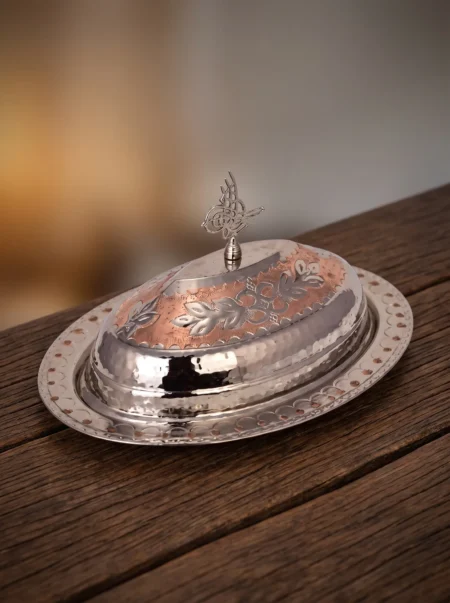
Hanedan Copper Boat-Shaped Serving Plate with Classic Lid — 35 cm, hand-engraved, copper and tin two-tone
A copper serving plate takes the main course from the kitchen to the table hot, and keeps it hot there. The pieces in this category are not all the same shape: boat-shaped kebab plates, lidded fish platters, round plates with tall lids and footed charcoal kebab warmers stretching from 30 cm to 120 cm all sit here together. Most are hand-hammered from a single sheet. BakırBul produces them to order through a long-term partner workshop in Kahramanmaraş, Türkiye.
One piece in the category is not copper: a 20 cm aluminium kunafa plate for two, made for baking kunafa directly. Its product name says aluminium, and it is listed here only because it is a plate.
Plate types and which dish each one suits
| Type | Size range | Lid | Weight | Typical use |
|---|---|---|---|---|
| Boat-shaped serving plate, open | 25–40 cm | None | 440–916 g | Doner and adana kebab, wraps laid side by side |
| Boat-shaped serving plate, classic lid | 25–40 cm | Yes | 766–1796 g | Bringing kebab to the table covered and opening it there |
| Boat-shaped serving plate, domed lid | 25–47 cm | Yes, tall | 770–2364 g | Tall-stacked portions, large tables |
| Lidded fish serving platter | 40–60 cm | Yes | 1078–2238 g | Whole fish, baked sea bass, sea bream |
| Round lidded serving plate | 23–30 cm | Yes, conical | 696–1392 g | Pilaf, casserole and egg pan dishes |
| Footed charcoal kebab warmer | 30–120 cm | Lidded and open | 2240–10700 g | Long tables, restaurant presentation |
Boat-shaped plates, as the name suggests, are long and narrow; a model listed as 40 cm measures about 29 cm wide and 41 cm long outside, with a depth of about 3.5 cm. That proportion suits skewers or wraps laid side by side. Fish platters are longer still: the 60 cm model reaches about 27 cm wide and 61 cm long, and rises to 12.6 cm with its lid. On round lidded plates the lid is conical and tall; the 23 cm model stands 20.5 cm high in total, the 30 cm model between 24 and 25 cm.
How to choose a size
A practical guide: on boat-shaped plates, 25 cm is a single portion, 30–35 cm serves one and a half to two people, and 40 cm and above is a sharing size set in the middle of the table. A lidded model is chosen to bring food to the table covered and open it there; the lid holds the steam and turns the reveal into part of the service. Open models are more practical for daily use and lighter.
Gauge runs from 0.80 to 1.20 millimetres. On large and lidded models, 1 millimetre and above is preferred, because a plate must not sag in the middle when carried full. The footed charcoal kebab warmers use 1 millimetre sheet and pass 10 kilograms at the 120 cm length; they are made for restaurants and large banquets more than home tables. Finishes are polished copper, nickel-plated and oxidised, and some lidded boat-shaped models come hand-engraved in copper and tin two-tone.
How to tell a real copper plate
Copper does not attract a magnet; a magnet that sticks to the body shows another metal underneath. Weight is the second test: copper is clearly heavier than a steel or aluminium body of the same size. The third is the surface that meets food: on copper it should be tin-lined, and tin has a dull, pale grey colour. Where a product page does not state the interior, the quotation confirms it in writing.
What sets the price of a copper plate
Three things decide it: diameter, sheet gauge and how the body is formed. A wide plate uses visibly more copper than a narrow one. A hand-hammered plate carries a higher labour share than a pressed plate of the same diameter. Prices are quoted per order, because they follow the copper price, the finish and the quantity; send your list of sizes and quantities with the destination.
Before first use
Wash a new plate first in warm water with a soft sponge and dry it straight away. It does not go in the dishwasher, and detergent should not be left standing on it. Before use, check that the tin layer on the food surface is continuous. The full routine is in how to care for copper.
Tin, heat and cleaning
A serving plate is in long contact with food, and that contact is often acidic: kebab with yoghurt, tomato sauce, fish with lemon squeezed over it. That is why the tin layer on the food surface matters especially here. Tin is a layer that thins; on plates that work hard with kebab and fish, check it before two years are up. When reddish copper shows inside, have the plate re-tinned before acidic food goes on it again.
Plates are not used on the hob or in the oven; food is cooked in another vessel and moved to the plate. In the footed charcoal kebab warmers, the embers in the lower chamber only keep food warm; they do not cook it. Washing is done by hand: warm water, a soft sponge and an immediate dry. The dishwasher harms both the tin and the exterior. When tarnish forms, rubbing with a salted slice of lemon is usually enough; for stubborn marks, use a paste of flour and vinegar.
The boat form in Kahramanmaraş
A boat-shaped plate comes from a flat sheet drawn up at both ends and dished in the middle; holding the symmetry is down to the coppersmith’s eye, because the hammer does the work, not a mould. On lidded models the work doubles: the lid is hammered separately and fitted to its body one by one, so each lid is the match of its own body. Kahramanmaraş copperwork, which carries a registered Turkish geographical indication, keeps this kind of matched production going today.
Lines and sizes
With plates, the choice starts with diameter, but the real split is depth. Shallow plates are for presentation and sharing; deeper ones for saucy dishes and single servings. Lidded forms make up a separate line; the lid is there to keep food hot and bring it to the table covered.
Most plates in this group are made from sheet between 1.00 and 1.15 millimetres, one of the heaviest bands in the catalogue; a plate passes from hand to hand and meets a knife, so thin sheet is not used. Weight runs from 440 grams to 2,364 grams, and almost all of that difference comes from size. Finishes are polished copper, nickel-plated and oxidised. Trays, plates and bowls are compared side by side in wholesale copper trays, plates and bowls.
Using copper as a kebab serving plate
One of the most frequent questions about copper plates is their use for kebab service. The choice there is about function, not decoration: copper spreads heat quickly and evenly, so sizzling butter poured over the dish runs across the whole plate and the meat stays hot through the service.
In this use, rim height matters as much as diameter; the rim needs to rise slightly so the butter stays on the plate. Because the plate is in direct contact with food, the interior is the first thing to check on the product page or in the quotation. Sizes, rims and restaurant use are covered in copper kebab serving plates.
Frequently asked questions
Which size boat-shaped plate suits how many people?
25 cm suits a single portion, 30–35 cm suits two, and 40 cm and above suits a sharing presentation in the middle of the table. The 47 cm model with a domed lid is made for large tables and restaurants that serve large shared portions.
How long does a copper serving plate keep food hot?
With the lid closed, a copper plate stays hot clearly longer than a porcelain plate in the same room. Copper takes up heat quickly and spreads it evenly across the surface, and the lid holds the steam in, so the food does not dry out while it waits at the table.
Do embers really go into the footed charcoal kebab warmer?
Yes. Its lower chamber is designed for embers, and the aim is to keep food hot at the table. It is not a cooking tool; the food is cooked in another vessel and laid out on the warmer.
Can plates and lids be swapped between pieces?
No. Lids are made matched to their bodies one by one. Even with the same model and size, the lid of another body may not sit perfectly, so sets are kept together in use and in storage.
Which pieces go with a serving plate?
The pieces most often ordered together are copper serving bowls for salad and meze, and copper pitchers and jugs for water and ayran. For the whole group, see copper serveware.