
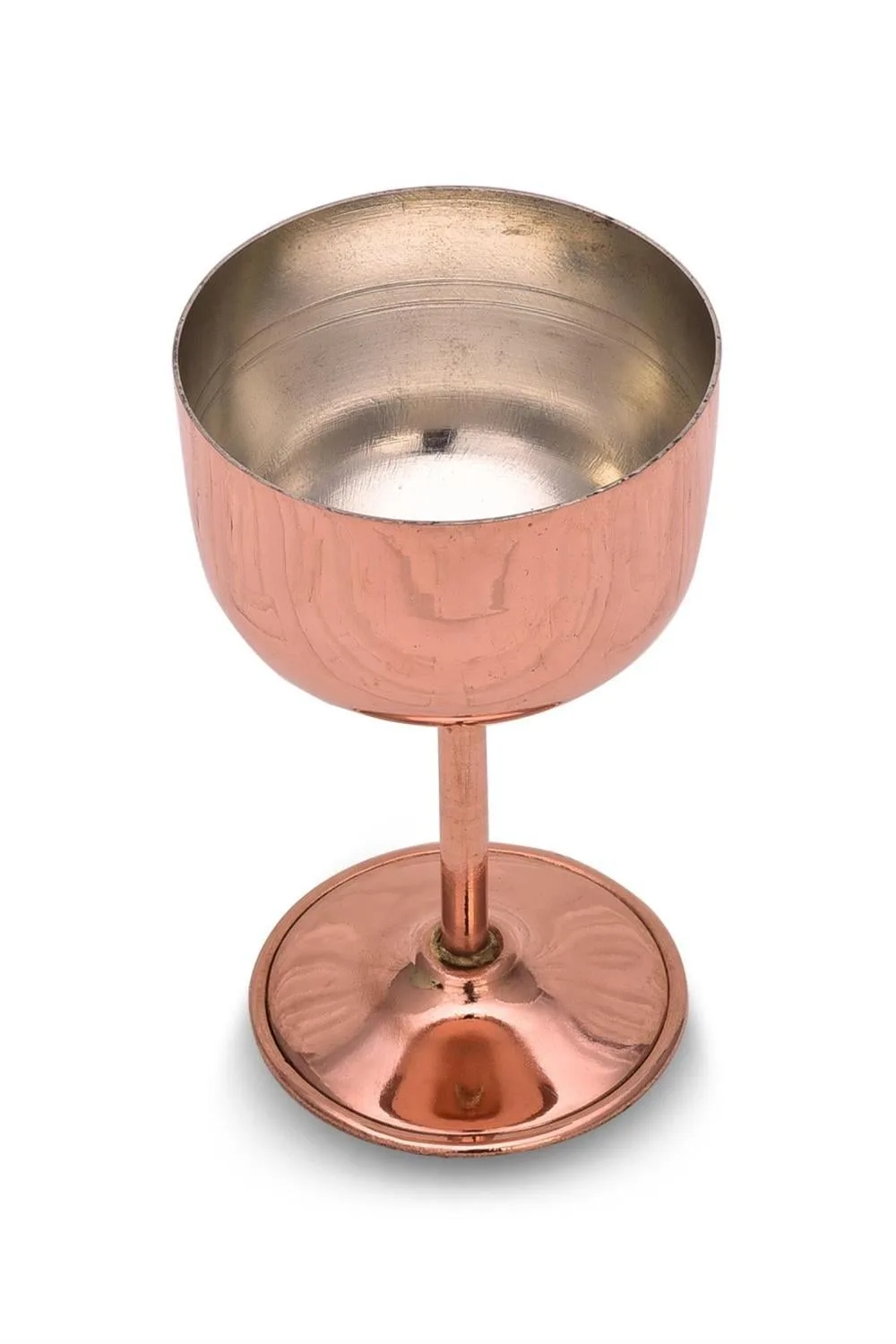
Copper Wine & Cocktail Glasses
Type
Technique
Finish
Sheet thickness
Copper wine and cocktail glasses, often called copper goblets, set a copper bowl on a slim stem. The stem keeps the warmth of the hand away from the bowl, so the drink stays cool for longer. Bowl volume and shape decide the choice, and BakırBul quotes each line singly or in sets of two, four and six.
Showing 1–16 of 54 results
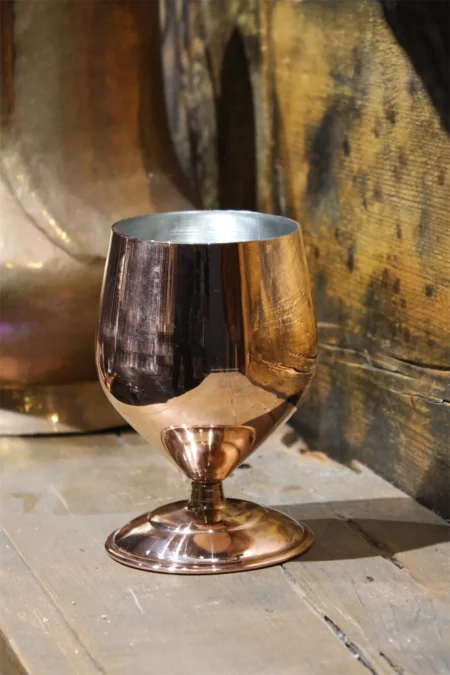
Merlot Copper Goblet — 500 ml, smooth, polished copper
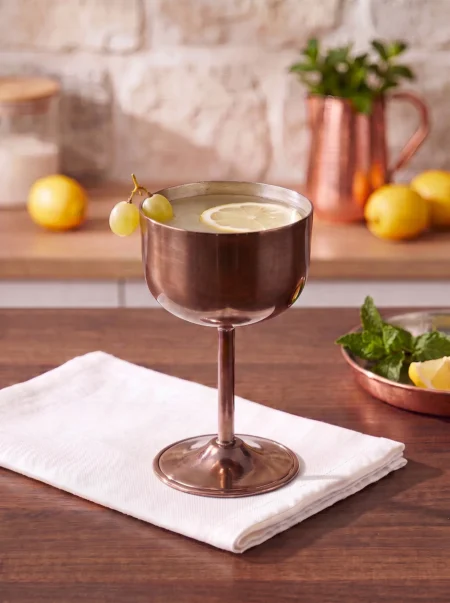
Vino Copper Goblet — No. 1, 240 ml, smooth, polished copper
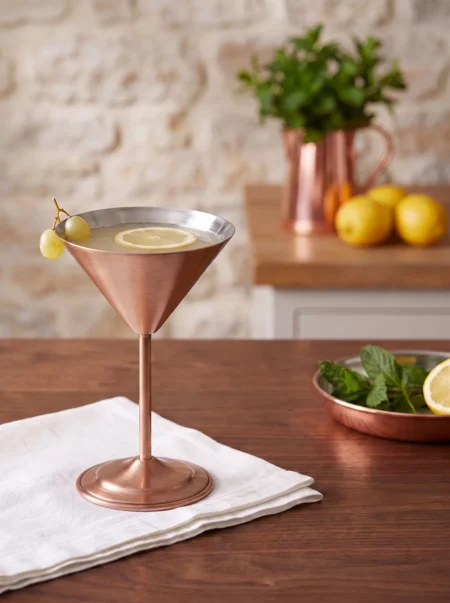
Copper Cocktail Glass — 250 ml, smooth, brushed matt
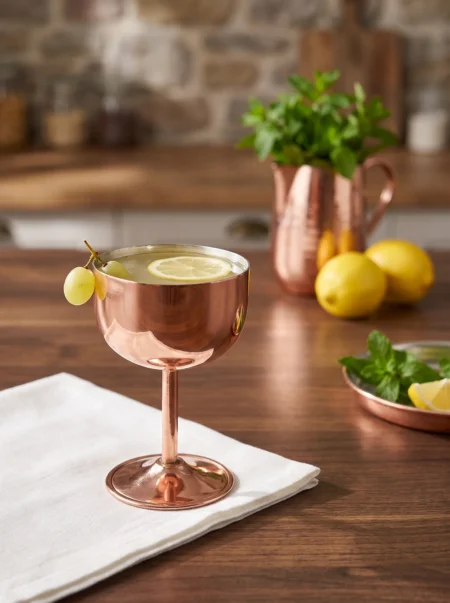
Vino Copper Goblet — No. 2, 400 ml, smooth, polished copper
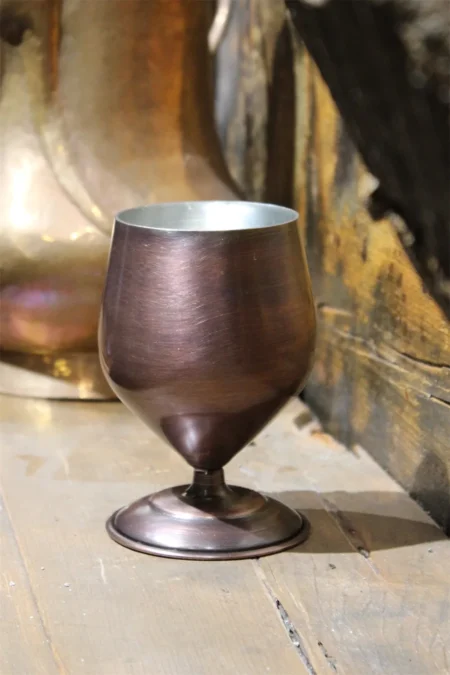
Merlot Copper Goblet — 500 ml, smooth, oxidised
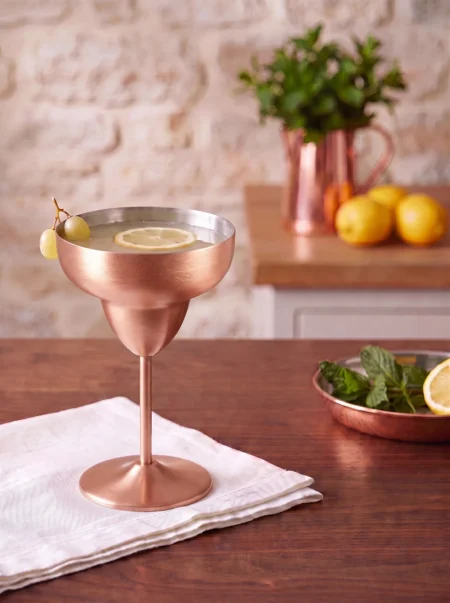
Margarita Copper Goblet — 450 ml, smooth, brushed matt
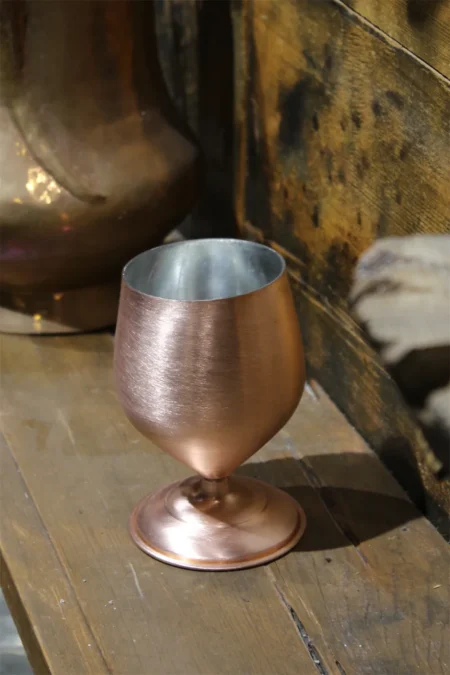
Merlot Copper Goblet — 500 ml, smooth, brushed matt
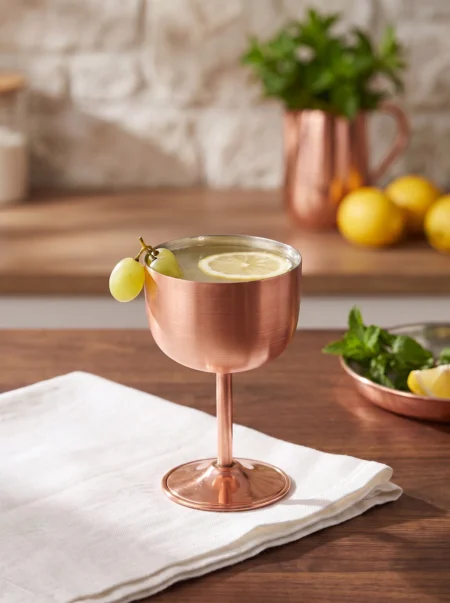
Zo Copper Cocktail Glass — 250 ml, smooth, polished copper
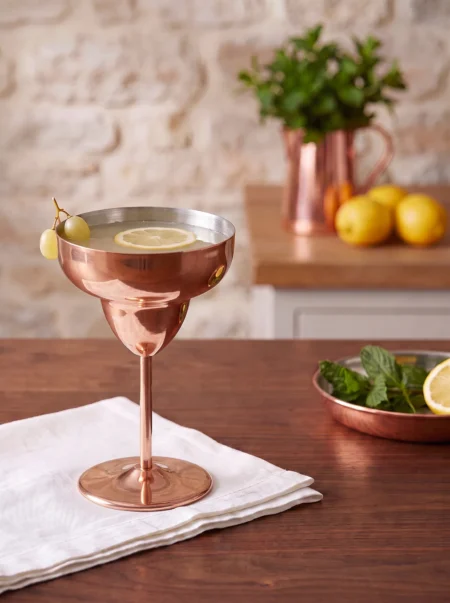
Margarita Copper Goblet — 450 ml, smooth, polished copper
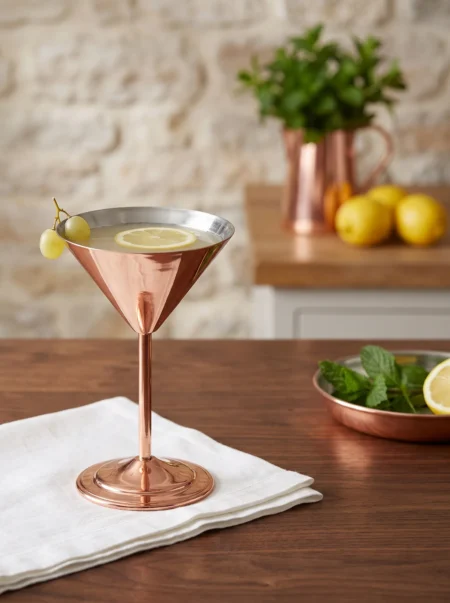
Copper Cocktail Glass — 250 ml, smooth, polished copper
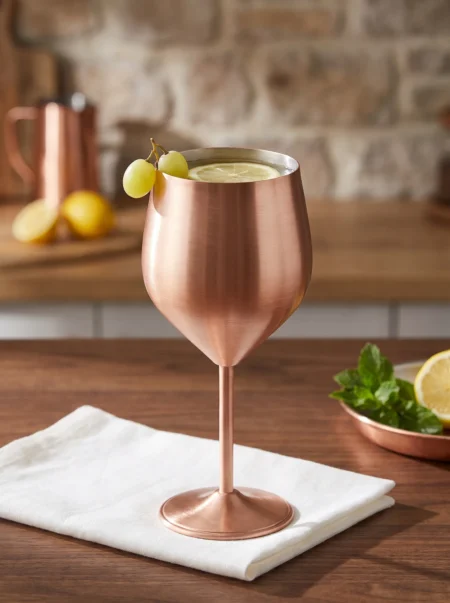
Vine-Gall Copper Goblet — 500 ml, smooth, brushed matt
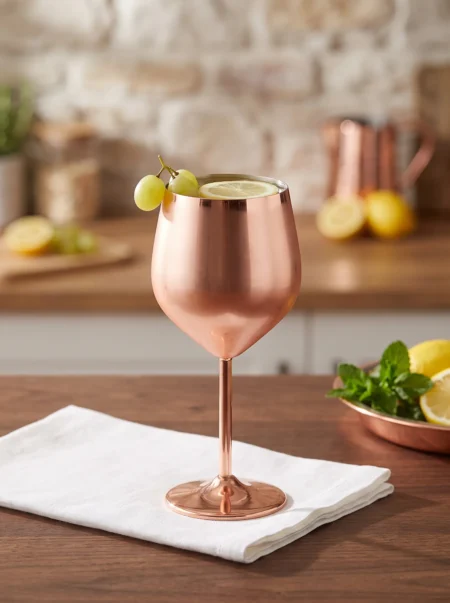
Vine-Gall Copper Goblet — 500 ml, smooth, polished copper
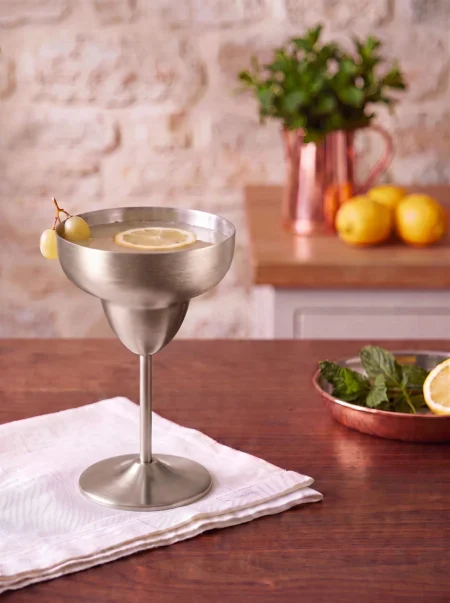
Margarita Copper Goblet — 450 ml, smooth, nickel-plated
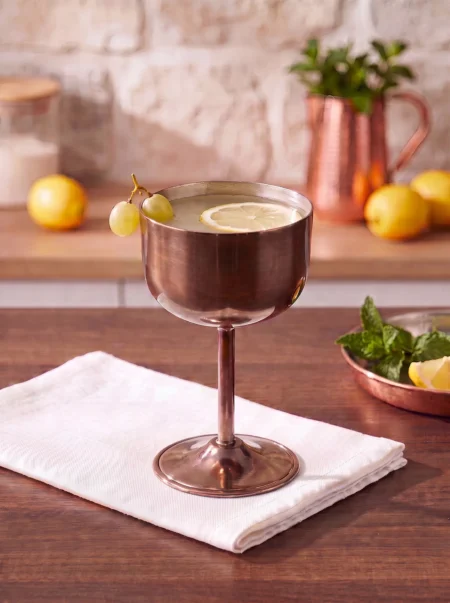
Vino Copper Goblet — No. 1, 240 ml, smooth, oxidised
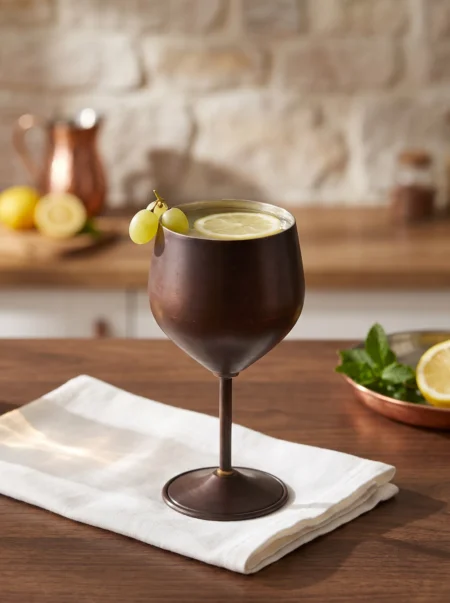
Vine-Gall Copper Goblet — 500 ml, smooth, oxidised
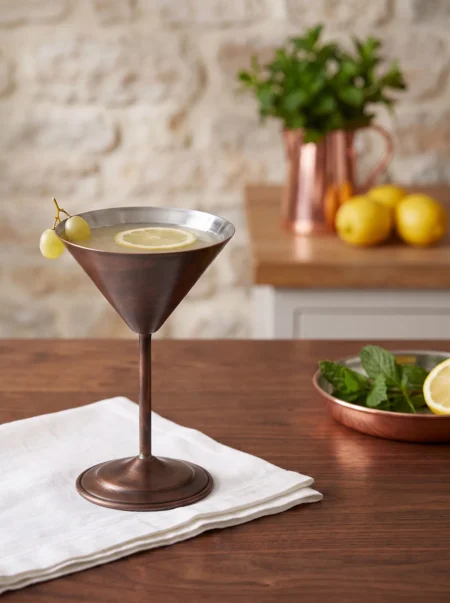
Copper Cocktail Glass — 250 ml, smooth, oxidised
A copper wine or cocktail glass is a drinking vessel whose bowl stands on a slim stem, and the stem is not just a matter of looks. Because the warmth of the hand does not pass into the bowl, the drink holds its temperature for longer. The range runs from a small 240 ml bowl to a large 500 ml one. BakırBul produces these glasses to order through a long-term partner workshop in Kahramanmaraş, Türkiye, and the inside of every bowl is tin-lined.
Telling glasses apart by bowl and rim
The shape of a glass tells you how it is meant to be used. A deep bowl that narrows slightly towards the rim keeps the drink closed in and gathers its aroma; a wide-mouthed bowl lets the aroma spread and is shaped for service without ice. The lines in the range follow that split directly: Merlot and Vine-Gall are deep 500 ml bowls, the Vino line comes in 240 ml and 400 ml, two cocktail-glass lines hold 250 ml, and the wide-mouthed Margarita holds 450 ml.
| Volume | Line | Use |
|---|---|---|
| 240 ml | Vino No. 1 | Small pours, aperitif service |
| 250 ml | Two cocktail-glass lines with a wide, shallow bowl | Service without ice, wide rim |
| 400 ml | Vino No. 2 | Standard service, everyday use |
| 450 ml | Margarita | Wide-mouthed bowl, fruit-based mixes |
| 500 ml | Merlot, Vine-Gall | Large bowl, special-occasion tables |
How to choose
- Bowl volume: a glass is never filled to the brim. A 450 ml Margarita takes a comfortable serving, and a 400 ml Vino looks right at two-thirds full. For small tables and measured pours, the 240–250 ml sizes are enough.
- Gauge and weight: the 450 ml Margarita is made from 0.80 mm sheet and weighs 290 grams. Most bowls sit between 0.80 and 0.90 mm, and the heavy Vine-Gall line goes up to 1.30 mm. Balance matters in a stemmed vessel: the wider the bowl, the steadier the foot needs to be.
- Finish: besides polished copper, oxidised and brushed matt, the Margarita and Vino lines also come nickel-plated, with a silver-tone exterior. Nickel is the choice for tables that want the look of a classic silver-tone service.
- Sets: most models are listed as a single piece and as sets of two, four and six. For weddings, engagements and anniversaries, the set of two is the most requested option; gift ideas are collected in copper anniversary and wedding gifts.
Tin, acidity and care
The inside of each bowl is tinned by the traditional method. That layer keeps the acid in fruit and citrus drinks off the copper, which is why the state of the tin matters more in a glass than in many other vessels. Under heavy use, re-tinning every one to two years is a sensible guide. When service ends, empty and rinse the glass; do not leave a lemony or fruit mix standing in it.
Washing is done by hand: warm water, a soft sponge and an immediate dry. The dishwasher harms both the tin and the exterior finish. When washing a stemmed glass, hold it by the bowl, not by the foot, so no load goes onto the joint. Tarnished copper comes back with lemon and salt, or a paste of flour, vinegar and salt; on oxidised glasses the dark tone is the intended look, so do not use a harsh polish on them.
The stem joint
A copper glass is made from two separate parts: the cup-shaped bowl and the foot beneath it. If the centres of the two parts do not line up, the glass rocks on the table, so the soldering stage is the real test of the work. Kahramanmaraş copperwork carries a registered Turkish geographical indication, and the stemmed glass is one of the pieces in that craft that asks most for balance.
What sets the price of a copper wine glass
Most bowls sit between 0.80 and 0.90 mm sheet and weigh 190–290 grams; because the gauge band is narrow, the price is separated mainly by volume and surface work. As the bowl grows from 240 ml to 450 ml, the copper used increases. Stemmed forms add an extra part to the body, which places them apart from cups. Set listings are priced per piece in the set. Prices are quoted per order; send the models, finishes and quantities you need, with the destination.
Lines, sets and sizes
Glasses are chosen by volume and by the height of the stem. 240 ml bowls suit single servings; 450 ml bowls suit long, slow tables. The stem reduces contact between hand and bowl and so lengthens the time a drink stays cool, while a footless cup stands more steadily.
Every bowl in this group has a smooth body; there are no hand-hammered glasses in the range, because the part of the rim that touches the lips needs to stay smooth. Finishes are polished copper, oxidised, nickel-plated and brushed matt. On nickel-plated glasses the nickel is on the outside only; the inside of the bowl is tin. For bar programmes, copper cocktail and Margarita glasses for bars covers volumes and service, and wholesale copper goblets and wine cups covers the wholesale route.
Frequently asked questions
Can acidic drinks be served in a copper wine glass?
Yes, because the inside of the bowl is tin-lined and the drink does not touch bare copper. The care that matters is not leaving an acidic drink standing in the glass for hours, and emptying and rinsing the glass after service. If the tin wears through and copper colour shows inside, the glass should be re-tinned before it goes back into service.
Should I choose a glass or a cup?
A stemmed glass suits special-occasion tables and slow, seated service; a cup suits everyday water and ayran. The stem reduces heat transfer but is less resistant to knocks than a cup. To compare, look at copper cups, tumblers and mule mugs.
What is the difference between a nickel-plated glass and a polished copper one?
The difference is only in the colour of the outer surface. Nickel plating gives a silver-tone surface that is more resistant to tarnish; polished copper is the natural colour of the metal and darkens over time. In both, the inside of the bowl is tin-lined, so the drink meets the same surface.
Can I match a set of glasses with a pitcher?
Yes. A pitcher and glasses chosen in the same finish give the table a unified look. Among the copper pitchers and jugs there are polished copper, oxidised and nickel-plated options that match the glass finishes.