
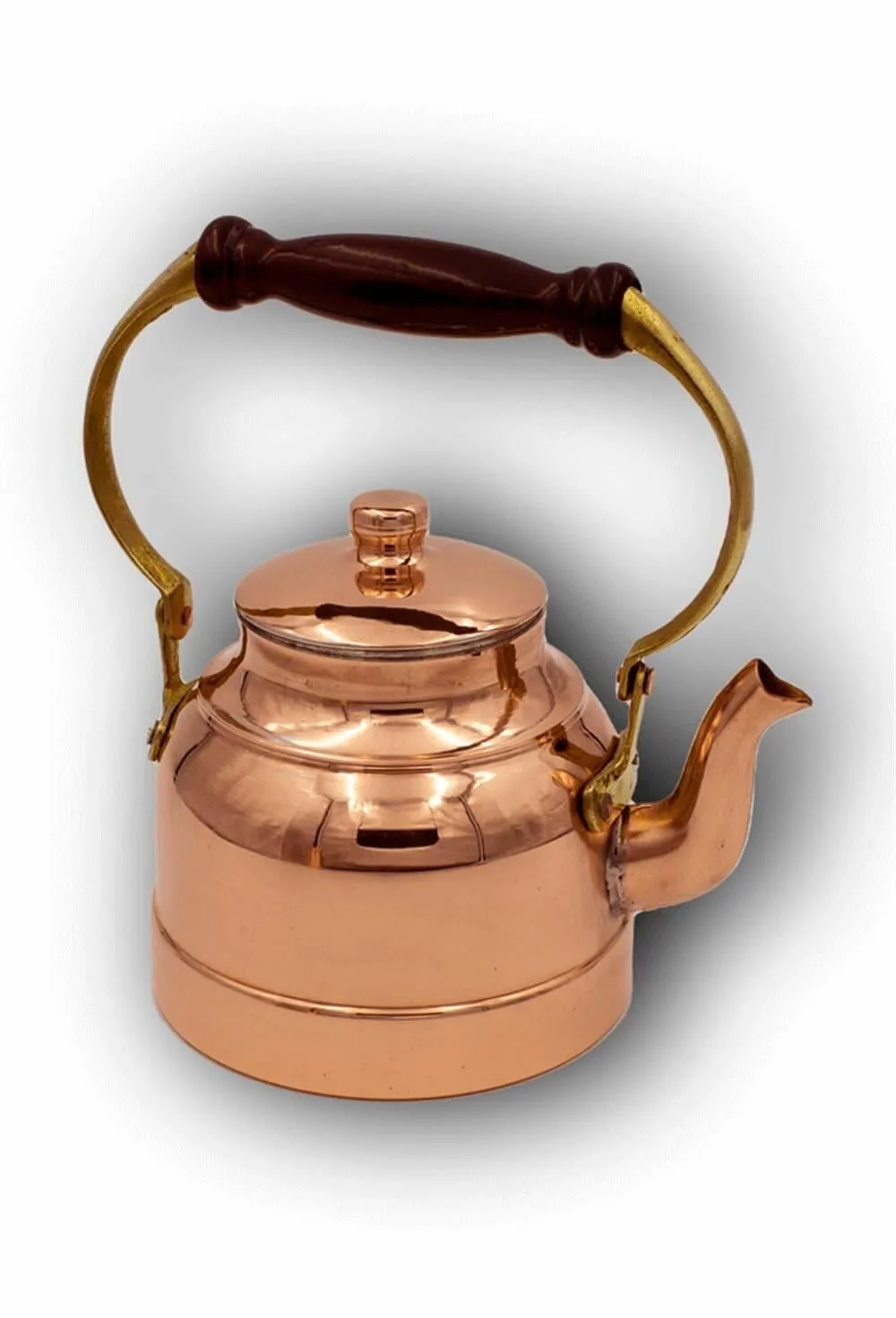
Copper Teapots
Type
Technique
Finish
Sheet thickness
A copper teapot is the brewing pot of Turkish tea: it does not boil water but brings boiled water and tea leaves together. The surface that touches the tea is tinned. The shape and size of the body change how long the brew takes to open, and BakırBul supplies stand-alone teapots in wholesale quantities.
Showing all 12 results
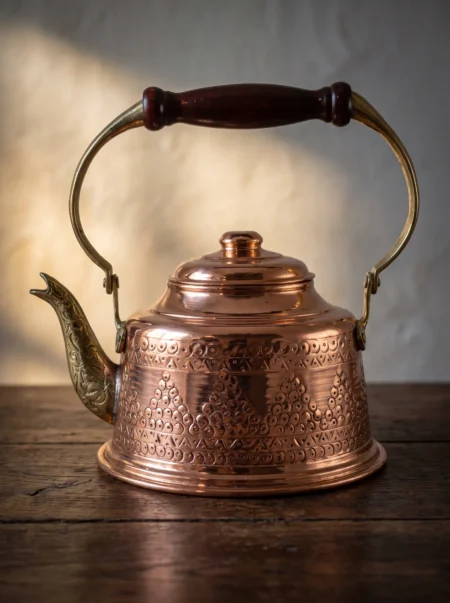
Maraş Copper Teapot — punch-decorated, polished copper
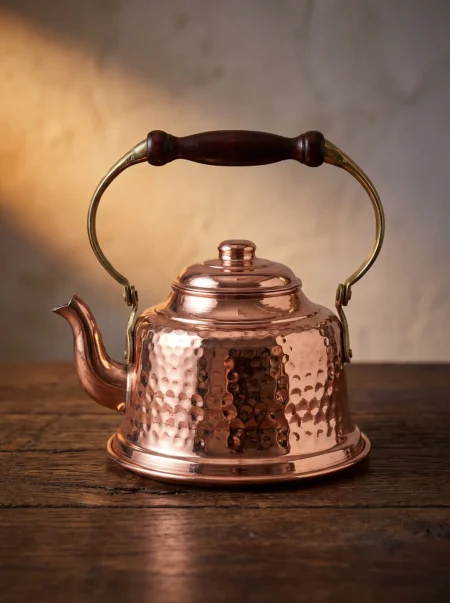
Maraş Copper Teapot — hand-hammered, polished copper
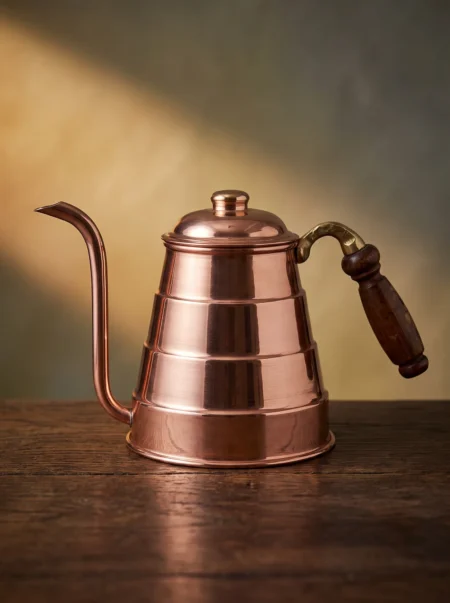
Tiryaki Copper Teapot — smooth, polished copper
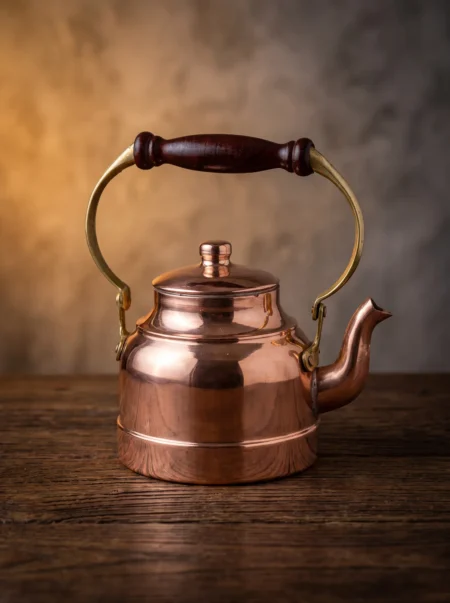
Çayyolu Copper Teapot — wooden handle, smooth, polished copper
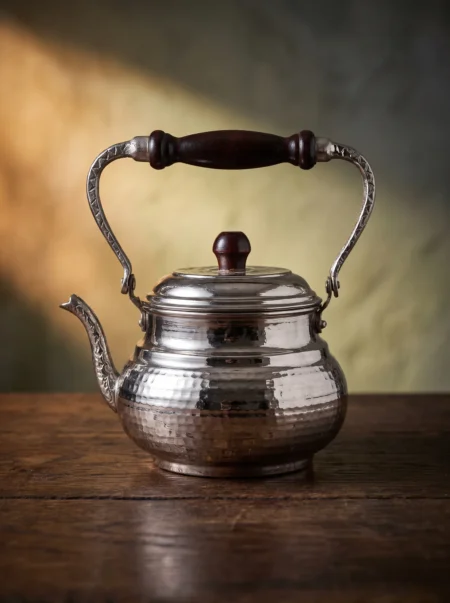
Copper Teapot — hand-hammered, nickel-plated
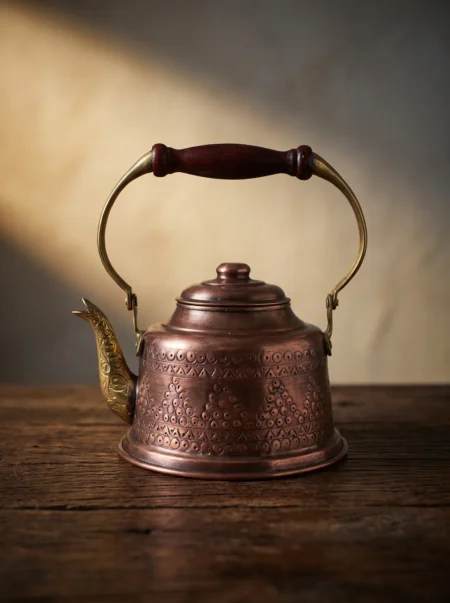
Maraş Copper Teapot — punch-decorated, oxidised
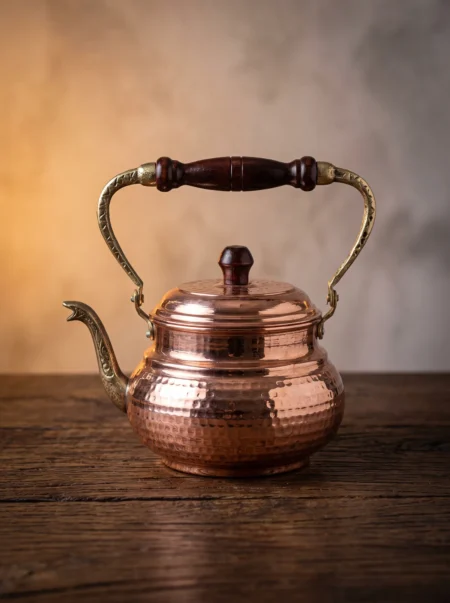
Copper Teapot — hand-hammered, polished copper
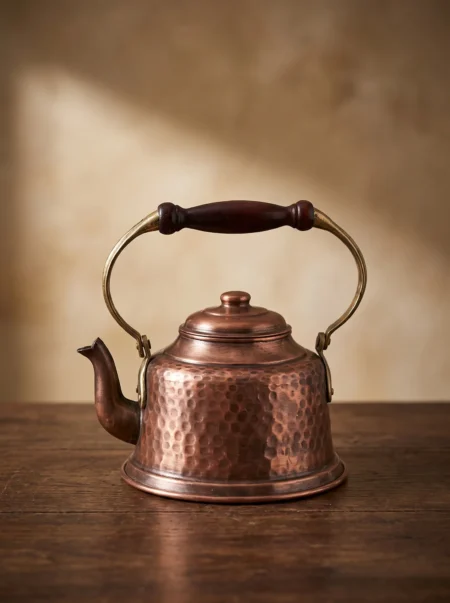
Maraş Copper Teapot — hand-hammered, oxidised
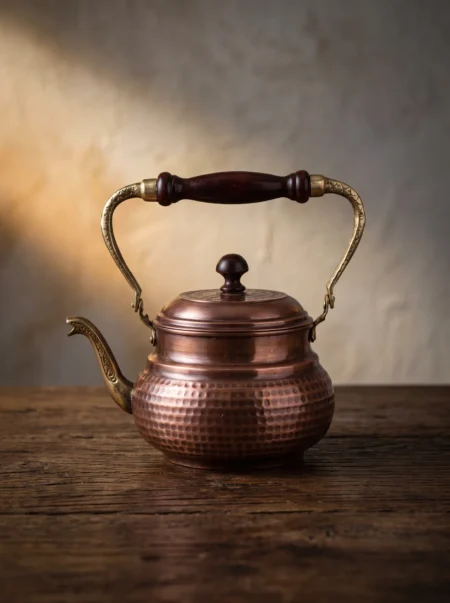
Copper Teapot — hand-hammered, oxidised
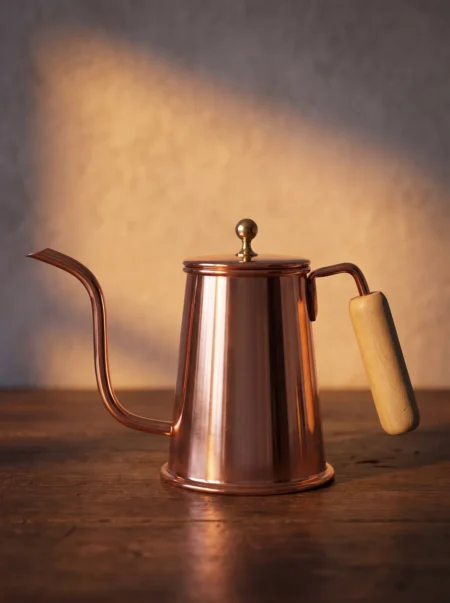
Kahveevi Copper Teapot — smooth, polished copper
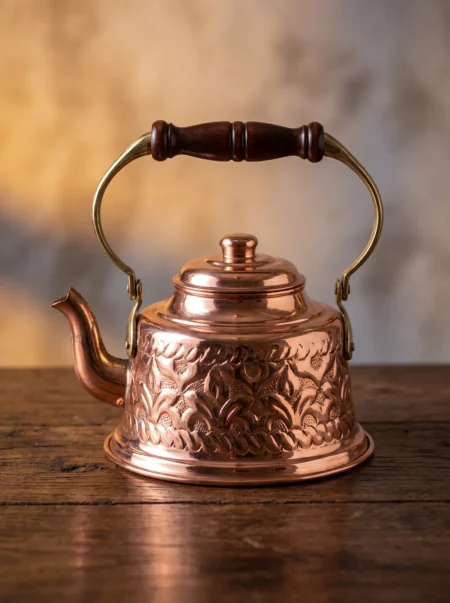
Maraş Copper Teapot — hand-engraved, polished copper
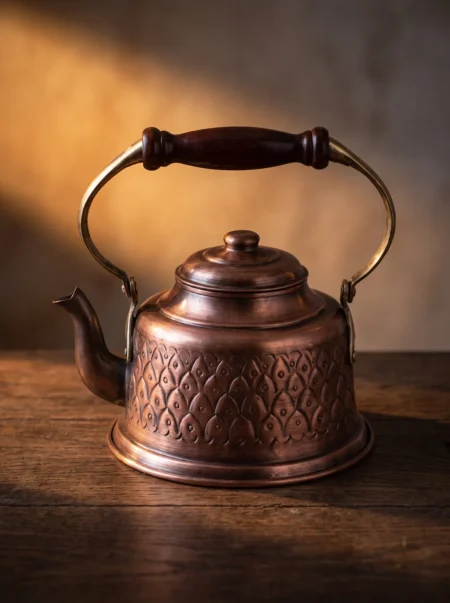
Maraş Copper Teapot — hand-engraved, oxidised
The copper teapot is the pot in which Turkish tea brews; it does not boil water itself. This group is built on the Maraş, Tiryaki, Çayyolu and Kahveevi bodies, plus a plain hand-hammered body offered in three finishes. Capacities run from 500 ml to 1300 ml and sheet thickness from 0.60 mm to 0.90 mm. Finishes are polished copper, oxidised and nickel-plated; the work is hand-hammered, hand-engraved, punch-decorated or smooth.
The difference between a teapot and a double teapot
This is the question asked most often, and the answer is simple: the lower kettle boils the water, and the upper pot is where the tea brews. A Turkish tea set works with the two stacked. The kettle sits on the hob and boils the water; the teapot above never touches the flame and warms only from the rising steam. The distinction is not just a name; it decides how the pot is used:
- A teapot is not put directly on the flame; tea in a teapot set straight on the hob scorches and turns bitter.
- A teapot holds less than the kettle, because it holds only the concentrated brew.
- A teapot can also be used on its own: boiled water is added from elsewhere and the pot goes to the table.
Copper’s advantage here is fast, even heat. The teapot warms from all sides in the steam from below and the brew comes out evenly; off the heat it gives up warmth quickly, so the tea does not stew. Complete two-tier sets are in copper Turkish double teapots.
Choosing capacity and body
The right teapot follows the number of glasses at the table. A tulip-shaped Turkish tea glass holds roughly 100–120 ml, of which about a third is brew. An 800 ml teapot therefore makes brew for around twenty glasses, but that brew should be drunk in one sitting; brew that stands too long darkens and turns harsh. A large teapot suits a full table, a small one tea for two in the morning.
| Body | Capacity and thickness | Work and finish |
|---|---|---|
| Maraş teapot | 1300 ml, 0.70 mm, about 840 g | Hand-hammered, hand-engraved or punch-decorated; polished copper and oxidised |
| Plain hand-hammered teapot | 1300 ml, 0.60 mm, about 630 g | Hand-hammered; polished copper, oxidised and nickel-plated |
| Tiryaki teapot | 800 ml, 0.80 mm, about 500 g | Smooth; polished copper |
| Çayyolu teapot | 1300 ml, 0.90 mm, wooden handle | Smooth; polished copper |
| Kahveevi teapot | 500 ml, 0.90 mm | Smooth; polished copper |
The work sets both the look and the cost. On a hand-hammered body the hammer marks stay visible and no two pieces are alike. Punch decoration and hand engraving mean a pattern worked into the surface with a chisel, and these two techniques give the traditional Maraş look most clearly. A smooth body is left unworked, plain and easy to clean. On the handle, wood stays cool and feels softer in the hand; a metal handle is more durable but needs a cloth on a hot pot.
A practical routine for good tea
Rinse the teapot with hot water to warm it, then add the dry tea. Pour the boiling water in slowly and set the pot on top of the kettle. Brewing usually takes ten to fifteen minutes; beyond that the tannins take over and the tea turns bitter. At long sittings, making a fresh brew gives a better result than keeping the same brew hot. To keep tea hot at the table for hours, the copper teapot warmers are made for that job.
How to tell a genuine copper teapot
Copper is not magnetic; a magnet that sticks to the body shows another metal underneath. Weight is the second test: copper is clearly heavier than a steel or aluminium body of the same size. The third is the inside: the surface that touches the tea is tinned.
First use of a new copper teapot
Wash the teapot in warm water with a soft sponge and dry it at once. It does not go in the dishwasher, and detergent should not be left standing in it. Before first use, check that the tin lining inside is intact.
Tin, hob and care
The food-contact surface inside the teapot is tinned. Tin is a protective layer over the copper and wears with time; under heavy use it is usually renewed every one to two years. When the reddish colour of copper starts to show inside, the pot is due for re-tinning. Because a teapot does not sit directly on the flame, its tin wears more slowly than that of a pot or pan.
After each use, empty the leaves, rinse the inside with warm water and dry it. Leaves left in the pot leave a dark film on the inside that spoils the taste of later brews. Avoid wire scourers; a soft sponge is enough. Darkening on the outside is copper’s reaction with air and is not a defect; lemon and salt, or a paste of flour, vinegar and salt, brings the shine back, but oxidised surfaces are not polished. Copper is not magnetic, so it does not work on induction unless an interface disc is used; the lower kettle of the set is used on a gas or electric hob.
The teapot in Kahramanmaraş copperwork
In the Maraş workshops the teapot is the piece whose pattern is talked about most. The body is small but always on show; rows of chiselled motifs come out a little closer or wider apart with the rhythm of the hand, so two teapots from the same form never carry exactly the same pattern. Kahramanmaraş copper handcraft carries a registered Turkish geographical indication, and the Maraş bodies in this group follow that decorative tradition directly.
What shapes the quotation for teapots
Capacity and surface work set the cost of a teapot. A larger body uses more copper. Smooth bodies stay plain, while punch-decorated and hand-engraved surfaces carry extra working time. Sheet thickness moves only within a narrow band. Quotations are prepared per order from your list of bodies, finishes and quantities, with the lead time agreed for that order. Wholesale terms for tea sets are on wholesale copper teapots and tea sets.
Models, sets and sizes
On a teapot the choice starts with capacity. An 800 ml body is sized for a small table; a 1.3 litre body for a full table or a long tea service. Because the teapot works with the kettle below, the ratio between the two also counts.
Finishes are polished copper, oxidised and nickel-plated. On the body side, hand-hammered, smooth, punch-decorated and hand-engraved forms differ; punch decoration leaves a repeating dotted pattern on the surface.
Frequently asked questions
What is the difference between a teapot and a double teapot?
The double teapot’s lower kettle boils the water; the teapot is the upper pot where the tea brews. In a Turkish tea set the two work stacked: the teapot never touches the hob and brews in the heat of the steam rising from the kettle.
Can I put the teapot directly on the hob?
No. A teapot is not a hob vessel; on direct heat the tea scorches and turns bitter and the tin inside wears for no reason. Boil the water separately and keep the teapot on top.
What capacity should I choose?
For daily use by two or three people, 800 ml; for a full table and guests, 1300 ml. Allow about a third of each glass for brew and size the pot to your own table.
What is the difference between hand-hammered, hand-engraved and smooth?
On a hand-hammered body the surface is shaped with a hammer and the marks show; hand engraving and punch decoration work a pattern into the surface with a chisel; a smooth body is left plain. All three are copper; the difference is in the work.
Is tea staining inside the teapot harmful?
It is not harmful, but it spoils the taste. Emptying the leaves and rinsing with warm water after each use is enough. If a dark film has formed, clean it gently with a soft sponge and no abrasives.
What completes the set?
For the full two-tier set see copper Turkish double teapots, and for glasses and cups see copper cups and tumblers.