Copper Frying Pans
Type
Technique
Finish
Sheet thickness
A copper frying pan decides how quickly a pan reacts in dishes cooked briefly at high heat, from breakfast eggs to a fast sauté. The cooking surface is tinned. Diameter is the first measure and sheet thickness the second, and BakırBul supplies the pans in wholesale quantities across open and lidded bodies.
Showing 1–16 of 52 results
Beyoğlu Copper Frying Pan — No. 1, 18 cm, hand-hammered, polished copper
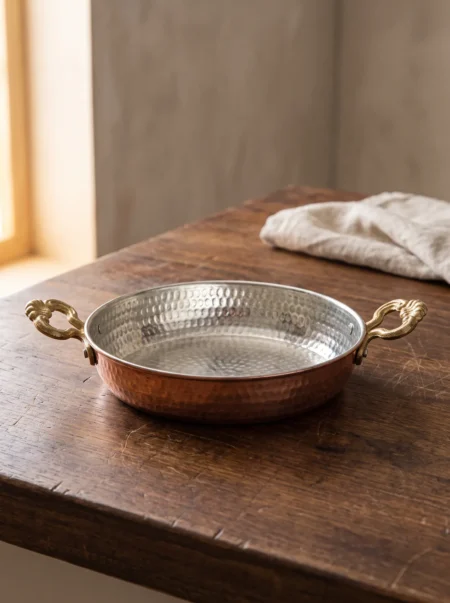
Acemli Copper Frying Pan — No. 3, 18 cm, machine-hammered, polished copper
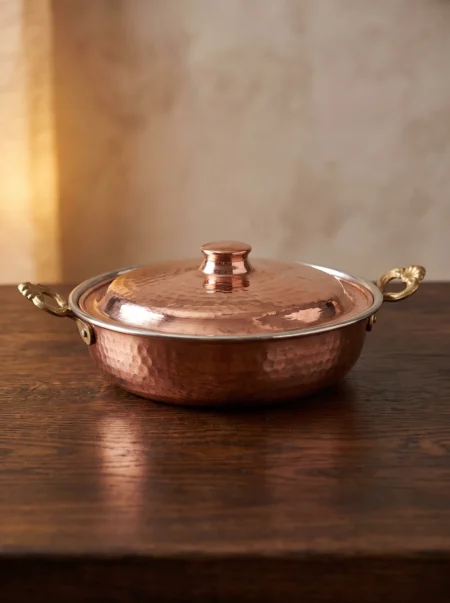
Beyoğlu Copper Frying Pan — No. 4, 24 cm, hand-hammered, polished copper
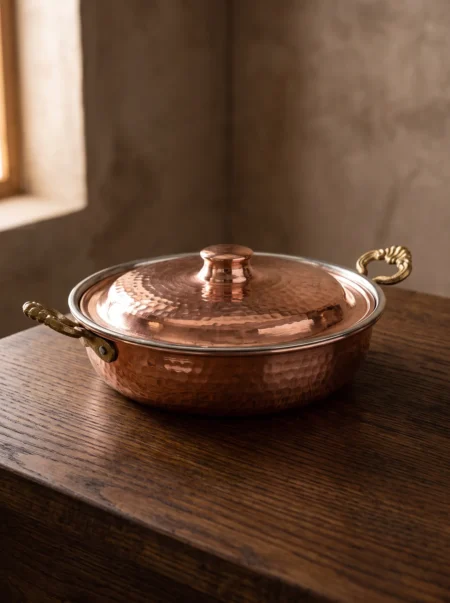
Beyoğlu Copper Frying Pan — No. 5, 27 cm, hand-hammered, polished copper
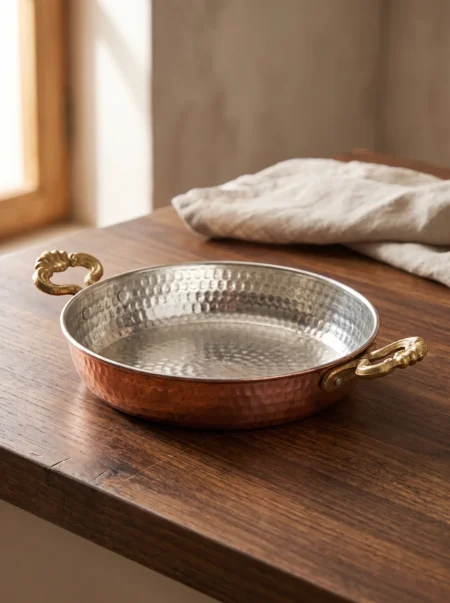
Acemli Copper Frying Pan — No. 1, 14 cm, machine-hammered, polished copper
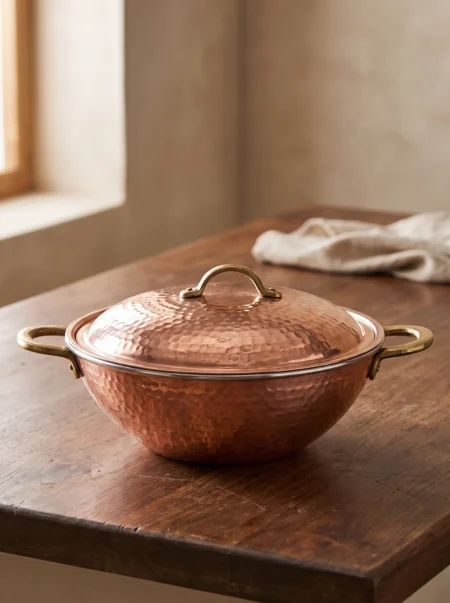
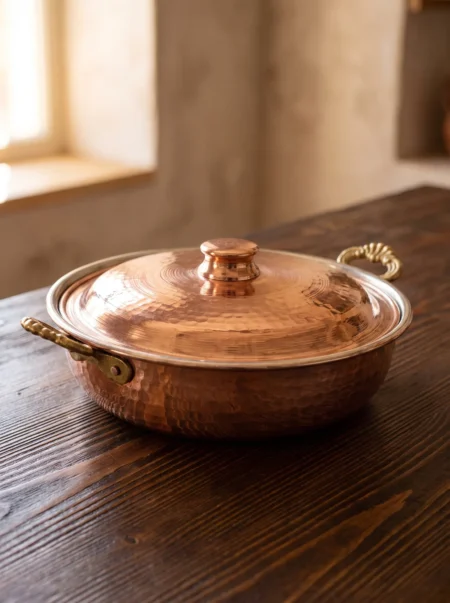
Lidded Copper Wok — 25 cm, hand-hammered, polished copper
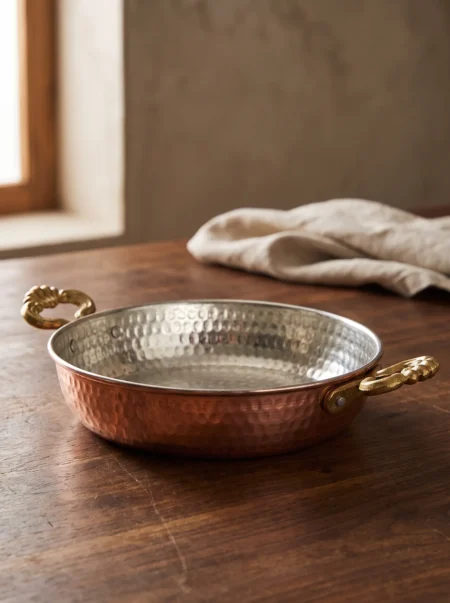
Acemli Copper Frying Pan — No. 6, 24 cm, machine-hammered, polished copper
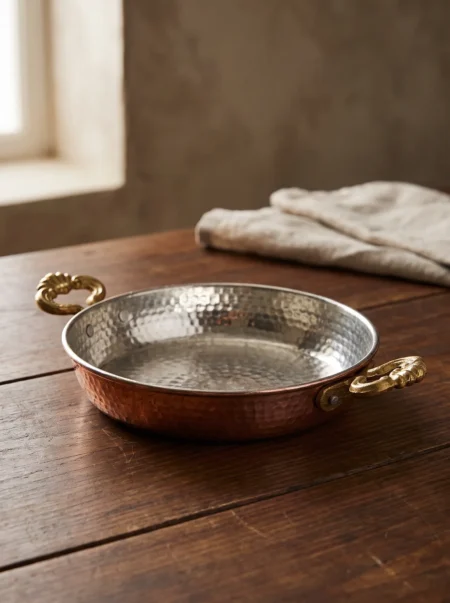
Acemli Copper Frying Pan — No. 5, 22 cm, hand-hammered, polished copper
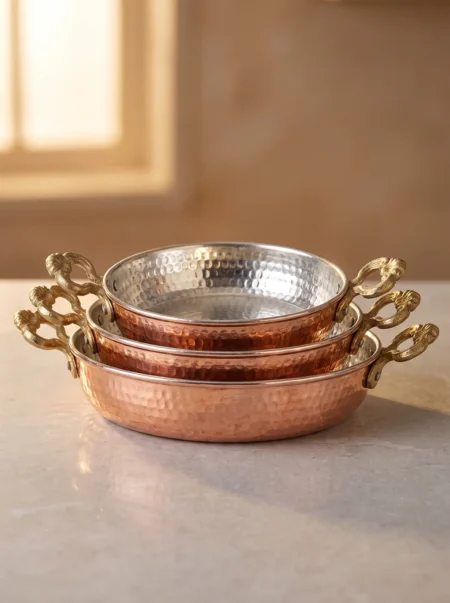
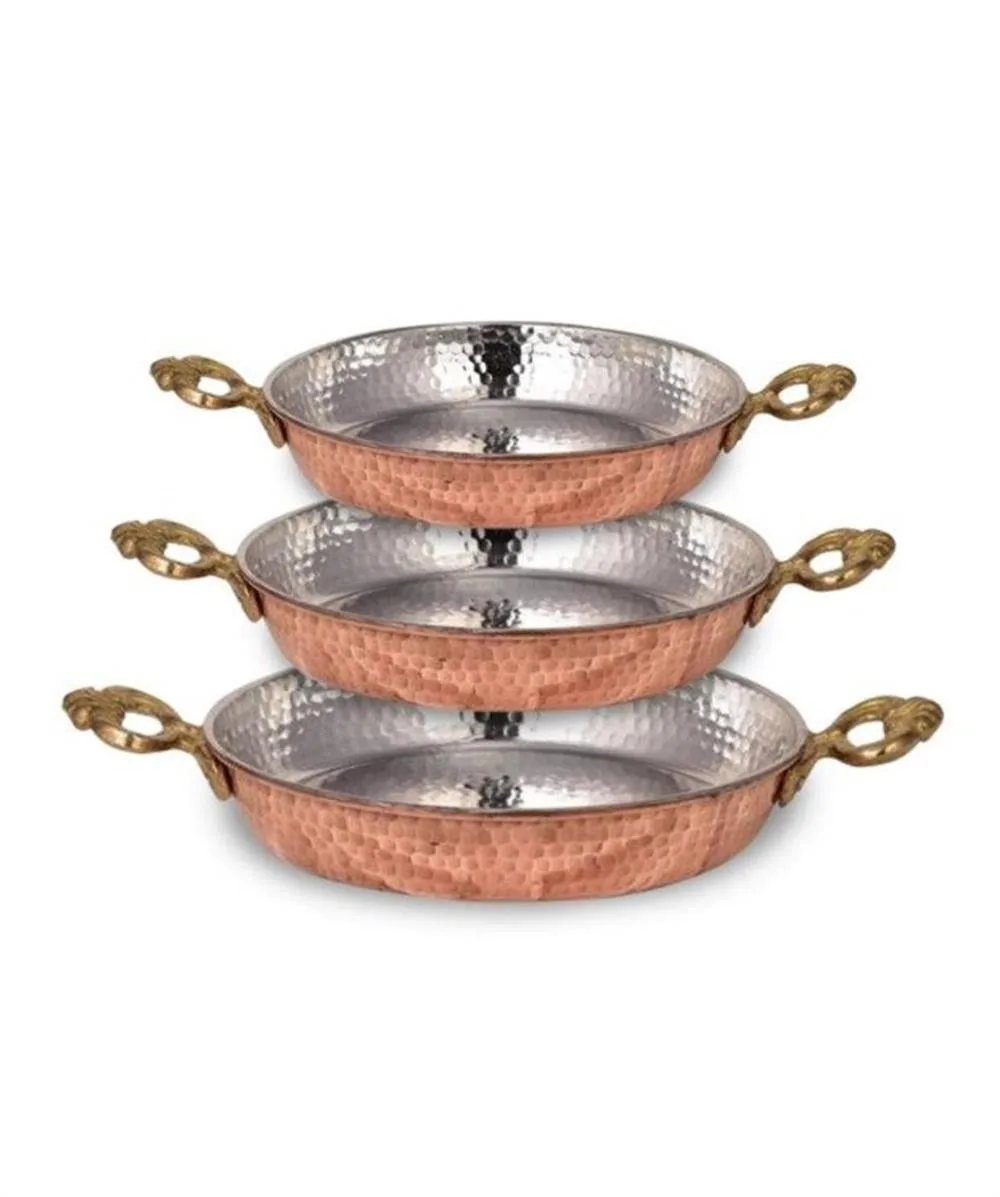
Special Series Acemli Copper Frying Pan, Set of 3 — Nos. 1–3, light gauge, machine-hammered, polished copper
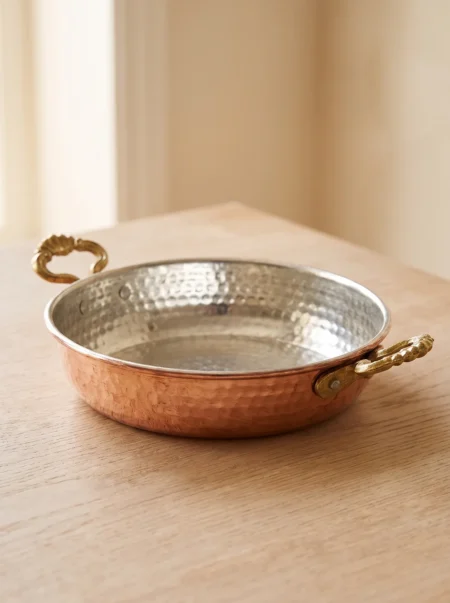
Soylu Copper Frying Pan — No. 1, 14 cm, light gauge, polished copper
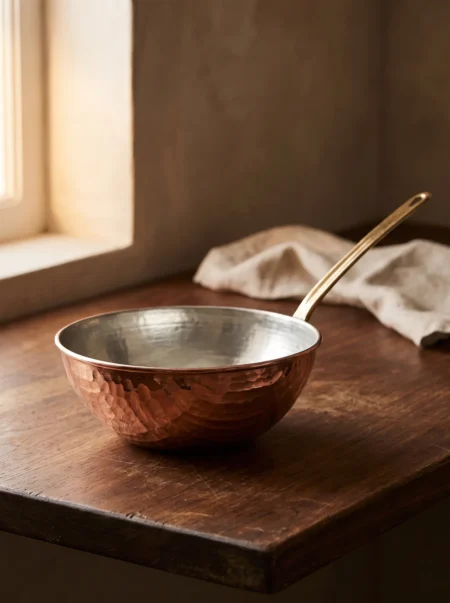
Copper Wok (pan only, no lid) — 25 cm, hand-hammered, polished copper
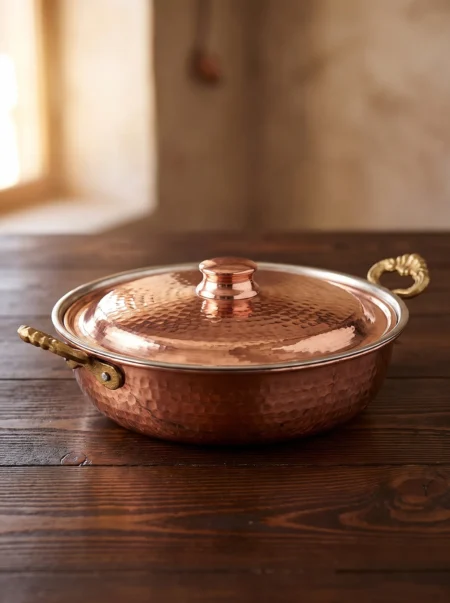
Beyoğlu Copper Frying Pan — No. 3, 22 cm, hand-hammered, polished copper
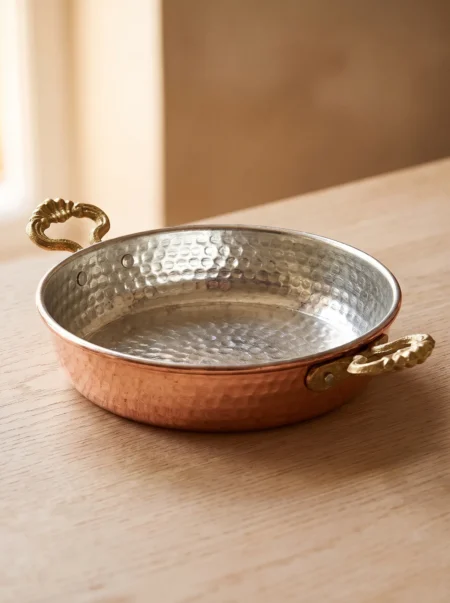
Soylu Copper Frying Pan — No. 5, 22 cm, light gauge, polished copper
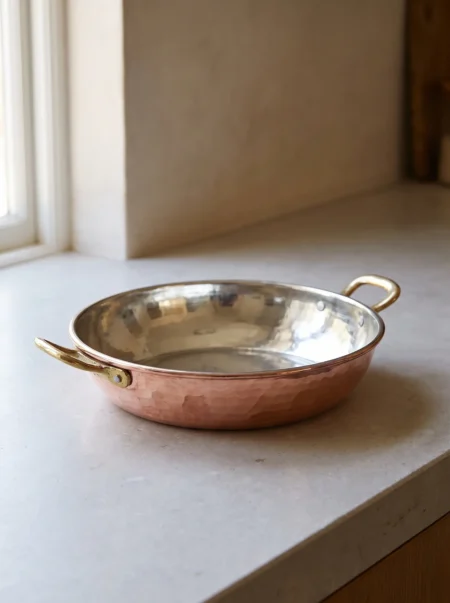
Çelebi Copper Frying Pan — No. 2, 16 cm, hand-hammered, polished copper
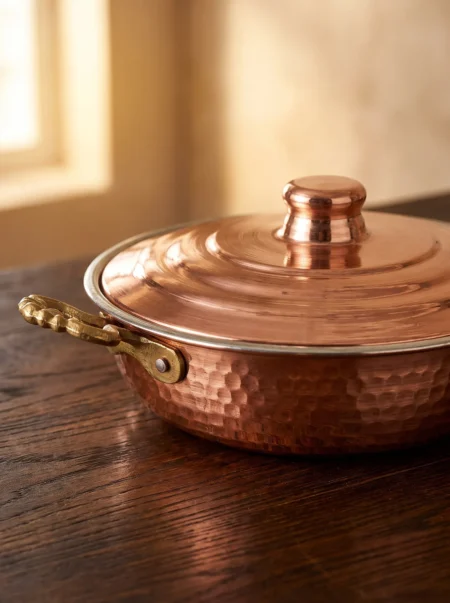
Emirgan Copper Frying Pan — No. 5, 22 cm, hand-hammered, polished copper
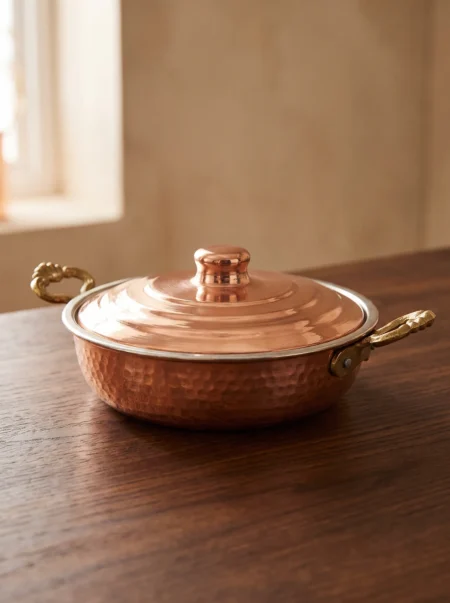
Emirgan Copper Frying Pan — No. 2, 16 cm, hand-hammered, polished copper
Everything cooked fast at high heat depends on how quickly the pan responds, which is why the copper frying pan is used for so much, from breakfast to sautéing. The range covers diameters from 14 cm to 27 cm, sheet thickness from 0.50 mm to 1.30 mm, and open and lidded bodies. The Emirgan, Acemli, Beyoğlu, Soylu, Çelebi and Şahika series, together with a wok, bring hand-hammered, machine-hammered and machine-formed smooth techniques side by side.
Choosing the size: numbers and centimetres
On a frying pan the size is given both by number and in centimetres. In the Emirgan, Acemli, Soylu and Çelebi series, No. 1 is 14 cm and each number adds 2 cm; in the lidded Beyoğlu series the sizes start at 18 cm. Check the centimetre value in the product name before deciding. The choice of diameter can be summarised like this:
| Diameter | Number | Used for |
|---|---|---|
| 14 cm | No. 1 | A single egg, a small portion |
| 16 cm | No. 2 | Breakfast for two |
| 18 cm | No. 3 | Menemen, eggs with spicy sausage |
| 20–22 cm | Nos. 4–5 | Sautéed vegetables, daily meals |
| 23–27 cm | Nos. 5–7 | Searing meat, a full table |
There is also a deep 25 cm wok, suited to stir-frying at high heat, with and without a lid. If you are unsure about size, the Acemli set of 3 (Nos. 1–3) is a good starting point.
Sheet thickness and production technique
Thickness decides how a pan holds heat. Light sheet heats fast and is light; it is practical for eggs, sauces and short jobs. Heavy sheet stores heat, so the temperature does not collapse when cold ingredients go in; it is better for searing and frying meat. As an example, in the Emirgan series the 14 cm body is 0.80 mm and about 406 g, and the 20 cm body is 1.20 mm and about 654 g. The Şahika series is the heaviest, from 1.00 mm to 1.30 mm.
Technique affects both the look and the cost. On hand-hammered bodies the hammer marks are clear and no two pieces are alike; most pans in the range are made this way. Machine-hammered bodies give a more regular pattern. Machine-formed smooth bodies have a plain, unpatterned surface and are the easiest to clean. The Çelebi series offers the same sizes both hand-hammered and smooth, which suits anyone comparing the two techniques.
Lidded bodies and the egg pan
Lidded models are a smaller part of the range; open bodies are the majority. A lid keeps steam in, speeds up cooking and stops ingredients that release their own juices, such as vegetables, from drying out; the Emirgan and Beyoğlu series are chosen with their lidded bodies for that work. Open bodies are better for frying, sautéing and searing, where you want the steam to escape.
The frying pan and the egg pan are often confused. A frying pan usually has a single long handle and a depth set for cooking; a egg pan is shallower, usually has two small handles and goes from the hob straight to the table to be served in. If the pan is going to the breakfast table, a shallow two-handled body is more useful; if you are tossing and stirring on the hob, a long-handled frying pan is. The egg pan itself is covered on Turkish copper egg pan for eggs and scrambled eggs with tomato.
How to tell a genuine copper frying pan
Copper is not magnetic; a magnet that sticks to the body shows another metal underneath. Weight is the second test: copper is clearly heavier than a steel or aluminium body of the same size. The third is the inside: the cooking surface is tinned, and tin has a pale grey-white colour.
First use of a new copper frying pan
Wash the pan in warm water with a soft sponge and dry it at once. It does not go in the dishwasher, and detergent should not be left standing in it. Before first use, check that the tin lining inside is intact.
Tin, cleaning and hob compatibility
The inside of the pans is tinned. Because a frying pan works at high heat, the tin thins a little faster than in a pot; under heavy use it is expected to be renewed every one to two years. Not leaving an empty pan on high heat extends the life of the tin, and never heating the pan without fat in it is a good habit. It does not go in the dishwasher; wash it by hand with warm water and a soft sponge, no metal scourers, and dry it at once. Copper is not magnetic, so the pans do not work on an induction hob unless an interface disc is used; they are made for gas and electric hobs, and copper pans on gas, electric and glass stoves covers each type. Darkening on the outside is a natural process; a paste of flour, vinegar and salt brightens the surface again.
Frying pan work in Kahramanmaraş
The difficulty with a frying pan is not depth but a flat base. On a wide, shallow body, a base that is not truly flat does not sit on the hob and the oil runs to one side, so the last rounds of hammering go into flattening the base. Kahramanmaraş copper handcraft carries a registered Turkish geographical indication, and seating the handle rivets in the body is a separate stage of the work.
In busy service a pan meets the hob far more often, so the choice of thickness moves up compared with home use; that planning is part of the wholesale conversation.
What shapes the quotation for frying pans
Sheet thickness separates the cost of frying pans most. At the same diameter, a heavy gauge pan uses close to twice the copper of a light gauge one, and weights run from under 300 g to over 1.3 kg. The second factor is technique: hand-hammered bodies sit above machine-hammered ones because of the working time. On lidded models the lid is costed as a separate part. Quotations are prepared per order from your list of series, diameters and quantities, with the lead time agreed for that order.
Models and sizes
A frying pan is chosen on two axes: body depth and sheet thickness. Shallow bodies are for frying and sautéing, deeper bodies for wetter cooking and wok-style use. Thickness relates to the hob: a light body heats quickly but loses heat quickly, a heavy body heats later and holds temperature more steadily.
On finish, the pans stay in polished copper; the nickel-plated and oxidised options seen on pots and pitchers are not offered in this group, because a frying pan works directly with fire. Lidded and open forms are listed as separate products, and a lid is not added later.
Frequently asked questions
What size copper frying pan should I choose?
For breakfast for two, Nos. 2–3 (16–18 cm); for everyday vegetable and meat dishes, Nos. 4–5 (20–22 cm). Full tables use Nos. 6–7 (24–27 cm).
Light gauge or heavy gauge?
Light sheet suits short jobs such as eggs and sauces; heavy sheet suits frying and searing meat. A heavy body holds its temperature when cold ingredients go in, so meat releases less liquid.
Can I cook without fat in a copper pan?
It is not recommended. A tinned surface is not a non-stick coating; put some fat in the pan so food does not stick, and do not heat the pan empty on high heat.
Can a copper frying pan be used on induction?
No. Copper is not magnetic, so an induction hob does not detect the pan unless an interface disc sits between them; the pans are used on gas and electric hobs.
Can a wholesale order mix techniques and sizes?
Yes. A list can combine hand-hammered, machine-hammered and smooth bodies, open and lidded, across diameters. Send the list with quantities and the destination country, and the quotation is prepared for that mix.
What goes with a frying pan?
To complete the hob set, see the copper cooking pots, the copper wok pans for high-heat pan-fried meat, and the whole copper cookware branch.