
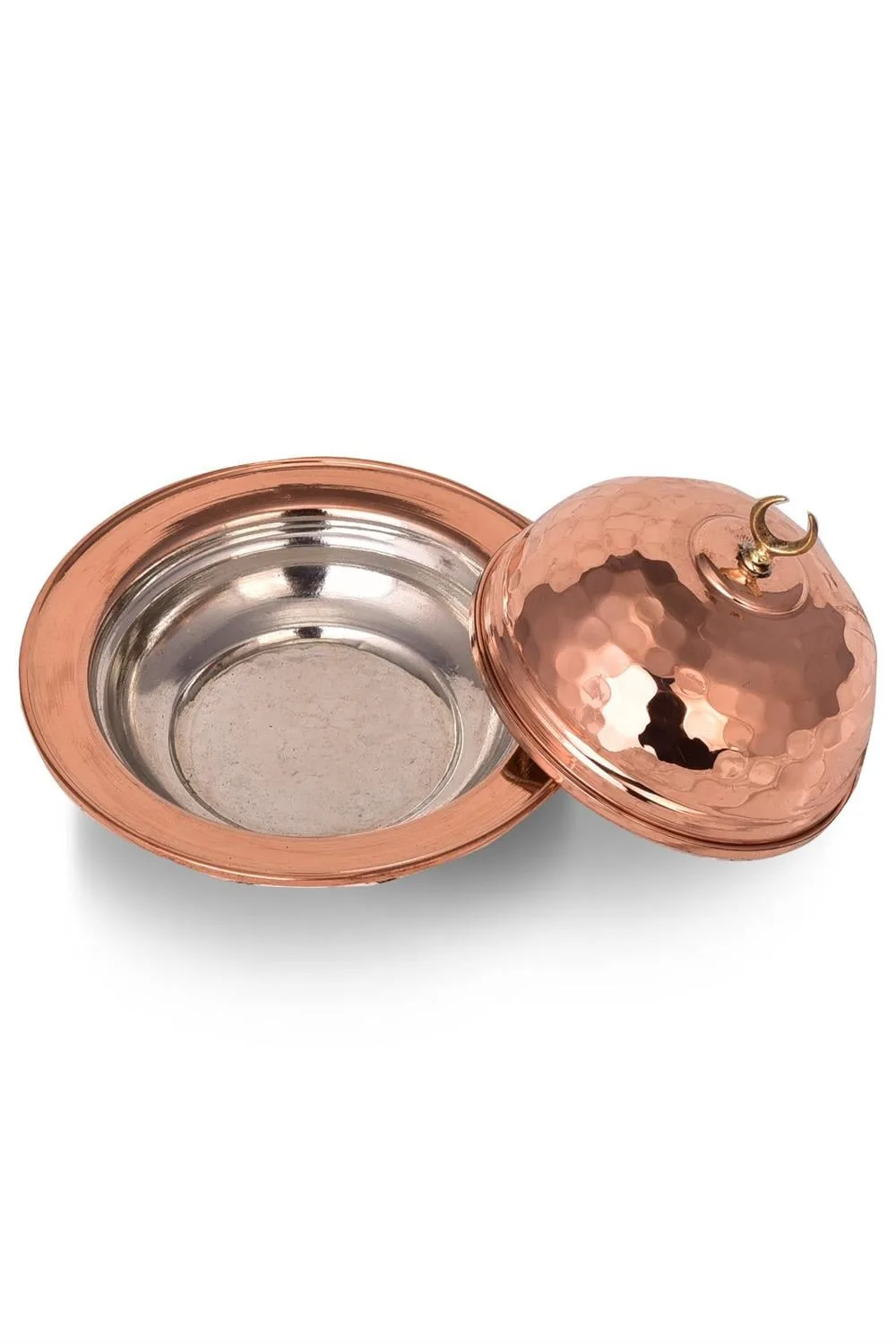
Copper Sugar Bowls & Candy Dishes
Type
Technique
Finish
Sheet thickness
Copper sugar bowls and candy dishes hold the treat served beside Turkish coffee: Turkish delight, chocolate or a handful of nuts. BakırBul’s range splits into low, open Turkish delight dishes on a small foot and taller lidded sugar bowls, plus mini casserole-shaped dishes. Most are hand-hammered and quoted singly or in sets.
Showing 1–16 of 35 results
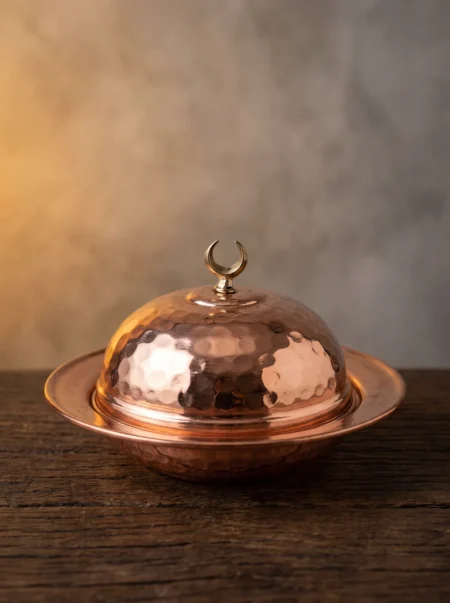
Saka Round Copper Turkish Delight Dish — 11 cm, hand-hammered, polished copper
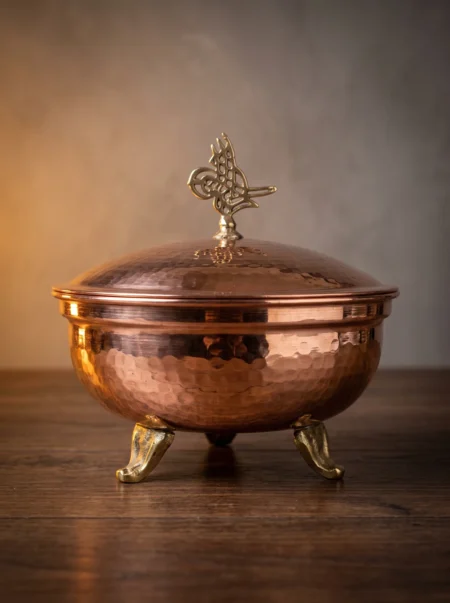
Defne Copper Sugar Bowl — 14 cm, hand-hammered, polished copper
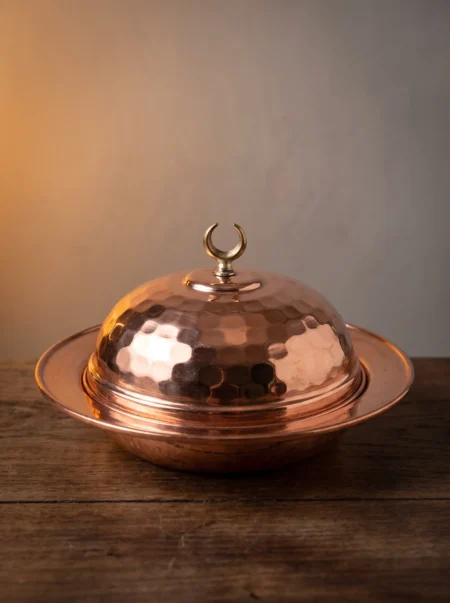
Saka Round Copper Turkish Delight Dish — 9 cm, hand-hammered, polished copper
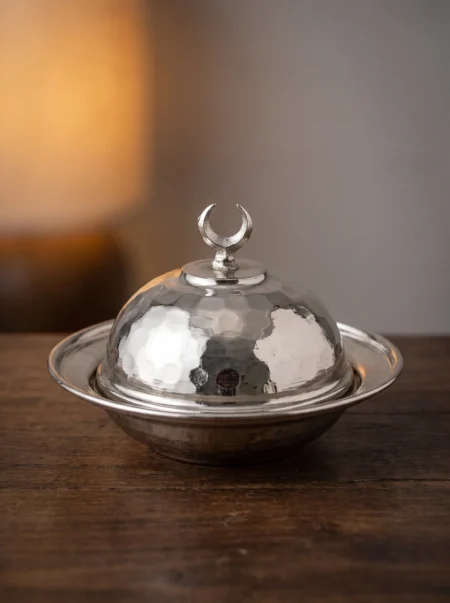
Saka Round Copper Turkish Delight Dish — 9 cm, hand-hammered, nickel-plated
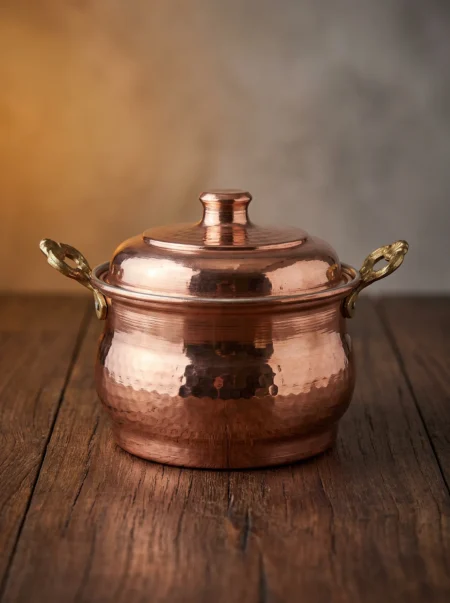
Mini Copper Casserole Sugar Bowl — 7 cm, hand-hammered, polished copper
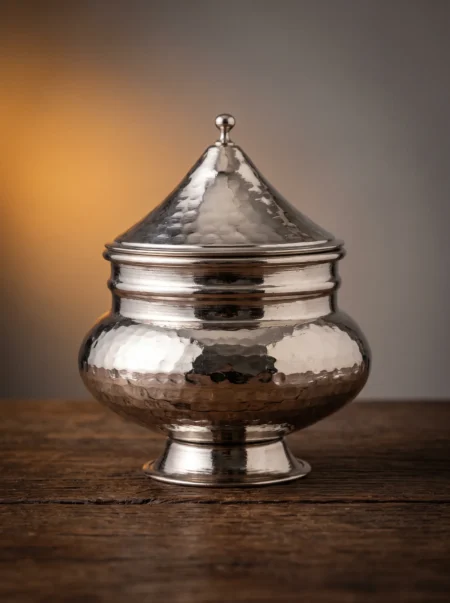
Rumeli Copper Sugar Bowl — hand-hammered, nickel-plated
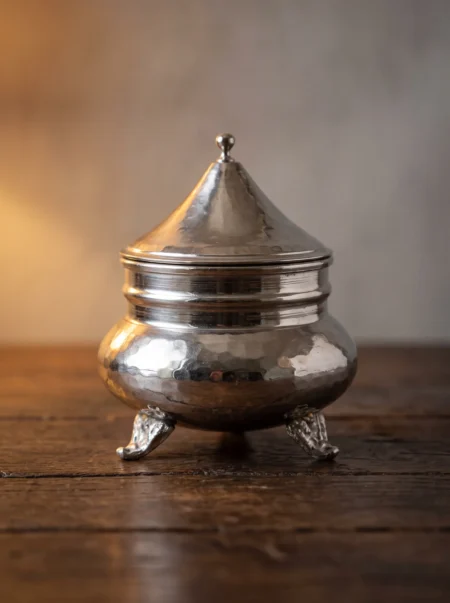
Copper Sugar Bowl — hand-hammered, nickel-plated
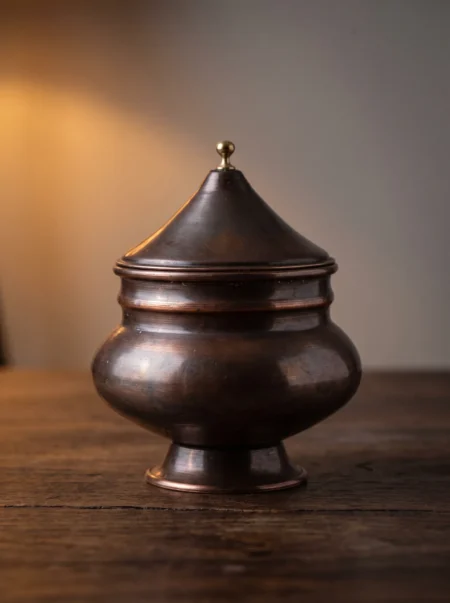
Rumeli Copper Sugar Bowl — smooth, oxidised
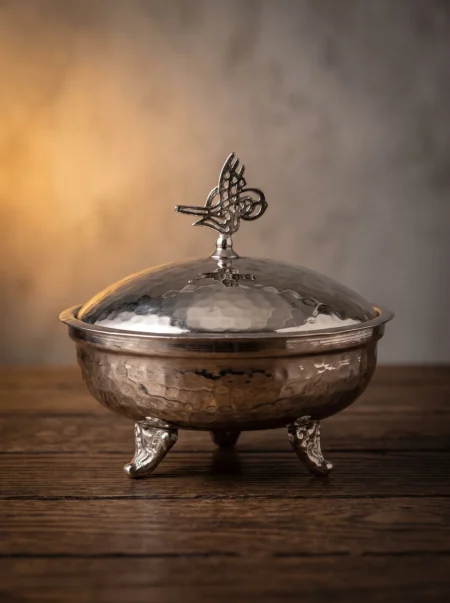
Defne Copper Sugar Bowl — 14 cm, hand-hammered, nickel-plated
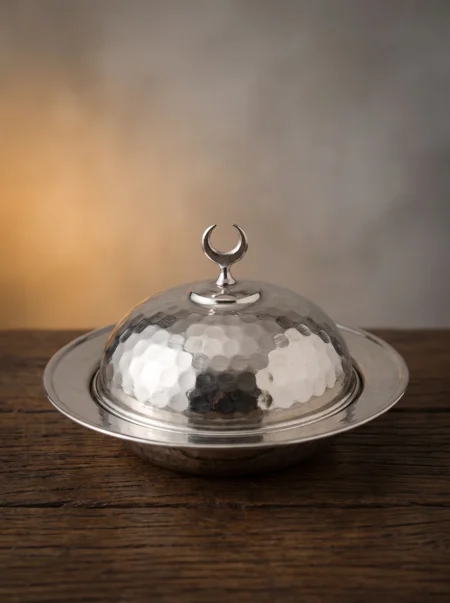
Saka Round Copper Turkish Delight Dish — 11 cm, hand-hammered, nickel-plated
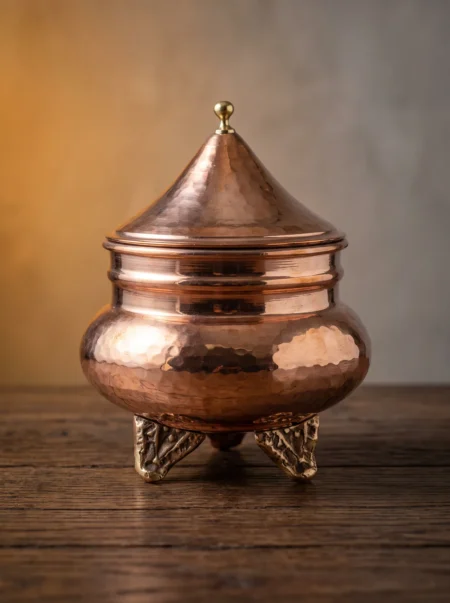
Copper Sugar Bowl — hand-hammered, polished copper
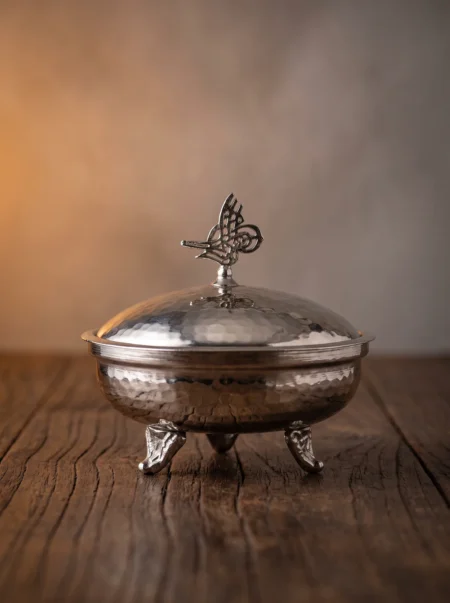
Defne Copper Sugar Bowl — 13 cm, hand-hammered, nickel-plated
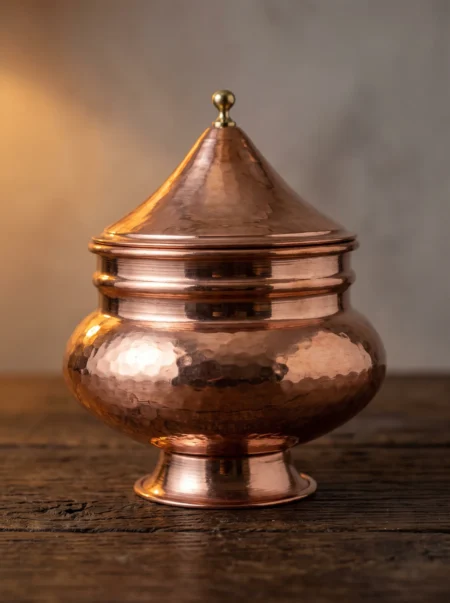
Rumeli Copper Sugar Bowl — hand-hammered, polished copper
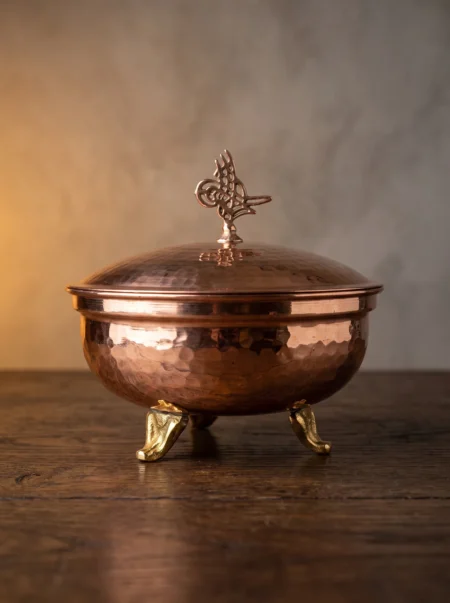
Defne Copper Sugar Bowl — 13 cm, hand-hammered, polished copper
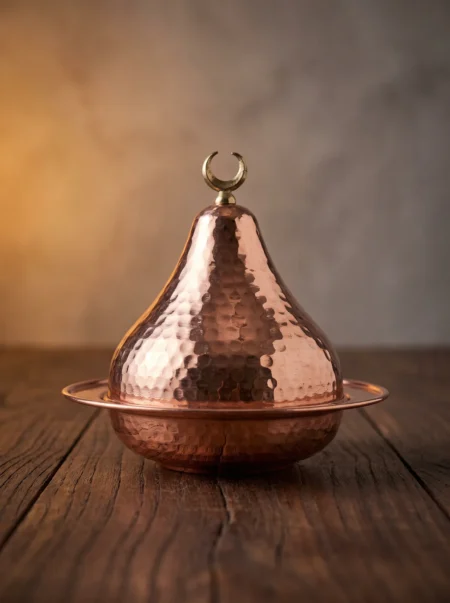
Heybeli Copper Sugar Bowl — 14 cm, hand-hammered, polished copper
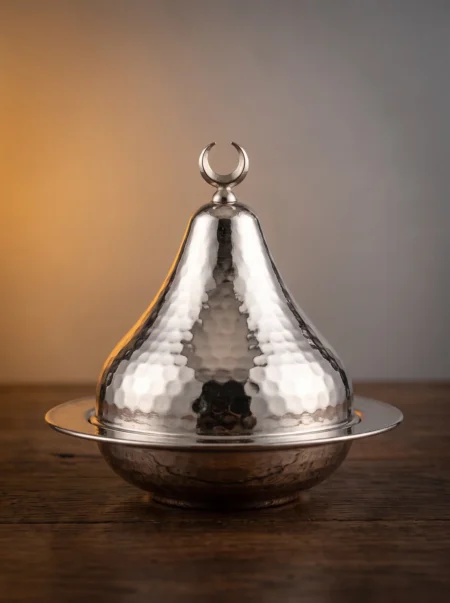
Heybeli Copper Sugar Bowl — 14 cm, hand-hammered, nickel-plated
A copper sugar bowl or Turkish delight dish holds the treat that comes with Turkish coffee: the piece of Turkish delight, the chocolate or the handful of nuts served beside the cup are all the work of these small vessels. The pieces in this category divide into main forms: low, wide-mouthed Turkish delight dishes, and tall, lidded, handled sugar bowls. BakırBul produces them to order through a long-term partner workshop in Kahramanmaraş, Türkiye.
Lokum dish or sugar bowl
A Turkish delight dish is low and shows what is inside it. In the Saka model, the 9 cm size corresponds to an 8.6 cm diameter and a 5.6 cm height; the 11 cm size to an 11.1 cm diameter and 6.4 cm in total height. Because it stands on a small foot, it rises above the other pieces on a tray; this is the form to choose when Turkish delight, chocolate and sugar cubes are meant to be seen.
A sugar bowl is lidded and keeps its contents hidden. In the Heybeli model the 14 cm bowl reaches 14.2 cm high and the 16 cm bowl 15.8 cm, with the lid taking up a large part of that height. The Defne model is lower, 7.9 cm high at 13 and 14 cm diameters. Rumeli is a small bowl, 9 cm across and 8.6 cm high, and Kafkas rises to 13 cm on an 11 cm base. A lid keeps damp and dust out, which is why lidded models are chosen for granulated sugar and nuts.
A third form is the mini casserole sugar dish. It is listed singly at 7, 8 and 10 cm across, and also as a set of three pieces. The small casserole shape is also used at the table for spices, pepper paste or a single serving of dessert.
Models, sizes and sets
| Model | Diameter | Height | Lid | Sets |
|---|---|---|---|---|
| Saka Turkish delight dish, small | 8.6 cm | 5.6 cm | No | Single, sets of 2, 4, 6 |
| Saka Turkish delight dish, large | 11.1 cm | 6.4 cm | No | Single, sets of 2, 4, 6 |
| Defne sugar bowl | 13.2–14.2 cm | 7.9 cm | Yes | Single |
| Heybeli sugar bowl | 14.4–16 cm | 14.2–15.8 cm | Yes | Single |
| Rumeli sugar bowl | 9 cm | 8.6 cm | Yes | Single |
| Kafkas sugar bowl | 11 cm | 13 cm | Yes | Single |
| Mini casserole sugar dish | 7–10 cm | 7.5–9 cm | No | Single, set of 3 |
Lokum dishes are hammered from 0.55 to 0.65 millimetre sheet, sugar bowls from 0.5 to 0.7 millimetre sheet. In small pieces, gauge decides the feel in the hand more than durability: a 68 gram Turkish delight dish feels feather-light, while a 316 gram sugar bowl sits solidly. Finishes are polished copper, nickel-plated and oxidised. Hosts usually choose a set of four or six Turkish delight dishes and pair them with a copper serving tray in the same finish.
Tin, dry treats and care
Sugar bowls and Turkish delight dishes mostly carry dry treats, but the moisture in sugar and the powdered sugar on Turkish delight still touch the copper. The interior is stated on each product page; nickel-plated pieces are tin-lined inside, and where a page does not say, the quotation confirms it in writing. How often tin needs renewing depends on how hard the piece is used; in a bowl in constant use it is one to two years. When the lining lifts in places and copper shows beneath, it needs renewing. A small sheet of paper under moist Turkish delight stops it sticking to the bottom and protects the lining.
These vessels are not used on the hob and do not go in the dishwasher. On lidded models, wash the lid and the body separately with warm water and a soft sponge and dry them at once; moisture leaves marks on the edge where the lid sits. A darkened surface comes back when rubbed with a salted slice of lemon, or when a paste of vinegar, flour and salt is left on it for a few minutes. Tarnish itself is not a defect; it is copper’s natural reaction with air.
The skill in small pieces
In Kahramanmaraş workshops, small vessels are the work by which skill is judged, because a fault is lost in a large piece and glaring in a small one. If the proportion between the foot and the mouth of a Turkish delight dish is off by a few millimetres, the piece sits crooked on the tray. On lidded sugar bowls, each lid is fitted to its body one by one, and the knob is drawn separately and soldered on. The town’s copperwork carries a registered Turkish geographical indication, and these small-scale pieces are among the most repeated work in that tradition.
What sets the price of a copper sugar bowl
Three things separate prices: body size, whether there is a lid, and technique. Weight runs from 68 grams to 316 grams; that wide band appears because single-serving dishes and shared serving bowls sit in the same category. Most bodies are hand-hammered, and the labour share is higher than on smooth bodies. Sheet gauge stays in a narrow 0.55–0.70 millimetre band, so it is not decisive here. Set listings are priced differently per piece. Prices are quoted per order; send the models, finishes and quantities with your destination.
Sugar bowls for hotels, cafés and gift retail are covered in wholesale copper sugar bowls, and the lidded Turkish delight dish in copper Turkish delight dishes.
Frequently asked questions
Should I choose a sugar bowl or a Turkish delight dish?
A lidded sugar bowl suits granulated sugar, sugar cubes and nuts; an open Turkish delight dish suits treats meant to be seen, such as Turkish delight and chocolate. In coffee service the two are often used together, the sugar bowl closed beside the pot and the Turkish delight dish open beside each cup.
What size of Turkish delight dish set is enough?
For home use at a table of four, a set of four is enough; for tables that host guests, a set of six. The same model is also listed singly, so a set can be completed later. Cafés usually order by the number of coffee services they run at once.
Can sugar be left in a copper sugar bowl for a long time?
In lidded models it can, but the bowl must stay dry. Moisture both clumps the sugar and marks the lining; keeping the lid closed and the bowl in a dry place is enough to avoid that.
Do these pieces work as gifts?
Yes. Because of their small size and hand-hammered surfaces, they are among the copper pieces most often given as gifts. For the same table, see copper raki glass coolers, which keep a glass cool, and for everything else, copper serveware.