Copper Wok Pans
Type
Technique
Finish
Sheet thickness
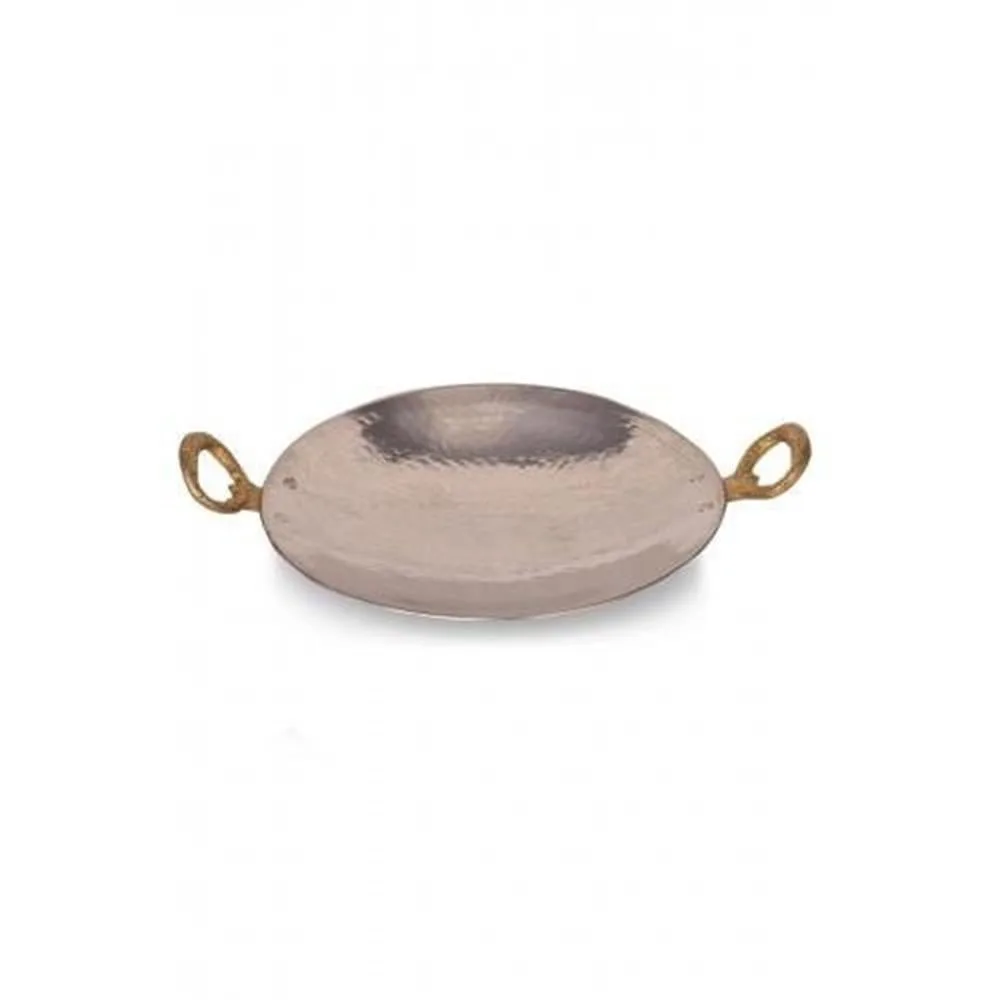
A copper wok pan, the Turkish wok pan, is a wide, shallow, slightly concave cooking pan with low raised edges, used to sear meat fast at high heat before it releases its juices. The cooking surface is tinned. The choice is made by diameter, and BakırBul supplies wok pans in wholesale quantities to venues that cook for a full table.
Showing all 11 results
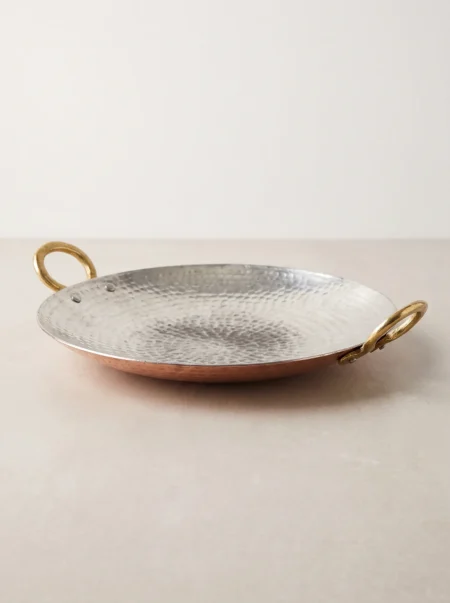
Ziyafet Copper Wok Pan — 28 cm, hand-hammered, polished copper
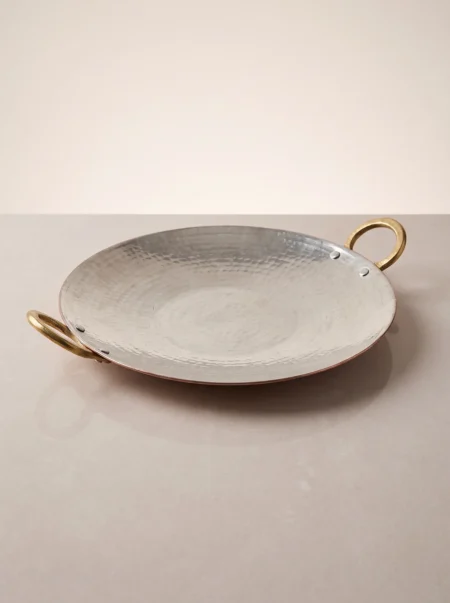
Ziyafet Copper Wok Pan — 16 cm, hand-hammered, polished copper
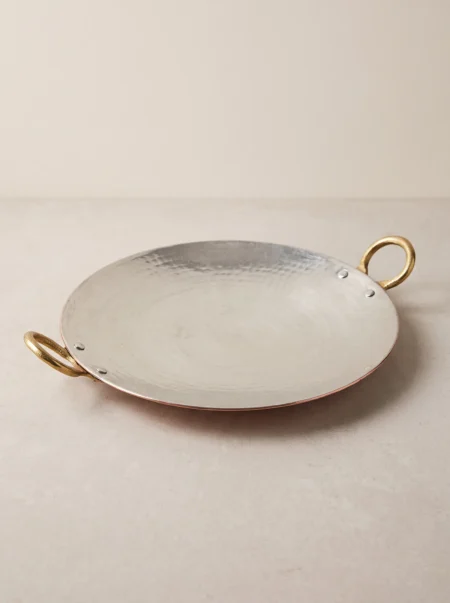
Ziyafet Copper Wok Pan — 32 cm, hand-hammered, polished copper
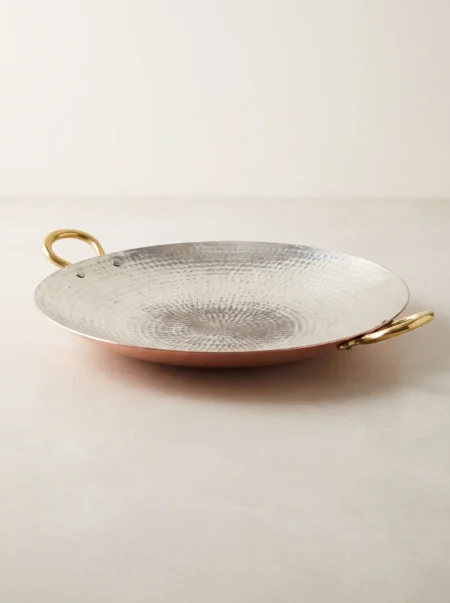
Ziyafet Copper Wok Pan — 20 cm, hand-hammered, polished copper
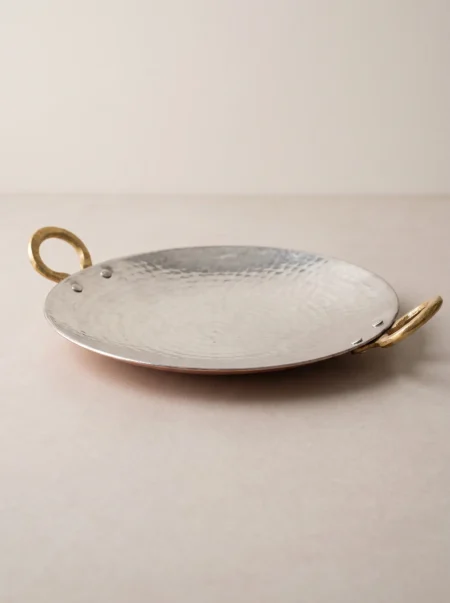
Ziyafet Copper Wok Pan — 30 cm, hand-hammered, polished copper
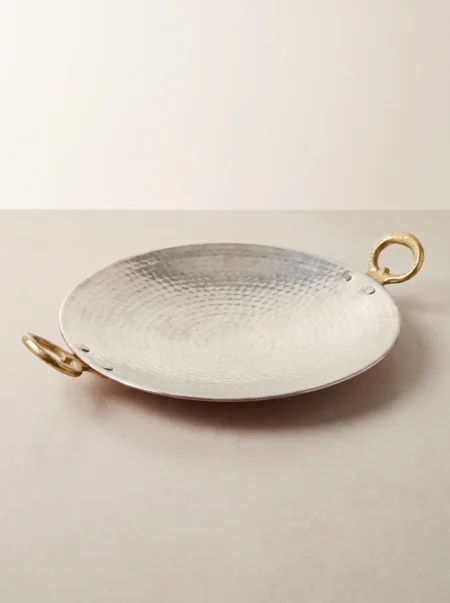
Ziyafet Copper Wok Pan — 26 cm, hand-hammered, polished copper
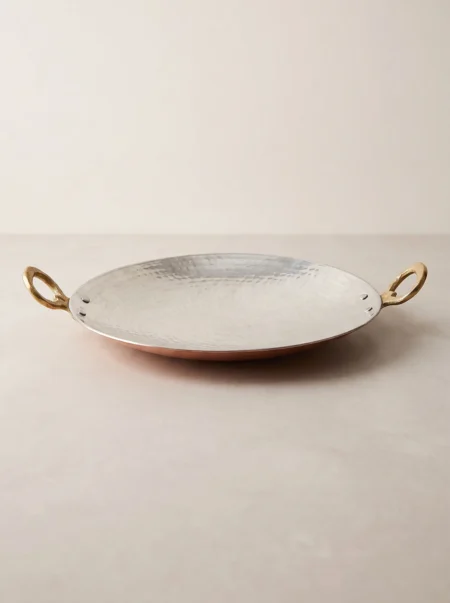
Ziyafet Copper Wok Pan — 24 cm, hand-hammered, polished copper
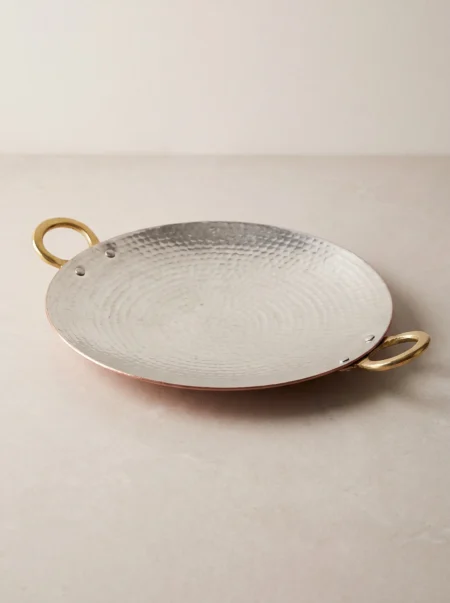
Ziyafet Copper Wok Pan — 18 cm, hand-hammered, polished copper
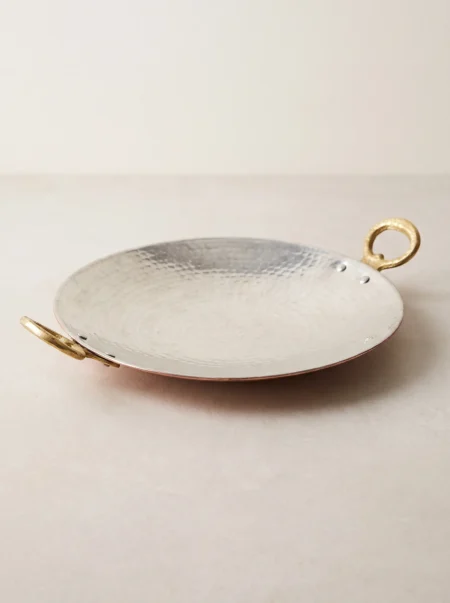
Ziyafet Copper Wok Pan — 34 cm, hand-hammered, polished copper
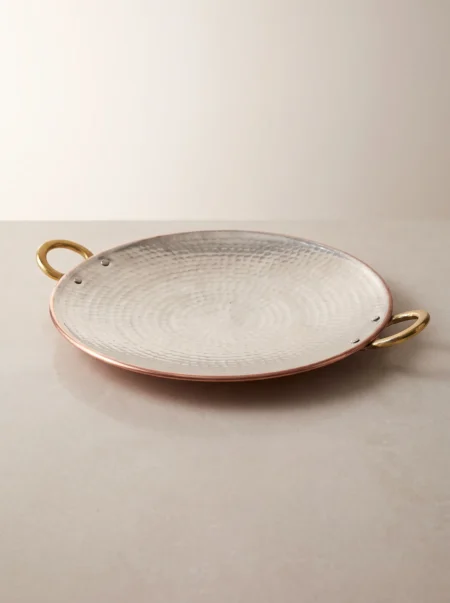
Ziyafet Copper Wok Pan — 36 cm, hand-hammered, polished copper
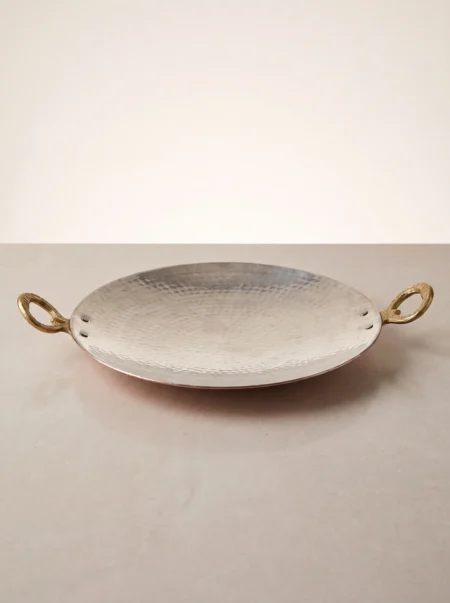
Ziyafet Copper Wok Pan — 22 cm, hand-hammered, polished copper
The copper wok pan is where meat is seared quickly at high heat and cooked without stewing in its own juices. Its edges rise only a little from a wide, shallow, gently concave base; it is not a flat griddle sheet. Every Ziyafet wok pan in this group is hand-hammered, in diameters from 16 cm to 36 cm and sheet from 0.80 mm to 1.00 mm. The finish is polished copper, the natural colour of the metal. Wholesale terms for this shape are on wholesale copper griddles and wok pans.
Why the wok pan is a vessel of its own
A pot stores heat and keeps steam inside; a wok pan does the opposite. The wide base spreads heat and the low edge lets steam escape at once, so the meat browns on the surface instead of simmering in its own liquid. Copper does this better than stainless steel or cast iron because it conducts heat faster and more evenly: lift the pan off the heat and the temperature drops, so the last thirty seconds of the pan-fried meat stay under your control. With cast iron that is not possible, because the pan keeps cooking after it leaves the fire.
At the table it is used most for:
- diced meat and lamb pan-fried meat, cooked in the meat’s own fat;
- a sac breakfast: spicy sausage, eggs, tomatoes and peppers cooked in turn in the same pan;
- sac pan-fried meat and chicken sauté for a full table;
- fast-frying vegetables, mushrooms and onions;
- taking the finished dish straight from the hob to the table, onto a warmer or a heat-resistant mat.
Which size serves how many
The most common mistake is buying too small. If the ingredients do not fit on the base in a single layer they pile up, the steam cannot escape and the pan-fried meat turns into a stew. The rule is simple: when the meat is spread across the base, the base should still show between the pieces. The table shows what the diameters in this group mean in practice.
| Diameter | Approximate servings | Typical use |
|---|---|---|
| 16–20 cm | 1–2 | Breakfast for one, a small sauté |
| 22–26 cm | 2–4 | Everyday pan-fried meat, a sac breakfast |
| 28–32 cm | 4–6 | A full household table, guests |
| 34–36 cm | 6–10 | Feasts, holiday tables, outdoor cooking |
A large wok pan can do a small job; the reverse is not true. The 34 and 36 cm bodies are, however, wider than a domestic burner, so in these sizes heat comes from the centre and spreads slowly to the edges. For a large pan, plan on a wide burner, an outdoor burner or a warmer under the pan. For daily use indoors, 26 and 28 cm are the two most balanced sizes.
Hob compatibility and cooking order
Copper is not magnetic, so it does not work on an induction hob unless an interface disc is used. Gas, electric and outdoor burners are suitable. On gas, keep the flame from reaching beyond the base; a flame that climbs up the sides burns the handle joints and the outer surface for no reason. The guide to copper on gas, electric and glass stoves covers each hob type.
Order matters in pan-fried meat. Warm the pan first, add the fat, then add the meat in two or three batches rather than all at once; adding it all at once drops the pan’s temperature and the meat releases its liquid. Salt goes in after the meat has coloured, because salt added early draws the juices out. Vegetables go in last, because they cook much faster.
Tin and cleaning
The food-contact surface of the wok pan is tinned. Tin is the protective layer over the copper; it keeps food from direct contact with the metal. In a vessel used at high heat, tin wears faster than in a frying pan, so under heavy use it is expected to be renewed every one to two years. When the base starts turning reddish, the pan is due for re-tinning. Leaving the pan hot, empty and without fat for a long time is the habit that wears tin the most.
A wok pan does not go in the dishwasher. When cooking is over, let the pan cool; pouring cold water on a hot pan shocks the metal. Wash it in warm water with a soft sponge and no wire scourer, which both scratches the tin and dulls the hammer marks of a hand-hammered surface. Dry it straight after washing. Darkening on the outside is normal copper behaviour; lemon and salt, or a paste of flour, vinegar and salt, brightens it.
The wok pan in Kahramanmaraş copperwork
A wok pan is made by hollowing a flat copper sheet step by step with the hammer. Each blow leaves the metal a little thinner and a little harder, so the base of a hand-hammered pan is more resistant than a pressed base of the same thickness. The hammer marks on the surface are not decoration but a record of how the piece was made, and they differ on every pan. Kahramanmaraş copper handcraft carries a registered Turkish geographical indication.
What shapes the quotation for wok pans
On a wok pan, diameter and body weight set the cost; as the pan widens, the copper used rises directly. Every body in this group is hand-hammered, so technique does not separate one piece from another; the difference comes from size. Edge height also counts, because higher-edged pans take more material. Quotations are prepared per order from your list of diameters and quantities, with the lead time agreed for that order.
Models and sizes
The choice starts with diameter: a wok pan is bought for the number of portions cooked on it. A narrow pan is enough for pan-fried meat for two or three, while a full table needs a wide diameter. The second measure is edge height; a low edge lets liquid evaporate quickly, a higher edge keeps a juicier pan-fried meat from spilling.
The finish in this group stays polished copper. The underside of the pan meets the fire directly, so no coating is applied there; the tin lining inside is confirmed on the quotation, and it matters for the dish being cooked.
Frequently asked questions
What diameter of wok pan should I choose?
For a household of four, 26–28 cm is enough. The ingredients must be able to spread across the base in a single layer; a crowded pan turns pan-fried meat into a stew. If you often cook for guests, go up to 32 cm or more.
Can a copper wok pan be used on induction?
No. Copper is not a magnetic metal, so an induction hob does not recognise the pan unless an interface disc sits under it. It works on gas and electric hobs and on outdoor burners.
Is a wok pan the same as a griddle?
Not quite. In English a griddle is usually a flat plate; the wok pan is a shallow pan with a gently concave base and low raised edges, so fat and juices gather instead of running off.
What is the difference between hand-hammered and machine-hammered?
On a hand-hammered pan the base is shaped with the hammer, the marks show and every piece is different. All the Ziyafet wok pans here are hand-hammered. Machine-hammering gives a more regular pattern and appears in other categories.
When should the tin be renewed?
When reddish copper starts to show in patches on the base. Under heavy use that is usually every one to two years. Re-tinning is ordinary maintenance that extends the pan’s life.
Can the wok pan go to the table?
Yes, a wok pan is both a cooking and a serving vessel. Put a heat-resistant mat or a warmer under it to protect the table. For other hob vessels see the copper frying pans and the whole copper cookware branch.