
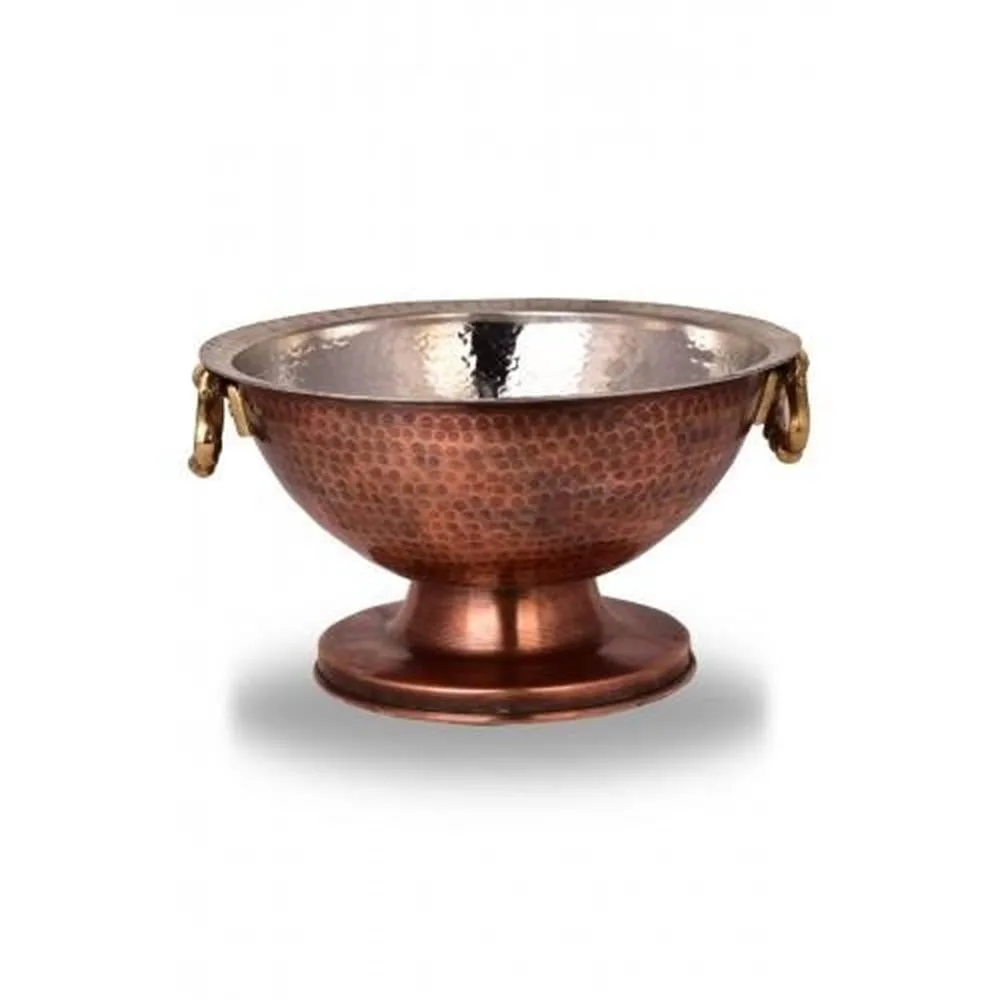
Copper Serving Bowls
Type
Technique
Finish
Sheet thickness
Copper serving bowls hold everything at the table that needs depth, from jam and olives at breakfast to salad, fruit or iced drinks at a party. BakırBul’s range runs from a 7.5 cm mini breakfast bowl to hand-hammered punch bowls of 27 cm and 32 cm, and mouth diameter and depth decide the choice.
Showing all 6 results
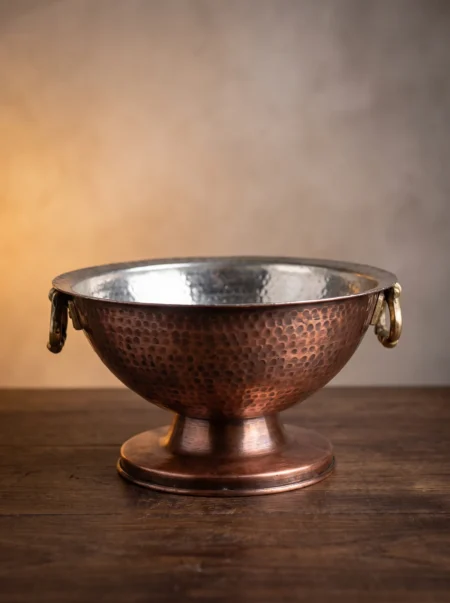
Copper Punch Bowl — 32 cm, hand-hammered, oxidised
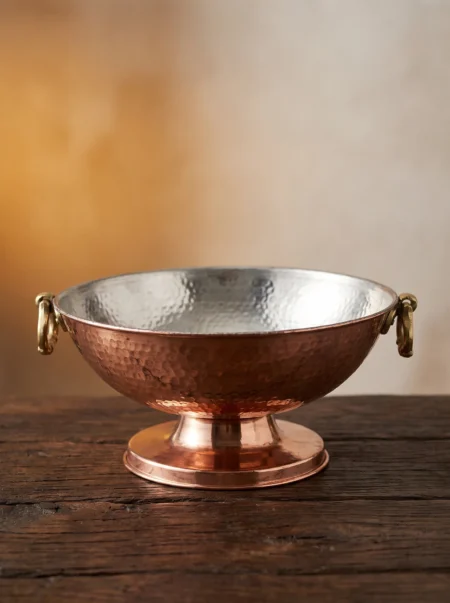
Copper Punch Bowl — 32 cm, hand-hammered, polished copper
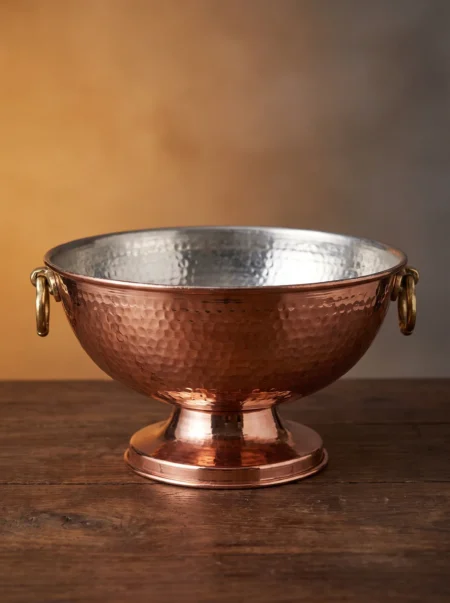
Copper Punch Bowl — 27 cm, hand-hammered, polished copper
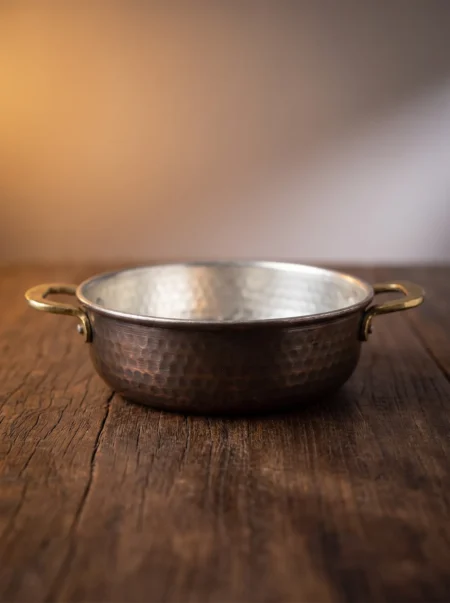
Mini Copper Breakfast Bowl — 7.5 cm, oxidised
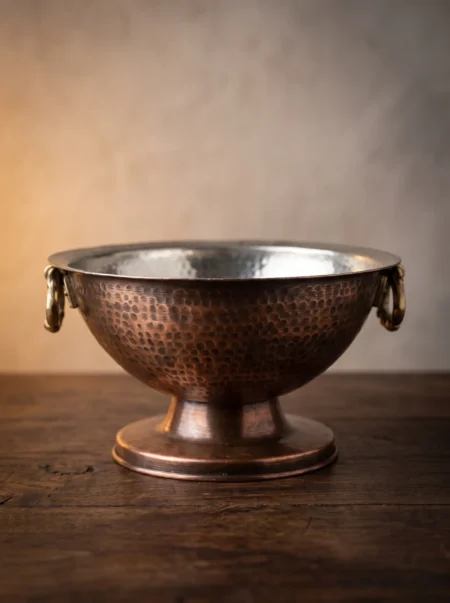
Copper Punch Bowl — 27 cm, hand-hammered, oxidised
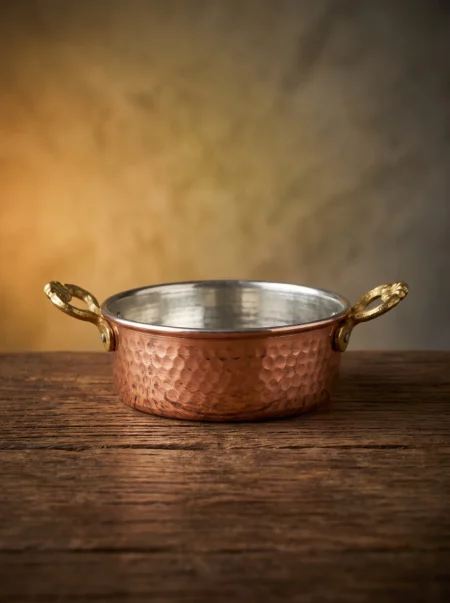
Mini Copper Breakfast Bowl — 7.5 cm, polished copper
A copper bowl is the vessel for everything at the table that needs depth: jam and olives at breakfast, salad and meze at dinner, fruit or iced drinks at a party. The bowls in the range move across two very different scales, from a 7.5 cm mini breakfast bowl to a deep 32 cm serving bowl. Each is dished from a single sheet. BakırBul produces them to order through a long-term partner workshop in Kahramanmaraş, Türkiye.
Which bowl goes where
The mini breakfast bowl is 7.5 cm across and only 2.5 cm high. Its size is exactly right for jam, honey, butter and olives set beside a breakfast plate; at 70 grams it weighs about as much as an egg. The most common use is a dozen of them laid in a band down the middle of a breakfast table. Hotels and cafés setting a Turkish breakfast use them in numbers; the full table is covered in Turkish breakfast serveware in copper.
The deep serving bowls, sold as punch bowls, are the large pieces that sit at the centre of the table. The 27 cm model has a 27 cm mouth, a 29 cm outer rim and a depth of about 10 cm; on the 32 cm model those measurements rise to 32, 34 and 12 cm. That depth is enough to toss a salad, pile fruit, or fill with ice to chill bottles. Both are hand-hammered and weigh between 1.1 and 1.4 kilograms, so they do not tip over even when full. Event use and capacities are set out in copper punch bowls for events.
Size and gauge
| Model | Mouth diameter | Depth | Gauge | Weight |
|---|---|---|---|---|
| Mini breakfast bowl | 7.5 cm | 2.5 cm | 0.80 mm | 70 g |
| Deep serving bowl, small | 27 cm | 10 cm | 0.70 mm | 1130 g |
| Deep serving bowl, large | 32 cm | 12 cm | 0.80 mm | 1430 g |
On the finish side there are polished copper and oxidised. Polished copper is the metal’s own reddish tone and darkens over time; oxidised is a darkened, matt finish that has no tarnish to show, so it needs less care in daily use. To keep a breakfast set together, choosing the bowls in the same finish as copper serving trays pulls the table together; for the main course, copper serving plates and platters come in the same finishes.
Tin, acidity and cleaning
The bowl is the vessel in this group with the most at stake, because what goes into it is often acidic. Lemony dressing, vinegar, pickle brine, tomato and citrus should not stay in long contact with bare copper, and tin is applied to the inside precisely to stop that. A bowl that will hold acidic food must be tin-lined; the interior is stated on the product page or confirmed in writing in the quotation. On bowls in frequent use, tin lasts on average one to two years before it needs renewing; when the inside starts turning copper-coloured, renewal is due.
A copper bowl is a serving vessel and is not used on the hob. It does not go in the dishwasher either; the alkaline detergent and the heat of the machine weaken the tin. Wash by hand in warm water with a soft sponge and dry it straight away, because water drops left on the surface leave marks. A darkened surface comes back if rubbed with lemon sprinkled with salt, or if a paste of flour and vinegar is left on it for a few minutes.
Dishing a bowl
A bowl is one of the forms in copperwork that needs the most hammer blows: the flat sheet has to be deepened without the rim tearing. The coppersmith strikes in circles from the centre outwards, and as the metal thins, the wall of the bowl rises. In Kahramanmaraş workshops a serving bowl of the 30 cm class therefore takes far longer than small pieces. The town’s copperwork carries a registered Turkish geographical indication, and deep vessels are counted as a sign of skill in that craft.
What sets the price of a copper bowl
Size and technique set the price. The bigger the body, the more copper it uses; hand-hammered bodies stand apart through their labour share. Finish is the third factor, as oxidised needs extra processing compared with polished copper. Because the size range in this group is wide, the gap between two products can look large; compare within the same size. Prices are quoted per order; send the sizes, finishes and quantities with your destination.
Lines and sizes
With bowls, size is chosen by what the vessel will hold. Small bodies are for single servings such as sauces, pickles and nuts; large bodies for salad, fruit and shared service. In the range the two ends stand well apart and there is no wide middle band, so a buyer looking for an in-between size should choose the nearest one from the centimetre value on the product page.
Finishes are polished copper and oxidised. The large bowls are hand-hammered. For the full wholesale picture, including sizes and branding, see wholesale copper serving bowls.
Frequently asked questions
Can a lemony salad go in a copper bowl?
Yes, if the tin is sound. Tin is the layer that keeps acidic food off the copper; if the lining has lifted in places, have the bowl re-tinned before you put salad in it. The interior of each bowl is stated on its product page or confirmed in the quotation.
Can a serving bowl be filled with ice to chill drinks?
Yes, the 27 cm and 32 cm deep bowls suit that job. Copper takes up the cold quickly and spreads it evenly through the body, so the outside of the bowl soon cools as well. Empty and dry the bowl once the ice has melted.
How many mini breakfast bowls should I order?
For a breakfast table of four, six to eight bowls are usually enough. With that number, jam, honey, butter, olives and two kinds of cheese can each be served separately. Hotels and cafés usually order by the number of covers rather than by the table.
Can the bowls go in the dishwasher?
No. High heat and dishwasher detergent damage both the tin inside and the exterior surface. Warm water, a soft sponge and an immediate dry is the right method. For more serving pieces, see copper serveware.