
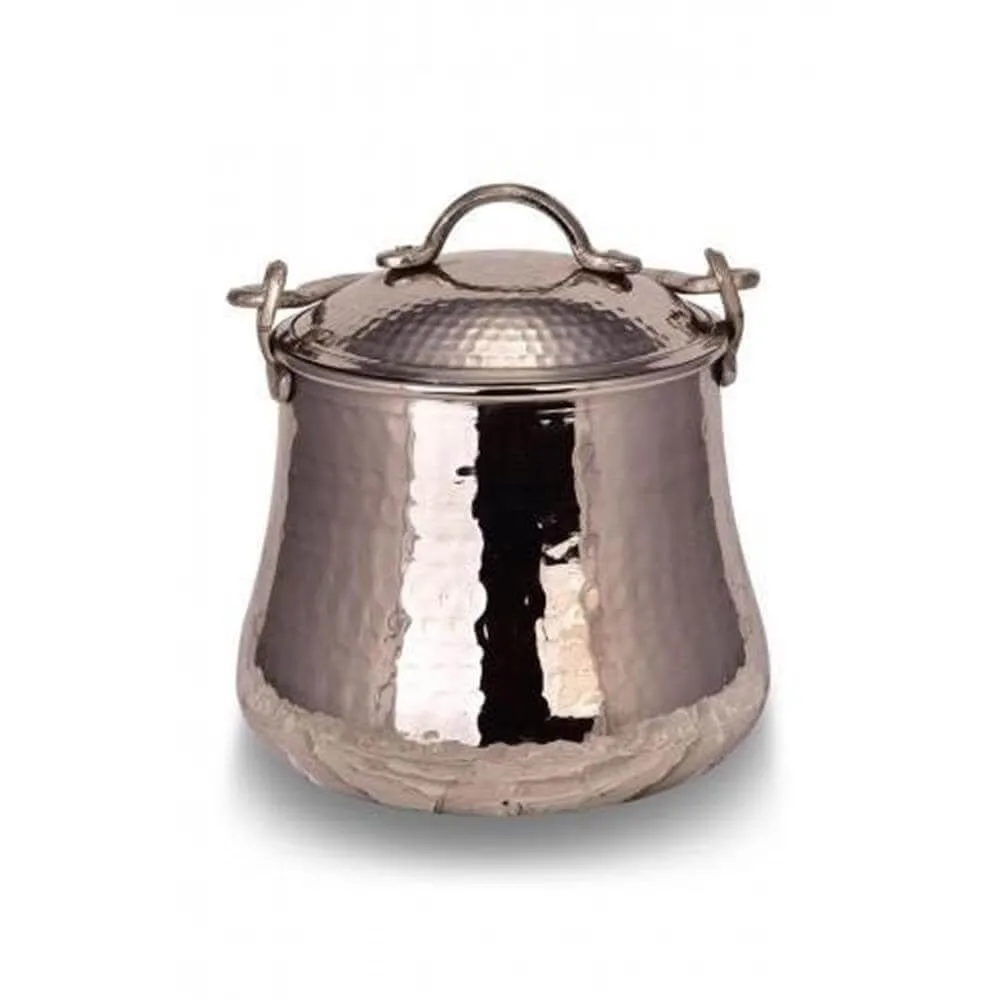
Copper Pails & Buckets
Type
Technique
Finish
Sheet thickness
A copper pail is a deep pail with a carrying handle and a mouth slightly narrower than its body, traditionally used to carry milk and water and now used for storage and display. Sizes are chosen by volume and carried weight. BakırBul supplies pail pails to trade buyers, quoted per order.
Showing all 9 results
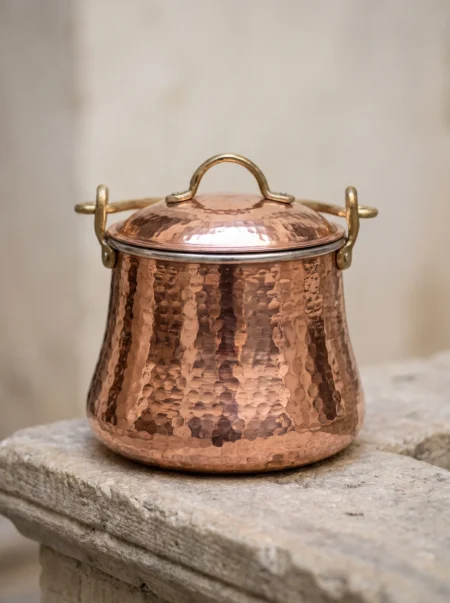
Elit Copper Pail — No. 1, 13 cm, hand-hammered, polished copper
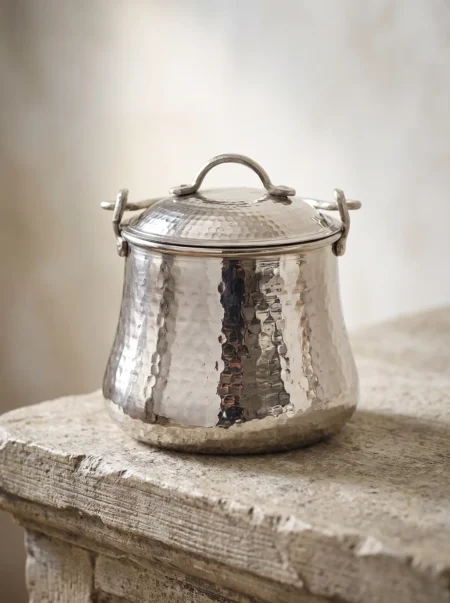
Elit Copper Pail — No. 1, 13 cm, hand-hammered, nickel-plated
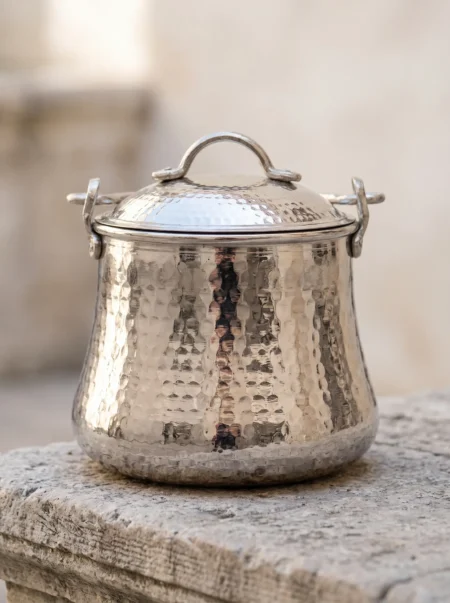
Elit Copper Pail — No. 2, 15 cm, hand-hammered, nickel-plated
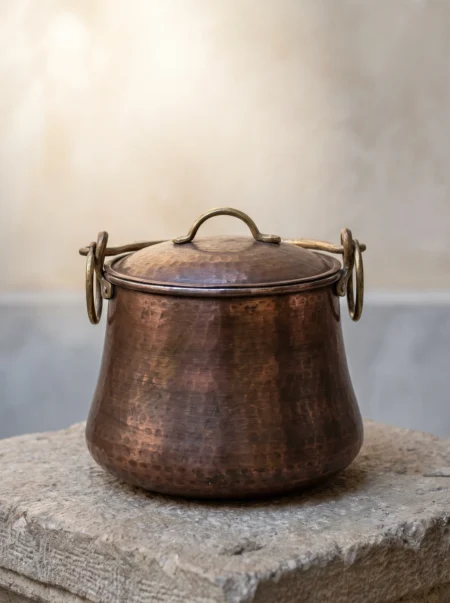
Elit Copper Pail — No. 2, 15 cm, hand-hammered, oxidised
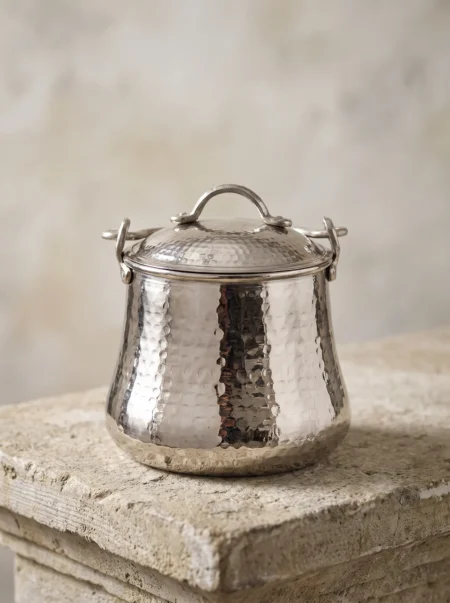
Elit Copper Pail — No. 3, 17 cm, hand-hammered, nickel-plated
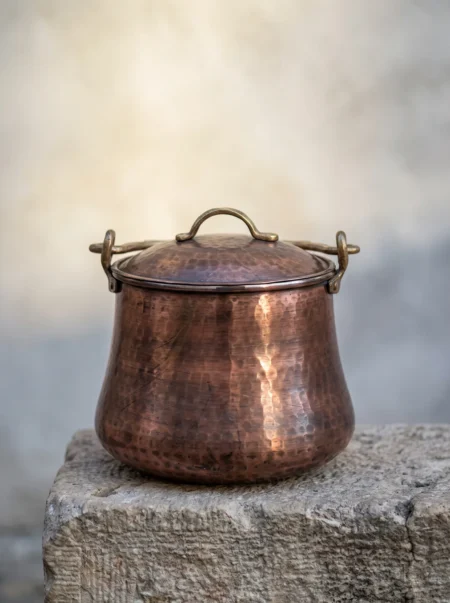
Elit Copper Pail — No. 1, 13 cm, hand-hammered, oxidised
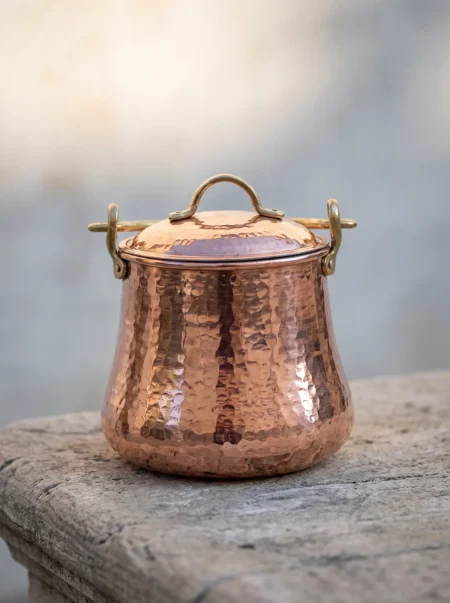
Elit Copper Pail — No. 2, 15 cm, hand-hammered, polished copper

Elit Copper Pail — No. 3, 17 cm, hand-hammered, oxidised
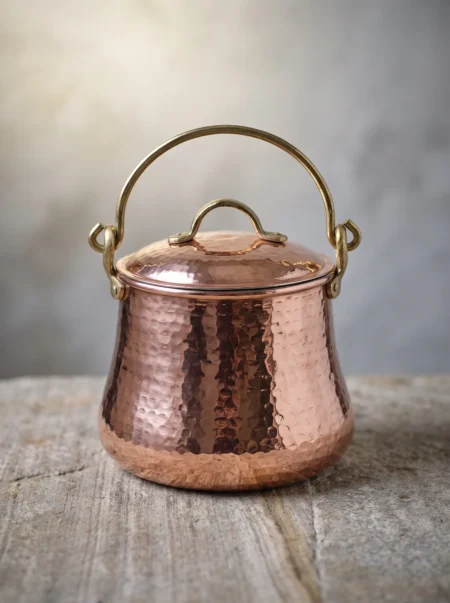
Elit Copper Pail — No. 3, 17 cm, hand-hammered, polished copper
The pail is, put simply, a copper vessel in the shape of a bucket: deep, with a mouth slightly narrower than the body and a bail handle on top. It was traditionally used at milking and to carry milk and water. The pails in this range all belong to the Elit series, are hand-hammered in Kahramanmaraş and are tinned inside.
What a pail is for
The design solves a carrying problem. Because the mouth is narrower than the body, less liquid splashes out when a full pail swings as you walk; the moving handle on top lets you carry it in one hand and hang it on a hook. In village life this was the vessel that brought fresh milk from the fold to the house.
Today a pail does three jobs. The first is bulk storage: dry goods such as bulgur, flour or dried pulses can be kept in it in a closed cupboard. The second is order in the kitchen, gathering loose items from a shelf or under the counter into one container. The third is decorative: with its hand-hammered surface the pail is used as a cachepot for a potted plant or as a stand-alone object in a living room, and it is a favourite prop with food stylists and hotel display teams.
Sizes in the range
| Size | Diameter | Volume | Weight | Sheet thickness |
|---|---|---|---|---|
| No. 1 | 13 cm | 1150 ml | 700 g | 0.60 mm |
| No. 2 | 15 cm | 2300 ml | 930–940 g | 0.90 mm |
| No. 3 | 17 cm | 3250 ml | 1140–1144 g | 0.90 mm |
Every size is listed in polished copper, oxidised and nickel-plated. One detail is worth noting: No. 1 is made from 0.60 mm sheet, while No. 2 and No. 3 use 0.90 mm, because as the full weight rises the body and the handle fixings need the support of heavier sheet.
How to choose
- Volume: No. 1 is enough for a counter where space is short. For dry goods in a pantry, No. 2 suits better; for a decorative piece with real presence, No. 3.
- Full weight: remember the weight of the vessel itself. No. 3 weighs over a kilogram empty, and with close to three litres of liquid inside the total passes four kilograms; if the pail will be carried often, choose a smaller size.
- Finish: polished copper is the natural colour of the metal and darkens over time; oxidised hides marks with its aged look; nickel-plated has a silver-tone look and holds its look better in damp rooms.
- Handle: the two points where the handle meets the body take the most load. Carry a full pail by the middle of the handle, never by pulling on one side.
Tin lining and care
The interior surfaces that meet food are tinned in the traditional way. If the pail is used with liquids such as milk or water, the tin tires faster; with heavy use, renewing it about every one to two years is recommended. When the red of the copper starts to show through inside in patches, it is time for retinning. For dry storage the interval is longer.
A pail does not go in the dishwasher. Wash it by hand with warm water and a soft sponge; after washing, turn the body upside down and let it dry completely, because water left in the base causes both darkening and marks. Clean a tarnished outside with lemon and salt, or a paste of flour, vinegar and salt, then rinse. If you use the pail as a cachepot, do not plant directly into it: set the plant in its own pot inside and do not let water collect at the bottom.
A farm vessel at the workbench
Few copper pieces are calculated around load as carefully as the pail, because when it is full, kilograms of weight hang on two small points at the handle fixings. When raising the body, the coppersmith leaves the top edge thicker and seats the handle lugs there. In Kahramanmaraş these pails are mostly made today to stand in pantries and living rooms rather than to carry milk, but the shape has stayed the same long after its original job.
What drives the unit cost of a copper pail
Volume decides. The bodies range from 1,150 to 3,250 millilitres and the weight from 700 grams to about 1,144 grams, and the amount of copper follows that directly. Every body in this group is hand-hammered, so technique does not separate the sizes. The handle is the second item, because it is shaped separately and fixed to the body. Sheet thickness runs from 0.60 to 0.90 millimetres. We do not publish prices; we quote per order from your list.
Models and sizes
A pail is chosen by volume. The 1.15 litre body suits daily carrying and storage; the 3.25 litre body is sized for bulk use. Because a full pail is carried by hand, the empty weight has to be counted as well: the largest body weighs over a kilogram even before it is filled.
All the bodies in this group are hand-hammered and the hammer marks differ from piece to piece. Finishes are polished copper, oxidised and nickel-plated. The miniature pail, a decorative scale model, is listed separately under copper decorative objects and miniatures. For lining choices, handle fixings and display use, read wholesale copper pails and buckets (pail).
Frequently asked questions
What is a pail and what is it used for?
A pail is a deep, bucket-shaped vessel with a carrying handle. It was traditionally used to carry milk and water; today it is chosen for dry food storage, for kitchen order and as a decorative piece.
Can a pail be used to carry water?
Yes. The interior is tinned, so the water does not touch the copper directly. Do not leave water standing in it for days, and dry the pail after use.
Can a pail go on the hob?
No. A pail is a carrying and storage vessel and is not designed for cooking. And because copper is not magnetic, no copper vessel works on an induction hob without an interface disc.
What does it pair with?
It works with the other pieces in the same group. For cold service at the table see copper ice buckets, and for every storage option see copper jars, pails and ice buckets.