
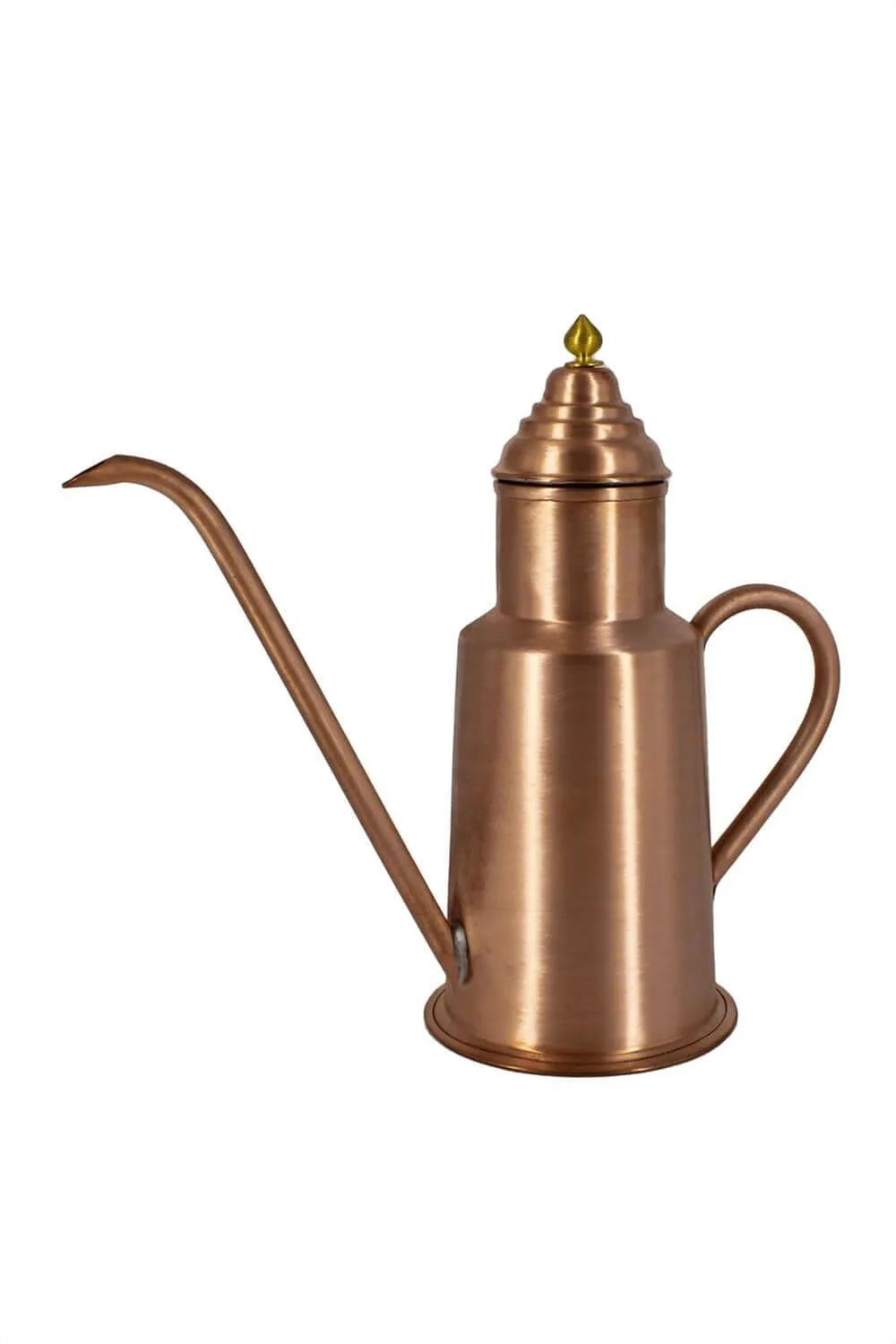
Copper Olive Oil Cruets
Type
Technique
Finish
Sheet thickness
A copper olive oil cruet is a closed-bodied vessel that keeps olive oil on the worktop away from light and air; the metal body holds the contents in the dark. Its narrowing neck and fine spout pour a controlled thread of oil. BakırBul supplies the cruets in wholesale quantities in four finishes.
Showing all 4 results
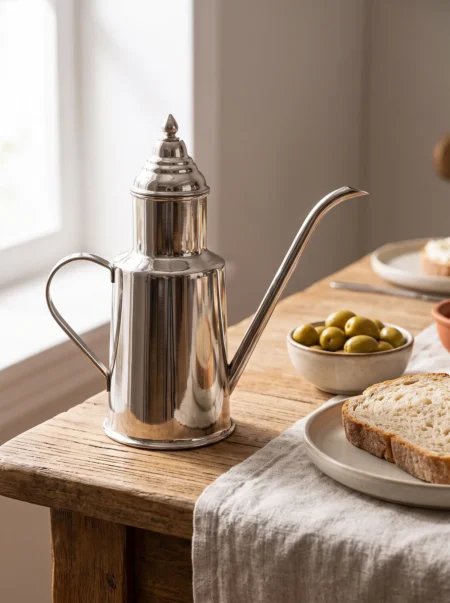
Gemlik Copper Oil Cruet — smooth, nickel-plated
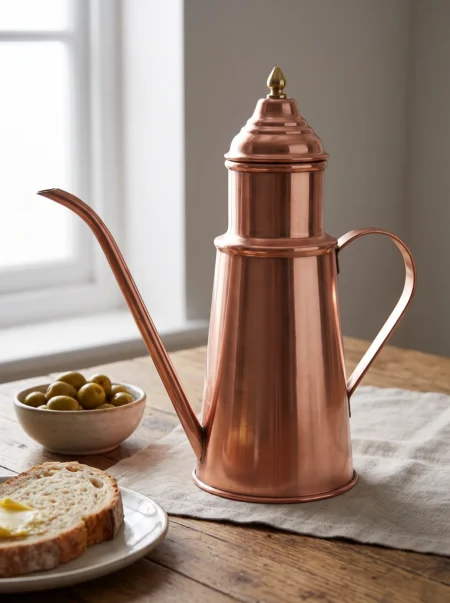
Gemlik Copper Oil Cruet — smooth, polished copper
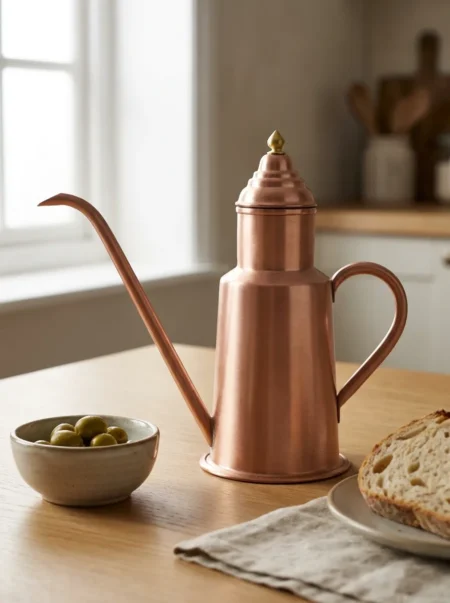
Gemlik Copper Oil Cruet — smooth, brushed matt
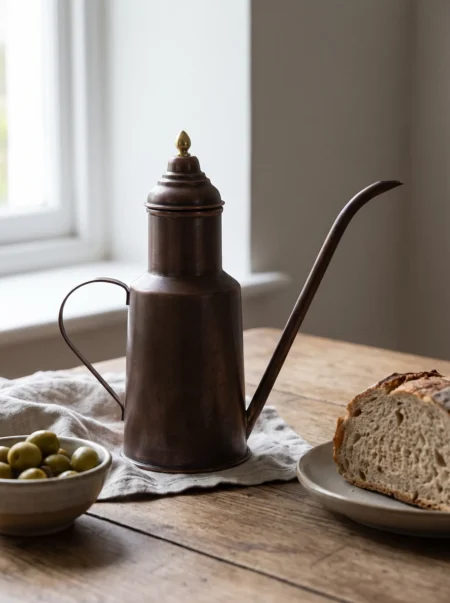
Gemlik Copper Oil Cruet — smooth, oxidised
A copper olive oil cruet keeps olive oil on the kitchen worktop, protected from light and air. This group holds the Gemlik cruet, a smooth 500 ml body named after the olive town on the Sea of Marmara. The same body comes in polished copper, oxidised, nickel-plated and brushed matt. The body is 0.70 mm sheet and weighs about 320 g empty. Wholesale terms for retailers and restaurants are on wholesale copper olive oil cruets.
What an oil cruet does
Three things spoil the taste of olive oil: light, heat and air. A glass bottle keeps out air to some degree but lets light straight through. In a clear bottle on the worktop or by a window, oil loses its freshness within a few weeks. A copper body lets no light through, so it is a practical way to decant the oil you use every day from the larger tin in small amounts and keep it to hand.
The cruet’s second job is control of the pour. The narrowing neck and fine spout let the oil run in a thin line, so it is easy to put a measured amount over a salad, along the edge of a dough or into a pan. Because the lip of the spout turns outwards, the last drop goes back into the body when you stop pouring and does not run down onto the worktop. In the kitchen it is used most for:
- finishing salads and meze with a drizzle of oil;
- bringing oil to the breakfast table beside cheese, olives and hummus;
- adding a measured amount of oil to a pan or pot;
- serving sour liquids such as vinegar, pomegranate molasses or lemon juice at the table.
How to choose
The cruets in this group share the same capacity and body size, so the choice is made mostly on finish. The finish affects daily care as well as the look.
| Finish | Look | Daily care |
|---|---|---|
| Polished copper | The natural red of copper, the brightest option | Darkens over time and needs polishing now and then |
| Oxidised | A darkened surface, matt and warm | Darkening is already part of the look; the lowest-maintenance option |
| Nickel-plated | A cool, even silver-toned surface | Does not darken, shows fingerprints a little more |
| Brushed matt | Brushed copper with a fine lined texture | Hides marks and spots; wiping is enough |
On capacity, 500 ml comfortably covers a week or two of oil for a household of two or three. Think of the cruet as a vessel for daily use rather than for storage: keep the large tin somewhere cool and dark and refill the cruet from it. That protects the bulk of the oil from air and keeps fresh oil always on the worktop. If the table setting has brass or wood details, oxidised suits it; in a white, plain kitchen, nickel-plated fits better.
Care, tin and limits of use
An oil cruet is not a cooking vessel; it does not go on the hob, is not heated and does not go in the oven. Its job is to hold and pour liquid. If you plan to put vinegar, lemon juice or pomegranate molasses in it, the inside needs to be tinned. Tin is the protective layer on the copper surface that meets food, and it stops acidic liquid from sitting in direct contact with copper. Tin wears with time; under heavy use it is usually renewed every one to two years. When reddish copper starts to show here and there inside, the cruet is due for re-tinning. Confirm the inner lining on the quotation, especially if the cruets are meant for vinegar.
Two rules are enough for cleaning. First, the cruet does not go in the dishwasher; detergent and high temperature damage both the tin and the outer surface. Wash it by hand in warm water with a soft sponge and dry it at once. Second, empty it completely and wash the inside every few months. Old oil left at the bottom turns rancid over time and spoils the taste of fresh oil. Natural darkening on the outside is not a defect; it is copper’s reaction with air and lifts easily with lemon and salt, or a mixture of flour, vinegar and salt. Do not polish an oxidised surface; that darkness is applied on purpose. The full routine is in how to care for copper cookware.
The oil cruet in Kahramanmaraş copperwork
The oil cruet is one of the small pieces that tests a maker’s sense of form the most. Moving from a wide body to a narrow neck, and then finishing that neck in a spout fine enough not to drip, requires the sheet to stay even in thickness at every stage. Kahramanmaraş copper handcraft carries a registered Turkish geographical indication, and that registration describes the town’s workshop tradition.
What shapes the quotation for oil cruets
The cruets share one specification: 0.70 mm sheet, 500 ml capacity and about 320 g. The only factor that separates the cost is the surface finish; polished copper, oxidised, nickel-plated and brushed matt each need different processing steps. Quotations are prepared per order from your list of finishes and quantities, with the lead time agreed for that order.
Models and sizes
The cruet body sits around 500 ml and the form is smooth. That size is chosen for the amount of oil a kitchen uses within a few weeks; because oil deteriorates with light and air over time, large-volume storage is not advised.
The copper body’s real job here is to keep light out. Finishes are polished copper, oxidised, nickel-plated and brushed matt.
Frequently asked questions
Does olive oil spoil in a copper cruet?
No. In a copper cruet with a tinned interior and a closed lid, olive oil does not spoil; because copper lets no light through, the oil is better protected than in a clear glass bottle. What matters is not keeping the cruet right next to the hob or in the sun.
Can I put vinegar or pomegranate molasses in it?
Yes, if the inside is tinned. Acidic liquids should not touch copper directly, and the tin layer is there for exactly that. If you notice the tin wearing thin, stop the acidic use and have the cruet re-tinned.
How much does this cruet hold?
The Gemlik cruets in this group hold 500 ml. The body is 0.70 mm sheet and weighs about 320 g empty, so it lifts easily with one hand even when full.
Can it go in the dishwasher?
No. Dishwasher detergent wears the tin and the outer surface quickly. Warm water, a few drops of washing-up liquid and a soft sponge are enough; dry it without leaving it to stand.
What should I do if the surface darkens?
Darkening is copper’s normal behaviour and is reversible. Rubbing the body with half a lemon dipped in salt, or with a paste of flour, vinegar and salt, brings the shine back; then rinse and dry.
What else completes the table?
See the copper butter warmers and sauce dishes, the copper spice jars and the whole copper cookware branch.