
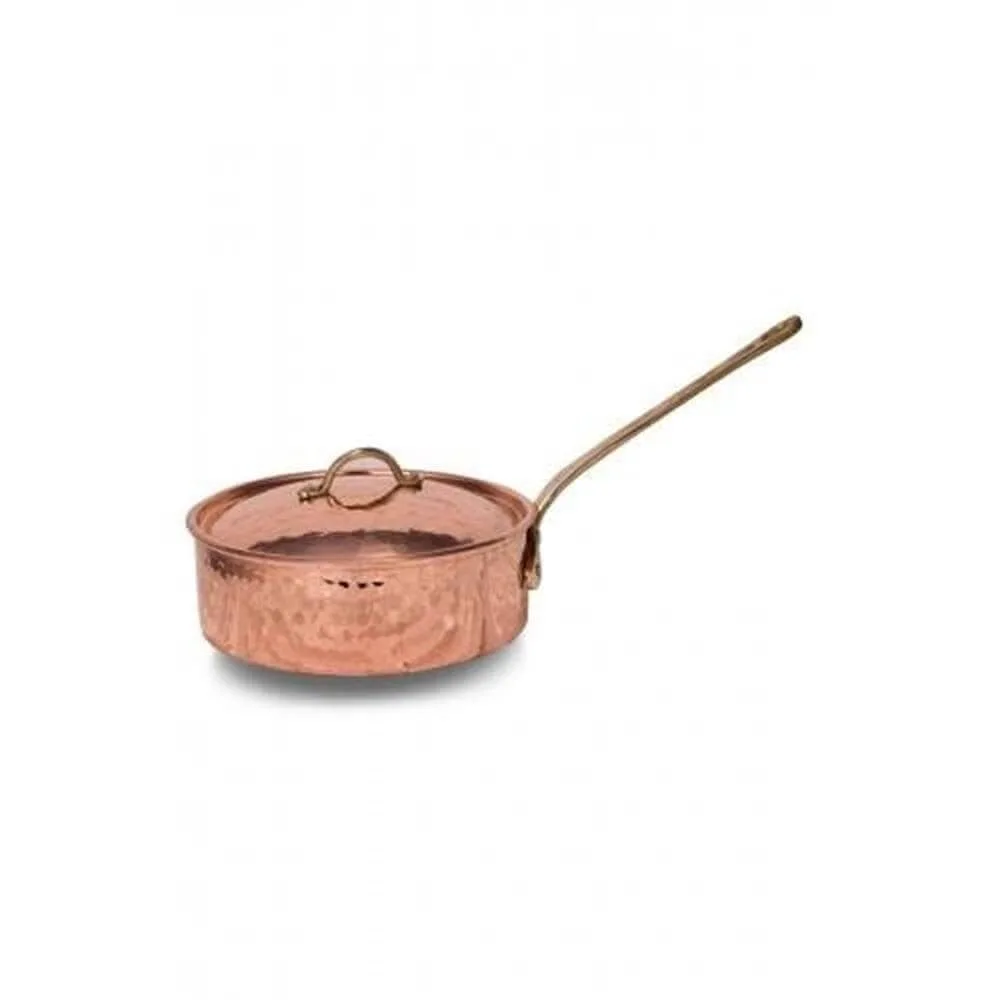
Copper Cooking Pots
Type
Technique
Finish
Sheet thickness
A copper cooking pot spreads heat evenly across the base and up the walls during long simmering, so food is less likely to catch. The choice is made on capacity, sheet thickness and the inner lining. For wholesale buyers the deciding point is being able to reorder the same series later and keep a kitchen or a shelf consistent.
Showing 1–16 of 49 results
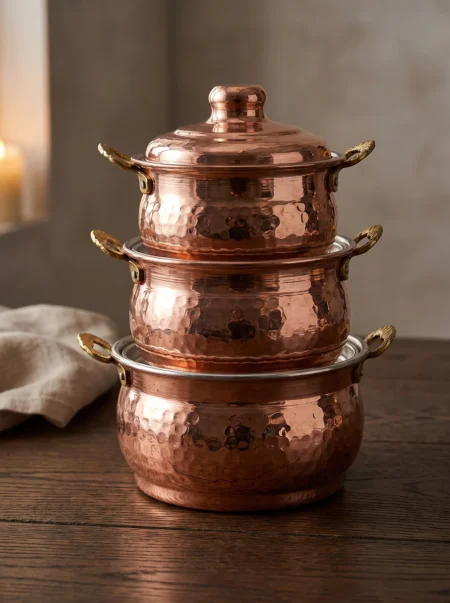
Mini Copper Casserole, Set of 3 — hand-hammered, polished copper
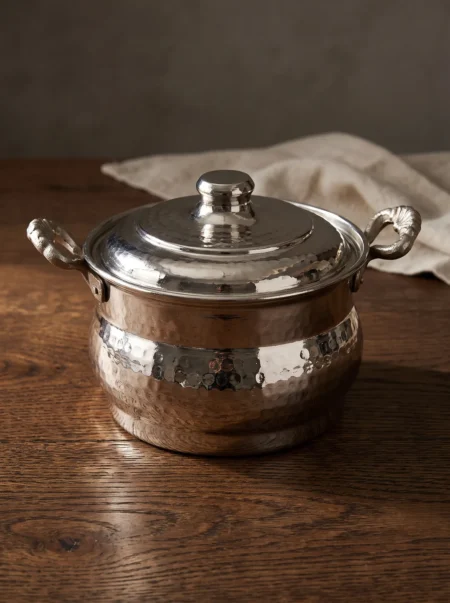
Maraş Copper Casserole — No. 3, 22 cm, hand-hammered, nickel-plated
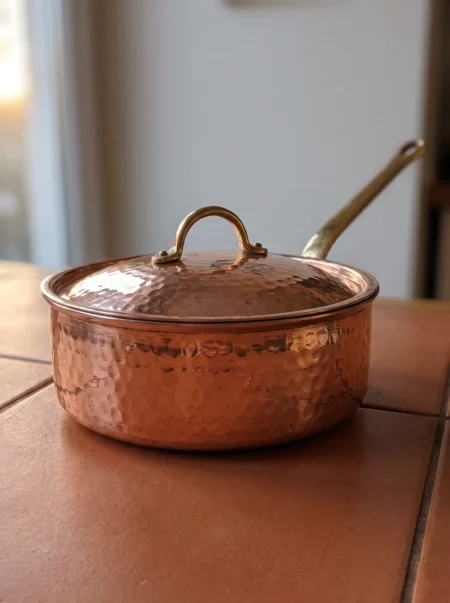
Copper Low Single-Handle Pot — No. 7, 28 cm, hand-hammered, polished copper
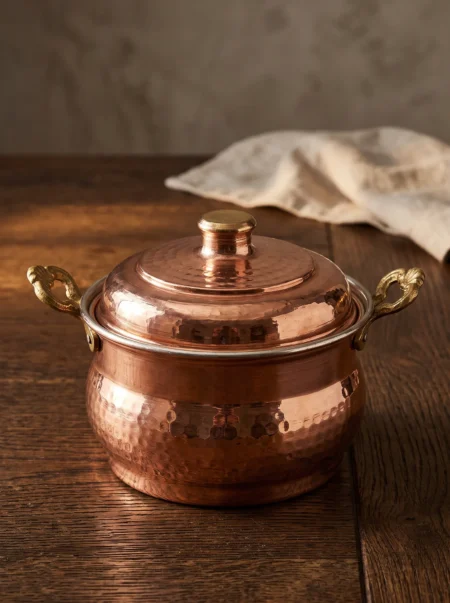
Maraş Copper Casserole — No. 1, 18 cm, hand-hammered, polished copper
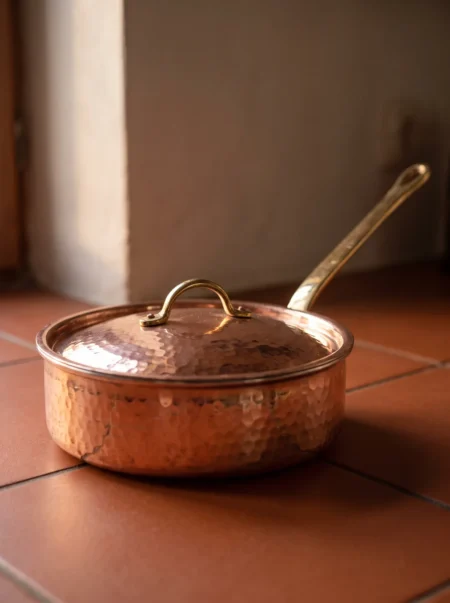
Copper Low Single-Handle Pot — No. 8, 30 cm, hand-hammered, polished copper
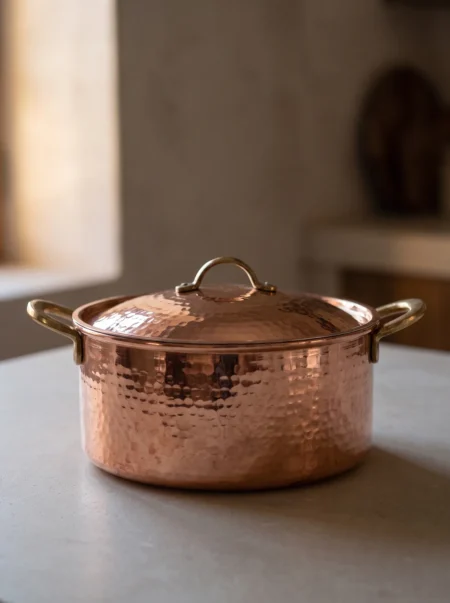
Copper Casserole Pot — No. 5, 24 cm, hand-hammered, polished copper
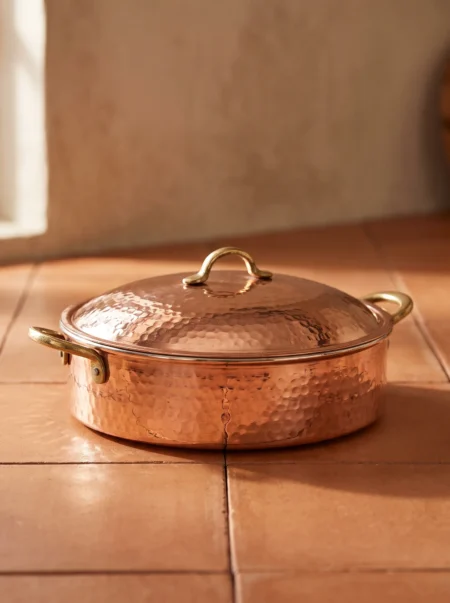
Copper Rondeau — No. 6, 26 cm, hand-hammered, polished copper
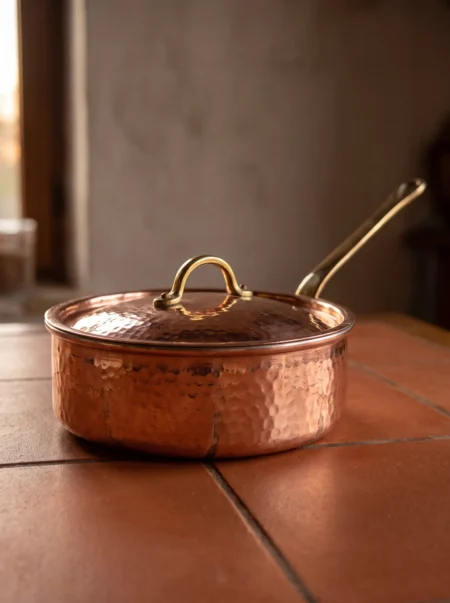
Copper Low Single-Handle Pot — No. 5, 24 cm, hand-hammered, polished copper
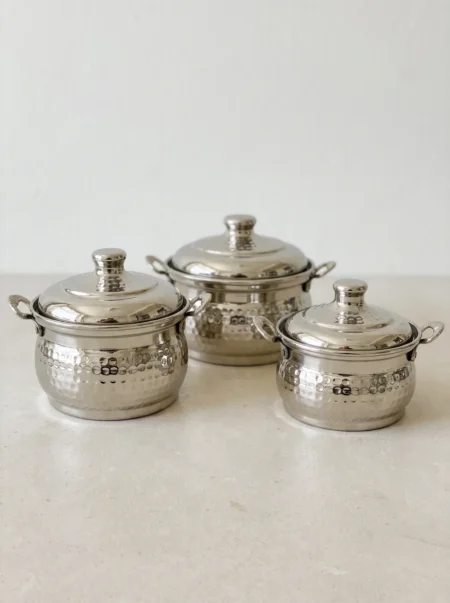
Mini Copper Casserole, Set of 3 — hand-hammered, nickel-plated
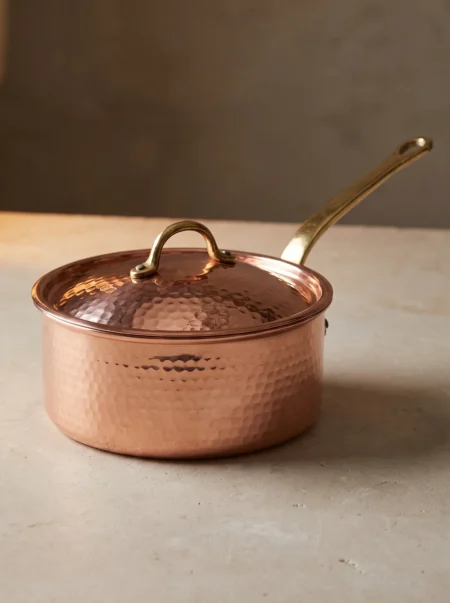
Copper Saucepan — No. 5, 26 cm, hand-hammered, polished copper
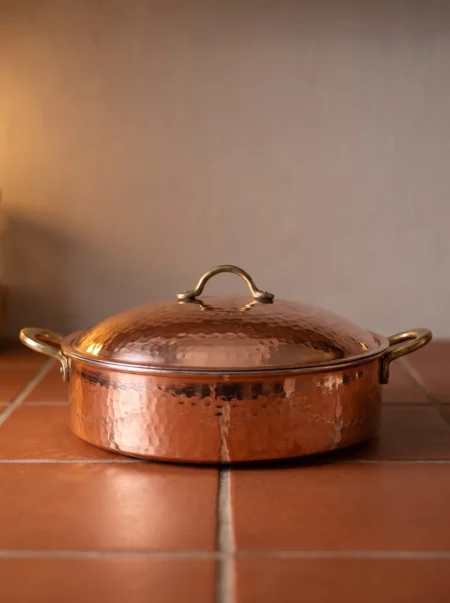
Copper Rondeau — No. 10, 34 cm, hand-hammered, polished copper
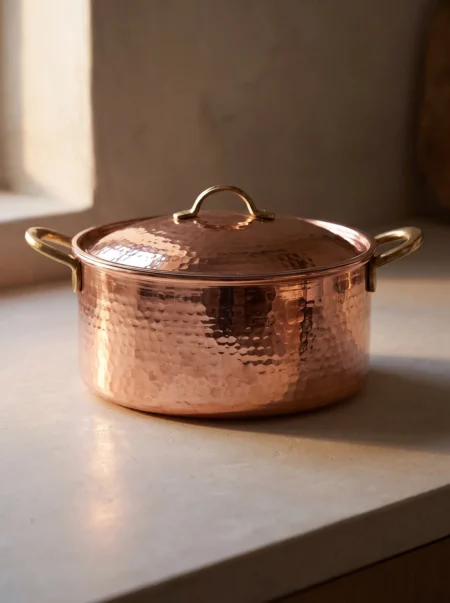
Copper Casserole Pot — No. 10, 34 cm, hand-hammered, polished copper
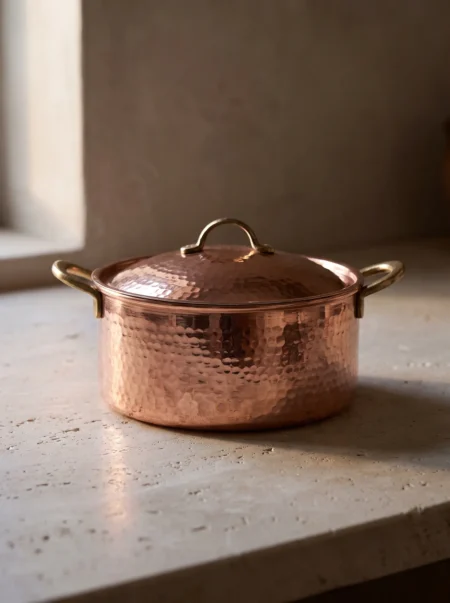
Copper Casserole Pot — No. 2, 18 cm, hand-hammered, polished copper
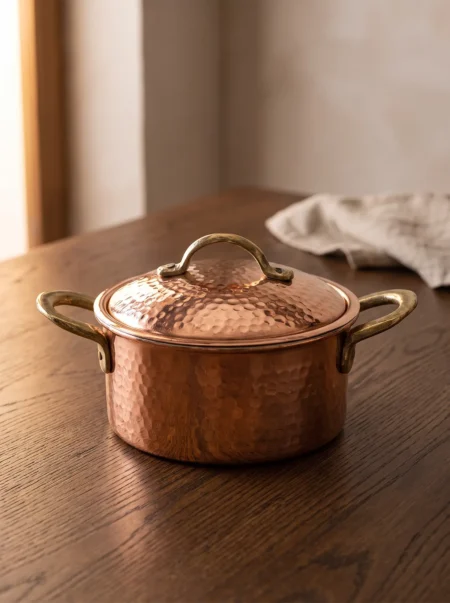
Mini Copper Milk and Sauce Pan — 14 cm, hand-hammered, polished copper
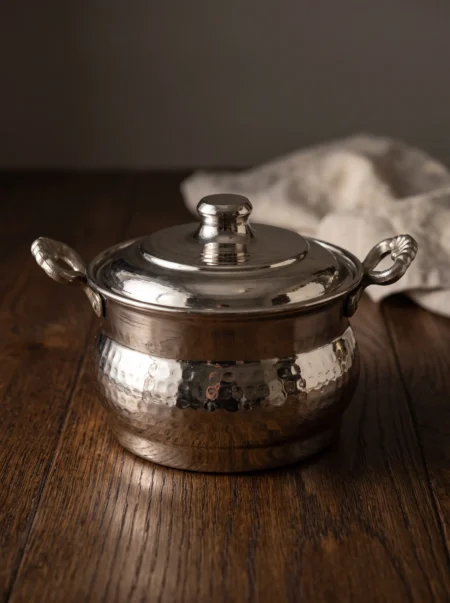
Maraş Copper Casserole — No. 2, 20 cm, hand-hammered, nickel-plated
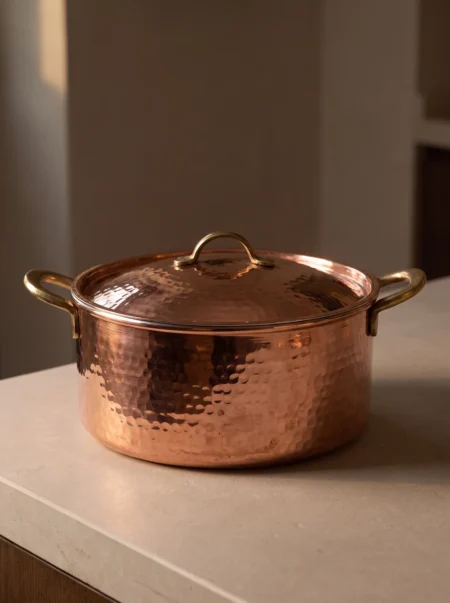
Copper Casserole Pot — No. 1, 16 cm, hand-hammered, polished copper
In dishes that stay on the hob for a long time, the way a pot distributes heat changes the result directly, which is why the copper cooking pot has long been a first choice for vessels that go on the fire. The range runs from a 12 cm mini casserole to a 36 cm pot, with capacities from under half a litre to around 7 litres. Every model is hand-hammered, and sheet thickness runs from 0.50 mm to 1.00 mm.
Numbers and centimetres
A copper pot is named by number, and the number stands for a diameter. The system is regular: No. 1 is 16 cm and each number adds 2 cm. The table shows the full range and what each size is used for:
| Number | Diameter | Typical use |
|---|---|---|
| Nos. 1–2 | 16–18 cm | Sauce, milk, a meal for one or two |
| Nos. 3–4 | 20–22 cm | Daily meals for three or four, pilaf |
| Nos. 5–6 | 24–26 cm | Meals for five or six, dried pulses |
| Nos. 7–8 | 28–30 cm | A full table, cooking for guests |
| Nos. 9–11 | 32–36 cm | Batch cooking and preserving |
Two groups sit outside this sequence. The mini casserole pots are single-portion vessels of 12, 13 and 14 cm and are also sold as a set of 3. The 14 cm mini milk and sauce pot is a separate model for small-volume jobs. US buyers converting to quarts and inches will find the working tables in copper cookware sizes in quarts and inches.
Pot types and what they are for
The body forms in the range divide by the kind of cooking:
- Rondeau: the classic Anatolian form that widens outwards from the middle. Used for braises, stuffed vegetables and meat-and-vegetable dishes. Available from No. 1 to No. 11, with two side handles or a single long handle.
- Straight-sided pot: a taller body with straight walls that gives more volume at the same diameter. Comfortable for pulses, soups, pasta and other generous liquid cooking. Sheet from 0.80 mm to 1.00 mm, from 16 cm to 36 cm, also with a single long handle.
- Maraş casserole: 18, 20 and 22 cm, for meat and vegetable stews that cook slowly over low heat. Offered in polished copper and nickel-plated.
- Mini casserole: portion pots from 12 to 14 cm. They go from hob to table, so they are used for single-serve casserole and oven dishes.
The casserole models start their numbering differently from the table above: on the Maraş casserole No. 1 is 18 cm, and on the mini casserole No. 1 is 12 cm. Whatever the series, the centimetre value in the product name is the safest reference. Serving and portion pots are covered in more depth on copper casserole and mini serving pots.
Single-handled rondeau and straight-sided models are practical for jobs that are stirred often and lifted off the hob often; two side handles carry more steadily when the pot is full. A full No. 9 pot can weigh well over two kilograms with its contents, so two handles are usually more comfortable in the large sizes. How these forms compare with Western shapes such as the rondeau and stockpot is set out in copper pot and pan shapes.
How to tell a genuine copper pot
Copper is not magnetic; a magnet that sticks to the body shows another metal underneath. Weight is the second test: copper is clearly heavier than a steel or aluminium body of the same size. The third is the inside: a tinned lining has the pale grey-white colour of tin. Confirm the lining of each line on the quotation before the order is placed.
What shapes the quotation for pots
Four things set the cost: the number, the sheet thickness, the production technique and whether a lid is included. Heavier sheet means more copper. On hand-hammered bodies the hammer work is a cost line of its own. Quotations are prepared per order from your list of series, numbers, finishes and quantities, and the lead time is agreed for that order. For restaurant kitchens, where a pot turns over several times a day, thickness and the re-tinning schedule differ from home use; that planning is part of the wholesale conversation.
First use of a new copper pot
Wash the pot in warm water with a soft sponge and dry it at once; then boil some water in it and pour that water away. It does not go in the dishwasher, and detergent should not be left standing in it. If the inside is tinned, check that the tin lining is intact before first use.
What changes when you cook in copper, and care
Copper conducts heat much faster and more evenly than stainless steel, so hot spots do not form on the base of the pot. In liquid dishes this means less catching on the base; lifted off the heat, the temperature drops quickly, so cooking really stops instead of continuing in the pot and breaking the food down. Low heat works harder in a copper pot, so turning the usual hob setting down one notch is generally enough.
A tinned lining keeps acidic dishes from direct contact with copper. Under heavy use it is usually renewed every one to two years; when reddish copper starts to show inside, the pot is due for re-tinning. A pot does not go in the dishwasher; wash it by hand in warm water with a soft sponge and dry it without leaving it to stand. Darkening on the outside is normal copper behaviour; lemon and salt polish it. Copper is not magnetic, so it does not work on an induction hob unless an interface disc is used; the pots are made for gas and electric hobs.
Hammering a pot in Kahramanmaraş
Large-diameter pots are the workshop jobs that take the most hammering. Once the sheet has been heated and softened, the sides are raised round by round; the swelling belly of the rondeau form is not reached in one pass but through repeated annealing and hammering. Kahramanmaraş copper handcraft carries a registered Turkish geographical indication, and keeping the wall of a 36 cm body even all the way round is the measure of that craft.
Models and sizes
On a pot the deciding measure is capacity. Small volumes are for sauces, milk and single portions; large volumes for full tables and long cooking. Weight follows capacity, from a few hundred grams for the smallest casserole to more than 2.5 kg for the largest straight-sided pot.
Every body in this group is hand-hammered. Sheet thickness varies from 0.50 mm to 1.00 mm, and heavier bodies behave more steadily in long cooking. Finishes are polished copper and nickel-plated.
Frequently asked questions
Which number of copper pot should I choose?
For a household of four, Nos. 3–4 (20–22 cm) cover most daily meals. Full tables use Nos. 5–7 (24–28 cm), and batch cooking and preserving use No. 9 and above.
What is the difference between the rondeau and the straight-sided pot?
The rondeau body widens outwards from the middle; the straight-sided body has upright walls. The rondeau suits stuffed vegetables and braises, while the straight-sided pot gives more volume at the same diameter and is preferred for soups and pulses.
Can a copper pot go in the oven?
The copper body can take oven heat, but a wooden handle or lid knob, where fitted, can be damaged, and tin melts at about 232 °C (about 450 °F), so the pot should never be heated empty. For oven work the copper baking trays are the better choice.
What happens when the tin wears?
The pot is re-tinned and goes back into use. When patches appear where the tin has lifted and reddish copper shows, the process is repeated; it is normal maintenance that extends the pot’s life.
Can a wholesale order mix series and sizes?
Yes. A list can combine rondeau, straight-sided and casserole pots in different numbers and finishes. Send the list with quantities and the destination country; there is no single published minimum.
What else is in the same branch?
To complete the hob set, see the copper frying pans and the rest of the copper cookware branch.