
Wholesale Copper Serveware — Trays, Plates, Pitchers
Copper trays, plates, pitchers and bowls
Serveware is the part of a copper range that earns its keep every single service — the tray that carries the coffee, the plate a mezze arrives on, the pitcher on the table, the bowl on the buffet. We supply handmade Turkish copper serveware to hotels, restaurants, cafés, caterers, homeware retailers and gift buyers, in matched finishes so a table reads as one set rather than as a collection.
Describe the service rather than the product code — covers per table, what is being carried, whether it goes to the guest or stays behind the pass — and we will propose the diameters that work.
BakırBul supplies handmade Turkish copper serveware in bulk — trays, serving plates, mezze dishes, pitchers, bowls, sugar and spice sets — to hotels, restaurants, caterers and homeware retailers. Every food surface is tin-lined, finishes are matched across groups so a table reads as one set, and diameters outside the range are made to drawing.
Matched finishes
Trays, plates, pitchers and bowls can be ordered in the same surface treatment so a table looks deliberate.
Tinned where it matters
Any surface that meets food is tin-lined. Decorative pieces that never touch food are quoted as decorative.
Sizes to your service
Diameters outside the range are made to order at the workshop we work with.
Logo and engraving
Trays and plate rims take a mark well. Engraving, laser and base stamping are all available.
Replenishment
Repeat orders are matched against your original specification, not re-guessed from a photograph.
Export packing
Flat pieces travel badly if packed carelessly. Trays and plates are separated, cornered and palletised.
What sits in a copper serveware order
A copper serveware order usually combines six groups: trays in round, oval and rectangular bodies; serving plates and mezze dishes; pitchers and carafes; bowls from condiment to presentation size; closed bodies such as sugar and spice sets; and decorative pieces that share the finish without being quoted as food-service pieces.
Serveware covers more ground than cookware and the buying logic is different. A pan is chosen for how it cooks; a tray is chosen for how it looks under a light, how it stacks in a service station and whether it survives a year of being knocked against a doorframe. These are the groups buyers combine most often.
Trays — round, oval and rectangular
The tray is the workhorse. Round trays dominate coffee and tea service because they are what the ritual expects; rectangular trays suit a bar pass and stack more efficiently; oval sits between the two and photographs well on a styled table. Rim height matters more than most buyers realise — a raised rim keeps a spilled glass on the tray instead of on a guest, and a flat rim looks cleaner but forgives nothing.
Hand-hammered trays scatter light and hide the scratches that a service tray inevitably collects. A mirror-bright tray in daily use will show every mark within a month. If the tray goes to the table in front of a guest, this is the single decision that most affects how the room looks in a year.
Serving plates and mezze dishes
Plates are the largest group in our own range and the most varied: shallow presentation plates, lidded serving dishes, sectioned mezze sets and deeper bodies for shared food. A copper plate is not a dinner plate substitute for cutting on — the tin lining is soft and a steak knife will mark it. It is a presentation and shared-service piece, and the venues that use it best treat it that way.
Lidded bodies are worth asking about specifically. A lid changes what the plate can do — food arriving covered, a reveal at the table, warmth held for a few extra minutes — and it changes the packing and the price. Buyers frequently discover the lidded version only after their first order.
Pitchers, jugs and carafes
Copper on a water service is a specific look, and it is one of the fastest ways to make a plain table feel considered. Pitchers come with and without a lid; the lid matters outdoors and on a terrace and matters less in a dining room. Handle attachment is the failure point here just as it is on a mug, and a pitcher is heavier when full, so ask about it.
Copper conducts heat quickly. A pitcher of chilled water frosts on the outside and feels genuinely cold in the hand, which guests notice. The same conductivity means it warms up just as fast once it stands, so venues that want the effect keep the pitchers chilled rather than the water alone.
Bowls
Bowls run from small condiment bodies to wide presentation pieces for a buffet. Ours are tin-lined, which is the right specification for food service. There is one classical exception worth knowing about because a chef will eventually raise it: the unlined copper bowl traditionally used for whipping egg whites, where the bare metal reaction with the protein is the entire point. That is a specialist tool, we do not supply an unlined food surface, and any supplier selling you an unlined bowl for general table use is not doing you a favour.
Sugar bowls, spice sets and coffee-service pieces
The small closed bodies — sugar bowls, spice and condiment sets, the assembled coffee-service trays Turkish tables use — are the pieces that turn a couple of items into a recognisable service. They are also the natural gift and retail package, because they photograph as a set and box cleanly.
Decorative pieces that share the finish
Candle holders, planters, vases and objects sit outside food service but share the same metal, the same finishes and the same workshop. Hotels and design-led retailers routinely order them alongside serveware so a lobby and a restaurant read as one property. They are quoted as decorative pieces, and we do not describe a decorative body as food-appropriate simply because it is made of the same material.
Tinning, and where it does and does not apply
Every serveware surface that meets food is tin-lined, because copper reacts with acid and serveware meets exactly what reacts: lemon, vinegar, tomato, pickles and yoghurt. Tin is soft and wears, so in a venue it is a maintenance line rather than a defect. Decorative bodies are quoted as decorative.
Copper reacts with acid, so every surface that meets food is tinned. On serveware this matters more than buyers expect, because serveware meets exactly the things that react: lemon, vinegar, tomato, pickles, yoghurt. A tray that only ever carries closed cups is a mild case; a mezze plate is not.
Tin is soft and it wears. In a home this takes years. In a venue running the same plates through service nightly, plan for it as maintenance rather than as a defect — the piece is re-tinned and returns to service. Where a piece is decorative and will never hold food, we say so on the quotation rather than implying a food specification it does not have. The full picture is on our page about copper and food safety, and the day-to-day routine is on living with copper.
Choosing finishes for a room, not for a photograph
Serveware finishes age very differently. Red copper is untreated and darkens with handling; oxide is deliberately aged and hides marks, which is why it dominates hospitality orders; nickel plating reads silver alongside stainless; scotch-brushed matt resists fingerprints; matte black and dark brown suit wood and stone. Bright surfaces need a polishing rota.
The same tray is available in several surface treatments and they age very differently. Red copper is untreated and darkens with time and handling. Oxide is deliberately aged and is the most forgiving in service — marks disappear into it, which is why it dominates hospitality orders. Nickel-plated exteriors read silver and sit comfortably with existing stainless service. Scotch-brushed is a directional matte that resists fingerprints better than anything else we offer. Matte black and dark brown are newer and photograph particularly well against wood and stone.
The practical rule: bright finishes need labour, aged finishes do not. Decide who polishes before you decide what looks best in the sample photograph. A property with a rota and a housekeeping standard can carry bright copper beautifully; a property without one should order aged or brushed and will be happier for years.
Sizing for a real service
Serveware is sized by service geometry rather than by appearance. A tray has to pass through its storage station and clear the table it lands on; a serving plate has to fit the shelf and the pass; a pitcher has to fit under the tap or onto the fridge shelf where it is chilled. Send the constraint.
The most common ordering mistake is buying by appearance rather than by service geometry. A tray has to pass through the station it is stored in and clear the table it lands on. A serving plate has to fit the shelf it is held on and the section of the pass it waits in. A pitcher has to fit under the tap or into the fridge shelf where it will be chilled.
Tell us the constraint and we will work backwards from it. Every product page carries the diameter and the height, and where a dimension you need is not in the range, our partner produces it to your drawing. Buyers who send a shelf height and a cover count get a better proposal than buyers who send a product code.
Retail, gift and private label
For homeware retailers and gift buyers the priorities change: boxed presentation, a mark that reads as your brand, barcodes and labelling, and consistency across repeat orders matter more than diameter tolerance. Marking and packaging can carry your label, and work made to your drawing goes out under your mark.
For homeware retailers and gift buyers the questions change. Boxed presentation, a mark that reads as your brand rather than ours, barcodes and labelling, and consistency across a repeat order all matter more than diameter tolerance. All of it is available: marking and packaging can carry your label, and work made to your drawing goes out under your mark. Detail is on the custom and private label page.
One caution we give every retail buyer. Copper photographs warmer and brighter than it looks on a shelf under retail lighting. If your product photography is being shot elsewhere, get a physical sample in front of the photographer first. It is a cheap step that prevents a catalogue full of images that do not match the goods.
Copper on a buffet, and what copper will not do
Copper serveware presents food; it does not hold it hot. Copper conducts heat quickly in both directions, so an uncovered copper dish on a buffet loses temperature about as fast as it gains it. Heat holding is the job of the chafing equipment underneath, and copper bodies sit on it rather than replacing it.
Conductivity is the property copper is bought for, and it works in both directions. A copper dish put out hot on a buffet sheds heat to the room as efficiently as it took it from the stove, so a copper body is a presentation vessel sitting on a heat source rather than a substitute for one. The Copper Development Association publishes the thermal figures behind that, and they are the same figures that make copper desirable on a hob.
What copper does buy you on a hot buffet is a few extra minutes when the body is lidded, and a surface that looks intentional under service lighting when a stainless gastronorm does not. Pre-warming the dish before the food goes in is worth more than it sounds, because a cold copper body pulls heat out of the first service.
The place copper genuinely wins on a buffet is the cold station. A chilled pitcher or bowl frosts on the outside and reads cold at a glance, which is a real effect rather than a marketing one, and it is why water and salad service is where most venues put their copper first.
One caution that belongs in a specification rather than in a complaint: do not leave a copper body sitting empty or nearly empty over a naked flame on a buffet line. Tin melts at a low temperature, and an unattended burner under an emptying dish is the classic way a lining is lost. The underlying chemistry is set out on copper cookware and safety.
Documents, food-contact rules and what a serveware importer is asked for
Copper serveware crossing a border needs three things settled early: the customs classification of the goods, the food-contact rules of the destination market, and who prepares which document. Serveware and decorative pieces can classify differently, and a body quoted as decorative should not be declared as tableware.
Classification comes first, because it decides duty and it decides which rules follow. Tableware and kitchenware of copper sit in their own heading in the harmonised system maintained by the World Customs Organization, and ornamental copper articles do not always sit with them. This is one practical reason we quote decorative bodies as decorative rather than blurring the two: a declaration should match the description on the invoice.
Food-contact rules follow the destination rather than the origin. In the European Union the framework is Regulation (EC) No 1935/2004, with the metals and alloys guide published through the EDQM as the working technical reference for release limits. Where a buyer or a market requires laboratory migration testing on a specific piece, it is arranged before shipping and it is priced; it is not a document any supplier holds in a drawer for every body in a range.
The paperwork split is the third item and the one most often assumed rather than agreed. We prepare the Türkiye-side export documents as a priced service; the customs declaration in the destination country has to be made by a party established there. The full division of responsibility is set out on importing copper cookware, and the market-by-market compliance picture on food contact and compliance.
Par levels, breakage and what to order as spares
Serveware attrition is not evenly spread: rims, spouts, lids and stems account for most of it, while flat trays mostly collect marks rather than damage. An opening order that includes spares from the same batch protects the set, because a replacement bought a year later matches a written specification rather than a memory.
Serveware does not wear evenly, and knowing which bodies go first turns a replacement order into a plan rather than a scramble. Lids are the first casualty in most kitchens, because they get put down on hot surfaces and stacked without separation. Spouts are second: a pitcher is washed by the handle and the spout takes the impact against the sink. Stems are third, since a tipped goblet lands on the narrowest part of itself. Tray rims collect the doorframes.
Flat pieces behave differently. A tray or a serving plate rarely breaks; it accumulates marks, which is a finish decision made months earlier rather than a breakage rate. That is the argument for oxide and brushed surfaces in a busy room, and it is why we push back when a buyer chooses bright copper for a service that has no polishing rota.
The practical answer is to buy the visible pieces and their spares in one batch and hold the spares unopened. The same finish name still has to be applied to the same batch standard, so a body pulled from the original run matches in a way a body ordered eighteen months later cannot be guaranteed to. Record the specification you were quoted — body, diameter, gauge, finish, marking, handle type — and keep it where the person ordering replacements will find it. Venue-wide practice is covered on copper for restaurants and hotels, and the tray range in detail on hand hammered copper trays.
Serveware groups in the catalogue
Photographs, diameters and finishes sit on every product page. The catalogue is in Turkish; ask us about anything you cannot read.
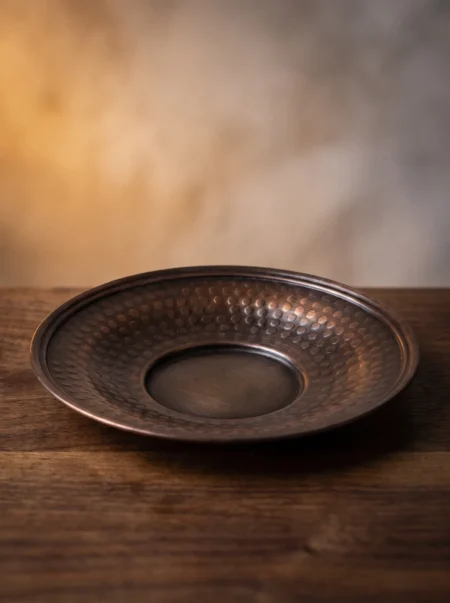 TraysRound, oval and rectangular bodies for coffee, tea and bar service.See the range
 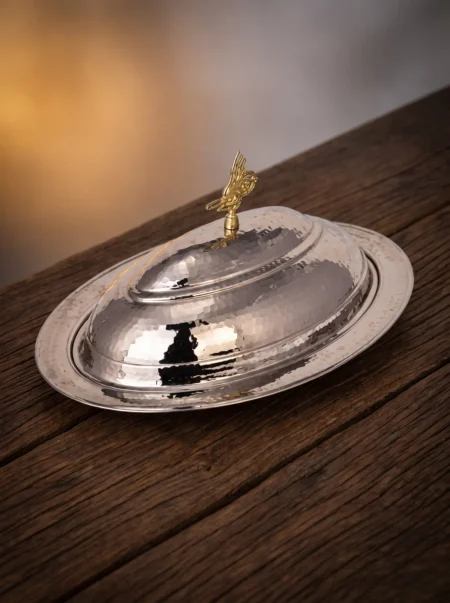 Serving platesShallow presentation plates, lidded dishes and mezze bodies.See the range
  Pitchers and carafesLidded and open bodies for water and table service.See the range
 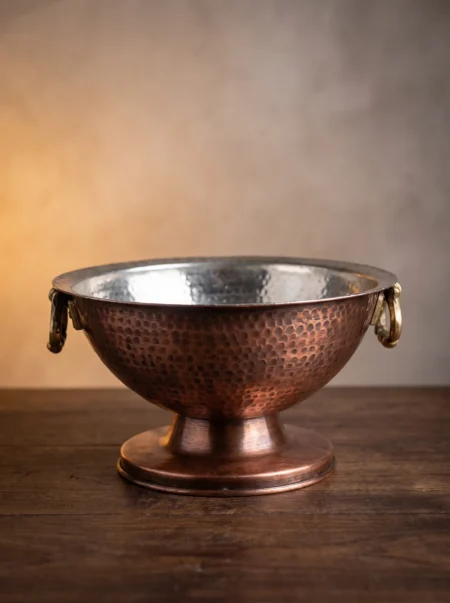 BowlsCondiment bodies through to wide presentation bowls.See the range
 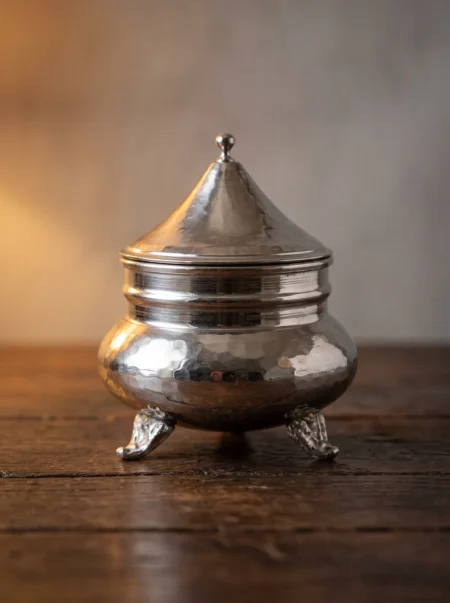 Sugar bowls and setsClosed bodies for sugar, spice and coffee service.See the range
 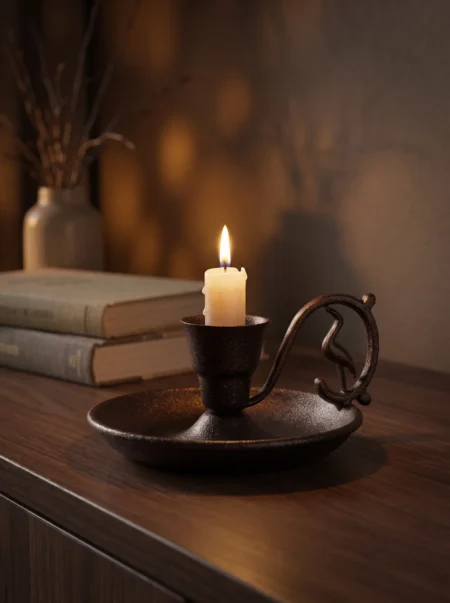 Decorative piecesCandle holders, planters and objects in matching finishes.See the range
 How we work
BakırBul specifies the piece, its long-term production partner makes it, and the goods are carried under BakırBul’s own name. Copper is selected from Anatolian copper towns, brought into the company’s own warehouse, checked against the written order and shipped, so one party stays accountable from quotation through to replacement.
We work through a long-term production partnership — we specify the piece, our partner produces it, and we carry it under our own name. Copper is selected from the workshops of Kahramanmaraş and other Anatolian copper towns, brought into our own warehouse, checked against the order and shipped. When a diameter or a form is not in the range, we have it made to your drawing rather than telling you it cannot be done.
Request a quotation
A serveware quotation needs the groups you want, an approximate quantity per line, the finish and the destination country. Venue buyers get a better proposal by describing the service instead — covers, stations, what is carried to the guest — and letting the list be proposed. A price and lead time follow.
Send the groups you want, the approximate quantities, the finish and the destination country. If you are furnishing a venue, the fastest route is to tell us the service — covers, stations, what is carried — and let us propose the list. We answer with a price and a realistic lead time.
What serveware buyers ask
Are copper bowls safe for food?
Tin-lined ones are, and every bowl we supply for food service is lined. Bare copper reacts with acidic food, which is why the lining exists. The one traditional exception is the unlined bowl used for whipping egg whites, where the reaction is deliberate and the bowl is a specialist tool rather than tableware — we do not supply an unlined food surface for general use.
Can copper plates go in a dishwasher?
We do not recommend it and we do not claim it. The detergent and heat cycle dull the exterior and shorten the life of the tin. Hand washing with a soft cloth and drying immediately is what keeps serveware looking like it did on delivery.
Which finish should a busy restaurant choose?
Oxide or scotch-brushed, in almost every case. Both hide handling marks, and neither needs a polishing rota. Bright red copper is beautiful and demands labour; if nobody is assigned to it, it will look neglected within a season.
Do the trays and plates come in matching finishes?
Yes, and it is worth specifying at the quotation stage. Ordering groups separately over several months is how a set drifts, because the same finish name still needs to be applied to the same batch standard.
Can you make a size that is not in the catalogue?
Yes. Our partner produces made-to-drawing work, and where the quantity justifies it new tooling is commissioned. Send the dimension you need and the constraint behind it.
Will a copper pitcher keep water cold?
It will feel cold quickly and frost on the outside, because copper conducts heat fast. That is a sensory effect, not insulation. Chill the pitcher itself if you want it to last through a service.
Do you supply decorative pieces as well?
Yes — candle holders, planters, vases and objects, in the same finishes. They are quoted as decorative rather than as food-service items, and we say which is which rather than blurring it.
What is the minimum order?
There is no published figure. A single tray diameter and a mixed venue list are different problems. Send the list and we will tell you straight away whether it works as an export shipment.
Can trays carry our logo?
Yes. A tray face and a plate rim take a mark better than almost any other body we make. Send vector artwork if you have it, and we will confirm placement on a sample first.
How is serveware packed for export?
Flat pieces are the ones that arrive damaged when packing is careless, so they are separated, cornered and palletised, and the carton dimensions and gross weights go out with the quotation for your forwarder. Customs classification and documents are covered on the importing page.
The 2026 catalogue — the full range with codes, sizes and weights: open or download it here. Furnishing a venue? See copper for restaurants and hotels, and for drinkware, mugs, cups and goblets in bulk.
Send us your list
Groups, approximate quantities and a destination country is enough to start. We come back the same day.
Last updated: 11 September 2026